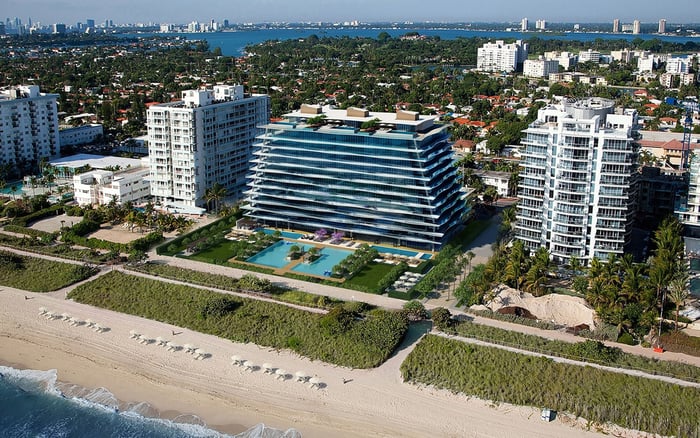
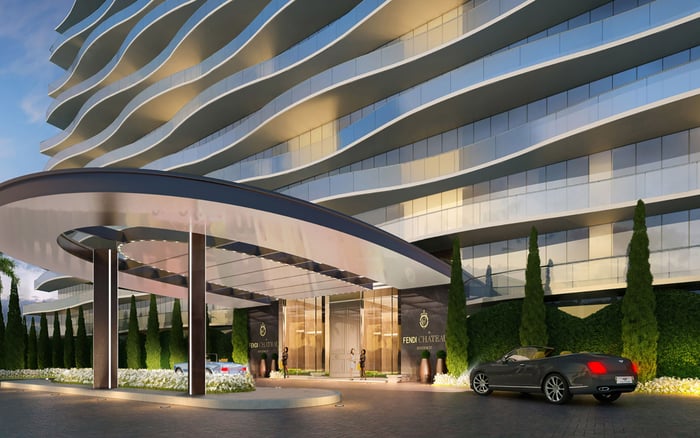
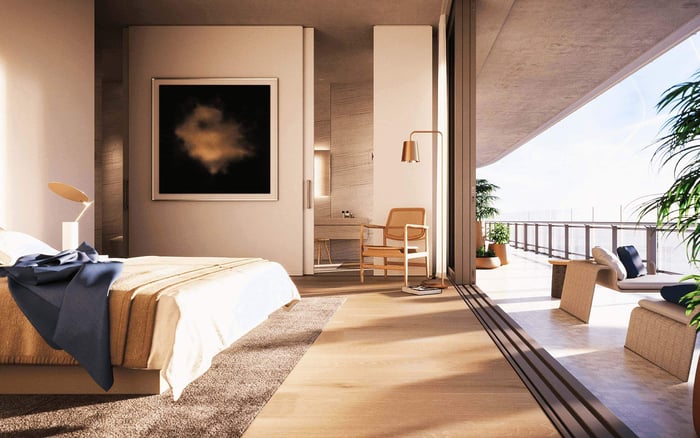
Fendi Château Residences Surfside stands out for buyers seeking a primary home because its oceanfront setting, small-scale format, branded design, and service model support privacy, routine, and long-term livability.
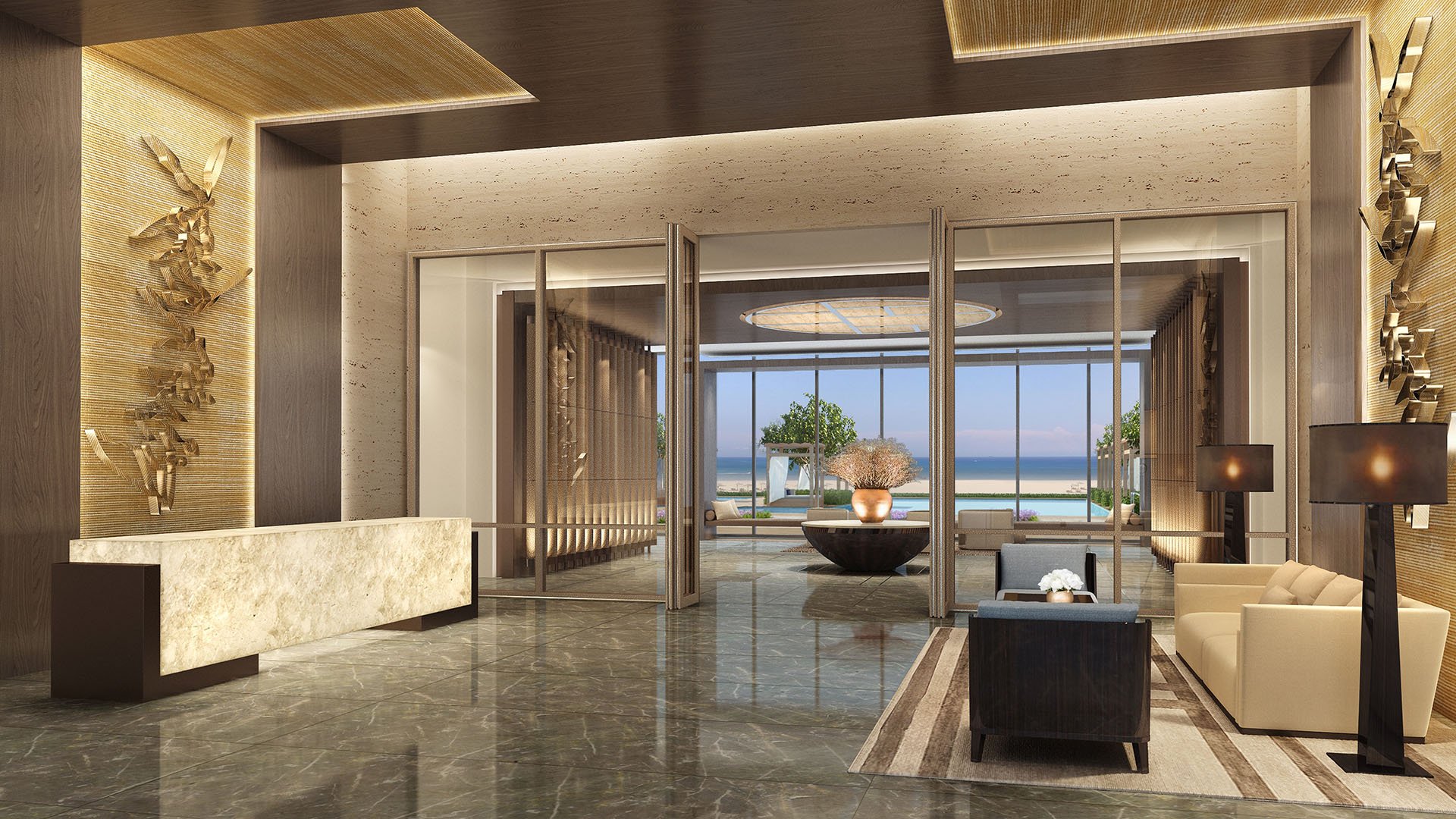
For buyers evaluating South Florida as a place to live, not simply a place to visit, the standards become more exacting. A primary residence must support mornings, school calendars, visiting family, storage, service expectations, and the quiet rituals that make a home feel permanent. That is where Fendi Château Residences Surfside earns its place on a serious shortlist.
The case is not only that the building is oceanfront, though that remains central to its appeal. It is the combination of direct ocean access, a calmer Surfside setting, branded design, full-service living, large-format residences, and a smaller-scale residential atmosphere. Together, those qualities point toward end-users who value permanence and privacy over hotel-style turnover or the constant energy of a denser condo corridor.
Fendi Château Residences Surfside is best understood as a residential address with a defined design identity, rather than a generic luxury tower that happens to sit on the sand. For the buyer prioritizing long-term livability, that distinction matters.
Surfside occupies a rare position on the Miami luxury map. Set between Bal Harbour and Miami Beach, it gives residents access to beach living, refined shopping, dining, and broader Miami connectivity without placing them at the center of a high-tourism core. That balance is one reason the neighborhood has become so compelling for buyers seeking a primary home.
A buyer considering Miami Beach may be drawn to the glamour, restaurants, and cultural density. Yet that same buyer may hesitate if the residence is expected to function year-round. Traffic patterns, nightlife intensity, and transient foot traffic can alter the texture of daily life. Surfside offers a quieter frame. It remains connected, but its residential rhythm is more restrained.
That is especially relevant for families, downsizers, and international buyers who want the beach to be part of ordinary life, not only a seasonal backdrop. Beach access becomes less of an amenity checklist item and more of a daily-use advantage: a morning walk, an after-school swim, a quiet evening outside. In a primary-residence strategy, lifestyle features must work repeatedly, not simply impress on arrival.
The small-scale format of Fendi Château is one of its most important advantages for primary-residence buyers. Lower resident density supports privacy, fewer points of daily friction, and a more estate-like atmosphere. In ultra-luxury housing, discretion is often more valuable than spectacle.
Large-format residences further strengthen that thesis. A primary home needs room for everyday routines: wardrobe depth, guest accommodation, entertaining areas, family privacy, and practical separation between public and private space. Compact pied-à-terre layouts can be elegant, but they rarely solve the same residential needs.
The building’s service model also matters. Full-service luxury living is not merely about convenience for a weekend stay. For year-round owners, consistent staffing, security, and operational ease shape quality of life. A building that feels prepared for daily occupancy is different from one designed around occasional arrivals and departures.
This is where Fendi Château’s private-residential feel becomes strategic. The appeal is not maximum exposure to Miami’s busiest districts. It is a home base that reduces the sense of transient traffic and allows the owner to settle into a durable rhythm.
The Fendi association gives the project a design-led identity that distinguishes it from a conventional luxury condominium. Branded residences can sometimes lean too heavily on name recognition, but the more meaningful question for primary buyers is whether the brand contributes to a coherent sense of place.
At Fendi Château, the brand position supports the idea of a curated residential environment. The value is not simply the label. It is the promise of an aesthetic point of view, one that makes the building feel considered rather than interchangeable. For a buyer who expects to live with the architecture and interiors daily, that level of identity carries weight.
Boutique luxury is strongest when it feels personal, not performative. In Surfside, the oceanfront setting and low-density format allow the brand to operate in a quieter register. The result is a property that can feel closer to an oceanfront private estate community than a conventional high-rise investment condo.
Surfside buyers often compare properties through subtle differences rather than broad categories. The neighborhood’s strongest addresses tend to appeal to people who already understand why this shoreline is valuable: it is close to Bal Harbour, close to Miami Beach, and still capable of feeling residential.
A buyer studying the area may also look at Eighty Seven Park Surfside, Ocean House Surfside, or The Delmore Surfside as part of a broader Surfside search. Each comparison helps sharpen the question: does the buyer want architectural distinction, intimacy, scale, service, oceanfront access, or a particular version of privacy?
Fendi Château’s answer is clear. It belongs in the conversation for buyers who want branded design, a quieter address, and generous residential proportions. The building is less compelling for someone whose main objective is short-term flexibility or a highly visible urban lifestyle. It is more compelling for a household seeking a polished, low-density home on the ocean.
That also differentiates it from the broader Miami Beach luxury conversation, where the energy can be more social and the setting more active. A buyer comparing The Surf Club Four Seasons Surfside with other Surfside properties may be making a similar lifestyle calculation: how much service, privacy, and neighborhood calm should define the everyday experience?
A primary-residence strategy still requires disciplined due diligence. Buyers should verify current inventory, pricing, association costs, rental rules, and any building-specific policies before making a final decision. Those details affect carrying costs, flexibility, and the long-term fit of any condominium purchase.
Just as important, buyers should evaluate the building at the level of lived experience. How does arrival feel at different times of day? Is the beach access practical for daily use? Does the service culture feel residential rather than transient? Do the floor plans support the household’s real routines, including storage, staff coordination, entertaining, and quiet separation?
For the right buyer, the strength of Fendi Château is its coherence. Surfside provides calm. The oceanfront location provides daily utility. The small-scale format supports privacy. The residences provide room to live. The brand provides identity. When those elements align, the property becomes more than an impressive address. It becomes a credible primary home.
Why is Fendi Château Residences Surfside relevant for primary-residence buyers? Its appeal comes from oceanfront living, privacy, low density, large-format residences, and a full-service residential model.
Is Surfside a quieter alternative to Miami Beach? Yes. Surfside offers beach living and proximity to Bal Harbour and Miami Beach while maintaining a calmer residential atmosphere.
Does the Fendi brand matter for end-users? It matters when buyers value a design-led identity and a more curated residential environment rather than a generic luxury tower.
Who is the strongest fit for this building? The strongest fit is an end-user who prioritizes privacy, service, residential scale, and long-term livability.
Is the oceanfront setting mainly symbolic? No. For primary residents, direct oceanfront living can become part of daily routines, not just a prestige feature.
How does low density help a primary-home strategy? A smaller-scale building can reduce resident traffic, improve privacy, and create a more estate-like atmosphere.
Should investors consider Fendi Château? Investors may study it, but the building’s clearest proposition is for buyers focused on livability rather than yield-driven priorities.
What should buyers verify before purchasing? Buyers should confirm current pricing, available residences, association costs, rental rules, and building policies.
How does Surfside support everyday convenience? It places residents near Bal Harbour, Miami Beach, and broader Miami connections while preserving a quieter neighborhood feel.
Why does Fendi Château belong on a shortlist? It combines branded design, oceanfront access, privacy, service, and residential scale in a setting suited to year-round living.
If you'd like a private walkthrough and a curated shortlist, connect with MILLION.
If branded residences are on your mind — as a home or as an allocation — we would be glad to share what we are seeing, privately.
Begin a quiet conversation