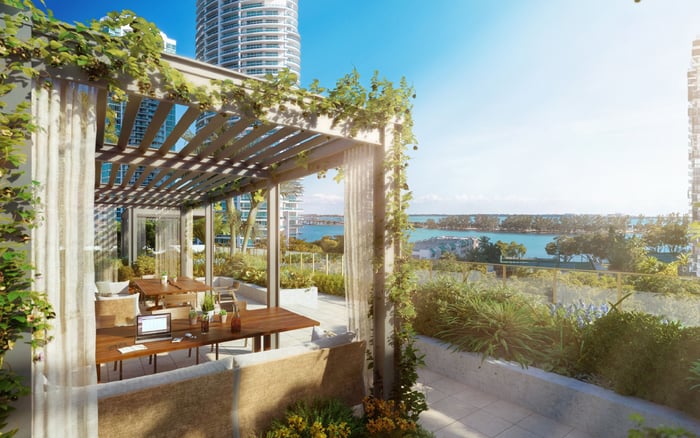
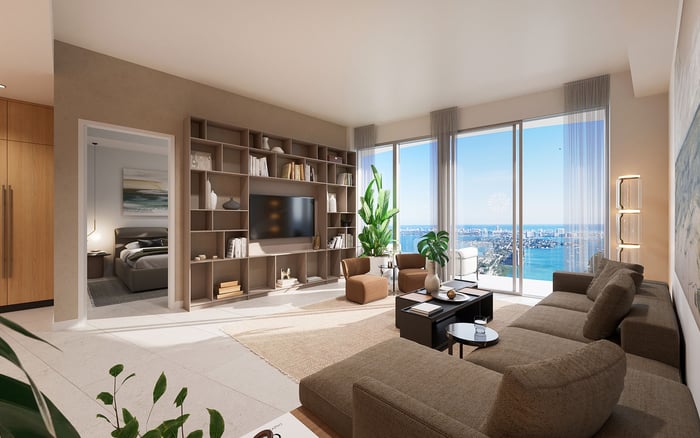
At Miami Design Residences Midtown Miami, operational quality should be tested as carefully as design. Buyers should examine access, staffing, governance, maintenance and resilience before committing.

At Miami Design Residences Midtown Miami, the most consequential due diligence may focus not on what a buyer sees, but on how the property is intended to function. Finishes can be inspected in a single visit. Operational quality reveals itself over time-in repeated arrivals, service requests, maintenance cycles and unexpected events.
For a buyer, “luxury without friction” should be treated as a testable operating proposition. Staffing, governance, technology, vendors and resident communications must work in concert. This buyer’s guide provides a framework for distinguishing a compelling presentation from a residence capable of delivering an elevated daily experience.
Begin at the curb. Valet capacity, guest processing, deliveries, rideshare activity and contractor access can converge during busy hours. A polished entrance matters, but the stronger proof is an orderly arrival when demand rises.
Buyers should visit more than once, at different times. Observe how long it takes to enter, hand off a vehicle, register a visitor and reach the residence. Ask how management separates resident traffic from deliveries and vendors-and what happens when the arrival or loading area becomes congested.
Elevators deserve the same scrutiny. Request information on preventive maintenance, service interruptions, response procedures and move-in scheduling. The goal is not a promise of perfection. It is evidence that inconvenience is anticipated, communicated and resolved.
Concierge quality is best judged by responsiveness and follow-through. Ask who receives requests after hours, how issues are logged, when residents receive updates and who has the authority to escalate a problem. Staffing depth matters as much as the number of services advertised.
This question is especially relevant when comparing urban residences across Miami-Dade. Buyers considering Kempinski Residences Miami Design District, Frida Kahlo Wynwood Residences or Villa Miami can apply the same test: identify who performs each service, how coverage is maintained and which standard governs the response.
Operational excellence requires clear accountability. Request available governing documents, proposed or current budgets, management agreements, reserve-planning materials and policies governing amenity access, guests, deliveries and alterations. Counsel and financial advisers should review the documents relevant to the purchase.
Vendor oversight is equally important. Ask how contracts are awarded, performance is measured and underperformance is corrected. Assess common-area upkeep beyond staged spaces. Corridors, service areas, garages, loading zones and back-of-house routes often reveal whether maintenance is systematic.
Amenity availability also requires definition. Clarify reservation rules, operating hours, guest limits, closure protocols and how maintenance is communicated. A broad lifestyle offering has limited value if access is unpredictable or capacity is routinely constrained.
Buyers weighing Miami Tropic Residences can apply the same distinction between a proposed service concept and a documented operating framework.
In South Florida, resilience is integral to service quality. Ask for the building’s hurricane procedures, emergency communication hierarchy, scope of backup power, flood-mitigation approach and drill schedule. Clarify which elevators, access systems, pumps, climate systems and common areas are expected to remain functional during an outage.
Indoor climate control deserves particular attention. Buyers should ask how humidity, water intrusion and prolonged power interruptions are monitored, and how residents are informed about remediation. The strongest answer combines equipment, trained personnel, vendor readiness and a precise communications plan.
A serious review should combine documentation with direct experience. Tour resident-facing and service areas, submit sample questions through the designated contact channel and request explanations of escalation procedures. Where records are available, look for consistency between stated policies and actual response practices.
Consider preparing an investment memo that scores access, elevators, staffing, maintenance, amenity capacity, governance and resilience separately. Assign unresolved questions to the contract review, inspection or management interview rather than allowing them to disappear within a general impression of quality.
Luxury operations should feel effortless to the resident precisely because substantial planning occurs behind the scenes. Before purchase, the task is to determine whether that planning is evident in procedures, accountability and repeatable performance.
What does frictionless luxury mean in a condominium? It means routine needs are handled predictably and discreetly, with clear accountability across staff, systems and vendors.
When should a buyer test building access? Visit at different times, including periods when guests, deliveries or local activity may increase demand.
What elevator information should be requested? Ask about preventive maintenance, outages, service response, move-in scheduling and resident communications.
How can concierge responsiveness be evaluated? Review request logging, response expectations, after-hours coverage and escalation authority.
Why inspect back-of-house areas? Garages, loading zones and service corridors can indicate whether upkeep extends beyond presentation spaces.
What should buyers ask about amenities? Clarify hours, reservations, capacity, guest policies, planned closures and maintenance notices.
Which governance documents deserve review? Request available budgets, management agreements, rules, reserve materials and relevant governing documents.
What hurricane planning should be examined? Review procedures for staffing, communications, backup power, flood mitigation, drills and post-event recovery.
Why does backup-power scope matter? Buyers need to know which critical systems are expected to operate and for what intended purpose.
What is the best final question before purchase? Ask what documentary and experiential evidence proves that the promised service standard can be sustained.
For a discreet conversation and a curated building-by-building shortlist, connect with MILLION.
If branded residences are on your mind — as a home or as an allocation — we would be glad to share what we are seeing, privately.
Begin a quiet conversation