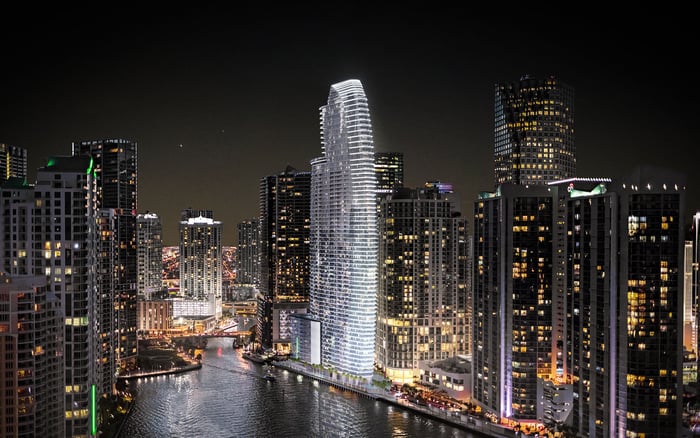
Faena Residences Miami Downtown Miami stands out for buyers who want a branded, hospitality-led home base with cultural energy, social optionality, and Downtown access, without making one private club ecosystem the organizing principle of ownership.

For a certain South Florida buyer, the most compelling luxury residence is not the one that most literally replicates a private club. It is the one that creates enough atmosphere, service density, design confidence, and social gravity for the home itself to become the lifestyle anchor. That is the central reason Faena Residences Miami Downtown Miami belongs on the shortlist.
The appeal is not simply that it sits in Downtown, or that it carries the Faena name. It is the pairing of a hospitality-driven brand identity with an urban residential setting that gives the address its particular buyer logic. For clients who want club-level atmosphere without making a single club ecosystem the organizing principle of ownership, Faena’s Downtown positioning is unusually relevant.
This is not an argument against clubs. Many high-net-worth buyers will still maintain memberships, beach routines, dining rituals, wellness circuits, and cultural calendars across Miami. The point is more precise: Faena Residences Miami Downtown Miami is best understood as club-adjacent, not club-dependent. It offers a branded environment designed to feel socially charged and service-oriented, while preserving a buyer’s ability to move fluidly through Miami’s broader lifestyle network.
Downtown gives the thesis its structure. In a resort-only setting, lifestyle can become concentrated around a single property, beach, or membership culture. In Downtown, the residence can function more like a command center: connected to dining, hospitality, cultural venues, wellness routines, offices, waterfront experiences, and the wider city.
That matters for buyers who already know Miami well. They may want the polish of a branded residence, but not the repetition of one social room, one club calendar, or one lifestyle script. Downtown supports a more open pattern of living, where the home provides the tone and the city supplies the optionality.
This is why Faena’s proposition feels distinct from a conventional amenity checklist. The draw is the orchestration of culture, hospitality, wellness, design, gastronomy, performance, and service energy. Translated into Downtown residential life, that sensibility speaks to buyers who want atmosphere at home and access beyond it.
The phrase “living club” is useful, if handled carefully. Faena Residences Miami Downtown Miami can be read as a residential alternative for buyers who want the mood of a club environment without relying on a formal club model as the defining feature of daily life.
For this buyer, the key question is not, “What membership comes with it?” The sharper question is, “Does the residence itself create enough identity, service rhythm, and social relevance to stand on its own?” Faena’s Downtown concept is strongest when viewed through that lens.
The buyer profile is sophisticated: someone who values privacy, but not isolation; service, but not stiffness; design, but not sterility; social energy, but not obligation. They want to be near Miami’s club scene, not captured by it. They want the ability to host, retreat, circulate, and decide how visible they wish to be on any given week.
That is where Downtown becomes a strategic lifestyle choice rather than a compromise. It allows the owner to maintain proximity to multiple versions of Miami: the corporate rhythm of Brickell, the cultural movement of the urban core, the hospitality pull of the waterfront, and the broader social field that extends to Miami Beach, Coconut Grove, Surfside, and beyond.
The shortlist argument becomes clearest when Faena is compared with other residential typologies. A buyer evaluating Aston Martin Residences Downtown Miami may be drawn to a different expression of branded identity within the same broad urban field. A buyer considering Casa Bella by B&B Italia Downtown Miami may be weighing design-led Downtown living with a separate set of associations. These comparisons are useful because they show that Downtown luxury is no longer a single category.
The Brickell conversation adds another layer. Projects such as Baccarat Residences Brickell speak to buyers who want branded elegance within Miami’s finance and dining corridor. Brickell has its own gravitational pull, especially for those who want immediacy to business, restaurants, and high-rise urban life. Faena’s Downtown thesis is adjacent to that energy, but framed more around culture, hospitality, and residential independence.
Even within Downtown, Waldorf Astoria Residences Downtown Miami offers another branded reference point for buyers who value global hospitality language. Faena differs in tone: less about traditional formality, more about cultural-hospitality atmosphere and the feeling of a place animated by design and social programming.
For buyers comparing private clubs, beach clubs, branded towers, and Downtown residences, this distinction is essential. Faena is not simply competing on the idea of access. It is competing on the idea of residential identity.
The best-fit buyer is not necessarily the one seeking maximum separation from the city. It is the buyer who wants a refined base inside Miami’s active lifestyle ecosystem. They may keep a beach routine, dine across neighborhoods, attend cultural events, and maintain relationships across multiple social circles. Their home must support that life without narrowing it.
This is especially relevant for high-net-worth buyers who want social connectivity anchored in a residence. They are not just buying finishes, views, or amenities. They are buying a way to move through Miami with discretion and ease. A strong building reduces friction, establishes tone, and becomes the place from which everything else feels accessible.
That is the difference between club-level atmosphere and club dependency. Club-level atmosphere means the building has enough identity to make ordinary days feel considered. Club dependency means the lifestyle proposition works only if the owner repeatedly returns to one structure, one calendar, or one membership setting. Faena’s Downtown story is more flexible than that.
Faena Residences Miami Downtown Miami belongs on the shortlist because it aligns with a very current luxury preference: optionality without dilution. Buyers want depth, but they do not want to be over-prescribed. They want service, but they want freedom. They want a recognizable brand, but they also want the city to remain open.
The project’s value proposition is strongest when viewed as a flexible base for Miami life. It is not just an address near activity. It is a branded environment intended to bring culture, hospitality, wellness, design, and social energy into the residential sphere. For the buyer who wants to live near the club scene without making a club the center of gravity, that is a meaningful distinction.
In a market filled with prestigious names and increasingly specialized lifestyle promises, Faena’s Downtown presence gives buyers another way to define luxury. Not as escape from Miami, and not as submission to one private ecosystem, but as a cultivated home base within the city’s wider social and cultural field.
What makes Faena Residences Miami Downtown Miami club-adjacent? Its appeal is the combination of branded hospitality, Downtown access, design energy, and social atmosphere without making one club ecosystem the main point of ownership.
Is this primarily a Downtown buyer story? Yes. Downtown is central because it gives residents access to multiple dining, hospitality, cultural, wellness, and social options across Miami.
How is club-level atmosphere different from club dependency? Club-level atmosphere means the residence itself feels socially and experientially rich. Club dependency means daily lifestyle depends heavily on one formal club structure.
Who is the best-fit buyer for this concept? The strongest fit is a high-net-worth buyer who wants service density, social connectivity, and residential independence in one Miami home base.
Does the Faena brand matter to the thesis? Yes. The brand context matters because the buyer is evaluating more than a conventional amenity list; the decision also involves atmosphere, design, service, and social tone.
Why not simply buy into a private club lifestyle? Some buyers will do both, but Faena’s appeal is for those who want proximity to Miami’s club scene while preserving optionality across the city.
How should buyers compare it with Brickell residences? Brickell may suit buyers focused on finance, dining, and high-rise urban convenience, while Faena’s Downtown logic leans into hospitality, culture, and atmosphere.
Is Faena Residences Miami Downtown Miami only about amenities? No. The stronger reading is a branded residential environment shaped by service, design, wellness, social energy, and cultural identity.
Should beach-club buyers consider it? Yes, if they want a city base that complements beach routines rather than replacing every lifestyle choice with a single waterfront or club setting.
Why does it deserve a place on a serious shortlist? It offers a flexible Downtown platform for buyers comparing branded residences, private clubs, beach clubs, and urban luxury towers.
For a discreet conversation and a curated building-by-building shortlist, connect with MILLION.
If branded residences are on your mind — as a home or as an allocation — we would be glad to share what we are seeing, privately.
Begin a quiet conversation