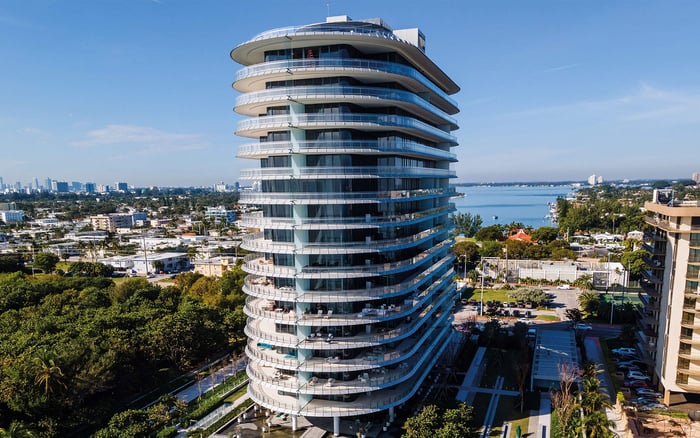
For South Florida collectors with household staff, insurance binder timing is a quiet but decisive part of contract readiness, closing confidence, and private-asset protection.

For a collector buying in South Florida, the most sensitive moments in a transaction are often not the most visible. The public narrative may center on architecture, water views, privacy, or the arrival of a rare residence. Behind it, the practical choreography of closing can determine whether a purchase feels seamless or strained. Insurance binder timing is one of those details.
A binder is not the glamour piece of an acquisition. It is part of the quiet infrastructure that allows a sophisticated buyer to move with confidence. For households with staff, collections, wine, vehicles, jewelry, design pieces, or rotating vendors, timing matters because the home is not simply an address. It is an operating environment.
Before signing, a buyer should understand what will be needed to secure coverage, when documentation must be in place, and who on the advisory team is responsible for each step. This is especially important when a residence is intended to hold valuable personal property from day one, or when household employees will have access before, during, or immediately after closing.
A staffed residence has a different rhythm from a seasonal pied-a-terre. A house manager, private chef, driver, art handler, housekeeper, estate security consultant, contractor, or property caretaker may be involved before the buyer has fully settled in. Each person may touch the property differently. Each access point can raise questions that should be addressed before coverage is assumed to be simple.
Collectors also tend to think beyond the purchase price. They may be planning for art installation, climate-sensitive storage, specialty lighting, controlled delivery windows, or private entertaining. If these matters are left until the week of closing, the advisory team may have less time to align the insurance binder with how the home will actually be used.
In a vertical setting such as Brickell, a buyer considering The Residences at 1428 Brickell should ask when proof of insurance will be required, how building documents interact with personal coverage, and whether planned move-in activity changes the timeline.
The cleanest time to surface insurance questions is before signing, not after the contract is already moving toward deadlines. Early review gives the buyer and counsel time to coordinate closing requirements, lender expectations if financing is involved, association requests if applicable, and household-specific exposures.
This does not mean every coverage detail must be resolved before a contract is executed. It means the buyer should know whether insurance placement appears straightforward, whether additional underwriting information may be requested, and whether the closing calendar allows enough time for review. The aim is not delay. The aim is control.
For collectors, the issue is often less about whether insurance exists and more about whether the binder reflects the residence as it will be occupied. A home that is empty for several weeks, a home under immediate design work, and a home receiving staff and valuables on closing day may each require a different conversation.
Staffing adds comfort, discretion, and continuity, but it also introduces operational complexity. A house manager may coordinate deliveries. A chef may use the kitchen before the principal arrives. A caretaker may oversee storm preparation. A vendor may enter to install art, lighting, millwork, or audio systems.
Before signing, the buyer should ask a simple set of questions. Who may enter the property before closing? Who may enter immediately after closing? Are any vendors moving valuable property? Will staff be employed directly, through an entity, or through an outside service? Will any person live on site? These are not abstract administrative questions. They can shape the insurance conversation.
A Miami Beach buyer evaluating The Perigon Miami Beach may have a different staffing pattern than a buyer acquiring a primary family residence in Boca Raton. The constant is that staff should be considered part of the home’s risk architecture from the outset.
Fine art, collectibles, couture, watches, instruments, rare books, and design objects do not always move on the same schedule as the real estate closing. Some items may remain in storage. Others may arrive early for installation. Some may require specialist handling. A binder conversation should be coordinated with the movement of these assets, not treated as a generic closing condition.
A collector should clarify whether valuable property will be present before the buyer sleeps in the home, whether items will be staged during construction or decorating, and whether any third-party handler assumes responsibility during transit or installation. The residence itself may close on one date, while the collection arrives in phases.
In Sunny Isles Beach, a buyer drawn to Bentley Residences Sunny Isles may be thinking about a highly curated lifestyle. That lifestyle should be matched by a closing checklist that treats collections, staff, and access protocols as connected items.
South Florida’s luxury market moves across very different residential formats. A waterfront condominium, a branded tower residence, a Palm Beach or West Palm Beach home, a Boca Raton residence, and a private island acquisition can each bring different closing logistics. The buyer’s insurance team should be brought in early enough to review the property type and requested documentation.
In a high-rise, the buyer may need to coordinate personal coverage with building requirements. In a single-family residence, the questions may include security, maintenance, household employees, vendors, and interim occupancy. In a second-home setting, the conversation may include how often the property will be occupied and who is responsible when the principal is away.
A West Palm Beach buyer considering Alba West Palm Beach, for example, may be balancing seasonal use, staff oversight, and furnishings arriving over time. The binder should be understood as part of that transition plan.
The most effective approach is not dramatic. It is disciplined. Before signing, a collector should ask counsel, the insurance advisor, and the property team to align on timing. The objective is to know what must be delivered, by whom, and by what date.
Key questions include whether the binder must be issued before closing, whether any lender or association language is required, whether staff access begins before ownership transfers, whether valuable property arrives before occupancy, and whether post-closing renovations or installations are planned. If the buyer is comparing Brickell, Miami Beach, Sunny Isles Beach, West Palm Beach, and Boca Raton options, this checklist should travel with the search.
This is why insurance binder timing belongs in every serious buyer-advisory conversation. It is not a substitute for legal, insurance, or tax advice. It is a reminder that luxury is not only aesthetic. At the highest level, luxury is continuity without friction.
What is an insurance binder in a luxury purchase? It is temporary evidence that coverage is being put in place, usually used to satisfy closing or stakeholder requirements while final policy documents are completed.
Why should a collector discuss binder timing before signing? Early review helps identify documentation needs before deadlines begin to compress, especially when collections, staff, or vendors are involved.
Does staff access affect the insurance conversation? It can, because household employees, vendors, and service providers may create operational questions that should be addressed before occupancy begins.
Should art and collectibles be discussed separately? Yes. Valuable personal property may need its own review, particularly if items arrive before or immediately after closing.
Is binder timing only an issue for financed purchases? No. Even cash buyers can benefit from a clear coverage timeline when staff, collections, or complex move-in logistics are involved.
When should the buyer’s insurance advisor be introduced? Ideally before signing or as early in negotiations as possible, so any timing or documentation issue can be anticipated.
Can a binder be treated as a last-week closing item? That approach may create unnecessary pressure. For staffed collector homes, earlier coordination is more prudent.
Do condominium purchases have different insurance coordination needs? They can, because building requirements, personal coverage, and move-in procedures may need to be aligned before closing.
What should household staff know before closing? Staff should know access rules, vendor protocols, and who is authorized to coordinate deliveries or installations during the transition.
What is the best mindset for South Florida buyers? Treat insurance readiness as part of the acquisition strategy, alongside contract terms, privacy, security, and collection planning.
If you'd like a private walkthrough and a curated shortlist, connect with MILLION.
If branded residences are on your mind — as a home or as an allocation — we would be glad to share what we are seeing, privately.
Begin a quiet conversation