In South Florida’s luxury condominium market, valet queuing is more than a convenience. It is a daily-operating issue that can influence arrival experience, privacy, guest flow, staffing costs, and long-term satisfaction. Buyers should treat it as a focused due-diligence topic rather than a casual tour question.
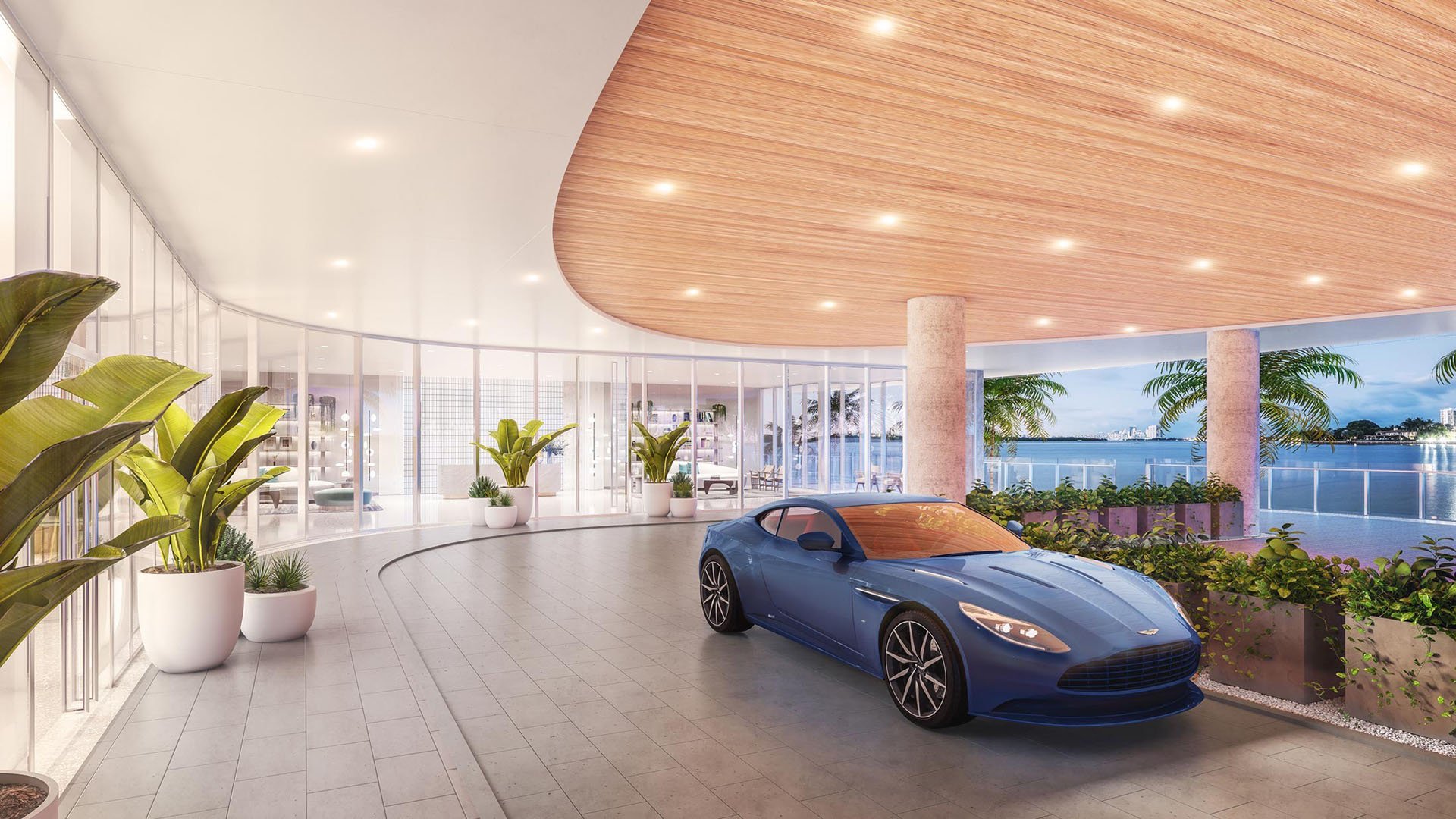
In South Florida luxury real estate, the arrival sequence is part of the residence. A porte cochere, private drive, staffed lobby, and polished valet stand are not merely theatrical details. They create the first daily interaction between owner, building, guest, driver, and staff. When the system works well, it feels invisible. When it does not, even the building’s most elegant finishes can be undermined by congestion at the curb.
That is why valet queuing deserves a separate due-diligence conversation. It should not be folded into a general amenity review or dismissed as a minor operational matter. For buyers comparing high-service condominiums across Brickell, Miami Beach, Sunny Isles, Fort Lauderdale, new-construction, and oceanfront settings, the question is not simply whether valet exists. The better question is how the building manages the moments when everyone arrives at once.
A luxury building’s arrival court must serve multiple users at once: residents returning home, guests arriving for dinner, delivery vehicles, rideshare cars, house staff, contractors, and sometimes event traffic. Each use case has a different rhythm. Owners expect discretion and speed. Guests may be unfamiliar with the protocol. Drivers may hesitate. Staff must manage the choreography without allowing the queue to spill into the public realm or create a sense of disorder.
This is especially important in South Florida, where seasonal occupancy, weekend entertaining, restaurant reservations, waterfront events, school schedules, and airport runs can compress demand into specific windows. A buyer may tour a residence at a quiet hour and see an impeccable arrival area. The more revealing question is how that same drive performs at 7:30 on a Friday evening, during a holiday week, or after a private gathering in the building.
A calm arrival has monetary and lifestyle value. It protects privacy, reduces friction, and reinforces the sense that the building is professionally managed. A strained valet queue can do the opposite, making daily life feel less private, more hurried, and less consistent with the price point.
The first layer of inquiry is physical. Buyers should ask how many vehicles can wait on property before the line affects the street, loading area, garage entry, or pedestrian path. They should understand whether the arrival lane allows cars to pass one another, or whether a single hesitation can stop the entire sequence. They should also ask how the building separates resident drop-offs, guest arrivals, deliveries, and service vehicles.
The second layer is operational. A polished arrival court needs staffing logic. Buyers should ask who controls valet staffing levels, how schedules are adjusted for peak periods, whether overnight coverage differs from daytime service, and how special events are handled. If the building allows private events in amenity spaces, the protocol for guest arrivals matters. A well-designed policy can prevent the owner who lives there from becoming captive to another owner’s party.
The third layer is financial. Valet service is not costless. Labor, insurance, uniforms, management oversight, technology, claims handling, and vendor contracts may all influence association expenses. Buyers do not need to become parking consultants, but they should understand whether the service model is adequately funded and whether the current budget reflects the service level being marketed.
Valet queuing is easy to under-discuss because it sits between design, operations, and governance. The architect may have planned an elegant drive. The sales presentation may emphasize white-glove service. The condominium documents may address parking rights and association responsibilities. Yet the lived experience depends on how those elements come together at peak demand.
A separate due-diligence conversation gives the buyer permission to slow down. It creates space to ask about real patterns rather than brochure language. Who parks the car? Where is it stored? How long should retrieval take during a busy period? What happens if the queue is full? How are guest vehicles identified? Is there a dedicated area for rideshare pick-up? Are deliveries directed to a service entrance, a loading bay, or the same arrival court used by residents?
The answers may not always be perfect, but the clarity matters. A buyer can tolerate certain limitations if they are known in advance. Surprise is the problem. In a premium building, the service promise should be legible before the purchase contract becomes irreversible.
Valet queuing is also a privacy issue. In buildings with a prominent public-facing entrance, owners may spend more time exposed at the arrival court than they expect. If vehicles cannot move efficiently, residents may be visible while waiting for staff, greeting guests, or coordinating luggage. A congested drive can also create unintended interaction among residents, vendors, and passersby.
For some buyers, this is a minor inconvenience. For others, especially those who value discretion, it is material. The best arrival systems reduce lingering. They allow a resident to enter, transfer from car to lobby, and disappear into the private world of the building with minimal delay. In a market where privacy is often part of the premium, the curb is part of the evaluation.
Buyers should coordinate the valet conversation with their broker, attorney, and, when appropriate, building management or the sales team. The goal is not to interrogate for sport. It is to understand the operating reality.
Useful questions include whether the valet vendor is contracted by the association, whether service terms can change after turnover, how claims are handled, how resident complaints are logged, and whether the association has rules for oversized vehicles, electric vehicles, guest parking, and overnight storage. Buyers may also want to know how move-ins, contractors, pet services, private chefs, and estate staff are directed so the front drive does not become an informal loading zone.
For a new development, the focus may be projected operations and governance. For a resale condominium, the focus may be current performance and owner sentiment. In both cases, the buyer is trying to learn whether the building’s service infrastructure matches the way they actually live.
A tour can reveal more than a floor plan. Buyers should watch how attendants greet cars, where vehicles pause, how pedestrians cross, how luggage is handled, and whether the garage entry competes with the valet lane. They should notice if drivers seem uncertain about where to stop. They should also observe whether staff appear empowered or merely reactive.
The quietest buildings often show discipline in small details: clear sightlines, intuitive lanes, discreet signage, and a natural handoff from car to lobby. These elements may seem subtle, but they shape daily satisfaction. A residence can have a magnificent view and still frustrate an owner if every arrival feels like a negotiation.
Valet queuing is not a glamorous topic, which is exactly why it deserves attention. It belongs in the same family as elevator capacity, service corridors, loading access, building staffing, and association budgeting. These are not the details that dominate a glossy presentation, but they are the details that preserve luxury after move-in.
A separate conversation helps buyers distinguish between aesthetic luxury and operational luxury. The former photographs beautifully. The latter makes life easier every day. In South Florida’s most competitive residential market, the best purchase decisions consider both.
Why should valet queuing be separate from general parking due diligence? Parking rights describe where a car may belong, while valet queuing describes how arrivals and departures actually work. The second issue is about daily service performance.
Should buyers ask about valet before or after signing a contract? Buyers should raise the topic during due diligence, before key contingencies expire. It is easier to evaluate service assumptions while there is still room to respond.
What is the most important valet question to ask first? Ask how the building handles peak arrival and departure periods. The answer usually reveals whether the system is designed for real-life demand.
Does a beautiful porte cochere guarantee smooth valet service? No. Design helps, but staffing, management, lane planning, and resident rules determine whether the arrival experience feels seamless.
Is valet queuing more important in high-density neighborhoods? It can be, because street pressure, rideshare activity, and neighboring uses may affect the curb experience. Buyers should evaluate the building and its immediate surroundings together.
Can valet operations affect association costs? Yes. Staffing levels, vendor contracts, insurance, and claims processes can influence the budget that owners ultimately support.
Should privacy-focused buyers care about valet flow? Absolutely. Slow or congested arrivals can leave residents exposed longer than expected at the most public edge of the property.
What should buyers look for during a building tour? Watch whether cars move intuitively, whether attendants communicate clearly, and whether guest, resident, and service traffic appear separated.
Do new developments require different valet questions than resales? Yes. New developments often require questions about projected operations, while resales allow more focus on current service patterns.
What is the best way to shortlist comparable options for touring? Start with location fit, delivery status, and daily lifestyle priorities, then compare stacks and elevations to validate views and privacy.
For a discreet conversation and a curated building-by-building shortlist, connect with MILLION.
If branded residences are on your mind — as a home or as an allocation — we would be glad to share what we are seeing, privately.
Begin a quiet conversation