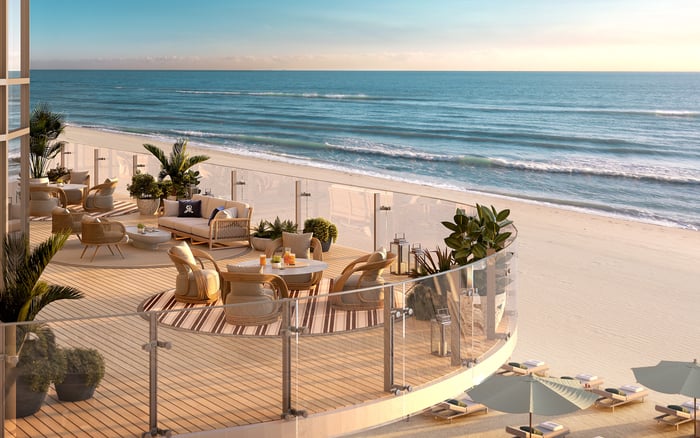
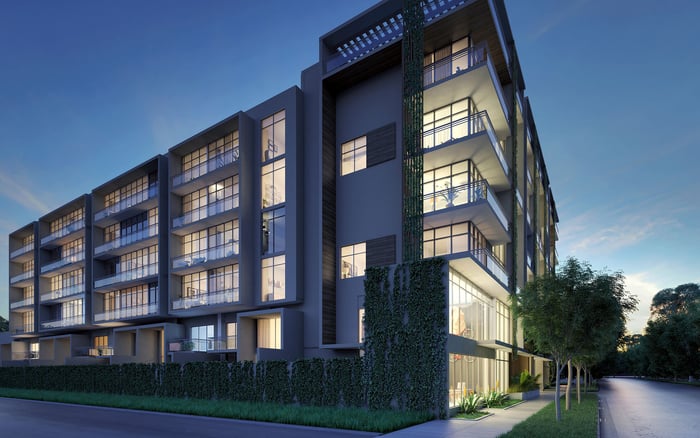
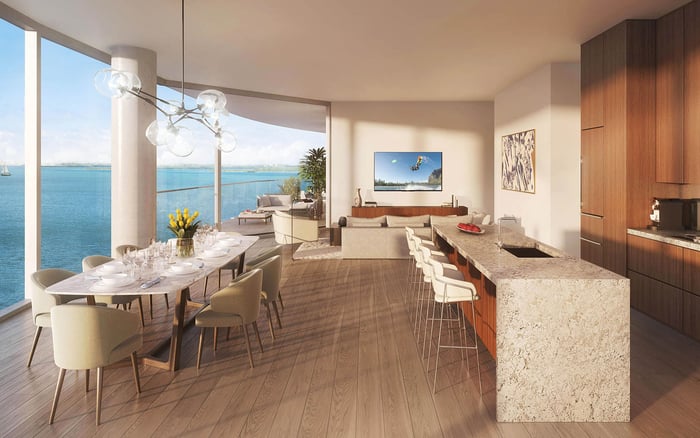
A buyer-focused comparison of Four Seasons Residences Coconut Grove and St. Regis® Residences Sunny Isles through the lens of storm resilience, emergency-power coverage, operating capacity, access risk, and association-cost exposure.
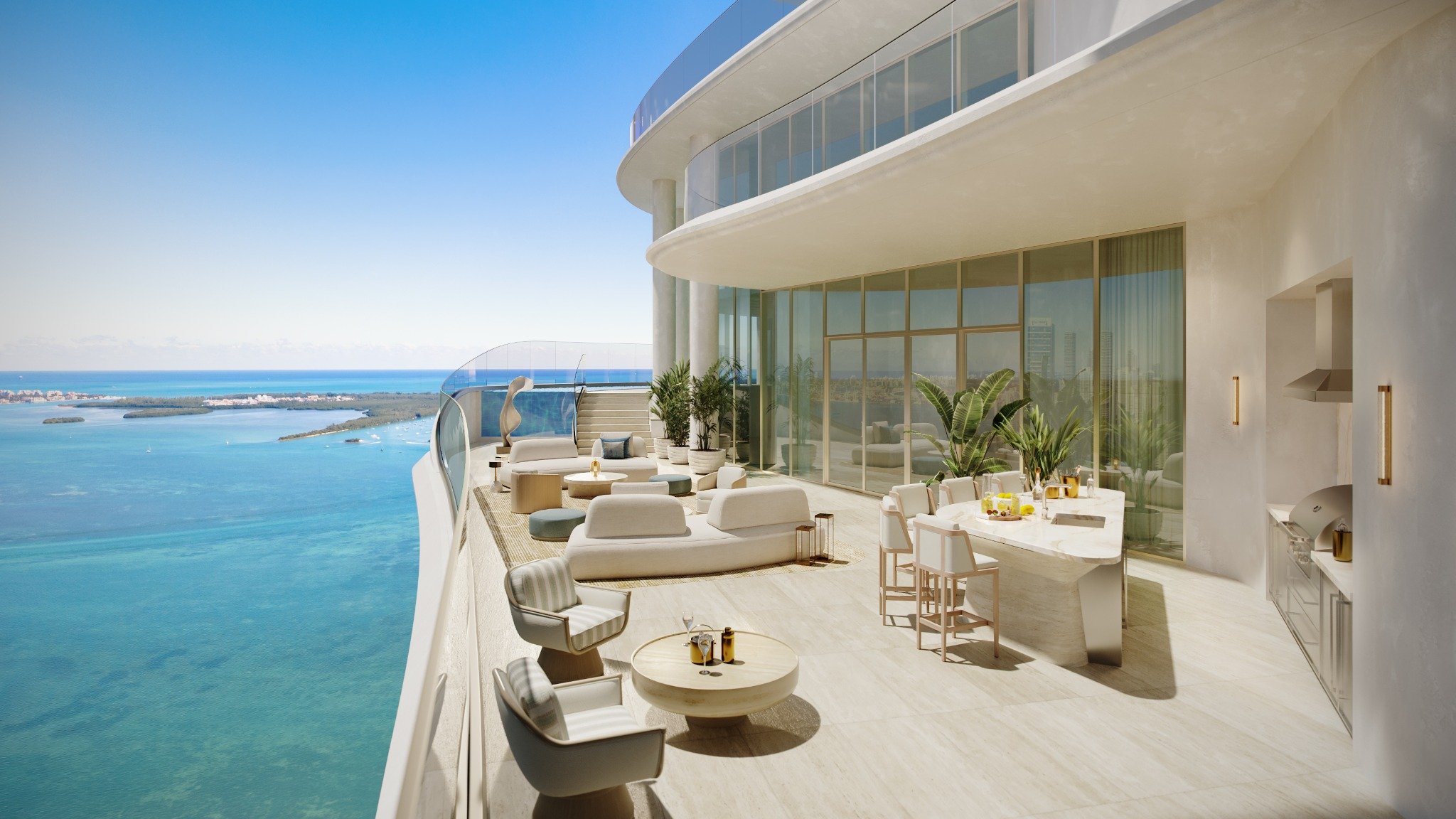
In South Florida’s highest tier of residential real estate, underwriting has moved beyond views, finishes, amenity programming, and brand service. For buyers comparing Four Seasons Residences Coconut Grove with St. Regis® Residences Sunny Isles, the central question is not simply which address feels rarer. It is which asset can show a more complete plan for storm exposure, power continuity, and recovery operations.
Both properties sit within the ultra-luxury branded-residence universe, but their hazard profiles are not interchangeable. Four Seasons Residences Coconut Grove should be evaluated through a bayfront Miami lens, with close attention to surge pathways, lower-level systems, garage exposure, and the resilience advantages or limits of a more urban setting. St. Regis® Residences Sunny Isles should be evaluated through a beachfront and barrier-island lens, where coastal access, evacuation, wind-driven rain, surge, and post-storm logistics sit closer to the center of the investment case.
The most sophisticated buyers are no longer asking only whether a building has a generator. They are asking what the generator powers, where the critical systems sit, how long fuel can support operations, who stays on site, and how owners are brought back after a major event.
Coconut Grove and Sunny Isles both carry waterfront prestige, but they do not carry the same resilience questions. At Four Seasons Residences Coconut Grove, the underwriting file should focus on bayfront Miami exposure. Buyers should ask how the property addresses potential water movement into garages, loading areas, lobby back-of-house spaces, and any lower-level mechanical, electrical, and plumbing equipment. A waterview residence may feel serene in normal conditions, but the resilience issue is how the building protects the infrastructure that makes daily life possible.
The Coconut Grove thesis is also partly about access. A more urban, bayfront location may offer different post-storm mobility and utility redundancy than a narrower coastal-island setting. That does not make the building inherently superior; it makes the diligence questions different. Buyers comparing other Grove assets, such as Vita at Grove Isle or The Well Coconut Grove, should apply the same discipline: trace water, power, access, and staffing rather than relying on architectural polish.
At St. Regis® Residences Sunny Isles, the diligence lens is sharper around direct coastal exposure. The buyer should underwrite wind-driven rain, storm surge, temporary access interruptions, and the timing of recovery after a significant event. A beachfront premium is not just a view premium; it should be matched by explicit planning for access disruption, extended utility outages, and owner communications.
Emergency power is one of the most misunderstood luxury-building claims. A generator may support life-safety requirements while leaving other owner expectations unmet. For either property, the buyer should request a detailed emergency-power matrix before treating generator coverage as a comfort point.
That matrix should identify which elevators are supported, whether domestic water pumps remain operational, how fire and life-safety systems are powered, whether garage exhaust continues, and whether security, access control, telecom rooms, package systems, and management offices have backup. It should also clarify whether any amenity areas or in-unit circuits receive emergency power, if at all.
Location is equally important. Buyers should ask where generators, switchgear, fuel tanks, domestic-water pumps, and other critical MEP systems sit relative to flood elevations, garages, loading areas, and lower-level flood risk. A generator that is technically present but operationally vulnerable does not solve the resilience problem. The more refined question is whether the systems that support backup power are themselves protected.
This standard applies across new-construction luxury in South Florida. A Sunny Isles buyer evaluating Bentley Residences Sunny Isles or another coastal tower should not accept the word “generator” as a complete answer. The value is in the load schedule, fuel plan, switchgear location, and operational duration.
Brand affiliation can elevate hospitality, but it is not a substitute for technical disclosure. The storm file should include a written hurricane operations plan, on-site ride-out staffing policy, post-storm re-entry protocols, owner communication procedures, vendor contracts, and fuel and water resupply procedures.
This is where the distinction between service and operations becomes material. A building can be gracious on a blue-sky day and still be underprepared for a multi-day utility interruption. Buyers should ask who remains on property before, during, and immediately after a storm; which vendors are under contract; how emergency communications are delivered; and what threshold determines when residents may return.
For St. Regis® Residences Sunny Isles, staffing diligence should be tied to barrier-island access. If roads, bridges, or utilities are temporarily constrained, how does the property maintain essential functions? For Four Seasons Residences Coconut Grove, the staffing question should examine whether urban access and nearby services translate into faster recovery, and whether that assumption is supported by written protocols rather than general confidence.
Resilience is not only an engineering topic. It can influence insurance premiums, deductibles, reserve planning, common charges, and special-assessment risk. A buyer who spends months negotiating finishes and view lines, but only minutes reviewing storm assumptions, is leaving a meaningful part of the ownership equation untreated.
The correct contract-stage request is broad but precise: building-specific engineering materials, floodproofing plans, emergency-power documentation, insurance and reserve assumptions, and the association’s operating framework for storm response. If certain items are not publicly disclosed, that does not end the inquiry. It converts the unknown into a negotiation point for counsel, the developer, the association, the property manager, and the insurance advisor.
The final underwriting distinction is this: Four Seasons Residences Coconut Grove asks whether a bayfront, urban Grove setting can offer resilient access and utility advantages while controlling lower-level water risk. St. Regis® Residences Sunny Isles asks whether a beachfront coastal premium is supported by a fully documented resilience plan for surge, power, staffing, and recovery. Both can be compelling. Neither should be assumed resilient by branding alone.
Is Four Seasons Residences Coconut Grove less exposed than St. Regis® Residences Sunny Isles? Not automatically. It has a different bayfront Miami exposure profile, while Sunny Isles carries beachfront and barrier-island access considerations.
What is the first resilience document a buyer should request? Start with the emergency-power matrix, then ask for floodproofing plans, hurricane operations procedures, and insurance or reserve assumptions.
Does having a generator mean the residence will function normally after a storm? No. Buyers need to know which loads are supported, for how long, and whether the supporting equipment is protected from flood risk.
Which generator loads matter most in a luxury tower? Elevators, fire and life-safety systems, domestic water pumps, garage exhaust, security, telecom rooms, and access systems should be reviewed.
Why does storm staffing matter in a branded residence? Staffing determines how the building communicates, secures the property, manages vendors, and restores essential services after a major event.
What should Sunny Isles buyers focus on first? Sunny Isles buyers should examine coastal exposure, access interruption, evacuation logistics, surge planning, and extended utility-outage procedures.
What should Coconut Grove buyers focus on first? Coconut Grove buyers should examine bayfront surge pathways, garage risk, back-of-house areas, loading zones, and lower-level MEP locations.
Can resilience planning affect ownership costs? Yes. Storm resilience can influence insurance premiums, deductibles, reserve planning, common charges, and special-assessment exposure.
Should buyers rely on brand affiliation for storm readiness? No. Brand service is valuable, but buyers should still request technical, operational, generator, and floodproofing documentation.
Is this diligence only relevant for new-construction purchases? No. The same questions apply to resale, pre-construction, and completed luxury condominiums across South Florida.
For a tailored shortlist and next-step guidance, connect with MILLION.
If branded residences are on your mind — as a home or as an allocation — we would be glad to share what we are seeing, privately.
Begin a quiet conversation