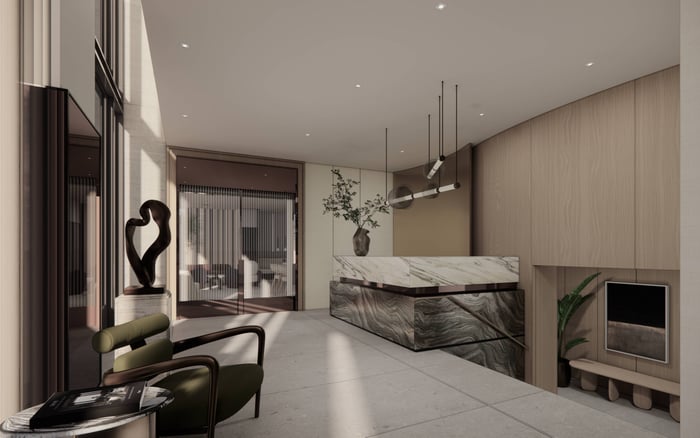
Bay Harbor Islands can suit estate owners moving into condominiums when the building performs like a private household, not merely an amenity package. The deciding factors are operational: access, staffing, privacy, receiving, storage, parking, pet protocols and governance that protects the calm of daily life.

For many estate owners, the move from a large single-family residence into a condominium is not a retreat from luxury. It is a decision to remove friction. The question is not whether a condominium can be beautiful enough, spacious enough or private enough. In South Florida’s upper tier, many can. The more consequential question is whether the building can absorb the daily complexity an estate owner is accustomed to controlling directly.
That is where Bay Harbor Islands can be persuasive. Its strongest condominium candidates appeal to buyers who want a quieter residential rhythm while still expecting the invisible competence of a well-run household. A doorman without a clear access protocol is not enough. A lobby without discretion is not enough. A garage without a predictable arrival experience is not enough. The building must operate as an extension of the owner’s standards.
For the Bay Harbor buyer leaving an estate, the successful condominium is not merely a smaller residence. It is a managed environment where privacy, service, security and routine are coordinated before they become problems.
The first review should be practical. How does the building handle arrivals when the owner is traveling, entertaining or receiving family? How are guests announced? How are deliveries received, stored and moved? How are service providers scheduled without disrupting the building or the owner’s privacy? These are not minor conveniences. They determine whether condominium living feels liberating or constrained.
Buildings such as Bay Harbor Towers often enter the conversation because estate owners want a residential address that can be evaluated through the lens of routine, not spectacle. The right questions are less about a brochure and more about how the property behaves at 7 a.m., during a dinner party, before a long trip and after an unexpected delivery.
The strongest operational fit usually comes from clarity. Owners should understand parking, valet procedures if applicable, loading access, elevator reservation policies, pet rules, package rooms, storage availability, maintenance communication and after-hours response. A residence can be elegantly finished, but if the operational choreography is weak, the owner feels the loss of control immediately.
Estate owners often value discretion. Smaller buildings can support that instinct because residents and staff may have fewer moving parts to manage. But boutique scale only works when governance is disciplined. Without mature rules, clear staffing and consistent enforcement, intimacy can become ambiguity.
In a comparison that includes Alana Bay Harbor Islands, the buyer should look beyond the appeal of a more personal residential scale and ask how decisions are made. Who manages resident requests? How are contractors supervised? Are rules written clearly enough to prevent negotiation at every point of friction? A well-run condominium should feel gracious, not improvised.
This matters especially for owners coming from estates, where household managers, assistants, vendors and drivers may already operate within established expectations. The condominium has to receive that ecosystem without allowing it to overwhelm the building. The ideal outcome is not less service. It is better coordinated service.
Downsizing does not mean abandoning the habits that made an estate work. Entertaining may become more intimate, but it still needs flow. Wardrobes may be edited, but storage still has to be rational. Outdoor living may shift from garden to terrace, but the owner still expects proportion, privacy and ease. Pets, art, wine, fitness routines, visiting children and seasonal guests all need to be considered before a contract becomes a lifestyle.
That is why buildings like La Baia North Bay Harbor Islands and Onda Bay Harbor are best evaluated through the owner’s actual week. A floor plan can look generous yet fail if the service elevator timing is awkward, storage is insufficient or guest access creates unnecessary formality. Conversely, a more compact residence can live beautifully when the building’s systems are thoughtful.
The estate owner should walk through a day in detail: morning car retrieval, dog walking, training sessions, deliveries, staff visits, private dinners, travel departures and returns. The more precisely the buyer tests the routine, the more obvious the right building becomes.
In luxury condominiums, the finest operations rarely announce themselves. Staff members know when to be visible and when to disappear. Residents understand the rules because the rules are sensible. Guests feel welcomed without weakening privacy. Vendors are accommodated without turning common areas into back corridors. Maintenance requests are addressed without drama.
That quiet competence is the difference between owning an apartment and living in a residence that behaves like a private home. For estate owners considering Origin Bay Harbor Islands, the essential due diligence is therefore operational as much as architectural. A beautiful lobby may create the first impression, but the loading dock, management office and house rules often reveal the real standard.
A successful downsize should create relief. It should remove the burden of maintaining grounds, supervising vendors and managing household logistics while preserving the parts of estate living that matter most: autonomy, calm, privacy and a sense of arrival. When a Bay Harbor Islands condominium achieves that balance, it can feel less like a compromise and more like a refinement.
Can Bay Harbor Islands work for estate owners who are used to privacy? Yes, if the building has clear access control, respectful staffing and resident rules that protect discretion.
What is the biggest mistake downsizing buyers make? They focus on finishes before testing how the building handles daily routines, deliveries, guests and service providers.
Should estate owners prioritize a larger unit or a better-run building? Both matter, but operational quality often determines whether the residence feels effortless after move-in.
Are boutique condominiums better for downsizers? They can be, provided the association, management and rules are mature enough to support consistent service.
How should buyers evaluate staff quality? Observe how arrivals, questions and resident interactions are handled, then review management procedures in detail.
Why is storage so important in a downsize? Estate owners often underestimate the volume of seasonal, entertaining, wardrobe and household items they still want nearby.
Do pet policies matter for luxury buyers? Yes, pet rules can shape daily comfort, elevator use, walking routines and the overall feeling of residential ease.
What should buyers ask about deliveries? Ask where packages are received, how oversized items are handled and whether staff coordination matches your expectations.
Is a condominium easier than managing an estate? It can be, but only when the building’s operations replace household management rather than creating new friction.
When should operational due diligence begin? It should begin before narrowing the shortlist, because the best floor plan cannot compensate for weak building systems.
For a tailored shortlist and next-step guidance, connect with MILLION.
If branded residences are on your mind — as a home or as an allocation — we would be glad to share what we are seeing, privately.
Begin a quiet conversation