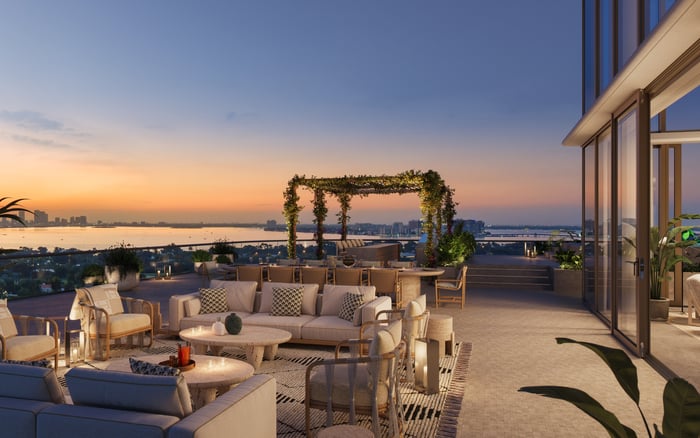
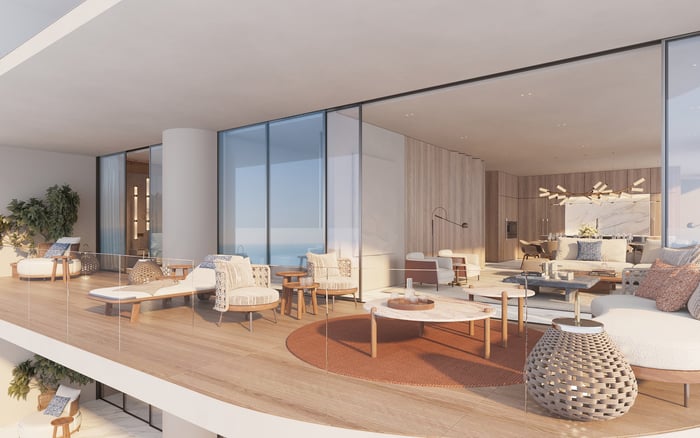
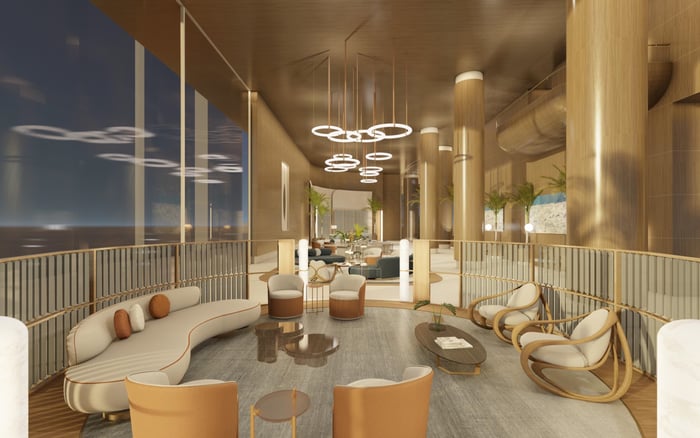
In South Florida luxury real estate, a second service entrance is less glamorous than a lounge but often more consequential. It protects privacy, improves staffing flow, reduces lobby clutter, and keeps deliveries, repairs, luggage, flowers, food, and large-item moves from colliding with the resident arrival experience.
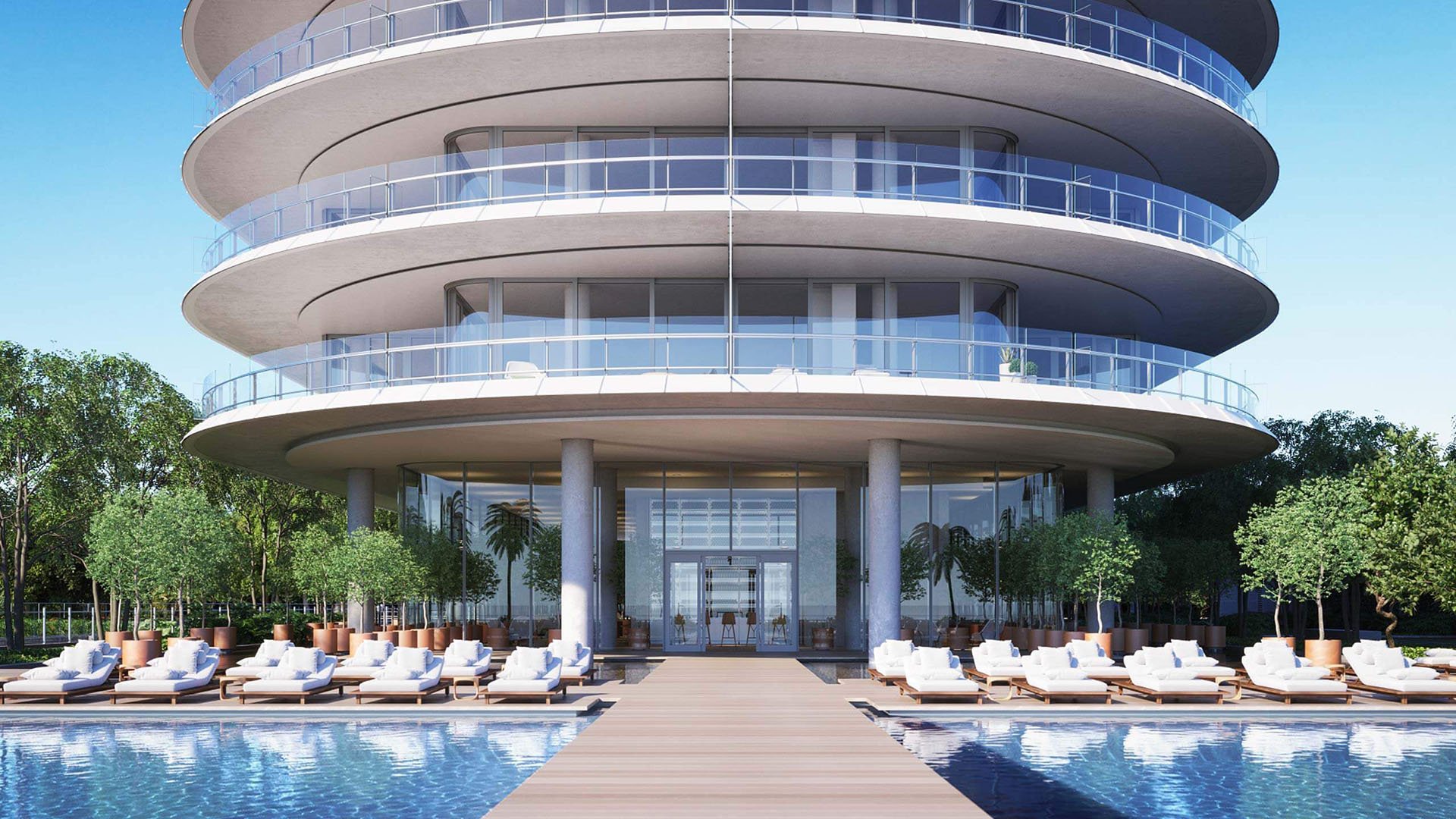
A lounge photographs beautifully. A second service entrance rarely does. Yet in the daily rhythm of a South Florida luxury residence, the less visible feature can have the greater impact on privacy, calm, and control.
The reason is straightforward: luxury living is operational. Flowers arrive before dinner. Groceries come in while guests are being welcomed. A chef may need access before the family returns from the beach. Housekeeping, dog walkers, assistants, nannies, maintenance technicians, installers, art handlers, and delivery teams all move through the building on schedules that do not always respect the formality of the main lobby.
A second service entrance separates the resident and guest experience on one side from the working life of the building on the other. That distinction is especially meaningful in high-service towers, where the property may function less like a typical condominium and more like a private hospitality environment.
Many upper-tier South Florida developments already offer multiple social settings: resident lounges, club rooms, terraces, dining spaces, bars, screening rooms, wellness areas, and private event rooms. For buyers comparing Brickell, Miami Beach, Sunny Isles, Surfside, and Fisher Island, another beautifully furnished room may not materially change how the home functions.
Back-of-house circulation can. In a building where every residence schedules deliveries, move-ins, repairs, and staffing, a single shared service path can become a bottleneck. The inconvenience may be subtle at first: a delayed furniture delivery, a crowded elevator, packaging near an arrival area, or a vendor waiting where residents receive guests. Over time, these details define how effortless the building feels.
That is why buyers looking at high-profile urban residences such as 888 Brickell by Dolce & Gabbana or The Residences at 1428 Brickell should think beyond finishes and views. The more service-rich the lifestyle, the more important it becomes to understand how staff, vendors, packages, luggage, and large deliveries actually enter and move through the property.
Luxury privacy is often discussed in terms of exposure: sightlines, elevator access, private foyers, and the number of residences per floor. Service circulation deserves the same scrutiny.
When vendors, housekeeping teams, maintenance crews, and deliveries pass through the same principal arrival sequence as residents and guests, privacy is weakened. The issue is not only security. It is the unwanted mixing of formal and functional moments. A dinner guest should not have to navigate around a cart of linens. A resident returning from a flight should not be met by a repair crew waiting beside the main entrance. A family hosting at home should not have to choreograph groceries and flowers through the same threshold used for arrivals.
A second service entrance helps preserve discretion. It allows household support to happen without becoming part of the social experience. In the best residences, that separation feels almost invisible, which is precisely the point.
The strongest case for dual service access is not an ordinary Tuesday with one package and one housekeeper. It is the overlapping day.
Imagine guests arriving for cocktails while groceries, wine, floral arrangements, luggage, and a last-minute repair are all in motion. In a single-path building, those activities compete for the same door, elevator, corridor, and staff attention. In a better-planned building, the front-of-house experience remains composed while the work happens elsewhere.
This matters across lifestyle categories. In Miami Beach, a buyer evaluating The Perigon Miami Beach may be thinking about entertaining, seasonal occupancy, and frequent guest arrivals. In Sunny Isles, a residence such as St. Regis® Residences Sunny Isles may attract buyers who expect hospitality-level ease. In Surfside, a project like The Delmore Surfside sits in a market where privacy and composure are central to the value proposition. The principle is consistent: the more refined the lifestyle, the less visible the logistics should be.
A second service entrance becomes even more important when paired with dedicated freight or service elevators. Large furniture, appliances, construction materials, art, pianos, and installation equipment should not travel through formal resident spaces when a better route exists.
This is not merely aesthetic. It reduces wear on primary arrival areas, limits congestion, and protects the tone of the building. It also helps during renovations, installations, and seasonal transitions, when owners may be moving more than suitcases. South Florida ownership often includes design refreshes, climate-related maintenance, HVAC servicing, humidity management, and salt-air considerations. Efficient vendor access can turn recurring upkeep from a disruption into a managed routine.
The feature is also difficult to add later. A lounge can often be redesigned, reprogrammed, or renovated. Service circulation is embedded in the bones of the property: entries, loading areas, elevators, corridors, security desks, and access-control systems. If the building does not have the operational spine at delivery, retrofitting it is rarely simple.
A polished amenity tour may not reveal the most important operational details. Buyers should ask practical questions: Where do vendors enter? Is there a dedicated service elevator or freight elevator? How are move-ins scheduled? Where do large deliveries wait? How are staff, groceries, luggage, flowers, laundry, and repair teams routed? What happens when multiple residences need access at once?
Formal property information may confirm ownership, parcels, and building basics, but it usually does not explain livability features such as back-of-house circulation. Those details require direct review of floor plans, building procedures, management protocols, and in-person observation.
The most sophisticated buyers understand that daily life is not improved only by visible luxury. It is improved by friction removed. A second service entrance is not a decorative amenity. It is an operating system for privacy, staffing, deliveries, repairs, entertaining, and calm.
Why can a second service entrance matter more than another lounge? A lounge adds lifestyle value, while a second service entrance affects daily movement every time staff, vendors, deliveries, repairs, or luggage arrive.
Does a second service entrance improve privacy? Yes. It helps separate resident and guest circulation from vendors, housekeeping, maintenance crews, and deliveries.
Is this feature mainly important for staffed households? It is especially useful for staffed households, but it also benefits owners who receive frequent packages, groceries, repairs, flowers, luggage, or furniture deliveries.
Why does it matter in South Florida luxury towers? Many buildings operate with full-service expectations, and the climate can increase maintenance needs, making efficient vendor access more important.
Can a building add a second service entrance later? It is often difficult because service access depends on entries, corridors, loading zones, elevators, and security systems built into the property.
How does it affect entertaining? It keeps the guest arrival experience composed while food, flowers, staff, and last-minute logistics move through a separate service path.
Should buyers ask about freight elevators? Yes. Freight or service elevators are important for moving large furniture, appliances, art, pianos, and renovation materials discreetly.
Does a second service entrance guarantee higher resale value? Not by itself. Its value is best understood as daily operational comfort rather than a specific, guaranteed resale premium.
What should buyers look for during a tour? Ask where vendors enter, how deliveries are staged, whether service elevators exist, and how overlapping move-ins or repairs are managed.
Do formal property documents show this kind of feature? Usually not. Property documents may show ownership and basic property data, but they rarely describe qualitative circulation and service design.
When you're ready to tour or underwrite the options, connect with MILLION.
If branded residences are on your mind — as a home or as an allocation — we would be glad to share what we are seeing, privately.
Begin a quiet conversation