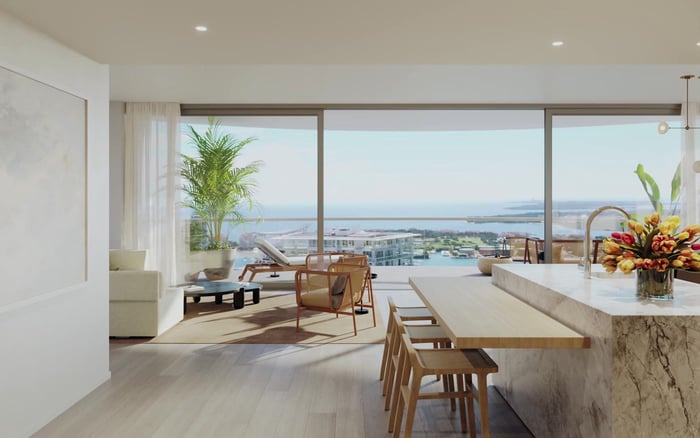
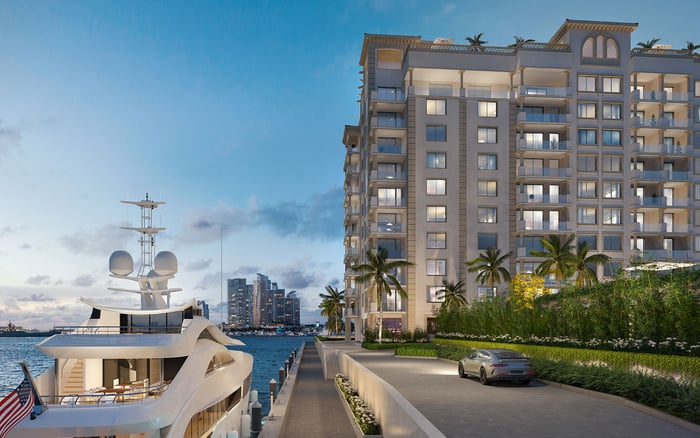
In South Florida, the most compelling luxury addresses are no longer defined by waterfront exposure alone. The stronger proposition is the rare overlap of water access, daily walkability, and a genuine wellness ecosystem within a short, usable radius. For discerning buyers, that means neighborhoods where a morning along the bay, a fitness class, lunch, and evening errands can unfold without defaulting to the car.
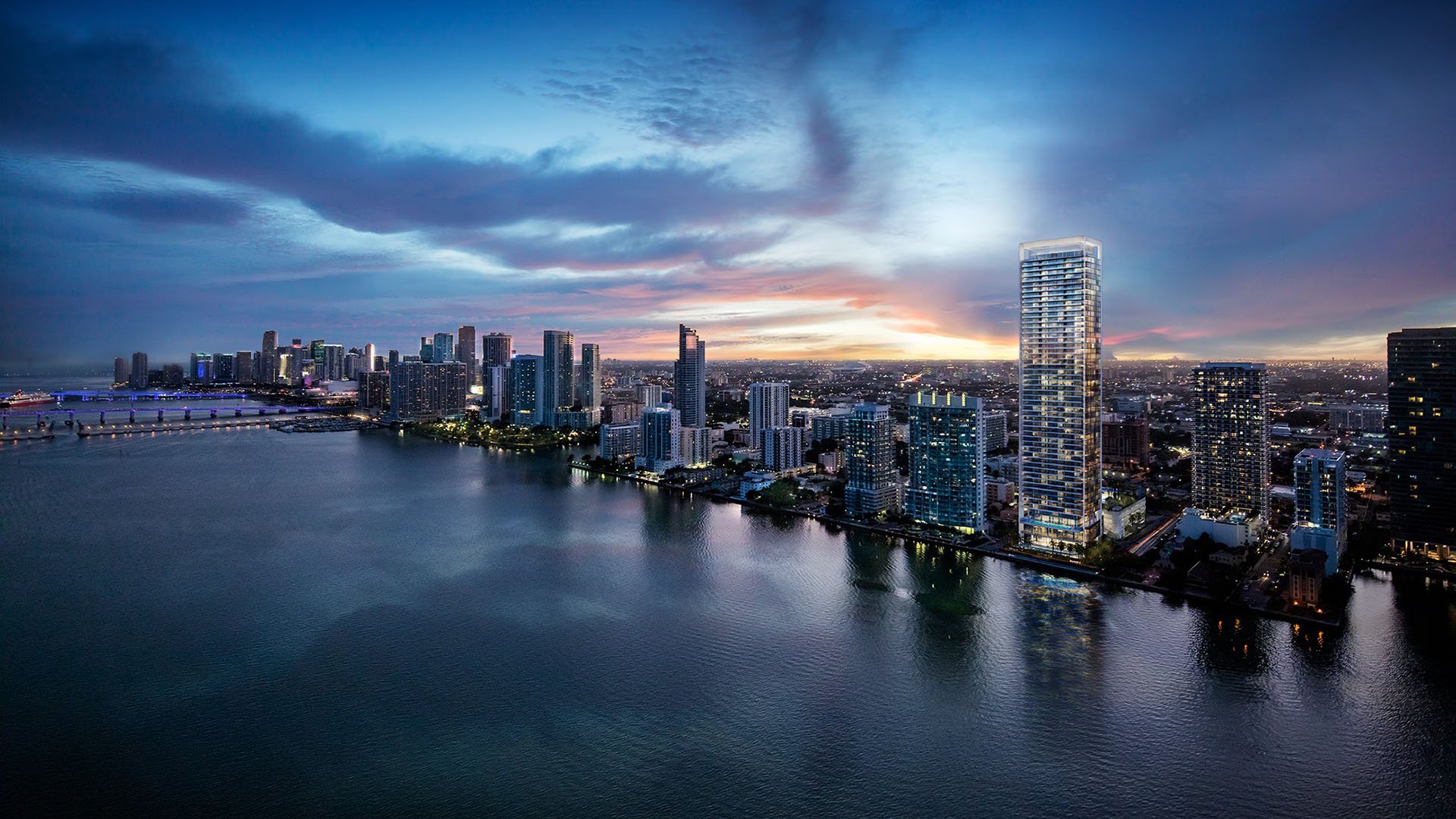
For South Florida buyers at the upper end of the market, the most desirable address is increasingly defined by three qualities working in concert: proximity to the water, genuine walkability, and a wellness ecosystem embedded in daily life rather than appended as an amenity package.
That overlap is rarer than marketing language suggests. Many buildings offer water views but sit in car-dependent pockets. Others occupy active urban districts yet feel removed from the calming influence of a bayfront promenade, marina edge, or beachfront path. The most compelling locations are those where residents can move through a quarter- to half-mile radius and reliably access waterfront air, fitness options, dining, and low-friction daily rituals on foot.
In practical terms, this is the difference between a residence that photographs well and one that supports a more elegant routine. It is why areas such as Miami Beach, Brickell, Coconut Grove, Edgewater, Coral Gables, Bal Harbour, Aventura, and Fort Lauderdale continue to draw outsized attention from sophisticated buyers.
In the South Florida luxury conversation, wellness has evolved beyond a fitness center and treatment room. Newer waterfront projects are increasingly framed around a broader set of offerings: yoga and recovery spaces, strong indoor-outdoor design, air-focused features, meditation or garden areas, and service layers that can extend to outside practitioners and more personalized health programming.
That shift matters because the strongest neighborhoods do not rely on in-building amenities alone. They pair residential wellness spaces with nearby studios, healthy dining, parks, waterfront paths, and beauty or recovery services that can be reached without logistical effort. The luxury proposition becomes less about a single spa level and more about a seamless day.
This is where buyers should be exacting. A polished brochure may describe a wellness-first lifestyle, but the real test is neighborhood performance. Can you walk to the waterfront, reach a training session or treatment, meet friends for lunch, and return home without treating the car as essential infrastructure? In South Florida’s best overlap zones, the answer is increasingly yes.
Miami Beach’s Mid-Beach remains one of the clearest expressions of this three-part overlap. It offers direct ocean presence, a walkable stretch along Collins Avenue, and a hospitality-informed approach to wellness that has shaped the surrounding residential market.
For buyers who prioritize beach access as part of a daily rhythm, Mid-Beach is compelling because the waterfront is not abstract. It is tactile, immediate, and woven into the neighborhood’s identity. A morning walk, an outdoor workout, and a lunch reservation can all fit within the same local circuit. That is a very different proposition from a more isolated oceanfront tower.
Projects such as 57 Ocean Miami Beach and The Perigon Miami Beach fit naturally into this conversation because they sit within a broader beach-and-wellness culture rather than depending on amenities alone to create it. In Miami Beach, the most desirable residences benefit as much from the district around them as from the square footage within them.
If Mid-Beach represents the beachfront version of the overlap, Brickell expresses it in a more urban register. The Miami River corridor and the greater Brickell waterfront have become increasingly walkable, with a residential base that now leans more decisively into wellness-oriented amenity design.
This is one of the rare South Florida locations where a resident can combine water adjacency with a meaningful concentration of dining, retail, and service infrastructure. The neighborhood’s strongest value is not simply that it is busy. It is that the activity is compressed into a navigable footprint, allowing daily routines to happen with fewer transitions and less friction.
That is part of the appeal behind projects like 2200 Brickell and The Residences at 1428 Brickell, where buyers are not simply acquiring skyline views. They are buying into Brickell’s increasingly polished version of the 15-minute neighborhood: waterfront proximity, dining, fitness, and personal services within reach of an elevator ride and a short walk.
For Brickell buyers, the key distinction is micro-location. Some addresses capture the urban-waterfront balance with grace. Others deliver density without serenity. The premium tends to accrue where both are present.
Coconut Grove offers a different kind of luxury altogether: less vertical intensity, more rooted neighborhood texture, and one of the region’s more convincing links between residential life, waterfront public space, and outdoor wellness culture.
Its bayfront parks and pedestrian connections contribute to a lifestyle that feels less scheduled and more organic. The Grove’s appeal lies in the ease of moving from residence to green space to local services while preserving a sense of discretion. That is especially powerful for buyers who want wellness to feel residential rather than performative.
The area’s evolving residential landscape reflects this sensibility. The Well Coconut Grove speaks directly to the wellness theme, while Park Grove Coconut Grove aligns with the neighborhood’s established bayfront prestige. In Coconut Grove, walkability is not as fast-paced as Brickell’s, but for many buyers it is more livable.
Edgewater has gained stature as a waterfront-adjacent submarket where walkability, access to nearby cultural and dining districts, and wellness-focused new development increasingly intersect. Its proximity to both the bay and the Wynwood orbit helps create the kind of amenity density that often supports pricing power over comparable inland alternatives.
In this context, Aria Reserve Miami and EDITION Edgewater illustrate why the district continues to draw attention. Buyers here are often seeking a blend of water orientation and urban energy, with a premium placed on buildings that connect residents to a useful surrounding neighborhood rather than standing apart from it.
Coral Gables belongs in the conversation for a different reason. Its appeal is less about overt high-rise waterfront spectacle and more about a carefully planned, pedestrian-aware environment where mixed-use patterns, public space, and nearby water access can converge elegantly. For buyers who value refinement, order, and walkable daily life, Coral Gables offers a quieter interpretation of the overlap.
North of Miami, Fort Lauderdale continues to strengthen its position as a market where waterfront living and pedestrian-oriented urbanism can coexist. Fort Lauderdale Beach and the Las Olas corridor remain particularly relevant because they combine residential choices with a nearby mix of dining, retail, and wellness services.
This gives projects such as Andare Residences Fort Lauderdale and St. Regis® Residences Bahia Mar Fort Lauderdale added resonance. In Fort Lauderdale, the value proposition is often tied to whether one can enjoy the water while still participating in a walkable city rhythm.
Bal Harbour and nearby Aventura occupy another useful niche in the regional map. Together, they represent a bayfront and luxury-retail pocket where upscale daily needs can be handled with relative ease and where wellness positioning has become increasingly central to the residential story. The draw here is not only the address itself, but the frictionless pairing of water, shopping, dining, and service.
For the luxury buyer, the overlap of wellness, walkability, and waterfront matters because it is difficult to replicate. A tower can renovate a spa. It cannot easily create a neighborhood ecosystem around itself. Likewise, a great retail district cannot manufacture authentic water presence where none exists.
That scarcity helps explain why walkable waterfront residences in amenity-dense pockets tend to command stronger interest. The long-term premium often belongs to places where several needs can be met within a short walk of the water, and where the neighborhood itself reinforces the lifestyle promised by the building.
In other words, the highest-value address is not necessarily the one with the most dramatic view. It is the one that lets a resident live well between appointments.
What is the ideal walking radius for this kind of luxury lifestyle? A practical benchmark is roughly a quarter- to half-mile, enough to reach the waterfront, dining, and wellness services comfortably on foot.
Is wellness still mostly about the building gym and spa? No. In the luxury market, wellness increasingly includes recovery spaces, air-focused design, meditation areas, and concierge-style service.
Why does walkability matter so much for waterfront buyers? Because true convenience changes daily life. Water views become even more compelling when dining, fitness, and errands are also close at hand.
Which Miami area best fits an urban waterfront lifestyle? Brickell is the clearest example, especially for buyers who want density, dining, and wellness amenities within a short radius.
Which area feels most outdoor-oriented and residential? Coconut Grove stands out for bayfront parks, pedestrian connectivity, and a wellness culture tied to everyday outdoor living.
Does Miami Beach still lead for beachfront wellness living? Yes. Mid-Beach remains one of the strongest examples of ocean access, walkability, and hospitality-level wellness culture intersecting.
Is Edgewater more than a view-driven market? Increasingly, yes. Its appeal is tied to both water adjacency and access to a broader amenity network that supports walkable living.
How does Fort Lauderdale compare with Miami for this overlap? Fort Lauderdale offers a compelling alternative, especially around the beach and Las Olas, where waterfront and walkability can coexist well.
Are Bal Harbour and Aventura part of this conversation? Yes. They appeal to buyers seeking a polished mix of bayfront positioning, luxury retail access, and wellness-oriented residential appeal.
What is the clearest signal of long-term value in these locations? It is the combination of scarce waterfront access and a neighborhood that supports daily life on foot, not just a building’s amenity deck.
When you're ready to tour or underwrite the options, connect with MILLION Luxury.
If branded residences are on your mind — as a home or as an allocation — we would be glad to share what we are seeing, privately.
Begin a quiet conversation