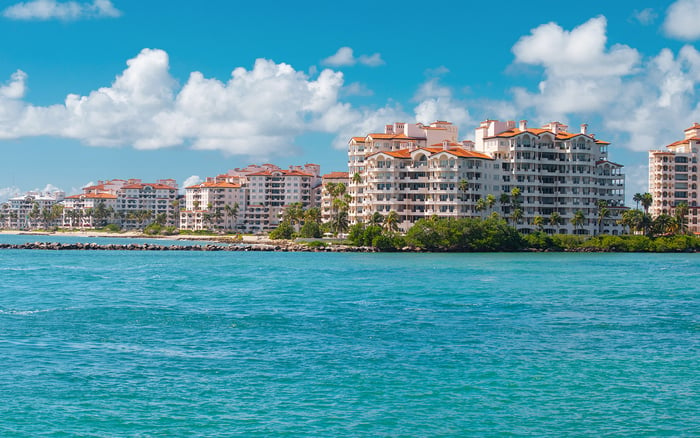
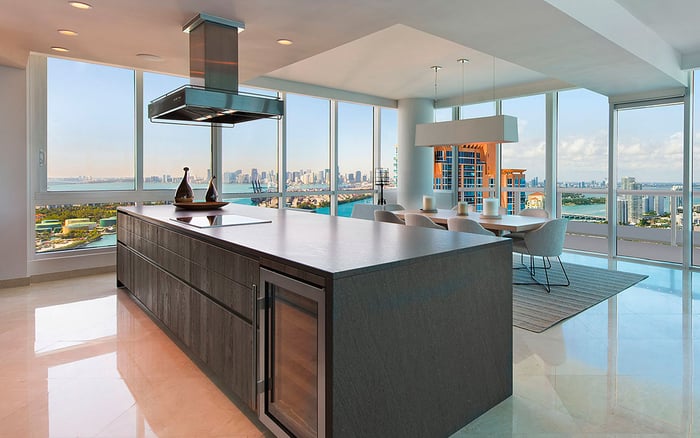
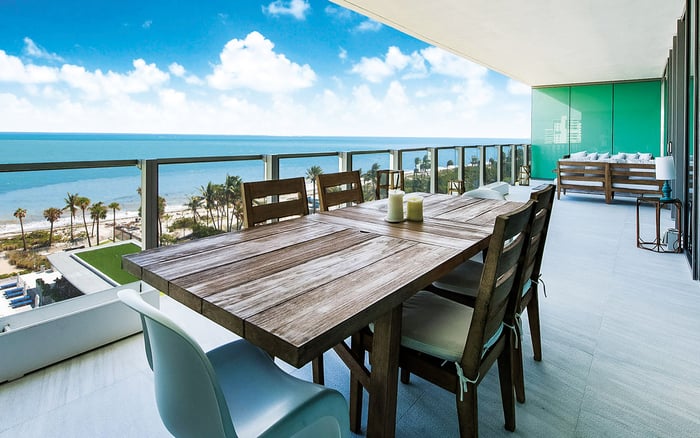
In South Florida’s upper tier, the most coveted addresses are not simply waterfront or walkable. They are places where daily ease, visual openness, and a sense of retreat coexist. For buyers weighing oceanfront glamour against quieter bayfront discretion, the best-fit neighborhoods are those that balance urban access with controlled access, limited through-traffic, or island geography.
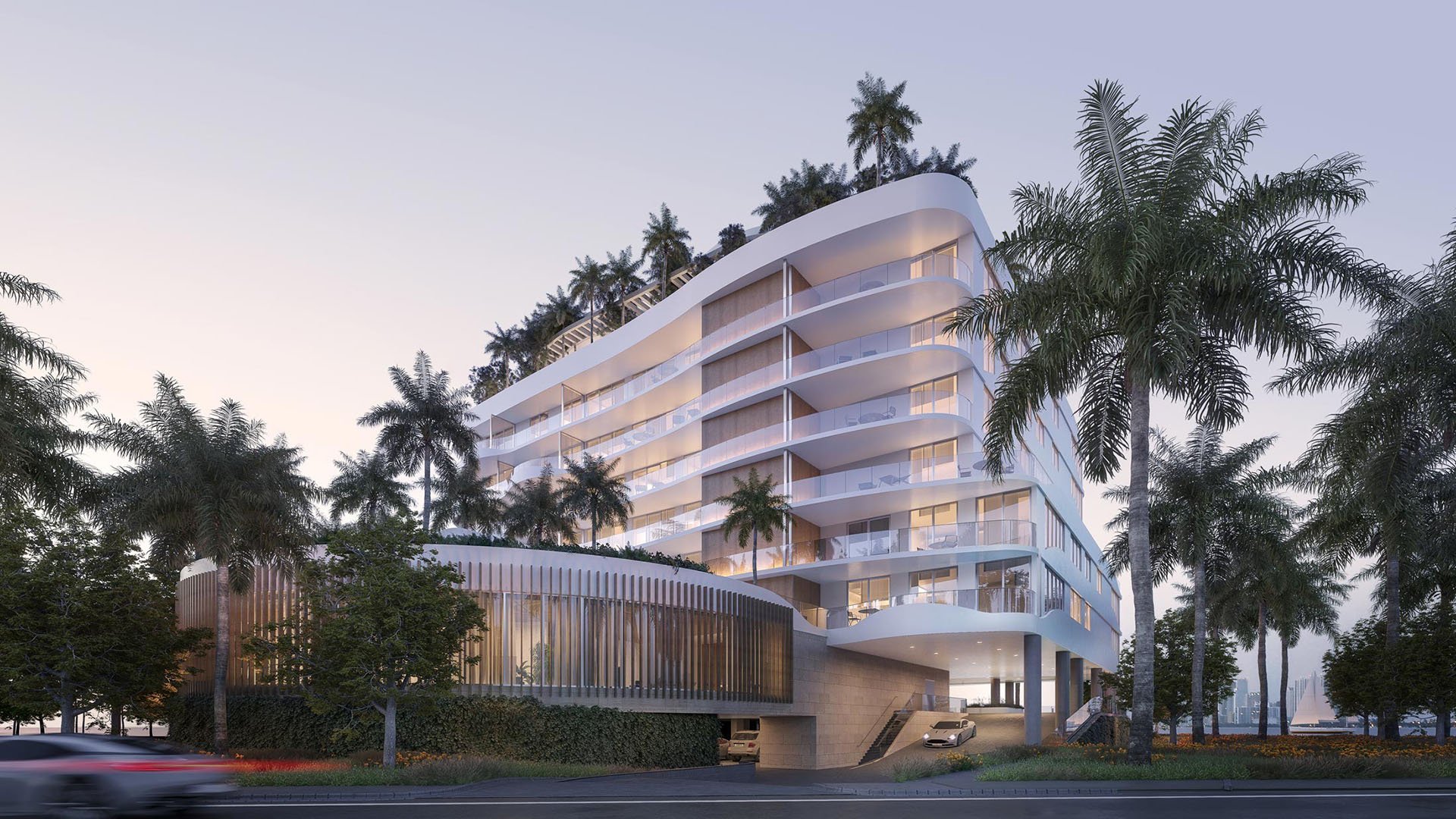
For South Florida buyers in the upper bracket, the search is rarely about maximizing a single trait. Pure walkability can bring density, traffic, and a more public feel. Pure privacy can mean longer drives, fewer daily conveniences, and less spontaneous use of the neighborhood. The strongest addresses sit in the middle, offering a lifestyle where a morning waterfront walk, a discreet arrival, and dinner without a car can all belong to the same routine.
That balance takes different forms depending on the submarket. In some places, walkability means a true urban grid with shops, restaurants, and errands nearby. In others, it means shaded streets, parks, marinas, and a calm village core that rewards being on foot even without a dense retail corridor. Privacy, likewise, is not limited to gates. In South Florida, it is often shaped by island geography, controlled entry, lower through-traffic, and deeper waterfront setbacks.
The result is a buyer map with a few clear standouts. Miami Beach remains a leading answer for those who want strong day-to-day walkability with either bay or ocean in view. Coral Gables appeals to buyers who prefer a more residential expression of that same balance. Coconut Grove and Key Biscayne offer a softer village rhythm closely tied to Biscayne Bay. Fisher Island stands apart as the market’s most pronounced privacy play, while Bal Harbour continues to attract buyers who want polished retail access within a tightly held waterfront setting.
In Miami Beach, developments such as The Perigon Miami Beach embody the appeal of living close to the shoreline while remaining connected to the city’s most desirable lifestyle corridors.
Miami Beach earns its place near the top because it offers one of the most persuasive combinations of walkability and water presence in the region. Buyers can live near restaurants, hospitality, wellness, and daily conveniences while still prioritizing ocean or bay views. The distinctions within Miami Beach matter, however. Mid-Beach offers a compelling blend of accessible commercial corridors and visual proximity to the water, while North Bay Road skews more private, with lower traffic and an estate-like bayfront atmosphere.
For buyers who want the prestige of water views without giving up a walkable lifestyle, Miami Beach continues to be one of the market’s most complete answers. This is especially true where privacy comes from building design, setback, and street position rather than a total retreat from urban life.
Coral Gables answers the same brief in a quieter register. It is especially appealing to buyers who want walkability without the overt buzz of the beach. Tree-lined streets, established residential character, and pedestrian-friendly areas such as Miracle Mile give the neighborhood a refined, residential form of convenience. The walkability here feels intentional rather than intense.
That is why Coral Gables continues to resonate with households seeking a more sheltered daily rhythm. Projects like Ponce Park Coral Gables reflect the appeal of stepping into a polished neighborhood setting while maintaining a greater sense of separation from the public-facing energy found elsewhere.
Coconut Grove stands out because its walkability is village-shaped rather than driven by an urban grid. The neighborhood offers shaded streets, parks, marinas, and a strong relationship with Biscayne Bay. For many luxury buyers, that creates one of the most livable combinations in Miami: the ability to move around locally on foot, feel embedded in an established neighborhood, and remain closely tied to the water.
That formula is especially compelling for buyers who define privacy as calmness rather than seclusion. Residences such as Vita at Grove Isle align naturally with the Grove’s blend of bayfront identity, greenery, and low-key sophistication.
Key Biscayne offers one of the clearest island-based solutions to this three-part equation. Water sits on multiple sides, the village core supports day-to-day movement without overreliance on the car, and the overall atmosphere remains notably private compared with denser coastal districts. Buyers who want an island setting without the complete detachment of a private-access enclave often find Key Biscayne to be the sweet spot.
Its appeal lies in proportion. It feels compact enough to be convenient, yet separate enough to feel protected. The neighborhood often appeals to buyers who want waterfront living paired with an address defined more by calm and continuity than by spectacle.
If privacy is non-negotiable, Fisher Island becomes the benchmark. Its defining advantage is not conventional city walkability but controlled access, a self-contained layout, and surrounding water that reinforces the sense of separation. Buyers who choose Fisher Island are often accepting that this is a different form of walkable living: one shaped by internal convenience and island containment, not by an open street grid.
That distinction matters. Fisher Island may not compete with Miami Beach for urban energy, but it surpasses nearly every other market for seclusion with expansive water exposure. This is the address for buyers who want privacy first and are willing to treat walkability as internal ease rather than public connectivity.
Bal Harbour remains highly desirable because it combines a polished waterfront setting with a walkable luxury anchor in its retail core. That creates a rare form of convenience at the upper end of the market: buyers can enjoy water views and luxury residences while having elite shopping and dining close at hand. It is not as broad or mixed as Miami Beach, but it is exceptionally focused in what it offers.
Nearby bayfront settings and islands also appeal to buyers who want something quieter than Miami Beach proper while preserving proximity to major coastal amenities. In these zones, the lifestyle often feels more curated, more residential, and less exposed.
Some neighborhoods excel at one or two parts of the equation but not all three. Wynwood and the Design District are among the strongest for urban walkability and lifestyle density, and they continue to attract younger luxury buyers. But they generally offer fewer classic open-water residential views than bayfront or island neighborhoods. They are compelling for city energy, less so for a fully resolved waterfront retreat.
Aventura presents a different variation. Its luxury market is closely tied to the Intracoastal and tends to favor planned convenience, internal amenities, and development-driven walkability rather than the organic street life found in older, more established neighborhoods. For some buyers, that is a benefit. For others, it can feel less textured.
Pinecrest and Palmetto Bay move in the opposite direction. They offer larger lots, more seclusion, and a lower-density lifestyle, but that usually comes with reduced day-to-day walkability. These areas can be ideal for privacy-led decisions, especially for buyers focused on homesites and bay access, though they are not the strongest answer to the full three-part brief.
The market consistently rewards places where water views and daily convenience intersect. Add walkability and discretion to that picture, and inventory tends to feel especially scarce.
Seasonality can also reinforce competition, which means buyers pursuing the most complete neighborhoods are often focused on a narrow band of inventory. In practice, the best opportunities are not merely about frontage or square footage. They are about position within the neighborhood: the block with less through-traffic, the residence with stronger setbacks, the building close enough to walk yet far enough removed to feel private.
For readers focused on South Florida luxury real estate, that is the essential distinction. The region’s most desirable addresses are not always the loudest or the most visibly urban. They are the ones that reconcile movement and stillness, openness and control, view and refuge.
Which South Florida neighborhood offers the best overall mix of walkability, privacy, and water views? Miami Beach is often viewed as the strongest all-around choice because it can combine high walkability with both bay and ocean orientation across several luxury enclaves.
Is Fisher Island walkable in the usual urban sense? Not exactly. Its walkability is internal and self-contained, with privacy created by restricted access and island geography rather than city street connectivity.
Why do buyers choose Coral Gables over Miami Beach? Coral Gables offers a quieter, more residential version of walkability with elegant streetscapes and a stronger sense of day-to-day discretion.
Does Key Biscayne feel private despite having a village core? Yes. Its island setting and compact layout allow for everyday convenience while still preserving a notably sheltered atmosphere.
How does Coconut Grove fit this conversation? Coconut Grove appeals to buyers who value parks, marinas, and village-scale movement on foot with close ties to Biscayne Bay.
Is Bal Harbour more about retail access or residential privacy? It offers both, but its edge is the unusual ability to pair a polished waterfront setting with luxury shopping within walking distance.
Where does Aventura rank for this lifestyle mix? Aventura is attractive for planned convenience and Intracoastal living, though it feels more development-led than organically walkable.
Are Pinecrest properties less desirable because walkability is lower? No. Pinecrest serves a different buyer profile, one that often prioritizes lot size, seclusion, and residential calm over walkable density.
Do water views materially affect buyer interest in these neighborhoods? Yes. Water exposure is a major part of the appeal when buyers are comparing otherwise similar luxury locations.
What is the best way to shortlist comparable options for touring? Start with location fit, delivery status, and daily lifestyle priorities, then compare stacks and elevations to validate views and privacy.
To compare the best-fit options with clarity, connect with MILLION Luxury.
If branded residences are on your mind — as a home or as an allocation — we would be glad to share what we are seeing, privately.
Begin a quiet conversation