A buyer-focused guide to evaluating valet queuing, arrival choreography, staffing, guest handling, rainy-day comfort, and operating rules before purchasing in a luxury South Florida building.
In South Florida luxury real estate, the front door is more than an address. It is a sequence: the turn from the street, the approach to the porte cochère, the handoff to the valet, the guest arrival, the delivery drop, and the quiet return home after dinner. When that sequence is graceful, a building feels composed. When it is poorly managed, even a remarkable residence can feel compromised before the elevator doors open.
Valet queuing is easy to underestimate during a polished sales presentation. A buyer may visit at a quiet hour and see one attendant, one car, and a calm entrance. Ownership is different. The sharper question is not whether the building offers valet. It is whether the building has been designed and operated to absorb real life with discretion.
The same questions apply across Brickell, Aventura, Edgewater, Downtown, Surfside, and resale opportunities, where arrival patterns vary by neighborhood, building culture, household size, and owner expectations. For a high-end buyer, the goal is straightforward: determine whether the building’s arrival choreography remains graceful when it matters most.
Begin with observation. A luxury brochure may describe full-service valet, but the lived experience is at the curb. How many cars can wait comfortably without spilling into an awkward position? Is there a clear distinction between owners, guests, rideshare vehicles, deliveries, and service vendors? Does the attendant manage the handoff with calm authority?
Visit more than once if possible. A weekday afternoon tells one story. A dinner-hour return tells another. A rainy evening, a holiday weekend, or a building event can reveal whether the arrival court has genuine capacity or simply appears serene in ideal conditions.
Watch the body language of residents. Do they linger comfortably while the car is retrieved, or do they seem resigned to friction? Does staff communicate wait times clearly? Are vehicles handled in a sequence that feels fair and orderly? These small cues often reveal the culture of the building more accurately than a formal tour.
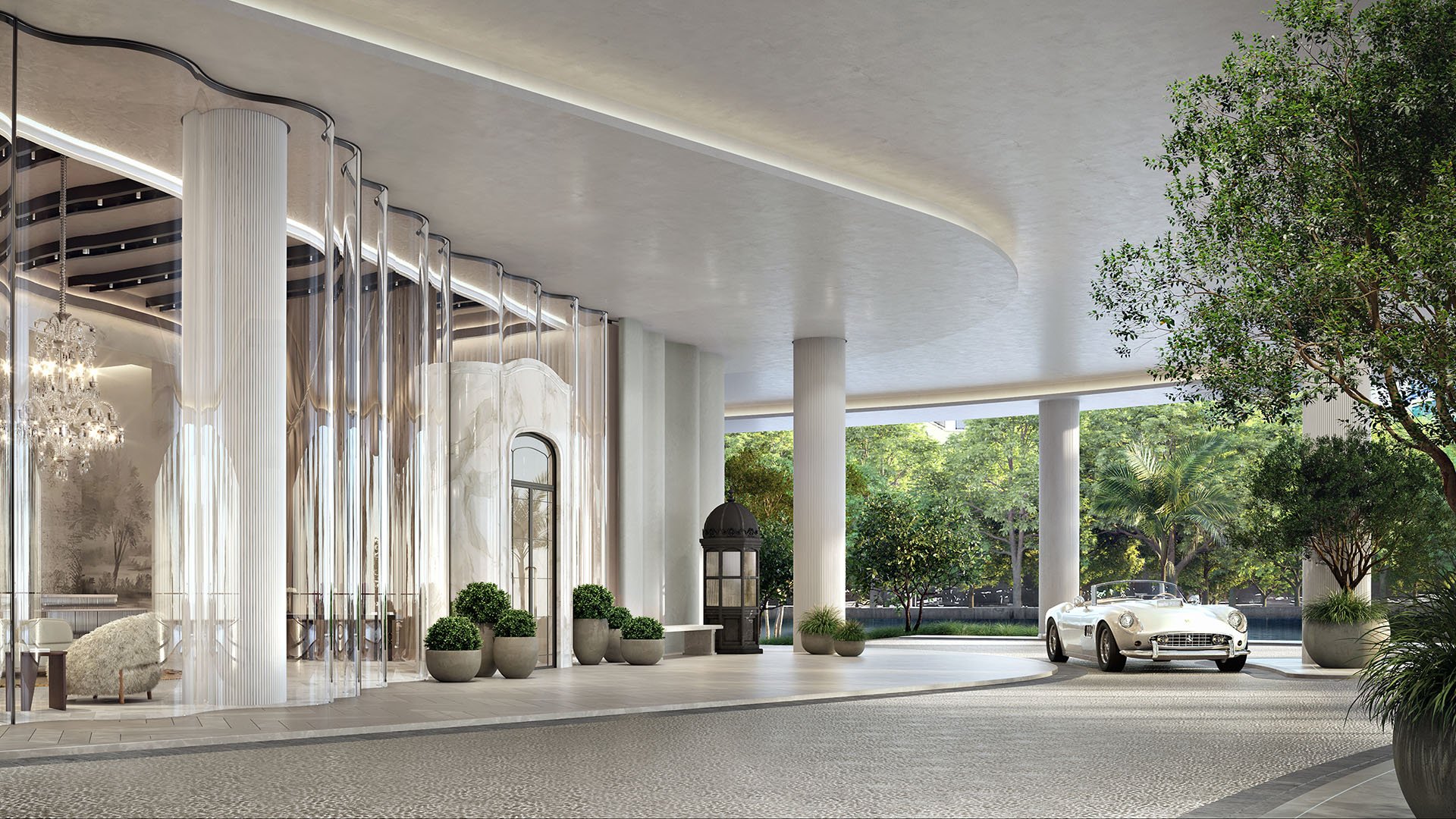
Buyers study ceiling heights, sightlines, terraces, and primary suites. The porte cochère deserves the same attention. A generous covered entry can protect residents and guests from rain, reduce confusion, and create a sense of ceremony. A constrained entrance can force vehicles into uncomfortable angles, create congestion, or make arrivals feel exposed.
Look at turning radius, stacking depth, pedestrian separation, and visibility. Can a larger vehicle maneuver without blocking the entire arrival? Is there a safe path for residents walking from the valet stand to the lobby? Are luggage carts, strollers, pets, and mobility needs accommodated without improvisation?
The best arrival courts feel intuitive. A first-time guest should understand where to stop. A resident should not have to explain the system every time someone visits. Design should make service look effortless, even when the operations behind it are highly coordinated.
Valet queuing is an operations question as much as a design question. Buyers should ask how staffing adjusts during predictable surges, including dinner departures, school-run periods, weekend guest arrivals, move-ins, private events, and seasonal occupancy shifts. The answer should be specific enough to inspire confidence, even if the building does not disclose every internal staffing detail.
Ask who supervises the valet team, how resident requests are prioritized, and whether there is a protocol for unusually high demand. Is there a manager on site during peak hours? Are vehicles requested through an app, a call, a text, a front desk request, or direct valet communication? A sophisticated system should reduce uncertainty, not create another layer of friction.
Also ask what happens when several residents request vehicles at once. A discreet building will not promise that no one ever waits. It should be able to explain how it prevents waiting from becoming disorder.
The resident experience is shaped by everyone who uses the entry. Guests, housekeepers, chefs, dog walkers, drivers, florists, caterers, contractors, and delivery personnel can all affect the valet court. In a building with strong protocols, these movements are anticipated. In a weaker operation, they collide at the front door.
Ask whether guests may use valet, whether guest vehicles have time limits, and whether event parking requires advance coordination. Clarify how deliveries are staged and whether vendors have a separate entry or designated loading procedure. A buyer who entertains often should be especially careful. A dinner for twelve should not create stress for neighbors or staff.
Security and hospitality must also be balanced. A building can feel warm without being loose, and controlled without feeling severe. The best operations make guests feel expected while protecting the resident experience.
South Florida buyers should pay close attention to weather choreography. Rain changes everything: umbrellas appear, luggage becomes more complicated, guests hesitate at the curb, and residents expect the building to perform. A covered arrival is helpful, but coverage alone is not a full plan.
Ask where cars wait during rain, whether attendants remain positioned for continuous coverage, and how pedestrians are guided from vehicle to lobby. Is the entry surface slippery when wet? Does water collect where passengers step out? Are umbrellas readily available and managed with care?
A good rain plan feels calm. Staff should not appear surprised by weather. The arrival should remain dignified, especially in buildings where buyers expect hotel-level attentiveness without the informality of a hotel lobby.
A buyer’s due diligence should include the condominium documents, house rules, budget, valet-related provisions, insurance considerations, and any agreements governing parking operations. The goal is not to become a parking specialist. It is to understand what is promised, what is optional, what costs extra, and what the association controls.
Clarify whether valet service is included in regular assessments, separately billed, or subject to change. Ask whether self-parking is available, whether assigned spaces exist, how additional vehicles are treated, and whether electric vehicle needs are addressed through building policy. If the residence will be used as a second home, confirm whether vehicle storage, long absences, battery maintenance, and guest access are handled smoothly.
Buyers should also ask about liability, claims procedures, and how incidents are documented. Luxury service is not the absence of risk. It is the presence of a mature system for handling ordinary complications without drama.
The ideal valet operation depends on how you live. A buyer with multiple vehicles may prioritize retrieval speed and storage clarity. A collector may care about handling standards and controlled access. A frequent host may focus on guest arrivals. A family may need predictable morning departures. A privacy-focused owner may want minimal interaction and disciplined discretion.
Consider how often you drive, how often guests visit, and whether you rely on private drivers, rideshare services, or house staff. Think about pets, children, luggage, sports equipment, beach gear, and groceries. These are not minor details. They are the daily frictions that separate a glamorous address from a genuinely livable one.
A building’s valet team is often one of the most visible expressions of its service culture. If the entrance feels rushed, unclear, or overburdened, the issue may not remain confined to the driveway. If it feels composed, accountable, and personal, it can reinforce the value of the entire property.
Before making a decision, walk the arrival court slowly and ask practical questions. How many vehicles can queue before the system strains? Where do guests stop? Where do deliveries go? How are oversized vehicles handled? What happens during a private event? Who is empowered to resolve a dispute?
Then observe. Time a retrieval without making it theatrical. Watch whether attendants make eye contact, open doors properly, protect interiors, and communicate with the front desk. Look for order, not performance. The most refined buildings rarely feel busy, even when they are working hard.
Finally, compare the valet operation to the price point of the residence. In South Florida’s upper tier, buyers are not only purchasing square footage and views. They are purchasing ease. A weak valet sequence can erode that ease every day. A strong one can make the building feel private, polished, and deeply considered.
Why does valet queuing matter in a luxury building? It affects daily convenience, guest experience, privacy, and the property’s first impression.
When should a buyer observe the valet area? Visit during more than one time period, especially when arrivals and departures are likely to overlap.
Is a covered porte cochère enough? Not by itself. Buyers should also evaluate queue depth, staff coordination, pedestrian flow, and rain procedures.
What should I ask about guest valet? Ask whether guests may use valet, how long vehicles may remain, and whether events require advance approval.
Should valet rules be reviewed before contract? Yes. Condo documents and house rules can clarify costs, limits, procedures, and owner responsibilities.
How can I evaluate staff quality discreetly? Watch communication, sequencing, vehicle handling, and how calmly the team manages competing requests.
Does valet quality affect resale appeal? It can influence how buyers perceive the building’s service culture and everyday livability.
What if I own multiple vehicles? Confirm storage, retrieval protocols, additional charges, and any limits before assuming the building fits your needs.
Is valet more important for a second home? It can be, especially if the car will sit for long periods or guests will access the residence in your absence.
What is the best sign of a strong valet operation? A calm arrival court, clear communication, and consistent procedures are usually better indicators than grand promises.
For a confidential assessment and a building-by-building shortlist, connect with MILLION.
If branded residences are on your mind — as a home or as an allocation — we would be glad to share what we are seeing, privately.
Begin a quiet conversation