A discreet buyer’s guide to evaluating trainer access, wellness operations, privacy, fees, and daily usability before committing to a South Florida luxury residence.
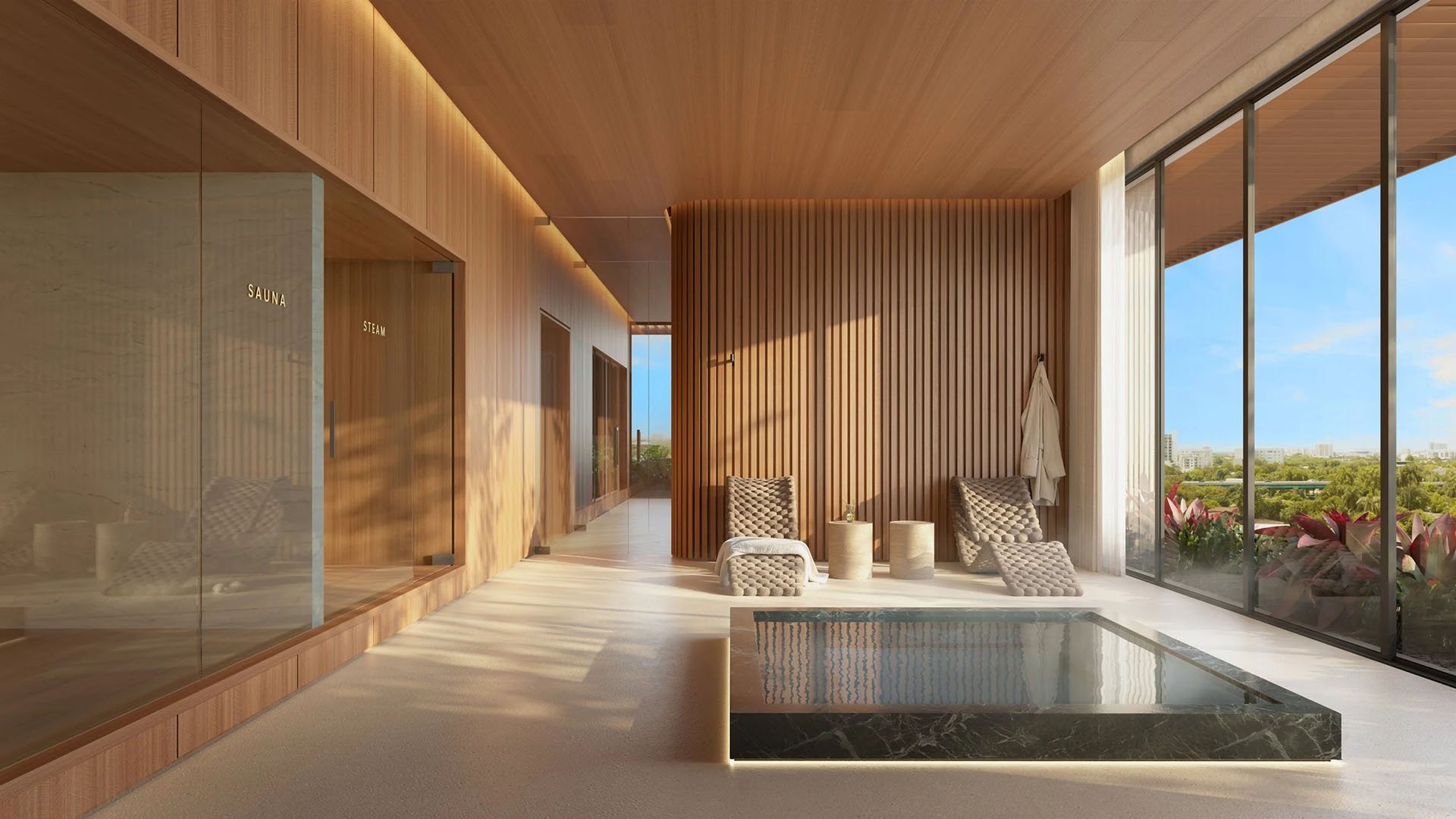
In South Florida’s luxury residential market, wellness has become part of the language of value. Sales galleries speak of recovery, longevity, movement, spa rituals, and hotel-level service. Renderings show serene gyms, private studios, treatment rooms, cold plunges, terraces, and pools composed like a private club. For a buyer, however, the essential question is rarely whether the building has wellness amenities. It is whether those amenities can be used in the way your life actually works.
Trainer access sits at the center of that question. A fitness center may look exceptional, but if your preferred trainer cannot enter the building, reserve space, use certain equipment, or work outside limited windows, the daily experience changes. The amenity becomes less personal, less efficient, and less aligned with the routine that likely drew you to it in the first place.
The right conversation is not adversarial. It is a matter of precision. Buyers in Brickell, along the waterfront, and across South Florida’s most design-conscious towers should treat wellness language as an invitation to request the operating rules behind the imagery.
The first question is simple: may an outside trainer work with me in the building? If the answer is yes, ask whether that access is available to all residents, limited to owners, subject to board or management approval, or handled case by case.
Then ask who qualifies as an outside trainer. Some buildings may distinguish between a licensed personal trainer, a physical therapist, a Pilates instructor, a yoga teacher, a stretch therapist, or a sports performance coach. That distinction matters if your routine includes more than traditional weight training. A buyer with a standing mobility session twice a week should not assume that a “trainer policy” automatically covers the person providing that service.
You should also clarify whether the trainer is treated as a guest, a vendor, or an approved service provider. Each category can carry different rules for entry, scheduling, insurance, elevator use, parking, check-in, and access to amenity floors.
A building may allow outside trainers while limiting where they can work. That difference is crucial. Ask whether sessions may take place in the main fitness center, a private training room, a yoga studio, an outdoor deck, a resident lounge, a pool area, a lap-pool lane, or inside your own residence.
Private in-residence training may sound ideal, but it can raise questions about noise, equipment transport, service elevator protocol, floor protection, and insurance. Training in a shared fitness room may be convenient, but only if the building allows one-on-one instruction in that space without disrupting other residents.
If you are drawn to a terrace for open-air movement or recovery, confirm whether trainers may use outdoor areas and whether those areas are governed by separate rules. A wellness terrace photographed at sunrise may function very differently during peak resident hours, private events, or seasonal demand.
The quality of trainer access often comes down to scheduling. Ask whether trainers can enter whenever the amenities are open, or only during specific windows. A policy that seems generous on paper may be less useful if your preferred session time is before school drop-off, after markets close, or on weekend mornings.
Request details on reservation systems. Can a resident reserve a private studio? Is there a maximum session length? How far in advance can sessions be booked? Are recurring bookings permitted? Can management cancel a reservation for building events, maintenance, or resident programming?
This is especially relevant in new-construction buildings where amenity programming may evolve after opening. Early sales materials may describe a wellness concept, while the final day-to-day rhythm is shaped by staffing, resident demand, and association rules. A sophisticated buyer asks for flexibility, not just beauty.
Trainer credentials should be handled clearly. Ask whether the building requires proof of certification, a business license, insurance, background screening, or signed waivers. Also ask who maintains those records and how often they must be updated.
This is not merely administrative. If a trainer is moving equipment, adjusting a resident’s form, leading high-intensity work, or using shared amenities, the building will want defined responsibility. The buyer should want the same. A well-drafted policy protects the resident’s routine, the trainer’s professional standing, and the community’s standards.
If your trainer already works with high-profile clients, privacy may be as important as paperwork. Confirm whether check-in is discreet, whether names appear on visible guest logs, whether service providers enter through a lobby or service route, and whether staff are trained to handle regular appointments with discretion.
Ask whether there are fees for outside trainer access. These may include registration fees, amenity reservation fees, guest charges, parking charges, cancellation penalties, or charges for using private rooms. Even modest fees can become meaningful if training is frequent.
Clarify whether the building offers in-house trainers and, if so, whether residents are encouraged or required to use them. Some buyers prefer an in-house program for convenience. Others are loyal to long-standing trainers, therapists, or performance specialists. The point is to understand whether the wellness program supports choice or channels residents toward a preferred provider model.
Also ask about gratuity culture. In a highly serviced building, residents may interact with attendants, spa staff, fitness personnel, valet teams, and concierge staff during a single wellness routine. Knowing what is included and what is discretionary helps preserve ease.
Trainer access should be considered alongside household structure. Can a spouse, partner, adult child, or long-term guest train with the same provider? Are sessions limited to one resident at a time? May a trainer work with a resident and a guest together? Are minors subject to separate requirements?
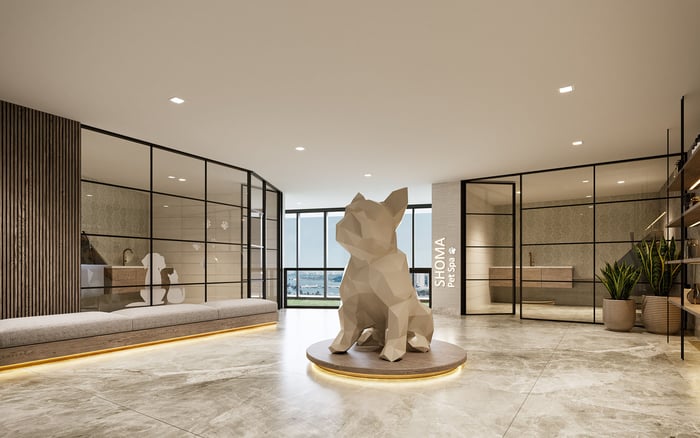
Pets may seem unrelated to wellness, yet lifestyle routines often overlap. A resident may return from a run with a dog, meet a trainer, then move through service corridors, elevators, or outdoor amenity areas. Buildings with precise rules make these transitions feel seamless rather than improvised.
Privacy also extends to visibility. If you value a low-profile routine, ask whether private studios are enclosed, whether glass walls face common areas, whether outdoor spaces are overlooked by neighboring residences, and whether amenity reservations display names or unit numbers.
Before signing, ask for the current house rules, amenity rules, trainer policy, guest policy, vendor access policy, and any wellness programming guidelines. If the building is not yet completed, ask how interim policies will be established and who has authority to change them.
The most useful questions are direct. May my outside trainer enter the building? What documents are required? Where may we train? What hours apply? Can I reserve a private room? Are there fees? Can policies change after closing? Who approves exceptions? How are disputes handled?
If the answers are vague, ask for them in writing. A polished sales conversation is helpful, but written operating detail is what protects the daily experience. In luxury real estate, the best amenities do not require constant negotiation. They anticipate how residents live.
A strong building response is specific, calm, and operational. It explains the approval process, the documentation required, the permitted areas, the reservation platform, the fee schedule, the rules for guests, and the process for renewing trainer credentials. It also explains who manages questions if a trainer arrives and front desk staff are uncertain.
A weaker answer relies on broad phrases such as “residents can arrange that” or “management will be flexible.” Flexibility can be useful, but only when paired with standards. Without standards, access may depend on who is working the desk, how busy the amenity floor is, or how the association interprets rules later.
The buyer’s objective is not to secure special treatment. It is to ensure that the residence supports a durable way of living. Wellness, at this level, should feel personal, discreet, and repeatable.
Can I assume my outside trainer will be allowed in a luxury condo? No. Always ask for the building’s specific trainer access policy and approval process before relying on the amenity offering.
What is the first trainer access question to ask? Ask whether outside trainers are permitted, then ask whether they are treated as guests, vendors, or approved service providers.
Should I ask about insurance requirements? Yes. Insurance, credentials, waivers, and registration rules can determine whether your trainer can work in the building at all.
Can trainer access rules change after I buy? They may change if building rules or association policies change. Ask who controls revisions and how residents are notified.
Is an in-house trainer program better than outside access? It depends on your routine. In-house trainers may be convenient, while outside access may preserve a trusted long-term relationship.
Why do reservation rules matter? Reservation rules determine whether you can secure the space and timing your routine requires, especially during peak hours.
Should I ask if training can happen inside my residence? Yes. In-residence sessions may be subject to rules on noise, equipment, elevators, building access, and insurance.
What privacy questions should I raise? Ask how trainers check in, whether reservations are visible, and whether private rooms are shielded from common areas.
Are fees common for trainer access? Fees may apply depending on the building’s policy. Ask about registration, room booking, guest, parking, and cancellation charges.
What should I do if the sales pitch sounds vague? Ask for written rules and confirm the operating details that affect your specific routine before making a decision.
For a confidential assessment and a building-by-building shortlist, connect with MILLION.
If branded residences are on your mind — as a home or as an allocation — we would be glad to share what we are seeing, privately.
Begin a quiet conversation