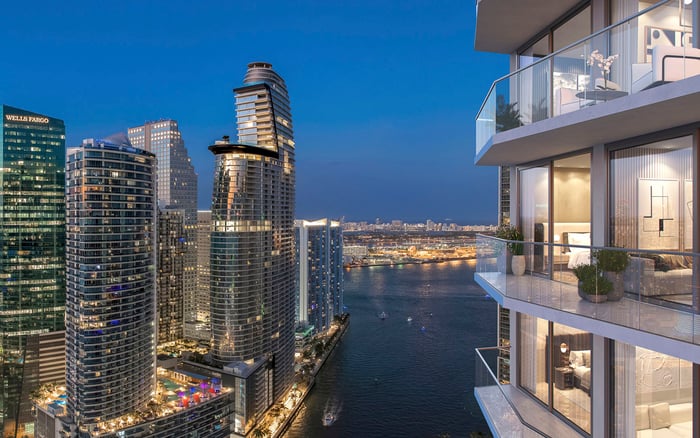
A Montreal buyer considering The Residences at 1428 Brickell should treat the decision as a cross-border lifestyle and planning exercise, balancing Florida usage, Canadian ties, professional counsel, and a disciplined ownership-cost model.
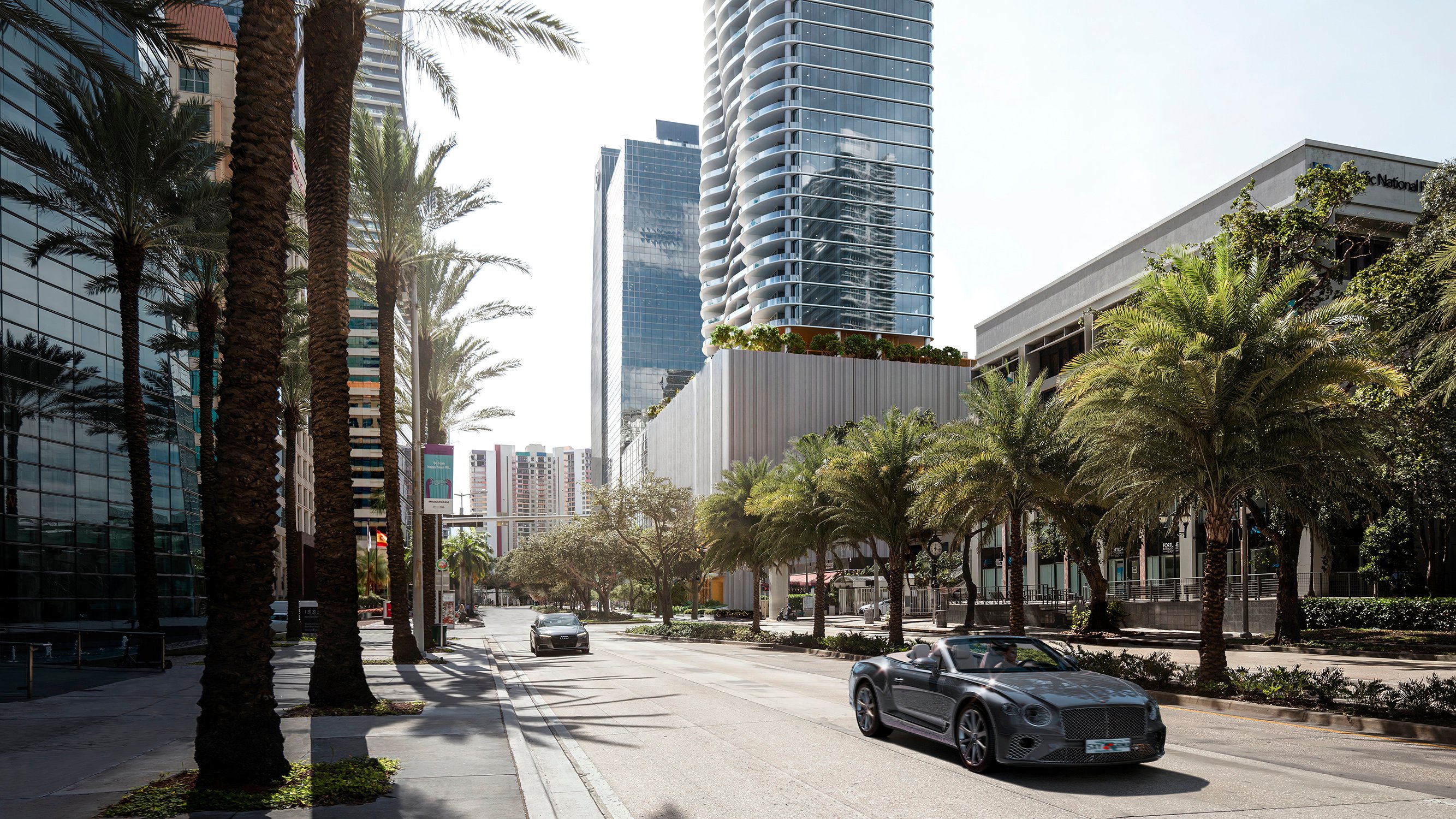
For a Montreal-based buyer, The Residences at 1428 Brickell is not simply a high-design condominium decision in Miami’s financial district. It is a cross-border planning exercise shaped by domicile, travel rhythm, family gravity, and the cost of maintaining a life in two places.
That distinction matters. A buyer may be drawn first by the emotional contrast: South Florida warmth during Quebec’s long winter, Brickell’s energy, and the ability to arrive in Miami for a season that feels materially different from life in Montreal. The more sophisticated question is whether the residence functions as a seasonal retreat, a dual-base lifestyle asset, or the foundation for a Florida-primary-residence plan with continuing Canadian ties.
This is where aspiration needs structure. The purchase should be modeled before it is romanticized.
Brickell occupies a specific lane within South Florida luxury. It is more urban, denser, and more finance-oriented than Palm Beach, which may appeal to a Montreal entrepreneur, investor, or professional who wants warm weather without surrendering city rhythm.
The lifestyle contrast is clear. Montreal offers culture, language, family history, and established community. Brickell offers restaurants, nightlife, international business energy, and proximity to global networks. For some buyers, that is precisely the point: Miami is not a replacement for Montreal, but a complementary operating base.
This is also why the comparison set should remain disciplined. A buyer focused on Brickell may also examine nearby new-development options such as Cipriani Residences Brickell, St. Regis® Residences Brickell, or Una Residences Brickell, not because they are interchangeable, but because they help frame the premium for location, timing, services, views, and long-term flexibility within the same urban market.
A Montreal buyer should begin with three core variables: tax domicile, travel rhythm, and ongoing ownership-cost structure. Each one influences the others.
Domicile is the most sensitive. A buyer should not assume that owning in Florida, spending winters in Miami, or declaring an intention to live in Florida automatically resolves cross-border residency questions. Canadian ties, U.S. presence, family location, business interests, documentation, and the pattern of actual life all belong in the analysis. This is a legal and tax-sensitive area, and it should be reviewed with qualified cross-border counsel before any buyer treats Florida as a primary residence.
Travel rhythm is the second variable. The model should count nights in Canada, nights in Florida, and nights elsewhere. This is not merely administrative. It clarifies whether the residence is likely to be heavily used, lightly used, or strategically used during specific months.
Ownership cost is the third. The model should be parameterized rather than fixed, because unit pricing, association costs, financing terms, insurance assumptions, property taxes, and closing costs can vary by unit, timing, and structure. The goal is not false precision. It is to understand the annual load under multiple scenarios.
The first scenario is winter-dominant usage. In this model, the buyer treats the colder Quebec months as the primary Miami window, aligning Brickell usage with the period when South Florida’s climate may feel most valuable. This may deliver strong lifestyle utility while keeping Montreal as the emotional and practical center of life.
The second scenario is a dual-domicile pattern. The buyer maintains substantial ties to Montreal while spending meaningful time in Florida. This can be attractive for families with business interests, children, aging parents, or cultural commitments in Canada, but it requires careful recordkeeping and professional advice. The risk is ambiguity: a life that feels balanced emotionally may look complicated legally.
The third scenario is a Florida-primary-residence plan with continuing Canadian ties. This is the most consequential model and should be approached cautiously. It may involve changes in documentation, travel behavior, professional relationships, asset planning, and the way a household actually lives. For the right buyer, it can create clarity. For the unprepared buyer, it can create exposure.
A credible cash-flow model for The Residences at 1428 Brickell should separate five buckets.
First are acquisition costs: purchase price, deposits, closing costs, financing expenses if applicable, legal review, and any customization or furnishing plan. Second are annual carrying costs: association fees, property taxes, insurance, utilities, maintenance, and services. Third are travel costs: flights, cars, airport transfers, guest travel, and the practical cost of maintaining wardrobes, staff, or storage across two locations.
Fourth are planning costs. Cross-border tax, estate, immigration-adjacent, and legal counsel may not be large relative to the purchase price, but they are essential to making the structure durable. Fifth are exit assumptions: expected hold period, resale liquidity, market timing, currency considerations, and the likelihood that family needs change.
This is where investment discipline protects lifestyle enthusiasm. A residence can be emotionally compelling and still require a sober analysis of annual cost load and long-term optionality.
For many Montreal buyers, the hardest calculation is not financial. It is personal. Family dinners, French-language community, long-standing friendships, and the cultural density of Montreal are not easily replaced by skyline views and warm evenings.
That does not weaken the Miami case. It clarifies it. If Brickell is a seasonal base, the residence should be evaluated for ease: arrival, lock-and-leave comfort, proximity to dining and business meetings, and the ability to host family without making the property feel like an obligation. If Brickell is a primary-base candidate, the buyer must ask whether daily life in Miami has enough depth beyond winter relief.
For some, a second-home strategy is the most elegant answer. It allows Montreal to remain the center of identity while Miami becomes a high-utility warm-weather address. For others, the Miami plan becomes more permanent over time, especially if business networks and social life begin to migrate south.
The most useful approach is scenario planning. Build a base case, a higher-cost case, and a lower-usage case. Then stress-test each one for family changes, business travel, currency movement, advisory complexity, and resale flexibility.
A Montreal buyer should also resist comparing Brickell only with other warm-weather destinations. Brickell is an urban proposition. Its appeal lies in density, pace, restaurants, finance, and international access. If the buyer wants quiet, resort-like separation, another South Florida market may fit better. If the buyer wants winter warmth with city intensity, Brickell belongs near the top of the shortlist.
The final question is not whether The Residences at 1428 Brickell is beautiful enough. The stronger question is whether it supports the buyer’s real pattern of life, and whether the household has modeled domicile, nights, costs, and exit flexibility with sufficient care.
Is The Residences at 1428 Brickell a good fit for Montreal buyers? It can be, especially for buyers seeking an urban Miami base rather than a quieter resort-style market. The fit depends on use pattern, family ties, and planning structure.
What months should a Montreal buyer model for Miami usage? A buyer should model the months they realistically expect to use the residence, especially during the colder Quebec season. The most useful plan is based on actual travel behavior rather than aspiration.
Can owning in Florida establish Florida domicile? Ownership alone should not be treated as sufficient. Domicile planning is legal and tax-sensitive and requires qualified cross-border counsel.
What should be included in the annual cost model? Carrying costs, insurance, taxes, association fees, utilities, travel, professional planning, and maintenance should be separated clearly.
Should travel nights be tracked? Yes. Nights in Canada, nights in Florida, and nights elsewhere can affect both lifestyle value and residency analysis.
Is Brickell comparable to Palm Beach? Brickell is more urban and business-oriented, while Palm Beach is a distinct South Florida luxury market with a different rhythm and setting.
What makes Brickell appealing to entrepreneurs? Its finance environment, dining scene, nightlife, and international networks can suit buyers with business interests beyond Canada.
Should buyers model resale before purchasing? Yes. Exit assumptions help clarify hold period, flexibility, liquidity, and how family needs may change.
Can Montreal remain the emotional home base? Absolutely. Many buyers may use Miami as a seasonal or strategic base while keeping family, culture, and community in Montreal.
What is the main takeaway for 1428 Brickell ownership? Treat the decision as scenario planning across lifestyle utility, cross-border tax exposure, annual cost load, and long-term flexibility.
When you're ready to tour or underwrite the options, connect with MILLION.
If branded residences are on your mind — as a home or as an allocation — we would be glad to share what we are seeing, privately.
Begin a quiet conversation