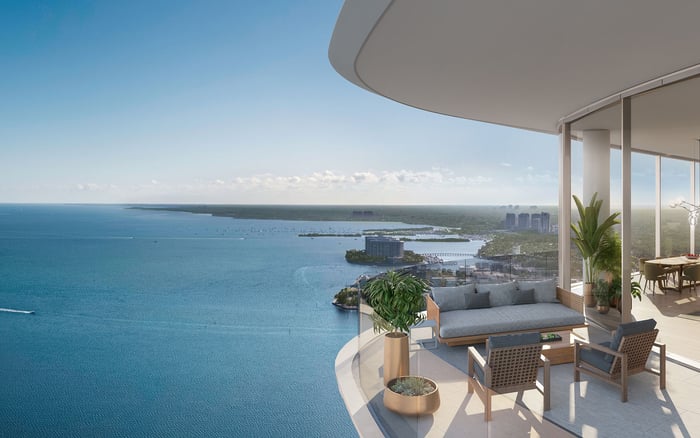
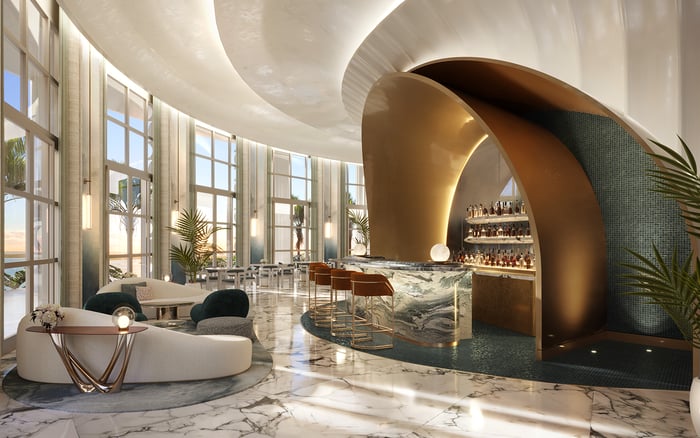
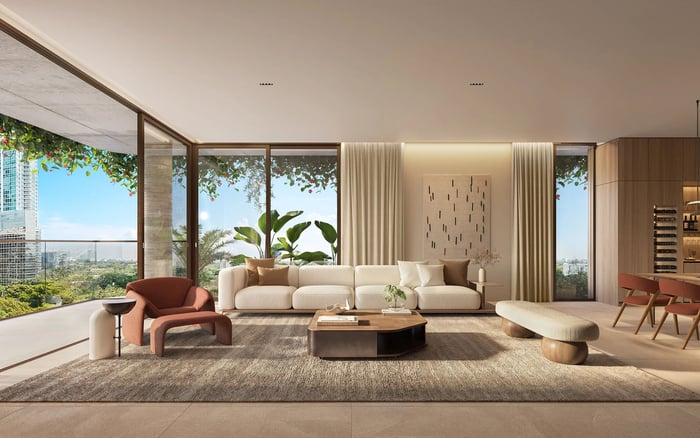
A buyer-oriented look at how layered lighting scenes can make a South Florida penthouse feel less like an occasional showcase and more like a complete, livable primary residence.
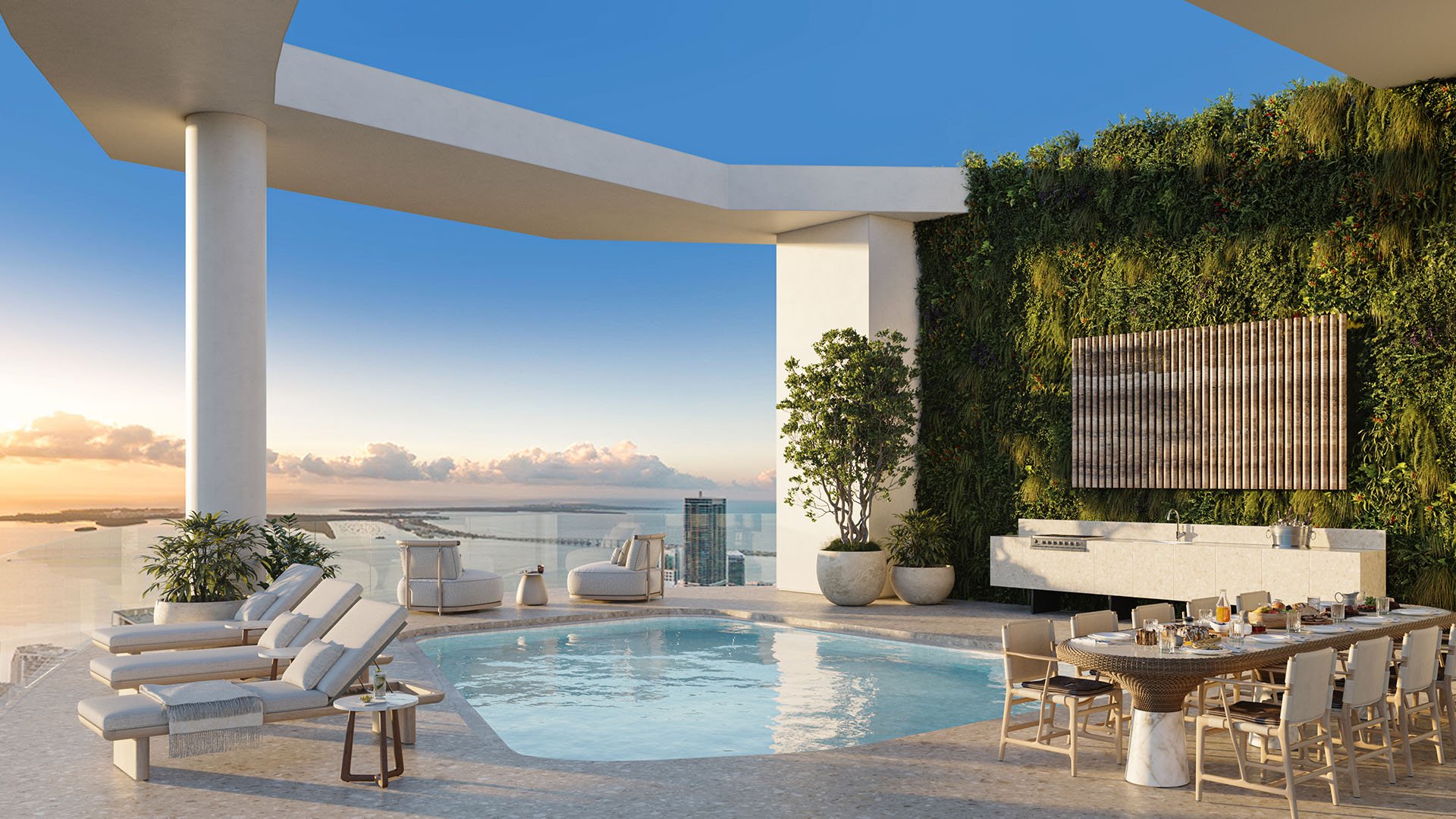
A penthouse can impress in the first five minutes and still fail its owner after five weeks. Volume, glass, views, stone, millwork, and ceiling height create the opening drama. Lighting determines whether that drama can become a daily rhythm. In South Florida, where daylight is intense, evenings are social, and views often run from ocean to skyline, the most successful penthouse residences are not simply bright. They are choreographed.
Lighting scenes separate a residence that always feels staged from one that understands the day. A breakfast scene should not feel like a cocktail scene. A late arrival from dinner should not require the same brightness as a family lunch. A stormy afternoon needs a different interior response than a clear winter morning. When those differences are anticipated, the penthouse begins to behave like a full-time home rather than a trophy reserved for select weekends.
This is especially important in Brickell, Miami Beach, Sunny Isles, Fisher Island, Palm Beach, and other South Florida addresses where glass walls, high-floor exposure, terrace living, and balcony transitions can make light both a privilege and a complication. The goal is not theatrical excess. The goal is control, softness, and ease.
A true primary residence must support repetition beautifully. It needs to handle the ordinary moments that rarely appear in listing photography: reading before sunrise, children doing homework, a quiet call from the study, a chef setting a table, a guest waking at night, a couple returning from an event, a house manager preparing the residence before arrival.
Lighting scenes allow these moments to be pre-composed. Instead of relying on dozens of switches, the home offers a set of intuitive moods: morning, day, entertain, dinner, art, evening, night, away, housekeeping, arrival. The names can vary, but the purpose is consistent: to remove friction from living.
For ultra-premium buyers, this is not a minor convenience. It is part of the residence’s operating quality. A penthouse with a thoughtful scene structure feels calmer because decisions have already been made. The owner is not managing lamps and dimmers. The residence is responding.
Many large apartments are overlit because brightness is mistaken for luxury. In practice, the finest homes rely on layers. Ambient light gives the room its general level. Accent light brings texture to art, stone, plaster, cabinetry, and sculpture. Task light supports the kitchen, vanity, desk, and reading chair. Decorative fixtures provide identity and proportion. Exterior and perimeter light extend the eye beyond the glass.
When these layers are separated, a scene can be precise. A dinner scene might dim the ceiling, warm the dining pendants, graze a feature wall, and keep the kitchen at a practical level. A late-night scene might leave only path lighting, soft cove light, and a restrained glow at the entry. A view scene might reduce interior reflection so the skyline or ocean becomes the focal point.
The best systems make this feel effortless. A room should never announce that it is automated. It should simply feel right at the right time.
South Florida penthouses often live through glass. That can be extraordinary, but it creates two design challenges. First, abundant daylight can flatten interiors during the day if materials are not supported by subtle task and accent lighting. Second, after dark, glass becomes reflective. If interior light is too strong or poorly aimed, the owner sees the room mirrored back instead of the view.
Lighting scenes help address both issues. Daytime scenes can support work areas without competing with sunlight. Sunset scenes can gradually warm the interior as natural light falls. Evening scenes can lower ceiling output and shift emphasis to vertical surfaces, art, lamps, and low-level architectural details. The residence remains luminous, but the glass is not turned into a mirror.
This matters most in high-exposure homes with wraparound rooms, open corners, and outdoor rooms that continue the living space. The transition from living room to terrace should feel fluid, not abrupt. Balcony lighting should preserve the night view, not flood it.
Kitchens often expose weak lighting design. A show kitchen may photograph beautifully with pendant lights alone, but daily use requires layered task light at counters, island, cooktop, and prep zones. The same kitchen may need a quiet morning level, a practical chef level, and a warm entertaining level. One switch cannot do all three.
Primary suites are equally revealing. A bedroom in a penthouse should be able to wake slowly, dress accurately, read comfortably, and wind down without glare. Closets need color-conscious light. Vanities need flattering, balanced illumination. Bathing areas benefit from soft indirect light that avoids the clinical feeling of a hotel corridor.
Circulation deserves attention as well. Long galleries, private elevator foyers, stair runs, powder rooms, and vestibules should be part of the scene logic. These spaces form the emotional sequence of arrival. In a full-time residence, the path from elevator to living room is experienced constantly, not occasionally.
Collectors often understand lighting before they understand controls. Art needs accuracy, consistency, and flexibility. But a penthouse is not a gallery. The art lighting must coexist with seating, dining, views, and daily movement. A scene dedicated to art can elevate the work without over-illuminating the entire residence.
Materials also change under light. Honed stone, polished metal, plaster, lacquer, bronze, oak, and linen each respond differently. A surface that appears serene in daylight can look harsh under the wrong evening temperature. A beautiful wall can disappear if the light falls only from the ceiling. A well-designed scene lets the architecture breathe.
Restraint is the mark of sophistication. The aim is not to activate every fixture at once. The aim is to know what should remain off.
Lighting should be reviewed as seriously as millwork, appliances, audio, and window treatments. Buyers should ask whether the residence has a centralized control system, whether scenes can be renamed and adjusted, and whether key rooms have independent layers. Whenever possible, they should test the home at different times of day, not only during a midday showing.
Ask how the entry sequence feels at night. Ask whether the primary suite has a true nighttime path. Ask whether the terrace and balcony lighting can be used without disturbing the view. Ask whether housekeeping has a dedicated bright setting. Ask whether entertaining can be handled without improvising every dimmer.
Most importantly, ask who will tune the scenes after move-in. Even a well-designed system needs refinement once furniture, art, rugs, and the owner’s patterns are in place. A penthouse becomes personal only after the lighting is adjusted around actual life.
The most compelling penthouses do not require constant negotiation. They anticipate. They welcome an owner home without glare. They let a dinner party expand from kitchen to living room to terrace. They soften the primary suite at night. They make the morning feel composed before anyone has had coffee.
This is why lighting scenes have become a serious consideration for full-time luxury living. They are not gadgets. They are spatial memory. In a market where views, amenities, and finishes can all be exceptional, the residences that live best are often the ones that understand time.
What is a lighting scene in a penthouse? A lighting scene is a preset combination of dimming levels, fixtures, and zones designed for a specific moment, such as dining, arrival, morning, or evening.
Why does lighting matter more in a penthouse than in a smaller home? Larger rooms, taller ceilings, glass walls, and outdoor transitions make lighting more complex. Scenes help the home feel intimate rather than cavernous.
Should lighting scenes be planned before furniture is installed? The infrastructure should be planned early, but final tuning is best after furniture, art, and window treatments are in place.
How many scenes does a full-time residence need? Most homes benefit from a concise set of practical scenes rather than too many options. The right number depends on lifestyle and room complexity.
Can a terrace or balcony be included in lighting scenes? Yes. Exterior zones can be coordinated with interior scenes so outdoor living feels connected while preserving views and privacy.
What is the most common lighting mistake in luxury penthouses? Over-lighting from the ceiling is common. It can create glare, flatten materials, and make the residence feel less intimate at night.
Does art require a separate lighting scene? Often, yes. A dedicated art scene can highlight works while keeping the rest of the room balanced and comfortable.
Are lighting scenes useful for owners who travel often? Yes. Arrival, away, and housekeeping scenes can make the residence easier to manage before, during, and after travel.
Should buyers test lighting during a showing? They should ask to see evening, entertaining, and nighttime settings if available. Daylight alone rarely reveals how a residence will live.
Can an existing penthouse be improved with new lighting scenes? In many cases, yes. The scope depends on wiring, fixture layout, control compatibility, and how much architectural work the owner is willing to undertake.
For a tailored shortlist and next-step guidance, connect with MILLION.
If branded residences are on your mind — as a home or as an allocation — we would be glad to share what we are seeing, privately.
Begin a quiet conversation