A refined look at how interior staircases can shift a South Florida penthouse from occasional showpiece to layered, livable primary residence.
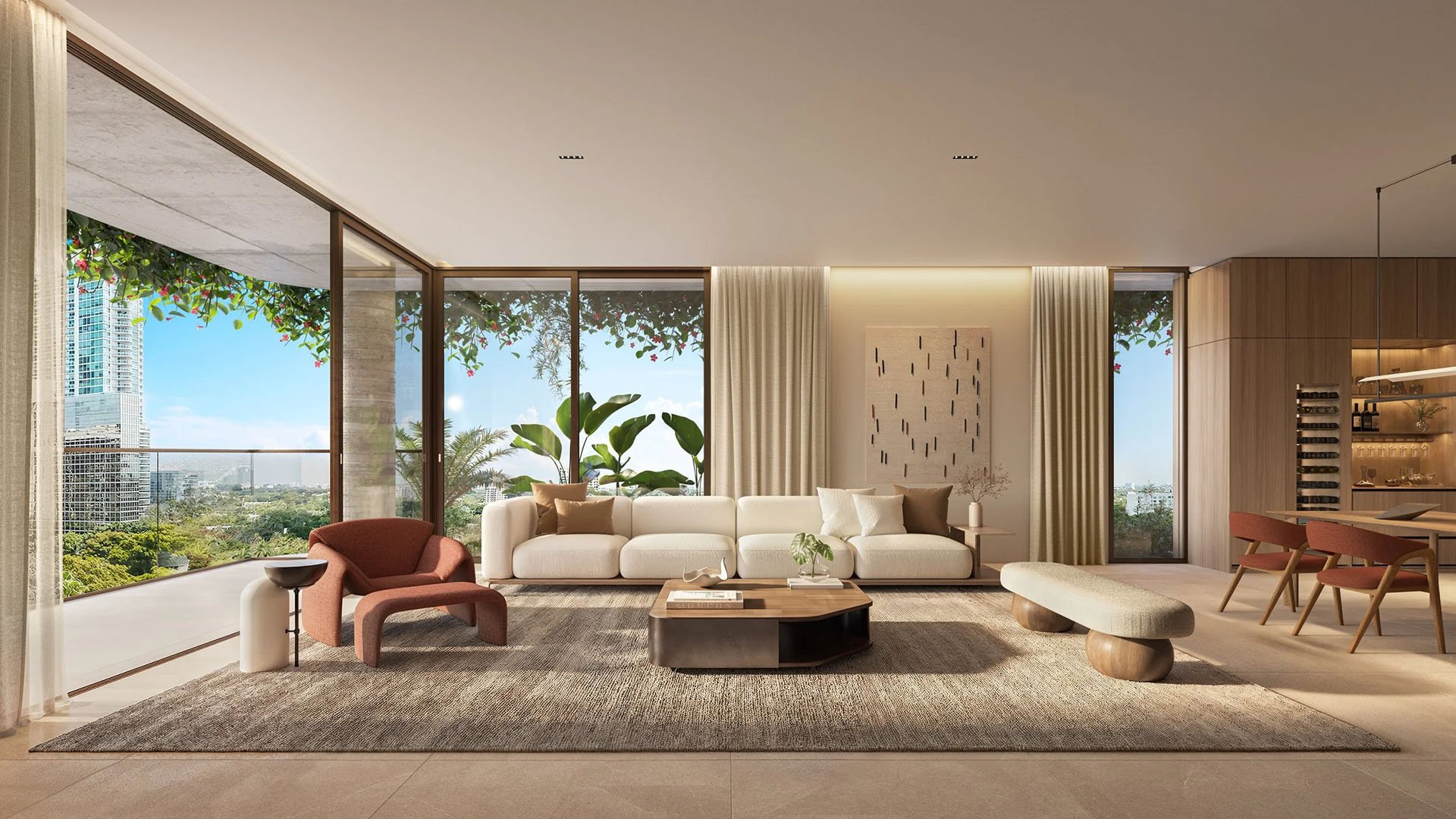
In a South Florida penthouse, an interior staircase is never merely a way to move between floors. It signals how the home is meant to be lived in. For a buyer considering a full-time residence rather than a seasonal perch, that distinction matters. A stair can make a high-rise home feel less like a large apartment and more like a private house suspended above the city, the bay or the ocean.
The strongest duplex and triplex penthouses use the staircase as a quiet organizing device. It separates public and private life without cutting off the connection between them. Guests may arrive into a dramatic entertaining level, while bedrooms, workspaces or family rooms sit above or below with a calmer rhythm. In that sense, vertical living becomes a form of privacy, not a complication.
South Florida buyers often focus first on views, ceiling heights, terrace depth and finishes. Those elements matter, but the staircase determines whether the residence feels intuitive after the first impression fades. A beautiful stair that interrupts daily flow can become a frustration. A thoughtfully placed one can make the entire home feel gracious, legible and genuinely livable.
A single-level penthouse can be extraordinarily convenient, especially for buyers who prioritize ease. Yet a multi-level plan offers something different: hierarchy. It gives the residence a sense of arrival, progression and destination. That quality is particularly valuable for owners who entertain frequently but still want bedrooms, offices and quiet rooms to remain protected.
The staircase can also create emotional distance within the home. A dinner party can occupy one level while the primary suite feels removed. Children or extended family can use a separate lounge without competing with the main salon. Staff circulation, service access and storage can be handled more discreetly when the plan allows for layers.
This is where a penthouse begins to approach the psychology of a townhouse or estate, while retaining the security, services and outlook of a condominium. In Brickell, Miami Beach, Sunny Isles and other vertical luxury markets, that hybrid quality can be compelling. The owner gets elevation and amenities without giving up the residential feeling of rooms that unfold over time.
Not every interior stair supports full-time use. Some are designed as sculptural moments first and practical elements second. A floating stair with delicate treads may photograph beautifully, but the buyer should consider how it feels at night, in formal shoes, with pets, with luggage or after a long flight. Full-time living asks different questions than occasional entertaining.
Tread depth, handrail comfort, lighting and landing placement all matter. The best stairs are ceremonial without becoming theatrical. They allow a graceful ascent but do not demand attention every time someone wants a book, a sweater or a quiet room. In a primary residence, convenience is luxury.
Acoustics are another subtle test. Open stairs can transmit conversation, music and television sound between levels. That may be desirable in a highly social home, but less ideal when one person is working and another is entertaining. Buyers should stand on each level, listen and imagine ordinary routines. The goal is not silence, but control.
The first question is placement. A stair near the entry can create immediate drama and help define the foyer. A stair deeper in the plan may preserve privacy and keep circulation away from the formal arrival. Neither is inherently better; the right answer depends on how the owner lives.
The second question is its relationship to light. A stair placed near glass can become a luminous architectural feature, especially at sunset. Yet it can also consume valuable view frontage if handled poorly. In a waterview residence, the stair should amplify the horizon, not compete with it.
The third question is future flexibility. A buyer may be perfectly comfortable with stairs today, but a full-time residence should be evaluated over a longer horizon. Some multi-level penthouses include elevator access to more than one level, while others rely primarily on the interior stair. Without making assumptions, buyers should verify how each level is reached, how deliveries move and how private areas remain accessible.
Finally, consider furniture movement. Oversized sofas, art, rugs and beds are part of the high-end lifestyle, but they require practical paths. A staircase that feels elegant to the eye should also be assessed for turns, landings, ceiling clearance and service logistics.
Materials set the tone. Stone can read formal and architectural. Wood can soften a glassy high-rise envelope. Metal and glass can feel weightless, but they require precision so the stair does not become cold or visually noisy. In the strongest residences, the stair speaks the same language as the kitchen, millwork, flooring and lighting.
Lighting should be layered rather than obvious. Step lights, concealed wall washes, pendant fixtures and natural light can work together, but restraint is key. A stair should remain safe at night without turning the home into a lobby. This distinction is important for buyers moving from single-family homes into new-construction condominiums, where shared-building grandeur can sometimes influence private interiors.
Artwork also changes the experience. A stair wall can become a gallery, allowing the home to unfold vertically with intention. Landings can host sculpture, seating or a framed view. These moments are not merely decorative. They slow the pace of movement and make the residence feel inhabited rather than staged.
A multi-level penthouse can attract a specific buyer: someone who wants the scale and separation of a house with the convenience of a staffed building. That audience may be smaller than the audience for a single-level residence, but it can be deeply motivated when the plan is right.
For resale, the staircase should feel like an asset rather than an obstacle. Buyers will respond to drama, but they will also test daily logic. Is the primary suite easy to reach? Are guests naturally directed to the entertaining level? Does the kitchen relate properly to dining and outdoor space? Does the stair create privacy or merely consume square footage?
The most enduring penthouses tend to balance spectacle with calm. They do not force the owner to choose between architectural impact and domestic ease. When the stair resolves circulation, enhances proportion and supports privacy, it becomes part of the residence’s long-term identity.
The simplest way to evaluate an interior stair is to imagine a full, ordinary day. Morning coffee, work calls, packages, guests, children, pets, dinner, late-night water, weekend visitors. If the stair enhances these moments, the penthouse can live beautifully. If it complicates them, the initial glamour may fade.
A true full-time penthouse does not rely on view alone. It needs rhythm, storage, privacy, circulation and comfort. The staircase can be the element that brings those qualities together, turning impressive volume into a home with a beginning, middle and destination.
Does an interior staircase make a penthouse feel more like a house? It can, especially when it separates entertaining, bedrooms and family areas into clear zones.
Is a duplex penthouse practical for full-time living? It can be practical if the stair placement, lighting, safety and access between levels support daily routines.
What should buyers check first in a multi-level penthouse? Start with circulation: how people, furniture, deliveries and guests move through each level.
Are floating staircases suitable for everyday use? They may be, but buyers should evaluate tread comfort, handrails, lighting and ease of use at night.
Can a staircase improve privacy in a penthouse? Yes, vertical separation can keep bedrooms, offices or family rooms removed from social areas.
Does a stair reduce usable space? It occupies floor area, but a well-designed stair can organize the plan and add architectural value.
Should families consider stair safety? Yes, especially with children, pets or older relatives who may use the residence regularly.
How does a stair affect entertaining? It can create a memorable arrival and help keep private spaces separate from guest areas.
Is single-level living better than a duplex penthouse? Neither is universally better; the right choice depends on lifestyle, mobility and privacy preferences.
What makes a penthouse suitable as a primary residence? It needs comfort, storage, intuitive circulation, acoustic control and private spaces that work every day.
If you'd like a private walkthrough and a curated shortlist, connect with MILLION.
If branded residences are on your mind — as a home or as an allocation — we would be glad to share what we are seeing, privately.
Begin a quiet conversation