For South Florida penthouse buyers, backup internet has become part of the quiet infrastructure that separates a beautiful second home from a dependable full-time residence.

A penthouse can seduce with volume, light, terrace scale, and a horizon that seems to belong exclusively to the residence. Yet the decision to live there year-round often turns on something less visible: whether the home can remain connected when ordinary systems falter. Backup internet is not a showpiece amenity. It is the quiet layer that allows a South Florida penthouse to operate as a principal residence rather than a beautiful escape.
For the modern luxury buyer, connectivity is no longer confined to a home office. It supports security systems, climate controls, entertainment, building access, wellness technology, telemedicine, family communication, and the private rhythm of work that follows many owners across time zones. A residence can have the right architecture and still feel provisional if its digital infrastructure is fragile.
This is why the conversation has moved beyond speed. Speed is expected. Resilience is the differentiator.
The traditional second-home penthouse was designed around arrival and retreat. Its success depended on views, service, privacy, and ease. A full-time residence asks more from the same space. It must perform on a Tuesday morning as gracefully as it entertains on a Saturday night.
That shift changes the due diligence. A buyer who plans to live in the sky year-round is not merely asking, “Is the internet fast?” The sharper question is, “What happens when the primary connection is unavailable?” The answer may involve multiple service pathways, automatic failover equipment, cellular backup, satellite options, network segmentation, and power continuity for the equipment that keeps the system alive.
In a penthouse, the stakes feel amplified. Owners are often farther from building service areas, surrounded by more integrated technology, and dependent on systems that should feel effortless. The goal is not to create a visible command center. The goal is to make the technology disappear into the architecture until it is needed.
The most refined connectivity plan begins with simple, practical questions. Is more than one internet provider available to the residence? Are the pathways physically diverse, or do they depend on the same vulnerable route? Does failover happen automatically, or does someone need to reset equipment manually? Is the networking equipment supported by backup power? Can building management or a private technician access relevant components without disrupting the household?
These questions belong beside the review of mechanical systems, glazing, elevators, and generator capacity. They are not purely technical details. They affect whether an owner can take a confidential video call, whether a security camera remains available, whether a child can attend an online session, and whether the home feels calm during a service interruption.
The best answers are often layered. A primary wired connection may be paired with an alternate wired option where available. A cellular solution may provide continuity for essential systems. A satellite option may be considered for additional resilience. The specific design should be tailored to the building, the unit, the owner’s privacy needs, and the realities of installation.
Luxury has always been partly about not having to think about the machinery behind comfort. The finest residences conceal complexity. Backup internet belongs in that tradition. It is not about filling a home with visible devices. It is about designing continuity into the residence so daily life can proceed without drama.
This matters in markets where the penthouse is increasingly expected to support multiple lives at once. A single residence may serve as an executive office, family base, wellness retreat, social setting, and private media environment. Each role depends on reliable connectivity. When the connection fails, the compromise is not abstract. It touches time, privacy, security, and convenience.
A thoughtful network design also protects the tone of the home. Rather than improvised routers, exposed wires, and temporary fixes, the system can be planned with the same discipline as lighting, millwork, and acoustic treatment. Technology should serve the atmosphere, not intrude on it.
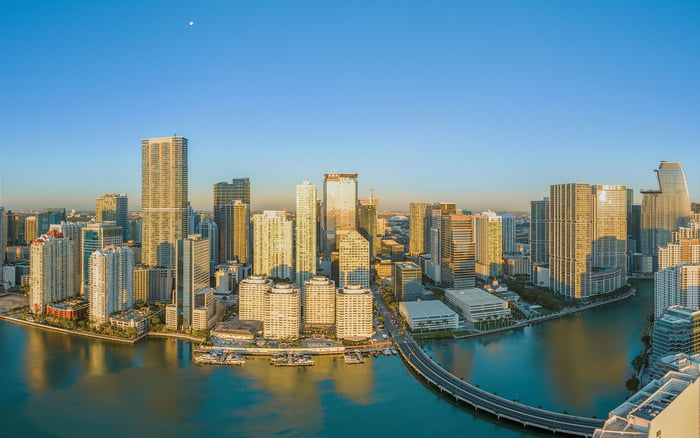
In Brickell, the full-time penthouse often functions as an extension of a global workday. The connectivity expectation is closely tied to productivity, discretion, and the ability to shift from private living to professional obligations without leaving the residence. A backup plan can be as important as desk placement or conference-ready lighting.
In Miami Beach, the question may be more lifestyle-driven but no less serious. Owners who want a residence to support extended stays need confidence that streaming, security, remote work, and family coordination will not depend on a single fragile connection. The best systems respect the relaxed character of the home while reinforcing its dependability.
In Sunny Isles, high-floor living makes digital resilience especially relevant to the perception of ease. A penthouse with sweeping views should not feel isolated from essential services. A resilient network helps preserve the sense that the residence is both elevated and fully practical.
In West Palm Beach, where many buyers value privacy, culture, and a more residential cadence, backup internet supports the transition from occasional use to daily living. It allows the home to accommodate professional obligations and household routines without sacrificing composure.
Across these submarkets, the buyer’s shorthand may differ, but the theme is consistent: penthouse, Brickell, Miami Beach, Sunny Isles, West Palm Beach, and second-home decisions increasingly intersect with digital resilience.
Backup internet should be addressed early enough to avoid aesthetic compromise. Equipment locations, cabinet ventilation, cable paths, access panels, and signal distribution all benefit from planning. In a finished penthouse, retrofitting can be possible, but it is rarely as elegant as designing the system before the home is fully dressed.
Owners should also think about which systems need priority. Not every device requires full continuity. A sophisticated plan can distinguish between essential functions, such as security, communications, access, and climate monitoring, and discretionary uses, such as entertainment or guest networks. This hierarchy keeps the solution efficient and easier to manage.
Privacy deserves equal attention. A full-time residence should not rely on default passwords, unmanaged devices, or informal setup choices. Network architecture can separate household users, guests, staff, building interfaces, and smart-home components. For a high-profile owner, that separation is part of residential discretion.
Backup internet is most powerful when considered before negotiation, renovation, or move-in. A buyer can ask the right questions, request confirmation of available service options, understand building rules, and estimate the scope of any upgrades. If the residence is already complete, a specialist can still evaluate the existing network and identify practical improvements.
The larger point is that connectivity is no longer a minor afterthought. It is part of habitability at the top of the market. A penthouse becomes a full-time residence when its beauty is matched by dependability. The view may close the emotional case, but continuity often closes the practical one.
Why does backup internet matter in a luxury penthouse? It helps the residence remain functional when the primary connection is interrupted, supporting work, security, entertainment, and daily household systems.
Is faster internet the same as better resilience? No. Speed addresses performance during normal operation, while resilience addresses what happens when a primary connection fails.
Should backup internet be reviewed before purchasing? Yes. Buyers should understand available providers, equipment locations, building rules, and whether automatic failover is possible.
Does a full-time residence need a different setup than a second home? Often, yes. A full-time home usually supports more daily systems, more professional use, and a lower tolerance for interruption.
Can backup internet be added after closing? In many cases it can, but earlier planning usually allows cleaner integration, better equipment placement, and fewer aesthetic compromises.
What systems should remain connected first? Priority typically goes to security, communications, access, climate monitoring, and essential smart-home controls.
Should guest Wi-Fi be separated from household systems? Yes. Separate networks can improve privacy, simplify management, and reduce exposure between guests, staff, and core residential systems.
Does backup power matter for internet equipment? Yes. A secondary internet path is more useful when the modem, router, switches, and related equipment can remain powered.
Is cellular backup enough for every penthouse? It depends on the residence, building conditions, usage needs, and owner expectations. It may be one layer rather than the entire solution.
How should buyers evaluate a penthouse for full-time digital living? They should treat connectivity like a core building system and review redundancy, privacy, access, equipment support, and service options.
When you're ready to tour or underwrite the options, connect with MILLION.
If branded residences are on your mind — as a home or as an allocation — we would be glad to share what we are seeing, privately.
Begin a quiet conversation