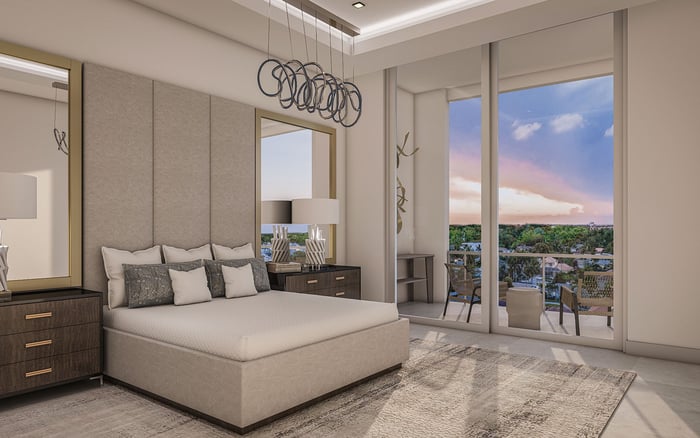
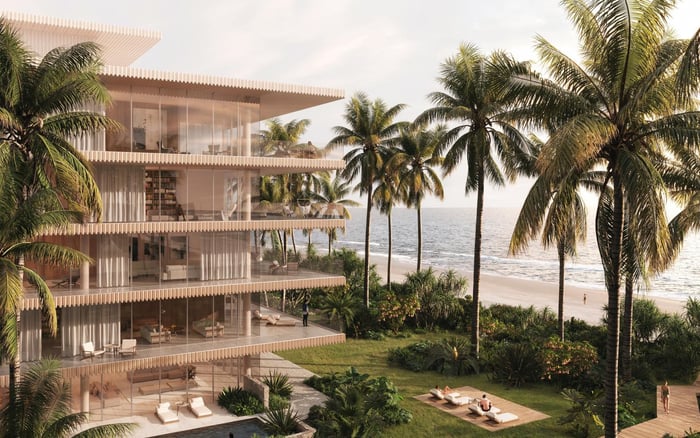
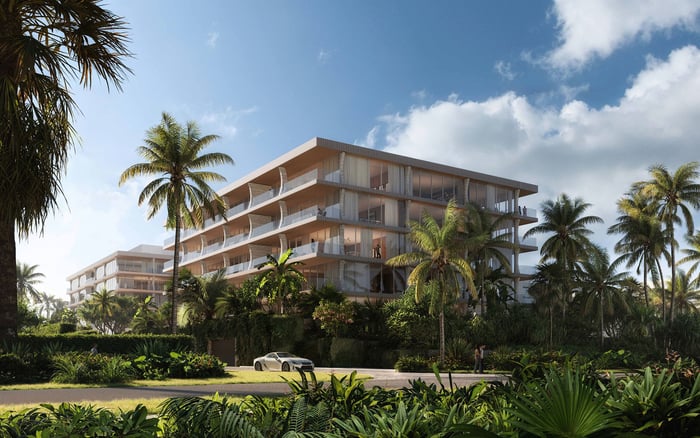
A buyer-focused look at The Berkeley Palm Beach and how its amenity strategy supports the ordinary weekday: work, wellness, family logistics, service, climate comfort, and quality of life.
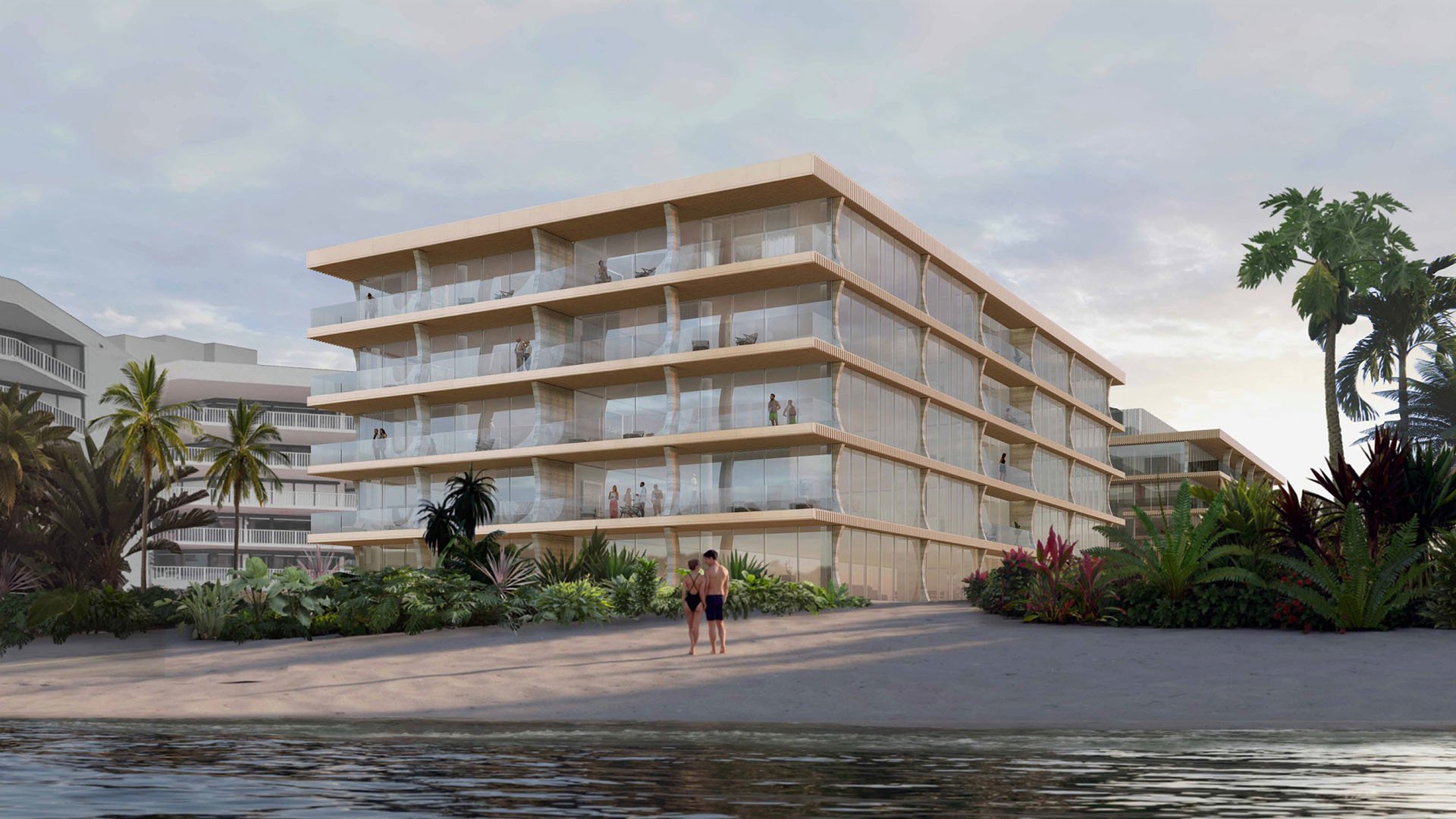
In Palm Beach, the most persuasive amenity programs are no longer judged only by how they perform on a Saturday afternoon. They are judged by what they solve at 7:15 on a Tuesday morning, between school drop-off, a work call, a wellness appointment, a delivery, and an early dinner that should feel relaxed rather than improvised.
That is the more revealing lens for The Berkeley Palm Beach. Its amenity narrative is best understood as an integrated ecosystem for ordinary days, not simply as a collection of attractive rooms. For the buyer who expects one residence to function as home, workplace, service hub, and social setting, the weekday becomes the measure of design intelligence.
The strongest luxury buildings make daily life feel edited. They reduce the number of decisions a resident must make, shorten transitions, and provide settings that match the cadence of an actual schedule. In that sense, The Berkeley’s relevance sits less in spectacle and more in continuity: morning movement, focused work, midday coordination, post-work recovery, and small moments of social life that do not require leaving the building.
A traditional amenity conversation begins with nouns: fitness center, lounge, lobby, terrace, pool, concierge. A more sophisticated conversation begins with verbs: arrive, prepare, focus, move, host, recover, reset. That shift matters for West Palm Beach and Palm Beach buyers because the residence is increasingly expected to absorb more of the day.
At The Berkeley, the useful question is not whether an amenity exists in isolation. It is whether the building experience connects spaces, services, and programming in a way that makes the weekday easier. A resident should be able to move from the garage to the lobby, from elevators to a work-oriented space, and from a wellness routine to a social moment without feeling that each step is disconnected from the next.
This is where service becomes part of architecture. Package handling, transportation coordination, security, and concierge-style support are not decorative benefits. They are operating systems that help the day hold together. For a buyer comparing new-construction options such as Alba West Palm Beach or Forté on Flagler West Palm Beach, the question is increasingly practical: which building removes the most friction without feeling overmanaged?
Wellness has a different meaning during the week than it does during a vacation. On weekends, it may be leisurely. On weekdays, it has to be reliable. The value lies in being able to begin the morning with movement, stretch after a flight, or recover after the workday without losing time to logistics.
For Palm Beach residents, that rhythm can be subtle but consequential. A building that supports an early workout, a shaded outdoor pause, or a calm post-work reset allows wellness to become habit rather than aspiration. The best amenity programming does not need to be loud. It simply needs to be available at the right moments and intuitive enough to fit into a demanding schedule.
A pool may be part of that equation, but its weekday value is not limited to swimming. It can serve as a psychological reset between professional obligations and personal time. A terrace can do similar work, especially when it offers the feeling of open air without requiring a resident to plan an outing.
The modern luxury residence must respect the fact that work is no longer confined to a conventional office. Residents may need to take calls, review documents, host a small meeting, or step away from the household for a focused hour. In a Palm Beach-area building, work-oriented spaces can be as valuable as leisure amenities when they are quiet, discreet, and properly separated from the most social parts of the property.
The Berkeley’s weekday story is strongest when understood through that lens. The building is not merely offering places to gather. It is supporting the practical reality that residents may move between domestic life and professional life several times in a single day.
This is also where privacy becomes a luxury amenity in itself. A work call taken outside the residence should not feel exposed. A meeting space should not feel like lobby overflow. A shared lounge should have enough design discipline to support concentration as well as conversation. Buyers comparing Mr. C Residences West Palm Beach and other West Palm Beach residences will notice whether shared spaces are designed for actual weekday use or only for brochure photography.
Weekday life is often less glamorous than weekend life, which is precisely why amenities matter. School schedules, tutoring, children’s activities, visiting relatives, deliveries, and household coordination all place demands on a residence. A building that offers flexible shared spaces can give families more ways to organize the day without turning the private home into the only stage for every activity.
This does not mean a building needs to be programmed like a club every hour. In fact, discretion is part of the appeal. The point is to provide enough variety that a child can be occupied, a parent can answer a call, a package can be managed, and a guest can be received without each event creating friction.
For buyers who live in South Florida full time, this is central to lifestyle value. The seasonal-resort fantasy is easy to understand, but the weekday residence has to do more. It must work when the calendar is crowded and the weather is inconvenient.
South Florida’s climate changes the way amenities should be evaluated. Heat, humidity, rain, and stormy afternoons make indoor, shaded, covered outdoor, and open-air spaces more than matters of preference. They are part of the functional design of daily life.
A successful amenity program gives residents choices. There should be moments when one can enjoy outdoor air without full sun, moments when indoor calm is preferable, and transitions that feel protected rather than exposed. The experience begins before a resident reaches a marquee amenity room. Garage arrival, lobby sequence, elevator ride, corridor atmosphere, and terrace access all contribute to whether the building feels composed.
This is one reason amenity value can influence buyer perception beyond immediate convenience. A residence that works gracefully on an ordinary humid afternoon may leave a deeper impression than a space designed only for perfect-weather entertaining.
Amenity strength can support resale appeal, absorption, and rental demand, but the most credible way to discuss that value is through lived utility rather than unsupported numbers. Buyers remember buildings that make life easier. They also remember buildings where beautiful spaces feel underused because they do not align with daily needs.
The Berkeley’s weekday positioning is therefore both practical and emotional. Practical, because service, work, wellness, and family logistics all reduce time pressure. Emotional, because a well-orchestrated building gives residents the feeling that the day is being supported rather than constantly negotiated.
In the Palm Beach market, that distinction matters. The most compelling residences are not merely luxurious in finish. They are disciplined in how they choreograph daily life. For buyers considering The Ritz-Carlton Residences® West Palm Beach alongside The Berkeley, the question is not only which name feels prestigious. It is which residence best fits the private rhythm of Monday through Friday.
What makes The Berkeley Palm Beach relevant to weekday living? Its amenity program is framed around daily routines, including work, wellness, service, family logistics, and social transitions.
Is the weekday focus different from resort-style amenity marketing? Yes. Resort-style amenities often emphasize leisure, while weekday amenities are judged by how well they reduce friction in ordinary life.
Why do work-oriented spaces matter in a luxury residence? Residents may need private places for calls, focused tasks, or small meetings without leaving the building.
How should buyers evaluate wellness amenities? They should consider whether wellness spaces fit a real routine, especially early morning, midday, and post-work use.
Do service amenities affect quality of life? Yes. Concierge-style support, security, transportation coordination, and package handling can make the week feel more orderly.
Why are family logistics part of the amenity conversation? Weekday life often includes school schedules, tutoring, activities, guests, and household coordination that benefit from flexible spaces.
How does South Florida weather shape amenity value? Indoor, shaded, covered outdoor, and open-air spaces help residents move through heat, humidity, rain, and stormy afternoons.
Are transitions inside the building important? Yes. Garages, lobbies, elevators, corridors, and terraces shape the resident experience before any marquee amenity is used.
Can weekday amenities influence resale appeal? Strong amenity programming can support buyer interest, especially when it creates practical value residents can feel every day.
What is the best way to compare The Berkeley with other residences? Look beyond the amenity list and consider how each building supports the actual rhythm of Monday through Friday.
For a tailored shortlist and next-step guidance, connect with MILLION.
If branded residences are on your mind — as a home or as an allocation — we would be glad to share what we are seeing, privately.
Begin a quiet conversation