At Jade Ocean, the headline windstorm percentage is only the beginning of the insurance inquiry. A buyer should translate each deductible into dollars, identify its trigger and valuation base, test the association’s liquidity, and coordinate the result with personal HO-6 coverage. Current association records are essential because the supplied public information does not establish Jade Ocean’s present deductible, insured value, reserve balance, or allocation formula.
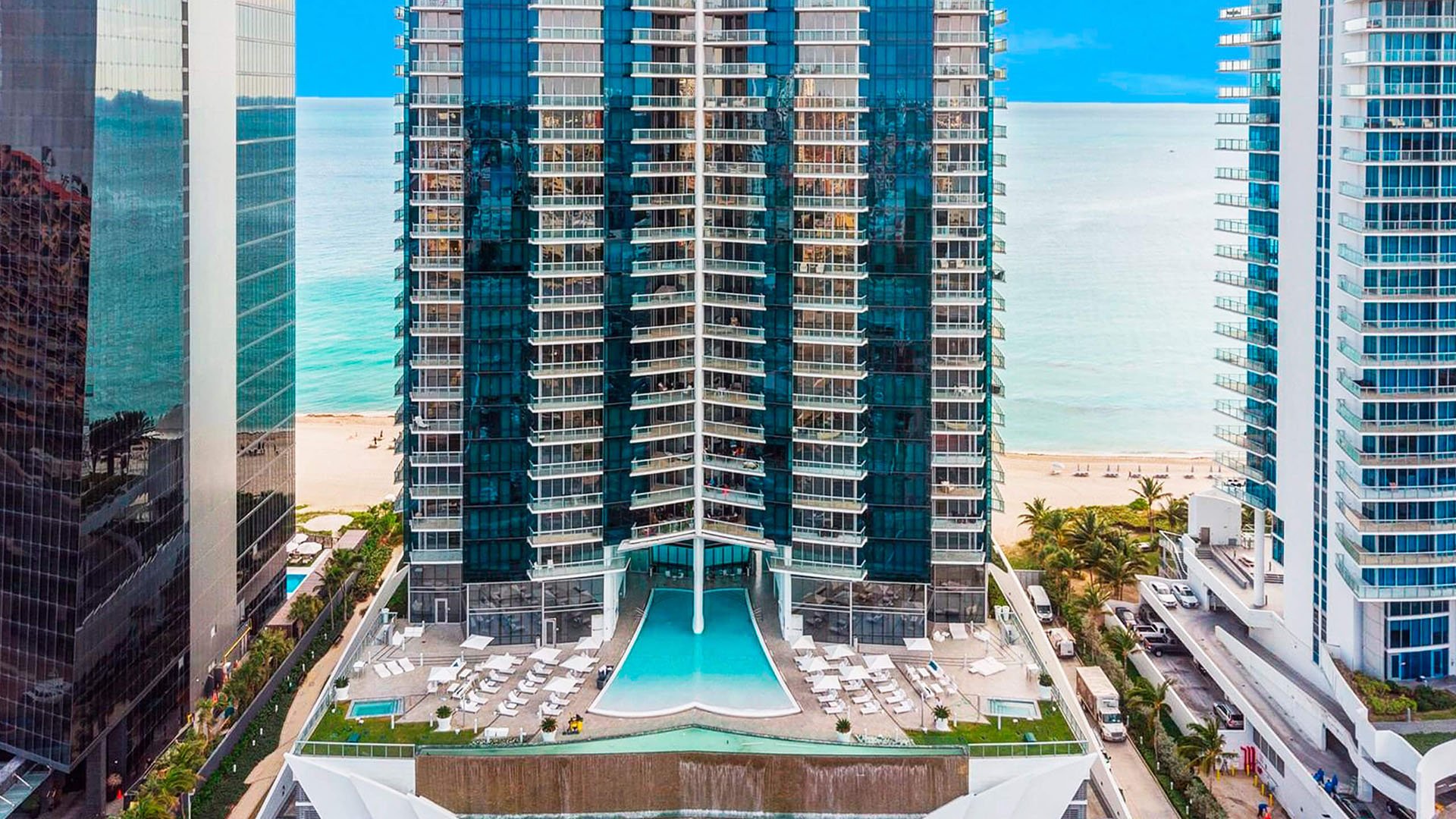
At Jade Ocean Sunny Isles Beach, at 17121 Collins Avenue, the most consequential insurance figure may not look dramatic at first. Florida condominium master policies often express wind or named-storm deductibles as a percentage of insured value. Yet a seemingly familiar percentage can represent a substantial first layer of uninsured loss when applied to a high-value oceanfront tower.
The practical question is not simply, “What is the deductible percentage?” It is, “How many dollars must the association fund after the applicable event?” The current public information supplied for this review does not establish Jade Ocean’s present master-policy deductible, total insured value, reserve balance, or owner-allocation formula. Those figures must be verified in current association records.
The meaningful measure of a percentage deductible is the dollar obligation it creates.
This distinction belongs at the center of an investment review. A sophisticated buyer may compare design, services, and location across Jade Signature Sunny Isles Beach, Jade Ocean, and other properties, but insurance economics demand a separate, document-led analysis.
The basic stress test is straightforward: multiply the applicable insured value by the deductible percentage to determine the association’s first loss. As a general illustration, a 5% deductible applied to a $30 million building value produces a $1.5 million deductible. This is an example only, not a representation of Jade Ocean’s coverage.
The calculation is reliable only after the buyer identifies the correct base. The percentage might apply to the tower’s total insured value, a scheduled location value, or another amount defined by the policy. The documents should also establish whether the deductible operates per occurrence, building, or location, and whether minimum or maximum dollar limits apply.
Florida requires hurricane-deductible options for commercial residential policies and requires the deductible to be disclosed in dollars even when it is percentage-based. A buyer should request the declarations page showing that dollar impact rather than accept a summary that presents only a percentage. Although hurricane and wind deductibles commonly fall within a 2% to 5% range in Florida, higher percentages can apply. The actual policy controls.
Windstorm, named-storm, and hurricane deductibles are not interchangeable labels. They may carry different triggers, percentages, and endorsements, making a side-by-side review essential. Florida’s hurricane-deductible period begins when the National Hurricane Center issues a hurricane warning for any part of the state and continues until 72 hours after the final watch or warning ends. A wind or named-storm provision may operate differently.
For an oceanfront residence, this trigger analysis should be completed before a storm, not reconstructed after one. The buyer’s adviser should identify which deductible applies to each plausible event and whether overlapping policy language creates uncertainty. The same discipline applies when evaluating newer Sunny Isles options such as St. Regis® Residences Sunny Isles. The point is not to presume identical coverage, but to make policy-specific diligence a consistent standard.
After covered damage, the carrier typically pays the covered amount less the master-policy deductible. The association then funds that deductible, generally through available operating funds or reserves, subject to the governing documents and the circumstances of the loss. If those resources are insufficient, the board may levy a special assessment.
That sequence raises three distinct questions. First, what is the association’s deductible in dollars? Second, how much unrestricted liquidity or eligible reserve funding is available? Third, how would any shortfall be allocated among owners?
The declaration, bylaws, and amendments may allocate deductible costs by percentage interest, equally by unit, or under another formula. In some frameworks, responsibility may shift to an owner whose negligence caused the damage. No allocation should be inferred from unit size, purchase price, or a verbal explanation. The controlling language should be read alongside the facts of the loss.
Reserve depletion matters even when no immediate assessment follows. Paying a deductible from reserves can reduce the funds available for other association needs. Total economic exposure may therefore include an assessment, diminished reserves, excluded damage, and underinsured property-not merely an owner’s mathematical share of a single deductible.
A unit owner can face two deductibles after the same storm: an allocated share of the association’s master-policy deductible and a separate wind or hurricane deductible under the owner’s HO-6 policy. The HO-6 contract should be reviewed for loss-assessment coverage that could respond to a valid association assessment, including its limits, deductible, exclusions, and triggering conditions.
The association and unit-owner policies should also be compared component by component. Responsibility may differ for structural elements, interior finishes, and personal property. Flood damage requires a separate analysis because wind coverage does not establish protection against storm surge or other flood losses.
This coordinated review is especially important in a resale transaction, where policies, endorsements, and budgets may have changed since the seller acquired the residence. The same principle applies across established coastal buildings, including Turnberry Ocean Club Sunny Isles: current documents carry more weight than assumptions based on a building’s profile.
A disciplined file should include the current insurance summary, declarations, all relevant endorsements, the association budget, reserve schedule, assessment notices, and pertinent board minutes. The buyer should also review prior wind, water, and hurricane claims because loss history can influence premiums, renewal terms, deductibles, and insurer availability.
The reserve schedule and current budget should then be tested against the deductible’s verified dollar value. The objective is not merely to confirm that reserves exist, but to determine whether accessible funds could absorb the association’s first loss without destabilizing other obligations. Any pending or recently approved assessment warrants review alongside board discussions of insurance renewals and claims.
This is the practical standard for buyer’s guides focused on high-value condominium ownership: obtain primary documents, reconcile their figures, and seek written clarification when terms conflict. Marketing materials and listing summaries cannot substitute for policy declarations or governing documents.
Financial exposure is only one part of storm diligence. Owners should obtain Jade Ocean’s hurricane plan and confirm responsibilities for balcony items, shutters, access permissions, and post-storm procedures. After a loss, the policy and association documents should clarify who may enter units, authorize emergency mitigation, document damage, and approve repairs.
Clear authority matters when time-sensitive work is required. An owner who understands access and documentation protocols is better positioned to protect the residence while preserving the claim record. Contact information for management, the association, and the owner’s insurance representatives should be current before hurricane conditions arise.
The final assessment should reduce the issue to a concise exposure map: each deductible in dollars, its trigger, the insured-value base, available association funding, the allocation formula, and the owner’s HO-6 response. It should separately flag excluded or underinsured property and flood exposure.
For Jade Ocean Sunny Isles Beach, this framework avoids both complacency and speculation. A large deductible does not automatically lead to an assessment, just as a healthy reserve balance does not by itself prove that funds are available for the loss. The quality of the decision rests on how the policy, reserves, condominium documents, and personal coverage operate together.
For a discreet review of Sunny Isles Beach opportunities and transaction priorities, connect with MILLION.
If branded residences are on your mind — as a home or as an allocation — we would be glad to share what we are seeing, privately.
Begin a quiet conversationThe current percentage and dollar amount must be confirmed in the association’s latest declarations and endorsements; the supplied public information does not establish them.
The percentage alone does not reveal the association’s first loss. It must be applied to the policy-defined insured-value base.
It depends on the applicable insured value. For illustration, 5% of $30 million equals a $1.5 million deductible, but this is not a Jade Ocean figure.
The association generally funds it through available funds or reserves, subject to governing documents and loss-specific exceptions.
A special assessment may be possible if association resources are insufficient, but the actual risk depends on current reserves, the deductible and the governing documents.
The declaration, bylaws and amendments may use percentage interest, equal shares per unit or another formula. The controlling documents should be verified.
Not necessarily. Their triggers, percentages and endorsements can differ, so each provision should be reviewed separately.
Yes. An owner may face an association assessment related to the master-policy deductible and a separate deductible under the unit’s HO-6 policy.
Loss-assessment coverage may respond to a valid assessment, depending on its limit, deductible, exclusions and trigger. The individual policy must be reviewed.
Not automatically. Flood and wind are separate coverage issues, so storm-surge and other flood exposure require an independent review.