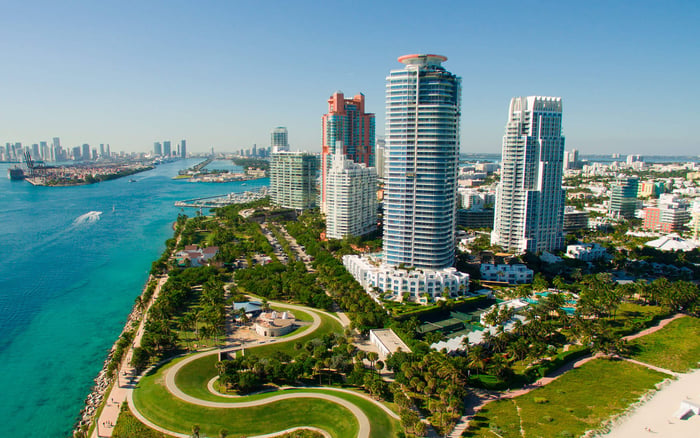
A discreet approach to financial verification at Faena House: distinguish purchasing capacity from funds origin, agree on acceptable evidence, and reserve sensitive disclosures for the appropriate recipients.

For a buyer considering Faena House Miami Beach, financial discretion deserves the same attention as the purchase itself. Demonstrating the ability to close should not automatically mean circulating a complete picture of personal finances. First establish what each recipient needs, why it is needed, and how it will be protected-before documents leave the buyer’s control.
Three concepts should remain distinct. Proof of funds demonstrates available purchasing capacity. Source of funds explains where the purchase money originated. Beneficial-ownership information identifies the people behind a purchasing entity. A document that answers one question may not answer the others, and a request for one should not silently expand into all three.
Privacy is best managed through precise disclosure, not incomplete disclosure. Treat the steps below as recommendations to agree with the relevant parties, not as established Faena House requirements.
Before submitting evidence, ask whether the request comes from the seller, the seller’s representative, the closing professional, or an association or management contact. Clarify whether it concerns offer qualification, a purchase application, or transaction compliance. Do not assume these recipients need identical files.
Ask for written confirmation of the acceptable document format, required amount, document age, and intended recipients. Establish whether a focused bank letter will suffice or statements are necessary. If the request is described as a building requirement, ask for the applicable written requirement rather than relying on an informal characterization.
For buyers also considering 57 Ocean Miami Beach, the same discipline applies: confirm acceptance for each transaction rather than treating an earlier approval as transferable. A buyer’s preferred privacy protocol is a starting point for agreement, not a rule binding every seller or closing professional.
A letter on official bank letterhead, signed by a bank officer and confirming available funds, can provide focused proof of purchasing capacity. If the recipient accepts it, the letter may avoid unnecessary exposure of transaction histories.
A proposed letter can include the buyer’s name, account type, partial account number, available balance in US dollars, issue date, and bank-officer contact information. Agree on the required balance disclosure before commissioning it. The letter should establish the relevant capacity without volunteering unrelated financial detail.
Recent bank statements or secure banking printouts are alternatives when they clearly identify the account holder and available balances. Brokerage or custodial statements require particular care: the relevant assets should be cash, money-market holdings, or otherwise available for withdrawal. Portfolio value and immediately available purchase funds are not interchangeable.
Escrow or attorney trust-account documentation may also be acceptable, but it establishes only the amount actually deposited. Evidence of a deposit should not be presented as proof of the entire purchase balance unless it supports that conclusion.
Redaction should remove unnecessary information while preserving verifiability. Ask whether nonessential account details may be masked, leaving the account holder, financial institution, date, and sufficient available balance visible. Obtain agreement before sending the edited document.
Do not obscure information a recipient must collect to meet an applicable compliance obligation. If closing requires broader disclosure than seller qualification, ask whether separate document packages can be used. The objective is appropriate access, not a promise that every recipient will accept the same abbreviated file.
For an offer at Setai Residences Miami Beach or Faena House, ask how recent the evidence must be. A practical preparation window is commonly 7-14 days before an offer, but that is not an established Faena House rule.
Foreign-account evidence may require translations, US-dollar equivalents, or additional bank verification. Clarify those expectations early so privacy decisions are not made under last-minute pressure.
When asked for source of funds, request a precise description of the question to be answered and the supporting documentation needed. A balance confirmation establishes that funds are available; it does not necessarily explain their origin. Conversely, evidence of origin may not establish present liquidity.
Ask counsel to help define the scope of the response before transmitting a broad financial archive. Establish which funds need to be explained, who needs the explanation, and whether the request rests on a transaction requirement or an applicable legal obligation. Do not assume a source-of-funds request calls for a complete source-of-wealth history.
Purchaser and account names also deserve attention. If an individual’s account will fund an LLC or trust purchase, the difference can prompt requests for documentation connecting the account holder, purchasing entity, and funds. Resolve that connection early rather than assuming personal proof of funds automatically establishes the entity’s purchasing capacity.
The federal residential real-estate geographic targeting framework dated October 2025 included Miami-Dade, Broward, and Palm Beach among covered Florida counties. It addressed certain purchases by legal entities without bank financing. A Miami Beach address or luxury price alone did not establish a reporting obligation.
Under requirements dated April 14, 2025, covered title insurers had to obtain information about beneficial owners and the individual primarily representing the purchasing entity, including identifying documentation. An LLC name alone was therefore not enough for a covered transaction.
These are dated requirements, not a substitute for closing-date advice. Have the closing professional and counsel confirm the applicable regime, thresholds, exemptions, effective dates, and required records. Do not treat historical geographic targeting requirements as proof that every Faena House buyer must disclose a complete financial history.
The same transaction-specific review belongs in a comparison involving The Surf Club Four Seasons Surfside. Neither a Surfside address nor a building name resolves the compliance question.
Where feasible, use a secure document portal or encrypted file transfer rather than ordinary email attachments. Before uploading, confirm the intended recipient and ask who can access, download, or forward the file. Ask about retention practices without assuming deletion will be available where records must be retained.
Authenticity matters alongside confidentiality. Verify a bank letter through a publicly listed bank or branch telephone number rather than relying solely on contact details printed on the letter. Agree on that verification route with the bank and recipient before circulation.
The strongest approach is straightforward: establish the purpose, agree on acceptable evidence, preserve required information, and limit unnecessary distribution. Privacy cannot eliminate legitimate disclosure obligations, but a carefully scoped process can keep proof of purchasing capacity from becoming an invitation to unrestricted financial scrutiny.
For a discreet perspective on your next South Florida residence, explore MILLION.
If branded residences are on your mind — as a home or as an allocation — we would be glad to share what we are seeing, privately.
Begin a quiet conversationProof of funds demonstrates available purchasing capacity. Source of funds explains where the purchase money originated.
No. Confirm the accepted format and any applicable written requirement with the relevant seller, closing professional, or building contact before sharing documents.
A focused bank letter may be acceptable if it confirms the required available funds and the recipient agrees. Confirm acceptance before commissioning the letter.
Ask to mask nonessential account details while preserving the account holder, institution, date, and sufficient available balance. Do not hide information required for applicable compliance obligations.
Yes, when the relevant assets are cash, money-market holdings, or otherwise available for withdrawal, subject to recipient acceptance. Total portfolio value alone may not establish available purchase funds.
Escrow documentation establishes only the amount actually deposited. It should not be presented as proof of the full purchase balance unless it supports that amount.
A common preparation window is 7–14 days before an offer, but this is not an established Faena House rule. Ask the recipient for its required document age.
No. Applicable transaction reporting requirements may require beneficial-owner and representative identification, so counsel should confirm what the closing requires.
Ask whether foreign-account documents need translations, US-dollar equivalents, or additional bank verification. Also confirm how the account holder will be connected to the proposed purchaser.
Use a secure portal or encrypted transfer where feasible and confirm who will have access. Verify bank letters through a publicly listed bank or branch number rather than relying only on the letter’s contact details.