A buyer-focused framework for separating advertised wellness amenities from usable capacity, documented air and water systems, and enforceable access rights at two branded residential addresses.
For a luxury buyer, wellness is less about the length of an amenity menu than the ease of maintaining a preferred routine. A morning workout, an available treatment appointment, and confidence in household air and water deserve the same scrutiny as a residence’s layout. The question is not simply what exists, but what ownership allows you to use, when, and at what cost.
At 888 Brickell by Dolce & Gabbana, an expansive planned amenity program warrants that examination. Buyers considering Four Seasons Hotel & Private Residences Fort Lauderdale should apply the same standard without assuming equivalent facilities or operating arrangements. Neither branding nor amenity imagery establishes superior filtration, easier reservations, or protected resident access.
888 Brickell is planned with more than 115,000 square feet of amenities encompassing fitness, wellness, dining, and social spaces. That figure does not measure dedicated wellness space. The announced residential count is 259, while the project also contemplates a hotel and hybrid residences. Buyers need to understand both the usable facilities and the population eligible to use them.
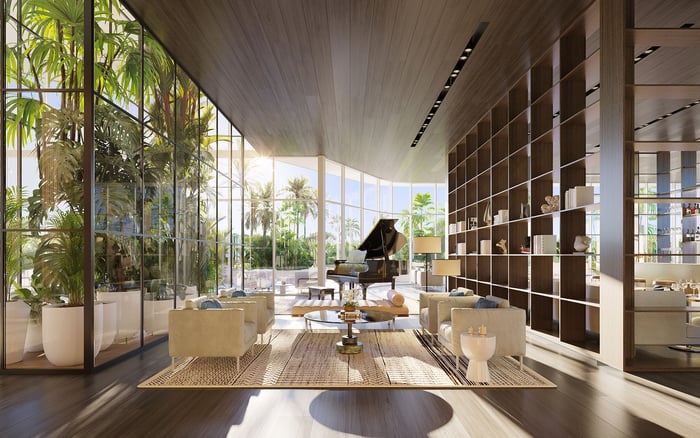
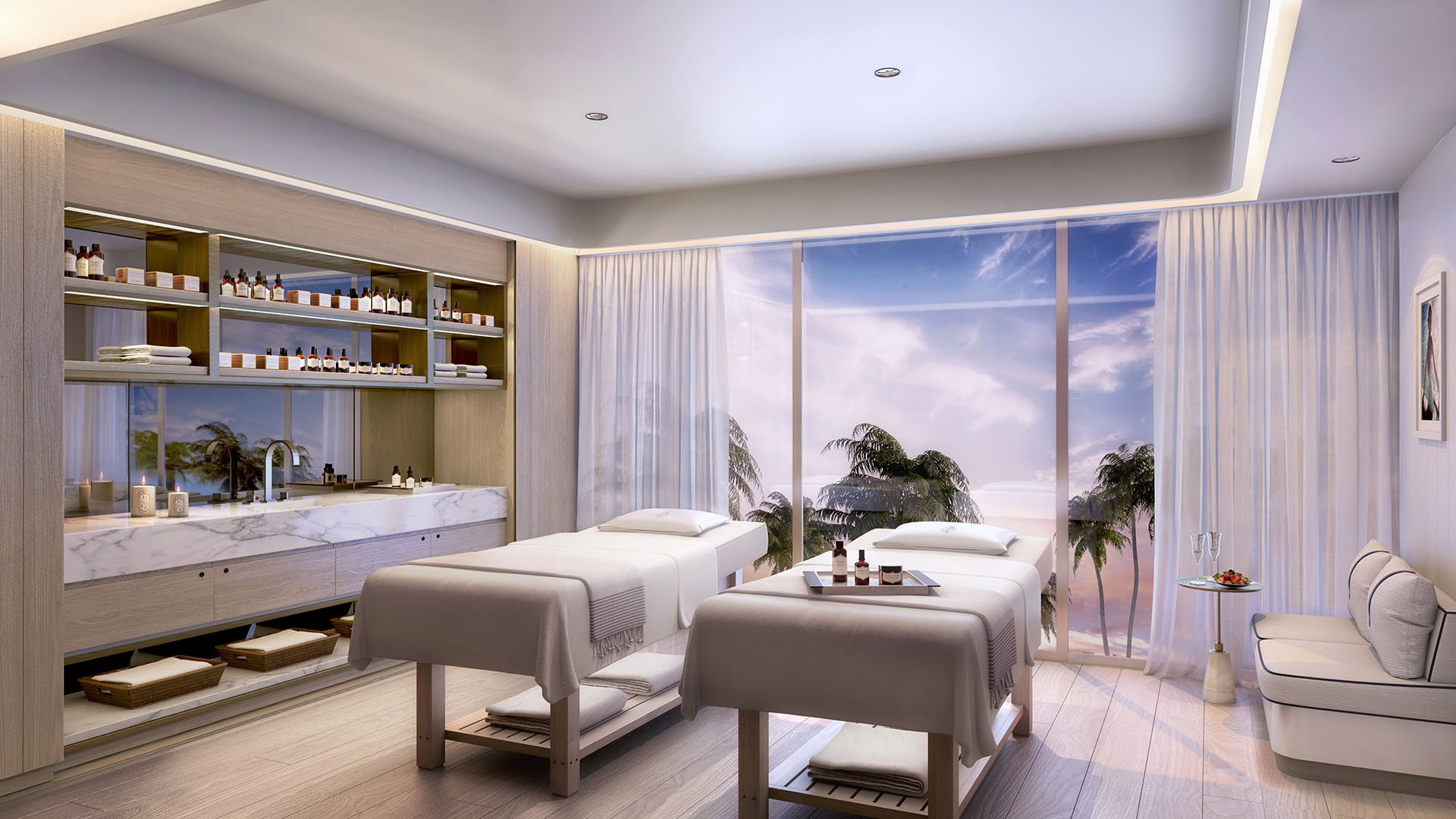
The planned offering includes an indoor racquet court, a fitness and wellness center, yoga and Pilates, and hot and cold plunge pools. The program also describes a full-floor spa and wellness center. These features establish breadth, not appointment availability or peak-hour comfort.
Request a room-by-room schedule showing equipment quantities, class capacities, treatment-room counts, hours, and staffing. Ask which users share each space: owners, tenants, hotel guests, invited visitors, or outside members, if permitted. Square footage cannot tell you whether your preferred class has space when you intend to attend.
Build the evaluation around your calendar. Ask how an owner would book a weekday morning class, a weekend treatment, and a recovery session after exercise. Request proposed operating schedules for planned facilities and current schedules wherever operations can be demonstrated. Distinguish a service available by arrangement from one routinely staffed.
At 888 Brickell, evaluate the advertised recovery spa, juice bar, bespoke massages, and IV therapy separately from ordinary fitness access. Their inclusion in the program does not establish complimentary use or coverage under ownership fees. Ask for service menus, pricing, provider arrangements, and cancellation terms before assigning them financial value.
The same discipline applies if your search extends to The Well Bay Harbor Islands: request evidence for the benefits that matter to you rather than transferring assumptions between addresses. A compelling wellness identity is a starting point for questions, not an answer to them.
Air quality deserves a technical review independent of the spa tour. Request separate mechanical design documents for the residence and shared spaces, covering filter ratings, outdoor-air supply, humidity control, corridor pressurization, and monitoring. Ask the reviewing engineer to distinguish design specifications from demonstrated operating performance.
For each system, identify who maintains it, who pays for replacement components, and whether owners control settings within their homes. Ask whether promised performance applies throughout the residence or only to selected equipment or rooms. Where systems are operating, request available maintenance and monitoring records; where they remain planned, ask what documentation will accompany delivery.
Do not treat an unspecified filtration system as absent-or a wellness designation as a technical certification. Neither property should receive a comparative advantage for air quality without documentation addressing the same spaces and performance criteria.
Keep domestic-water treatment, in-unit drinking-water filtration, and pool or spa sanitation in separate categories. Evidence about one does not establish the performance of another. For both addresses, request specifications identifying the proposed or installed treatment and the outlets it serves.
Ask whether drinking-water filtration is a building provision, an in-unit feature, or an owner-selected option. Obtain maintenance responsibilities, replacement schedules, applicable costs, and any available testing documentation. If water is described as purified, ask what that term means in the system specification.
If you are considering additional equipment, confirm installation permissions and ongoing servicing obligations before relying on an upgrade. The objective is a documented chain of responsibility, not an attractive appliance description. Missing technical detail should remain an open diligence item, not become a claim that either property lacks filtration.
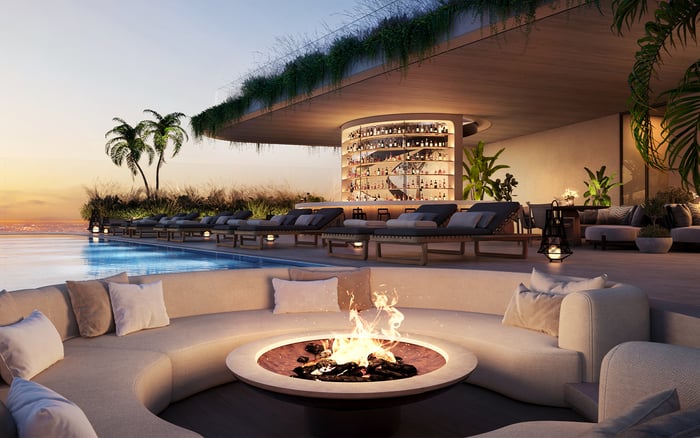
888 Brickell’s planned amenities include a 3,800-square-foot pool. Its Pool Club is described with two poolside bars and private cabanas, signaling a hospitality and social role alongside recreation. A separate private resident pool is also described, but buyers should obtain governing access terms before treating resident-only use as guaranteed.
Request written reservation windows, resident priority rules, guest allowances, cancellation penalties, cabana charges, class fees, and event-closure provisions. Ask whether owners have guaranteed access, preferential booking, or simply eligibility to reserve. These are distinct benefits.
For Four Seasons Fort Lauderdale, request property-specific rules rather than importing expectations from another branded residence. Have management explain how those rules apply to an owner in residence, an owner’s guest, and a tenant where rentals are permitted. Ask who can change the rules and how owners are notified. A booking demonstration is useful, but it should accompany written terms, not replace them.
Before comparing value, ask counsel to review the condominium declaration, shared-facilities agreements, applicable club terms, and any rental-program agreement. Separate rights attached to ownership from services supplied under an operating arrangement. Identify who controls access, sets charges, and bears maintenance obligations.
Organize the decision into four categories: usable wellness capacity, documented air systems, documented water treatment, and written access rules. Mark each benefit as contractually supported, operationally demonstrated, or still requiring confirmation. This keeps a beautiful presentation from carrying more weight than the underlying commitment.
Without comparable property-specific evidence, there is no defensible basis for naming a winner on filtration or booking convenience. The better choice is the residence whose documented arrangements support your routine, privacy preferences, and tolerance for shared hospitality spaces.
For a discreet residential search guided by the details that shape daily ownership, connect with MILLION.
If branded residences are on your mind — as a home or as an allocation — we would be glad to share what we are seeing, privately.
Begin a quiet conversationNo. The planned program exceeds 115,000 square feet across wellness, fitness, dining, and social uses, so the total does not measure dedicated wellness capacity.
The announced count is 259 residences. Buyers should also establish which hotel guests and other users would be eligible for shared amenities.
The planned offering includes an indoor racquet court, a fitness and wellness center, yoga and Pilates, and hot and cold plunge pools. Class capacities and staffing schedules should be requested separately.
The advertised offerings do not establish inclusion in ownership fees. Buyers should request service pricing, provider arrangements, and applicable terms.
A separate private resident pool is described in the planned program. Buyers should confirm resident-only access in the governing documents rather than assume it is guaranteed.
A defensible comparison requires property-specific mechanical specifications and relevant operating evidence. Branding alone does not establish better air quality.
Request documents covering filter ratings, outdoor-air supply, humidity control, corridor pressurization, and monitoring for residences and shared spaces separately. Also establish maintenance responsibilities.
No. Domestic-water treatment, in-unit drinking-water filtration, and pool or spa sanitation require separate specifications and maintenance review.
Confirm reservation windows, resident priority, guest allowances, cancellations, cabana charges, class fees, and event closures. Establish who can change those rules.
Request property-specific amenity rules, the condominium declaration, shared-facilities agreements, and any applicable club or rental-program terms. Do not assume benefits or rental rights from branding.