A discreet buyer’s guide to asking the right wind mitigation credit questions before purchasing luxury real estate in Hallandale Beach.
In Hallandale Beach, insurance due diligence is not a back-office detail. For the luxury buyer, it belongs alongside view exposure, building pedigree, privacy, amenity depth, and long-term ownership strategy. Wind mitigation credits can influence the cost of carrying a residence, but the more important reason to study them is subtler: they reveal how carefully a property has been documented, maintained, and explained.
The essential question is not simply, “How much is the credit?” A more refined buyer asks, “What exactly supports the credit, who has reviewed it, and what could change after closing?” That distinction matters in a market where polished finishes can distract from the paperwork that shapes ownership.
The recommendation is consistent: discuss wind mitigation before the contract becomes emotional. If the answer is vague, slow the process down. If the documentation is organized, current, and easy for an insurance advisor to review, the property has already passed an important test of seriousness.
Luxury marketing is designed to make a residence feel effortless. Wind mitigation review is designed to make ownership less opaque. Begin with the building or residence itself, then work outward to the policy, premium, and closing timeline.
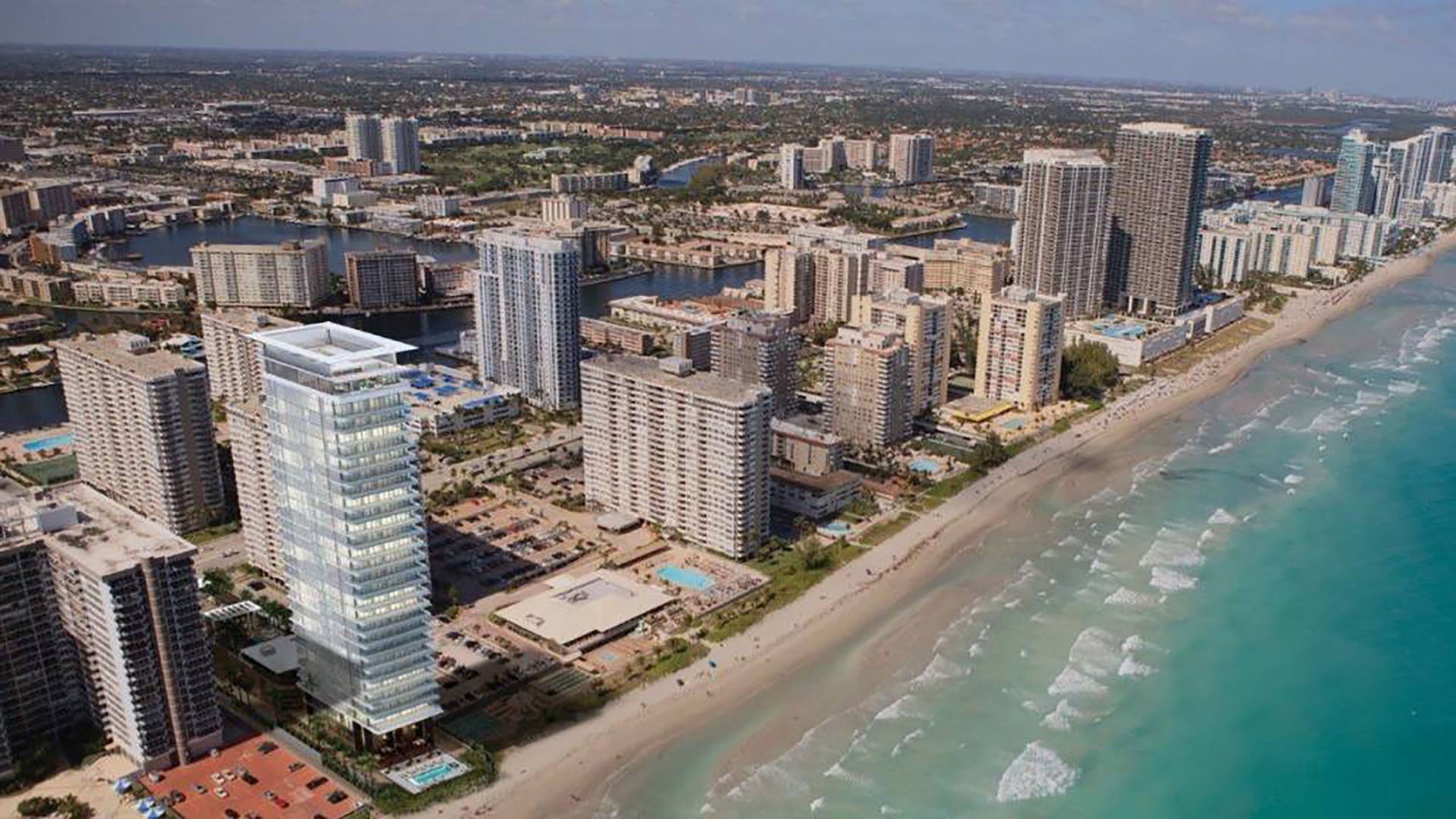
In Hallandale Beach, buyers looking at ocean-facing inventory should ask how wind-related documentation is maintained and whether the available materials are sufficient for an insurance professional to evaluate before contract deadlines. The same discipline applies when considering a resort-style private setting such as Shell Bay by Auberge Hallandale, where a buyer’s lifestyle expectations should be matched by equally careful ownership review.
Ask whether the property has a wind mitigation inspection report, when it was prepared, and whether any material changes have been made since. Ask whether the seller, association, or management office can provide documentation early, rather than at the last hour. A beautiful residence with delayed documentation creates unnecessary pressure.
A wind mitigation credit is not an aesthetic feature. It is a potential insurance consideration tied to documentation and underwriting review. Buyers should avoid casual assumptions based on the seller’s current premium, a neighbor’s experience, or a verbal estimate.
The central question is whether the credit follows the documented characteristics of the property, the insurance policy being quoted, or a combination of both. Your insurance advisor should explain which parts of the review are building-level and which are unit-level. Your legal advisor should help determine whether contract language gives enough time to receive and evaluate those answers.
For condominium buyers, this distinction is especially important. Some insurance issues may relate to the association or building, while others may relate to the individual residence and the buyer’s own coverage. A clear answer should separate those layers rather than blending them into a single reassuring sentence.
Before submitting an offer, request a focused package rather than accepting a casual promise. The goal is not to overwhelm the seller. The goal is to establish whether the property’s insurance position can be reviewed with the same professionalism as title, financing, and inspection.
Ask for the most recent wind mitigation inspection report, if one exists. Ask whether the report has been used in connection with a recent insurance quote or policy review. Ask whether any improvements, repairs, or replacements have occurred since the report was prepared. Ask whether the association or management office maintains building-wide records relevant to wind mitigation review. Ask whether the seller is willing to allow a new inspection if the buyer’s advisor recommends one.
For a single-family estate or townhouse, also ask whether prior improvements were properly documented. For a condominium, ask whether the association can provide materials within the buyer’s due diligence period. In either case, a luxury transaction should not rely on memory when written documentation is available.
The best answer is specific, calm, and document-backed. It includes a dated report, a clear chain of who supplied it, and enough time for your insurance advisor to review it. It does not promise a fixed outcome before underwriting has been completed.
A weaker answer sounds confident but remains abstract: “The building qualifies,” “everyone gets the credit,” or “the premium is low.” Those phrases may be well intentioned, but they do not substitute for review. If the seller’s side cannot provide support, your offer strategy should reflect the uncertainty.
In Broward luxury markets, discretion is valuable, but speed should not be confused with sophistication. A disciplined buyer can move quickly while still insisting on the documents that shape risk.
Oceanfront and waterfront ownership is often chosen for light, views, privacy, and the sensory pleasure of living close to the water. Those same priorities should sharpen, not soften, the buyer’s diligence. The more exceptional the setting, the more important it becomes to understand the insurance conversation in advance.
Buyers comparing Hallandale Beach with nearby coastal alternatives may also study properties such as Four Seasons Hotel & Private Residences Fort Lauderdale and Bentley Residences Sunny Isles. The point is not to assume that one building’s insurance profile predicts another’s. The point is to bring the same questions to every serious contender, then let the documentation separate assumption from reality.
A refined buyer does not ask for a wind mitigation answer to win a minor concession. The buyer asks because ownership quality is revealed in the details.
Wind mitigation credits can influence negotiations, but they should be handled with restraint. If documentation is strong, it may support confidence in the buyer’s projected carrying costs. If documentation is missing or unclear, the buyer may need more time, a deeper insurance review, or a more conservative approach to pricing.
The most useful contract strategy allows enough time to verify the insurance position without turning the transaction into a confrontation. A seller with organized records will usually understand the request. A seller without records may still have an attractive property, but the buyer should price and structure the offer with that uncertainty in mind.
For Hallandale Beach buyers, the elegant move is to ask early, ask clearly, and avoid dramatics. Wind mitigation credits are not the entire insurance story, but they are one of the first signs of whether the broader story is being told carefully.
Should I ask about wind mitigation credits before making an offer? Yes. Ask before the offer or during the earliest due diligence window so your insurance advisor has time to review the documentation.
Is the seller’s current insurance premium enough to rely on? No. A prior premium may not reflect your policy, underwriting review, or documentation requirements.
What document should I request first? Ask for the most recent wind mitigation inspection report, if available, plus any related materials used for recent insurance review.
Can wind mitigation credits change after closing? They can. Treat any projected credit as subject to review by your insurer and the documentation available at the time.
Who should review the documents for me? Your insurance advisor should review the credit implications, and your legal advisor should review timing and contract protections.
Do condominium buyers need to ask different questions? Yes. Condo buyers should separate building-level records from unit-level coverage questions and confirm who controls each document.
Should I order a new inspection? Consider it if the existing report is unavailable, outdated, unclear, or inconsistent with the property information you receive.
Can a strong wind mitigation file improve my confidence as a buyer? Yes. Organized documentation can make the insurance review more transparent and reduce uncertainty before closing.
Should I use credits as a negotiation point? Use them carefully. The stronger argument is not the credit itself, but the clarity or uncertainty around the documentation.
Is this especially relevant in Hallandale Beach? Yes. In a coastal luxury purchase, insurance diligence should be part of the first serious ownership conversation.
For a discreet conversation and a curated building-by-building shortlist, connect with MILLION.
If branded residences are on your mind — as a home or as an allocation — we would be glad to share what we are seeing, privately.
Begin a quiet conversation