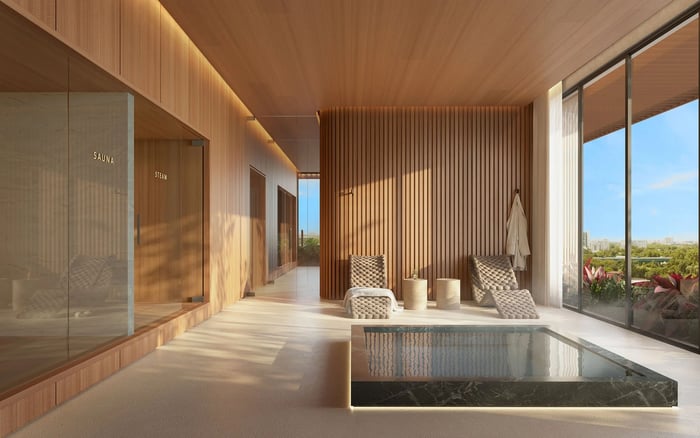
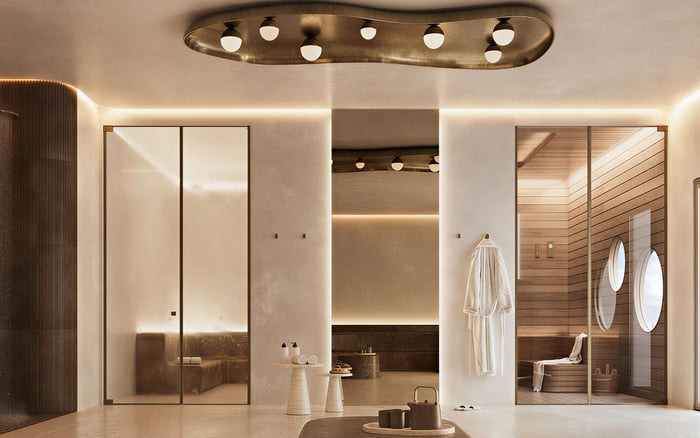
A discreet buyer’s guide to evaluating wet-room drainage in South Florida luxury residences, from floor pitch and waterproofing to access panels, maintenance, and the difference between a compelling wellness narrative and durable construction.

In South Florida luxury real estate, wellness language is everywhere: spa baths, rain showers, steam-ready suites, soaking tubs, cold-plunge adjacency, and hotel-inspired wet rooms wrapped in stone. The phrasing is seductive because it speaks to how buyers want to live. But a wet room is not merely an aesthetic gesture. It is a controlled water environment inside a private residence, and its quality depends on drainage, waterproofing, ventilation, service access, and the precision of the floor plane.
That is why discerning buyers approach the wellness bathroom with the same discipline they bring to views, ceiling heights, parking, and building operations. The question is not whether the bath photographs beautifully. The question is whether it performs quietly for years. In a Brickell tower, an oceanfront retreat, or a low-density boutique residence, water management is what separates lasting luxury from costly inconvenience.
For a buyer comparing new-construction residences, a balcony, a terrace, and pool amenities may command the initial tour narrative. Yet the wet room deserves equal scrutiny because it is one of the most technically demanding spaces in the home. It must feel effortless precisely because it has been carefully engineered.
Begin with the most direct question: where does the water go, and how does it get there? A wet room should not rely on guesswork or a gentle hope that water will find the drain. Ask the sales team, design representative, or inspector to explain the floor slope, the drain location, and the relationship between the shower area and the rest of the bathroom.
The answer should be specific enough to make sense. Is the drain linear or point-style? Is it placed at the wall, along the threshold, or within the showering zone? Does the floor slope in one direction or multiple directions? If there is a large-format stone or porcelain surface, how was that surface reconciled with the required pitch? Large slabs can create an elegant visual field, but they leave little room for imprecision.
A sophisticated wet room feels flat underfoot but is not flat. The pitch must be subtle, consistent, and purposeful. If the bathroom includes an open shower beside a tub, ask how overspray is controlled. If there is no curb, ask how water is kept from migrating toward vanities, closets, or bedroom flooring. In a luxury residence, the answer should never be, “It should be fine.”
The threshold is where design ambition often meets practical performance. A curbless wet room can look beautifully seamless, especially when the same stone continues from the vanity zone through the shower. But seamless does not mean boundary-free. The bathroom still needs a strategy for containing water.
Ask whether there is a concealed slope break, a slight recess, a linear drain positioned as a barrier, or a material transition that helps manage flow. If the wet area opens directly to a dressing space, ask what protects millwork, baseboards, and flooring outside the shower. South Florida buyers often favor indoor-outdoor living, but a bathroom is not a terrace. Water that travels beyond the intended zone becomes a maintenance issue, not a lifestyle feature.
Also consider how the room will be used. A rainfall shower, hand shower, body sprays, and steam function each create different water behavior. The more elaborate the shower system, the more important the drainage conversation becomes. Wellness should add pleasure, not uncertainty.
The most important part of a wet room is usually the part the buyer cannot see. Waterproofing sits behind the stone, tile, and wall assemblies. It protects the structure, neighboring spaces, and finishes from the cumulative effect of moisture.
Ask what waterproofing system was specified, whether the walls and floors were treated as a continuous assembly, and how corners, penetrations, niches, benches, and drain connections were handled. These are the vulnerable points. A beautiful slab wall is only as reassuring as the preparation behind it.
Buyers should also ask about testing. Was the shower pan or wet-room floor flood-tested before finishes were installed? If so, is documentation available? In resale, an inspector may not be able to see behind finished surfaces, which makes visible clues more important: staining, loose grout, musty odors, swollen cabinetry, discoloration near baseboards, or inconsistent caulking. None of these automatically proves failure, but each deserves attention before closing.
Luxury buyers are often shown the visible finishes first: stone selection, plumbing fixtures, mirrors, lighting, and cabinetry. But access determines whether a future issue is simple or invasive. Ask how the drain can be cleaned. Can the grate be removed easily? Is the trap accessible? If the bath has a freestanding tub, how are the supply and waste connections serviced? If there is a steam shower, where are the generator and controls located?
A well-conceived residence anticipates maintenance without compromising design. Access panels can be discreet. Drain covers can be elegant. Mechanical locations can be planned. What matters is that they exist, and that the building or owner has a clear path to service.
This is especially relevant for secondary-home owners who may not use the residence daily. A wet room that sits unused for long stretches, then receives intensive use during a visit, should be easy to inspect, clean, and maintain. The quieter the home’s operation, the more deliberate the planning behind it usually is.
A wellness bath in South Florida exists within a humid climate. Even when the residence is climate-controlled, the bathroom must handle steam, warm showers, damp towels, and enclosed cabinetry. Drainage removes liquid water. Ventilation helps manage moisture in the air.
Ask how the bathroom exhaust is designed and whether it is appropriately located near the wet zone. If the residence includes a steam feature, ask how the enclosure, ceiling slope, door seals, and ventilation are coordinated. Steam can be luxurious, but only when the room is built for it.
Natural stone also deserves a practical conversation. Some stones are more porous than others, and honed finishes may behave differently from polished surfaces. Ask what sealing and maintenance are recommended. A wellness space should feel sensuous, but it should not require a private ritual of constant repair.
A polished sales presentation may describe the bathroom as spa-inspired. Your task is to translate that phrase into verifiable questions. Ask for the wet-room section drawing if available. Ask who designed the drainage layout. Ask whether the exact residence you are buying has the same bath configuration as the model. Ask what changes, if any, were made during construction.
If buying pre-construction, request clarity before customization decisions are locked. A larger shower head, added hand shower, different tub, or altered stone format can affect drainage and waterproofing. If buying resale, bring in a qualified inspector with experience in luxury condominiums and wet areas. The inspector should use moisture readings where appropriate and evaluate surrounding finishes, not merely the drain itself.
The strongest question may be the simplest: “Show me how this room manages water.” A confident answer will move from aesthetics to performance without hesitation.
The best wet rooms are almost silent in their competence. The floor dries predictably. Water stays in its intended zone. Drains are accessible. Grout lines remain clean. No threshold feels like an afterthought. The room supports the idea of wellness because the technical decisions have already been resolved.
This is the standard luxury buyers should expect. A bath can be visually calm and technically rigorous at the same time. In fact, that union is often the true marker of quality. The wellness pitch may open the door, but drainage tells you whether the promise has substance.
What is the first wet-room drainage question a buyer should ask? Ask where the water is intended to go and how the floor is pitched to direct it there.
Is a curbless wet room always better? Not automatically. It can be elegant, but it needs precise slope, containment, and waterproofing.
Should I ask to see drawings for the bathroom? Yes. Sections or finish plans can clarify drain location, slope, and threshold strategy.
Why does drain access matter in a luxury residence? Even refined spaces require cleaning and service, and poor access can make minor issues disruptive.
Are linear drains preferable to point drains? They can support a sleek design, but performance depends on placement, pitch, and installation quality.
What visible warning signs should resale buyers notice? Look for staining, swelling, loose grout, odors, or discoloration near wet areas and adjacent finishes.
Does a steam shower change the drainage conversation? Yes. Steam adds moisture management requirements beyond ordinary shower drainage.
Can large-format stone complicate drainage? It can, because large pieces require careful planning to achieve subtle and consistent floor pitch.
Should pre-construction buyers discuss wet rooms before selecting finishes? Yes. Fixture changes, slab choices, and shower layouts can affect drainage and waterproofing.
What defines a truly luxurious wet room? It combines beauty with disciplined water control, ventilation, maintenance access, and durable detailing.
To compare the best-fit options with clarity, connect with MILLION.
If branded residences are on your mind — as a home or as an allocation — we would be glad to share what we are seeing, privately.
Begin a quiet conversation