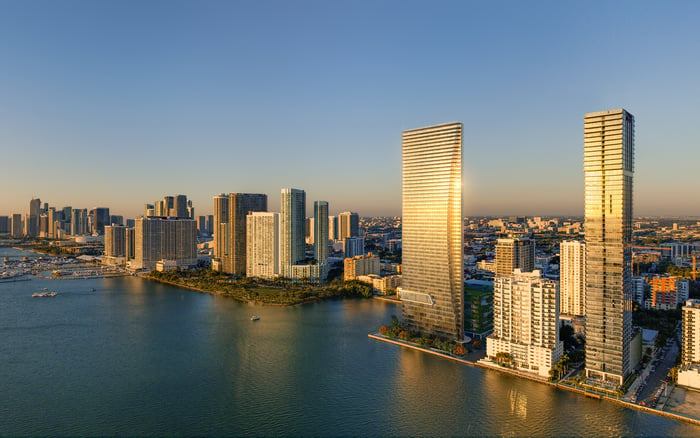
A discreet buyer’s guide to the financing, liquidity, and timing questions that should be resolved before acquiring luxury real estate in North Bay Village.

A luxury purchase in North Bay Village is rarely just a real estate decision. For many high-net-worth buyers, it is a balance-sheet decision shaped by concentrated equity positions, private business interests, trust planning, tax timing, and the desire to remain liquid while securing a waterfront home or residence.
That is why the most important questions are often asked before the first showing. A buyer who waits until contract negotiation to discuss financing may discover that the preferred structure, whether a portfolio loan, securities-backed line, cash purchase with post-closing financing, or traditional jumbo mortgage, does not move at the same pace as the opportunity. In a competitive setting, certainty is its own form of leverage.
North Bay Village has a particular appeal for buyers who want water, privacy, and proximity without feeling fully absorbed into the density of Miami Beach or the business rhythm of Brickell. But the financing discipline should be the same as it would be for a trophy condominium, a penthouse, or a waterfront single-family acquisition: define what capital is available, what capital should remain invested, and what liquidity must be protected after closing.
This North Bay Village checklist is designed for buyers who want to enter conversations prepared, discreetly and precisely.
Portfolio financing can feel relationship-driven, but it is still underwriting. Before relying on it for a luxury real estate purchase, ask what the lender is evaluating: the property, broader assets, recurring income, marketable securities, business distributions, outside liabilities, or a combination of these factors.
The key question is not simply, “How much can I borrow?” It is, “What assumptions support that number?” A buyer should understand whether the credit decision depends on asset values that can fluctuate, income that may be irregular, or collateral that could trigger additional requirements if markets move.
When comparing residences such as Continuum Club & Residences North Bay Village, the financing conversation should be aligned with the actual purchase path. Is the property complete or in development? Are deposits staged? Will the loan close at contract, at completion, or after ownership transfers? Each answer changes how liquidity is planned.
The most elegant purchase structure is not always the one with the lowest visible rate. A buyer may prefer to finance at a higher cost if doing so preserves liquidity, avoids selling appreciated assets at an inconvenient time, or maintains flexibility for a business investment. Conversely, paying more cash may be prudent if it reduces exposure to margin calls, refinance uncertainty, or future rate adjustments.
Before writing an offer, ask your advisors to define a minimum post-closing liquidity reserve. That reserve should be separate from the down payment, closing costs, furnishings, assessments, insurance, maintenance, association charges, and any near-term lifestyle expenditures connected to the move.
For a waterfront acquisition, this discipline is especially important. Ownership may involve carrying costs that are manageable but still meaningful when layered with tax obligations, estate planning, travel, staffing, or other residences. Liquidity should not be calculated as whatever remains after the purchase. It should be protected as part of the purchase.
Many affluent buyers explore borrowing against liquid portfolios to avoid selling assets. Used thoughtfully, this can create speed and optionality. Used casually, it can create vulnerability. The buyer should ask whether a securities-backed line is intended as short-term bridge financing, a long-term borrowing tool, or a temporary source of contract liquidity while a mortgage or other facility is finalized.
The distinction matters. A bridge strategy should have a defined exit. A long-term strategy should be stress-tested. Ask what happens if the value of pledged assets declines, if the lender changes advance rates, if interest costs rise, or if a major liquidity event is delayed.
If a buyer is evaluating Shoma Bay North Bay Village or another North Bay Village opportunity while simultaneously managing a concentrated portfolio, the most important question is not whether leverage is available. It is whether that leverage remains comfortable under less favorable conditions.
Pre-Construction purchases require a different liquidity rhythm than resale closings. The buyer may have more time before final funding is required, but deposits can still be substantial commitments. Before signing, ask when deposits are due, whether they are refundable under specific conditions, and how they fit into broader cash management.
A buyer considering Tula Residences North Bay Village should treat deposit planning as part of the financing plan, not as a separate administrative step. If funds will come from a portfolio line, asset sale, business distribution, or bonus event, the timing should be mapped conservatively.
The same principle applies to negotiation. Sellers and developers tend to value clean execution. A buyer who can demonstrate financial readiness without overexposing private information may have an advantage. The goal is to show certainty while preserving discretion.
Luxury real estate is illiquid compared with publicly traded assets. That is not a flaw. It is part of the character of owning a distinctive property. But a buyer should not rely on a fast future sale to correct an overly tight acquisition structure.
Ask how the purchase performs if the property is held longer than expected. Ask whether the carrying costs remain comfortable if another home does not sell promptly, if a business liquidity event is postponed, or if personal plans change. Ask whether the financing can be extended, refinanced, or converted without pressure.
This is where investment thinking becomes useful, even for a lifestyle purchase. The buyer should define the holding period, the realistic sources of repayment, and the circumstances that would make the ownership structure less attractive. A home may be emotional, but the capital stack should remain unemotional.
North Bay Village does not exist in isolation. Buyers often compare it with Bay Harbor Islands, Miami Beach, Edgewater, and select mainland waterfront pockets. That comparison should include not only design and lifestyle, but also financing feasibility.
For example, a buyer looking across the bay might compare North Bay Village opportunities with Onda Bay Harbor to understand how different contract structures, completion timelines, association expectations, and resale profiles might affect liquidity. The objective is not to find the cheapest capital. It is to find the capital structure that best matches the buyer’s priorities.
Ask whether a lender views the property type, building status, ownership structure, or buyer use case differently. Ask whether foreign ownership, trust ownership, entity ownership, or multiple residences complicate underwriting. These questions are best addressed before a desired residence becomes time-sensitive.
The right financing conversation usually involves more than a mortgage banker. Depending on the buyer, it may include a private banker, tax advisor, estate counsel, business manager, insurance specialist, and real estate advisor. Each sees a different risk.
The private banker may focus on collateral and liquidity. The tax advisor may focus on asset sales and timing. The estate attorney may consider title structure and succession. The insurance specialist may identify coverage and cost considerations. The real estate advisor should translate property-specific realities into the conversation.
The buyer’s task is to make sure these voices are coordinated before documents become urgent. A graceful acquisition feels simple at the closing table because the difficult questions were asked early.
Before purchasing luxury real estate in North Bay Village, ask these questions in writing and insist on direct answers:
What is the true source of funds for deposits, closing, and post-closing reserves? What happens if pledged portfolio assets decline in value? How quickly can the lender issue a credible approval? Are there conditions tied to income, entity structure, foreign status, or property type? Can the financing survive a delayed closing? How much liquidity should remain untouched after the purchase? What are the realistic carry costs for the first full year of ownership? If the property is Pre-Construction, what is the schedule for deposits and final funding? If the plan changes, can the loan be refinanced, repaid, or restructured without stress?
The strongest buyers are not necessarily the ones who pay all cash. They are the ones whose financing plan is intentional, resilient, and private.
Should I arrange financing before touring luxury property in North Bay Village? Yes. Early financing guidance helps define budget, liquidity needs, and negotiating strength before a preferred residence becomes time-sensitive.
Is portfolio financing the same as a traditional mortgage? No. Portfolio financing may consider a broader financial relationship, but the lender still evaluates collateral, liquidity, income, and risk.
Why do wealthy buyers use securities-backed credit for real estate? It can preserve invested assets and create speed, but it should be tested against market volatility and repayment timing.
How much cash should remain after closing? The reserve depends on the buyer’s full balance sheet, but it should cover ownership costs, personal obligations, and unexpected liquidity needs.
Are Pre-Construction deposits part of the financing plan? Yes. Deposit timing should be coordinated with cash availability, portfolio borrowing, tax planning, and final closing funds.
Can paying cash still be risky? Yes. An all-cash purchase can reduce debt risk but may concentrate too much capital in an illiquid asset.
What should I ask about a securities-backed line? Ask about advance rates, collateral requirements, interest terms, repayment expectations, and what happens if portfolio values decline.
Should the property be purchased personally, in a trust, or through an entity? That decision should be made with legal and tax advisors before contract signing because it may affect underwriting and closing logistics.
How should I compare North Bay Village with nearby waterfront markets? Compare lifestyle, contract terms, ownership costs, liquidity, financing availability, and expected holding period together.
What is the most important financing question before committing? Ask whether the purchase still feels comfortable if markets, rates, timing, or personal plans move against the original assumption.
For a confidential assessment and a building-by-building shortlist, connect with MILLION.
If branded residences are on your mind — as a home or as an allocation — we would be glad to share what we are seeing, privately.
Begin a quiet conversation