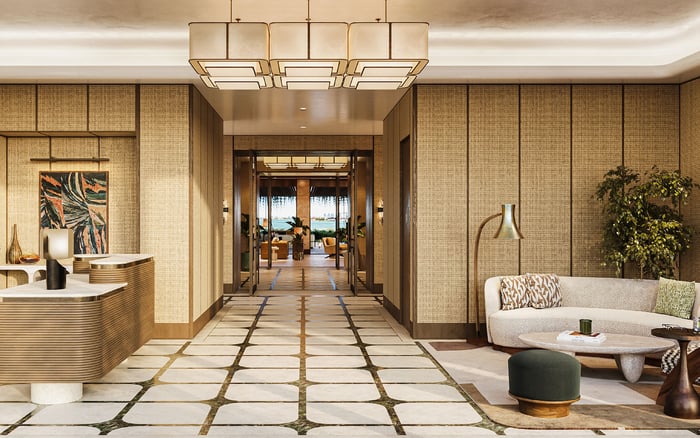
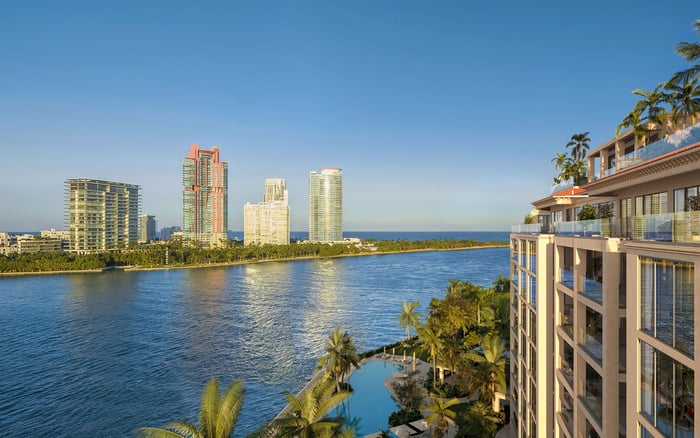
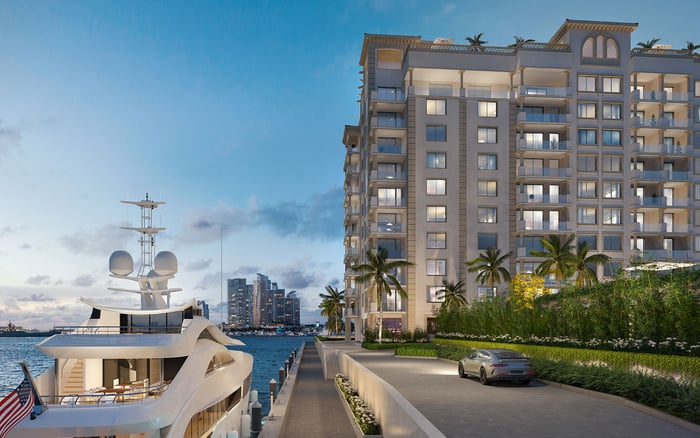
A discreet buyer’s guide to evaluating neighboring development risk on Fisher Island, from view protection and construction disruption to legal diligence, resale sensitivity, and offer strategy.
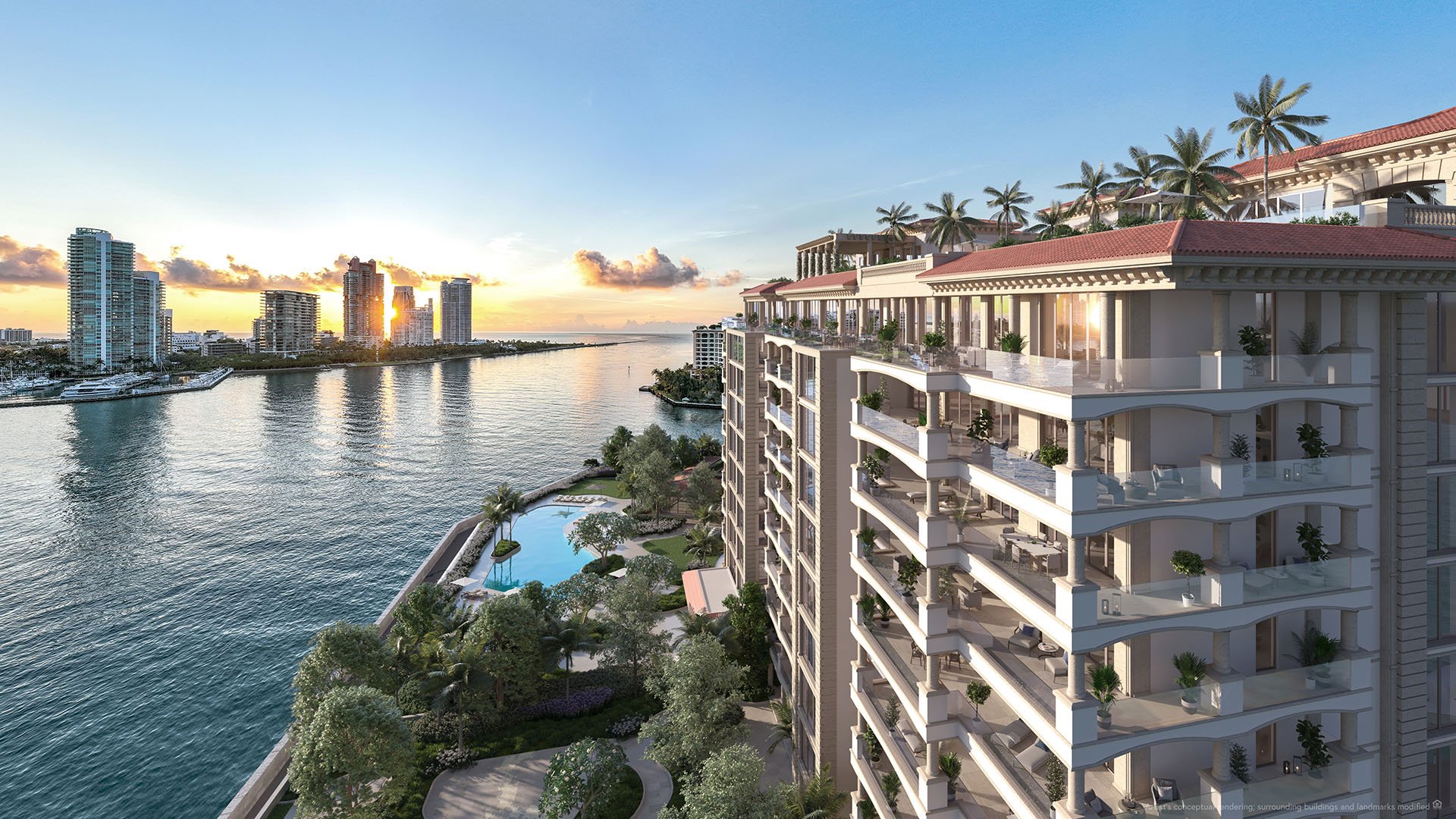
Buying on Fisher Island is not a typical waterfront purchase. The island’s appeal rests on privacy, controlled arrival, open water, club life, and the rare feeling that Miami is close without being intrusive. That is exactly why neighboring development risk should be examined before a buyer becomes attached to a terrace, a sunset angle, or the quiet surrounding a particular residence.
The central question is simple: what could change around this property after you own it? In a luxury context, that question is seldom limited to whether a building may appear next door. It extends to sightlines, privacy, construction access, delivery routes, landscaping, traffic patterns, dockage, amenity quiet, and the market’s future perception of the residence.
At established addresses such as Palazzo del Sol Fisher Island, buyers often focus on finishes, service, and views. The more sophisticated move is to ask how those qualities are protected, or not protected, by the surrounding land, governing documents, and approval environment.
A serene neighboring site can feel permanent. It may be landscaped, low scale, lightly used, or visually harmless. None of that answers the real diligence question. Before contracting, ask what the adjacent and nearby parcels are currently allowed to become, what approvals already exist, and whether any applications, variances, or amendments are being discussed.
Your counsel and advisory team should review applicable zoning, recorded restrictions, easements, association documents, development rights, access rights, and any known pending plans. The goal is not to predict the future with certainty. It is to define the range of plausible outcomes and decide whether the property remains compelling if the least attractive legal outcome occurs.
For an oceanfront residence, this is especially important because value is often tied to the quality of light, horizon, terrace privacy, and the relationship between interior rooms and water. A partial obstruction, a changed setback, or a new line of balconies can matter more than a buyer expects.
Neighboring development risk has two distinct layers. The first is permanent risk: a view corridor changes, a neighboring structure rises, or a once-open edge becomes more enclosed. The second is temporary but meaningful risk: construction noise, dust, staging, worker access, lane interruptions, lighting, and reduced serenity during the build period.
Both matter, but they should be priced differently. A temporary disturbance may be acceptable if the residence’s long-term position remains strong. A permanent change to view or privacy requires deeper scrutiny because it can affect both enjoyment and eventual resale psychology.
At Palazzo della Luna Fisher Island, for example, a buyer should still look beyond the building itself. The relevant questions are not only about the residence being acquired, but also about the angles from its primary rooms, the sightlines from the terrace, and the parcels that define the visual experience around it.
Many buyers ask whether something can be built nearby. Fewer ask how it would be built. In an island setting, construction logistics can be as important as the entitlement itself. Ask where trucks, workers, materials, cranes, temporary fencing, lighting, and staging would be located. Ask whether construction traffic could affect access, parking, club routes, marina areas, or the quiet arrival sequence that makes the property feel discreet.
This is where gated-community living requires a different lens. Controlled access may enhance privacy, but it can also make construction logistics more noticeable if routes are concentrated or staging areas sit near daily paths. A buyer considering a primary residence should evaluate weekday livability, not only weekend showings.
Also ask whether any building work could affect utilities, seawalls, landscaping buffers, dock access, or exterior amenity use. Even when the future building is not directly in front of your residence, its construction footprint may still influence daily life.
Luxury buyers tend to describe privacy emotionally. Diligence should translate that feeling into physical measurements and sightlines. Ask what setbacks apply, where balconies may be placed, whether rooftop or amenity areas could overlook your residence, and how landscaping buffers are maintained or controlled.
The most important privacy issue may not be a direct window-to-window view. It may be a future amenity deck, service corridor, lighting condition, or elevated outdoor space that changes how a terrace feels at night. In residences with generous outdoor living, privacy should be assessed from seated eye level, standing sightlines, bedroom exposures, bathroom glass, and the path between indoor and outdoor entertaining areas.
For estate-style offerings such as The Links Estates at Fisher Island, the buyer’s questions should expand from the home itself to the full perimeter experience: what can be seen, what can be heard, who can pass nearby, and whether any adjacent condition is protected by recorded rights rather than informal expectation.
Development risk is not only a personal comfort issue. It is an investment variable. A future buyer may be more conservative than you are, particularly if a neighboring project is incomplete, controversial, visually uncertain, or actively under construction during your resale window.
Ask your advisor to underwrite three scenarios: no meaningful change, temporary construction disruption, and a permanent change in outlook or privacy. For each scenario, consider days on market, negotiating leverage, buyer objections, and the type of buyer who would still see the property as best in class.
This is where trophy-market discipline matters. The finest buyers often pay premiums for certainty. If your residence carries uncertainty, the acquisition price, contract protections, or time horizon should reflect that. A beautiful home can still be the right purchase, but not at a price that assumes every surrounding condition is frozen.
Before inspection and diligence periods expire, ask for written clarity on disclosures, known neighboring plans, association notices, pending assessments tied to surrounding work, and any documents that may affect access, views, or shared infrastructure. If the seller has received notices or materials relevant to nearby development, your team should request them early.
Ask whether the association has minutes, notices, architectural review materials, or communications concerning adjacent parcels. Ask whether owners have raised concerns about construction impacts. Ask whether any easements, rights of way, or shared facilities could become more active if a nearby site changes.
New-construction buyers should also evaluate developer representations carefully. At The Residences at Six Fisher Island, as with any significant purchase, the conversation should include not just design and amenity programming, but also what surrounds the residence and what documentation supports the buyer’s assumptions.
Ask what parcels immediately border the residence and what is permitted there. Ask whether any neighboring property has unused development rights. Ask if there are pending or expected approvals. Ask where a future structure could sit and how tall or visually prominent it could become. Ask how construction access would be managed. Ask whether any view, light, air, access, or privacy condition is protected by recorded documents.
Then ask the more personal question: if the neighboring condition changed, would you still want to own this home? If the answer is yes, the property may deserve continued pursuit with intelligent pricing. If the answer depends entirely on today’s open view or quiet edge, diligence should become more rigorous before the offer becomes emotional.
On Fisher Island, the strongest acquisitions are not simply the most beautiful on the day of the showing. They are the ones whose beauty is supported by structure, documentation, and a clear-eyed understanding of what can happen next door.
What is neighboring development risk in Fisher Island luxury real estate? It is the possibility that nearby construction, land use, or future approvals could affect views, privacy, access, noise, or resale perception.
Should I worry about a nearby empty or landscaped parcel? Yes. The important issue is not how it looks today, but what may legally be built or changed there in the future.
Is view risk the same as construction noise risk? No. Construction noise may be temporary, while a changed view, privacy condition, or building mass can be permanent.
Who should review neighboring development risk for me? Your real estate advisor, land use counsel, and condominium or association counsel should coordinate before key contingencies expire.
Can association documents help identify risk? They can. Minutes, notices, easements, architectural controls, and shared infrastructure documents may reveal important surrounding-property issues.
What should I ask about construction logistics? Ask about staging, truck routes, worker access, cranes, lighting, temporary fencing, and any effect on daily arrival or amenity use.
How does neighboring development affect resale? Future buyers may discount uncertainty, especially if construction is active or if views and privacy are no longer as expected.
Should I avoid a property if development is possible nearby? Not necessarily. The key is to understand the risk, price it correctly, and decide whether the residence remains desirable under realistic scenarios.
Are waterfront residences more sensitive to this issue? Often, yes. Waterfront value can depend heavily on light, horizon, terrace privacy, and unobstructed visual relationships.
When should I raise these questions in the buying process? Raise them before making a final offer when possible, and certainly before waiving diligence, inspection, or document-review rights.
For a tailored shortlist and next-step guidance, connect with MILLION.
If branded residences are on your mind — as a home or as an allocation — we would be glad to share what we are seeing, privately.
Begin a quiet conversation