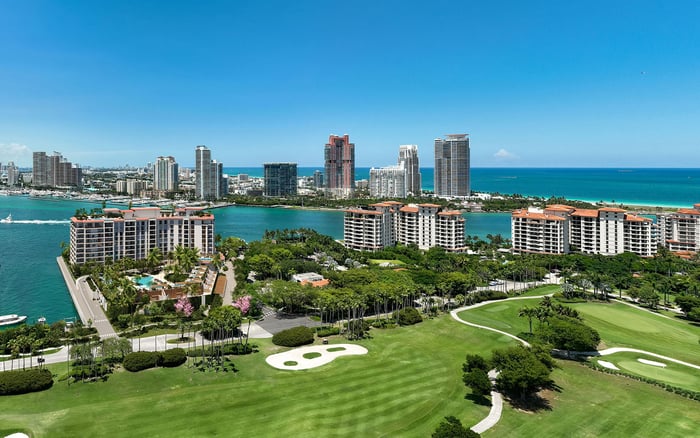
A discreet buyer’s guide to comparing Florida homestead planning before purchasing on Fisher Island, including title structure, permanent residence timing, Save Our Homes, portability, domicile, trusts, entity ownership, and estate considerations.

For a Fisher Island buyer, Florida homestead planning is not a post-closing administrative task. It is a pre-contract design question that affects title, taxes, domicile, creditor protection, and estate succession. The central issue is deceptively simple: who will hold legal or beneficial title, and will the property be that owner’s permanent residence as of January 1 of the relevant tax year?
This is Fisher Island planning in its most practical form: not merely a second-home or investment conversation, but a permanent-residence analysis for families whose balance sheets often cross jurisdictions. The island’s gated-community privacy may make the purchase feel self-contained, yet the legal consequences are statewide and highly specific.
Florida’s homestead exemption generally requires the owner to hold legal or beneficial title and make the property a permanent residence as of January 1. For Fisher Island owners, applications are handled through the Miami-Dade Property Appraiser. The normal filing deadline is March 1, making timing critical for buyers closing late in the year or relocating from another state or country.
The standard Florida homestead exemption can reduce assessed value by up to $50,000. The first $25,000 applies to all property taxes, while the additional $25,000 applies to non-school taxes on assessed value between $50,000 and $75,000. On a trophy residence, that exemption alone may feel modest.
The more consequential long-term planning point is often Save Our Homes. Once a property qualifies as homestead, annual increases in assessed value are generally limited to the lesser of 3% or the change in the Consumer Price Index. On high-value Fisher Island property, that cap can compound over time if market values rise faster than the capped assessment.
That is why a buyer comparing Palazzo del Sol Fisher Island, The Residences at Six Fisher Island, or a private estate environment should ask more than, “What will the first tax bill look like?” The sharper question is, “What title and residency structure best preserves the possibility of capped assessment growth over many years?”
Florida portability may allow a qualifying owner to transfer up to $500,000 of Save Our Homes assessment difference from a prior Florida homestead to a new Florida homestead. For an owner moving from another Florida residence to Fisher Island, this can be an important part of the acquisition model.
Timing is critical. Portability generally requires the new homestead to be established by January 1 of the third year after abandoning the prior homestead. Buyers should map the sale of the prior residence, the Fisher Island closing, occupancy, documentation, and filing sequence before assuming the benefit will follow them.
Portability is not a branding feature or a building amenity. It is a personal tax attribute tied to specific facts. A buyer moving between Palazzo della Luna Fisher Island, The Links Estates at Fisher Island, or another Florida homestead should coordinate the transition before deed structure and closing instructions are finalized.
Fisher Island buyers commonly compare individual ownership, spousal ownership, trust ownership, and entity ownership. Each choice may serve a different goal: simplicity, privacy, estate planning, governance, liability planning, or international tax coordination. But the homestead exemption is tied to title, residence, and ownership facts, so the structure should be tested before the contract becomes irreversible.
An individual owner may present the cleanest path if the residence will truly be that person’s permanent home. Spousal ownership can align with family planning, but it must be coordinated with Florida’s homestead descent and devise rules. Trust ownership may be useful in sophisticated estate plans, but the trust terms and beneficial interests should be reviewed for homestead compatibility. Entity ownership can create privacy or operational advantages in some contexts, but buyers should be cautious about assuming an LLC, corporation, or offshore structure will support homestead treatment.
Post-closing changes deserve particular care. A change in ownership can cause reassessment at just value, and restructuring title after purchase can also create documentary stamp tax costs. The refined approach is to solve the ownership question before closing, not to acquire first and repair later.
Florida has no state personal income tax on individuals, which makes domicile planning a central issue for buyers relocating from high-tax states. A Florida declaration of domicile can be recorded as evidence of intent to make Florida a permanent home, but it should be supported by actual conduct.
For Fisher Island buyers, the residence file should be coherent. The address used for important records, physical occupancy, voter registration where applicable, driver licensing, vehicle registration, family routines, professional relationships, and the abandonment of a prior domicile can all become part of the practical story. The homestead application is stronger when the buyer’s broader life aligns with the claimed permanent residence.
International buyers face another layer. Nonresident non-citizens purchasing U.S. real estate should coordinate homestead goals with U.S. estate-tax planning because U.S.-situs assets may be subject to U.S. estate tax. The right answer may not be the simplest deed form, and the best estate-tax structure may not be the most straightforward homestead structure. That tension should be resolved with counsel before closing.
Florida’s constitutional homestead protection generally shields qualifying homestead property from forced sale, subject to important exceptions such as property taxes, purchase-money obligations, and obligations for labor or improvements on the property. It also has acreage limits: up to one-half acre within a municipality and up to 160 contiguous acres outside a municipality.
For luxury condominium and estate buyers, the asset-protection concept is often attractive. Yet homestead protection is not merely defensive. It also shapes what happens at death. Florida homestead rights restrict devise when the owner is survived by a spouse or minor child. Separate descent rules can give surviving spouses rights that override a preferred estate plan if the plan was not designed around homestead law.
This is where family governance becomes as important as tax. A buyer may want a residence to pass to children from a prior marriage, a trust, a family office structure, or a surviving spouse under customized terms. Florida homestead law may not allow that result unless the plan is carefully structured.
Before signing or waiving contingencies, a Fisher Island buyer should compare four scenarios. First, individual ownership, focusing on homestead eligibility, simplicity, domicile evidence, and estate consequences. Second, spousal ownership, focusing on survivorship, constitutional restrictions, and future control. Third, trust ownership, focusing on beneficial title, trust language, creditor protection, and succession. Fourth, entity ownership, focusing on privacy, transferability, financing, tax costs, and whether homestead goals remain realistic.
The buyer should also compare dates. Was the prior Florida homestead abandoned? Can the new Fisher Island property be established as the permanent residence by January 1? Will the March 1 filing deadline be met? If portability is relevant, is the transfer window still open? If title might be changed later, what reassessment and documentary stamp tax consequences could follow?
The best planning feels quiet because the work happens early. When the deed, domicile file, financing documents, estate plan, and family objectives all point in the same direction, the property can be enjoyed as intended: privately, elegantly, and with fewer avoidable surprises.
When should Fisher Island buyers start homestead planning? Before signing a contract or finalizing title instructions. Eligibility depends on ownership and permanent-residence facts that should be designed before closing.
What is the key January 1 rule? The owner generally must hold legal or beneficial title and make the property a permanent residence as of January 1 of the tax year.
Who handles homestead applications for Fisher Island? Fisher Island owners apply through the Miami-Dade Property Appraiser, which administers local homestead filings.
How much is the standard Florida homestead exemption? It can reduce assessed value by up to $50,000, with different portions applying to all taxes and to non-school taxes.
Why is Save Our Homes important for luxury property? It limits annual assessment increases to the lesser of 3% or CPI, which can become meaningful when market values rise faster.
Can portability help a buyer moving from another Florida home? Yes, a qualifying owner may transfer up to $500,000 of prior Save Our Homes assessment difference to a new homestead.
Can a trust own a homestead property? It may be possible in some structures, but the trust terms and beneficial ownership should be reviewed before closing.
Should buyers use an LLC for a Fisher Island homestead? Entity ownership can serve certain planning goals, but buyers should not assume it will support homestead treatment without legal review.
Does Florida homestead affect estate planning? Yes, homestead rules can restrict devise when there is a surviving spouse or minor child and may alter succession plans.
Is a declaration of domicile enough by itself? No. It can evidence intent, but the buyer’s conduct should also support Florida as the permanent home.
For a tailored shortlist and next-step guidance, connect with MILLION.
If branded residences are on your mind — as a home or as an allocation — we would be glad to share what we are seeing, privately.
Begin a quiet conversation