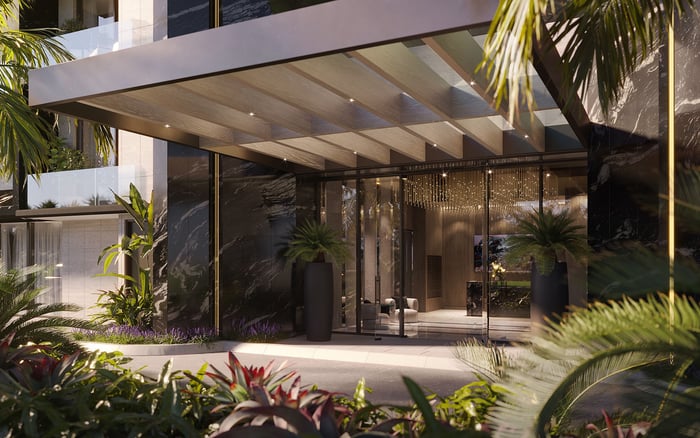
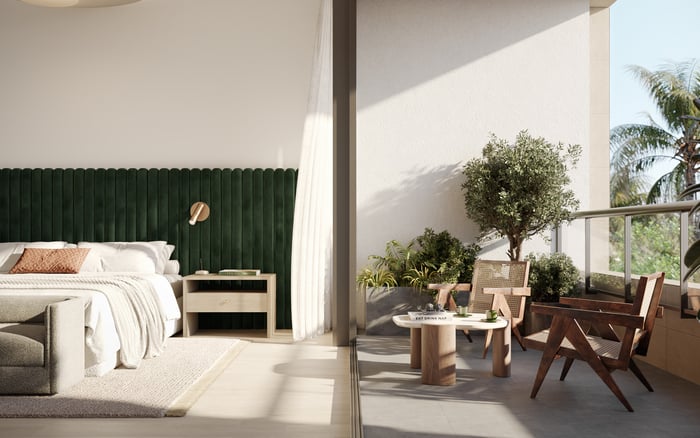
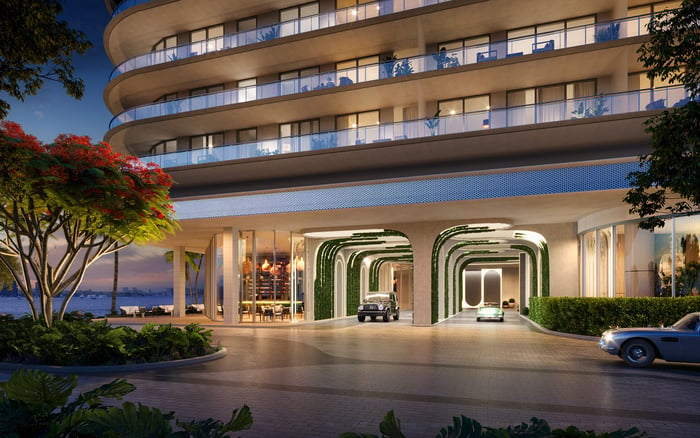
A discreet buyer’s guide to evaluating neighboring development risk, view corridors, construction exposure, and long-term value before purchasing luxury real estate in Bay Harbor Islands.
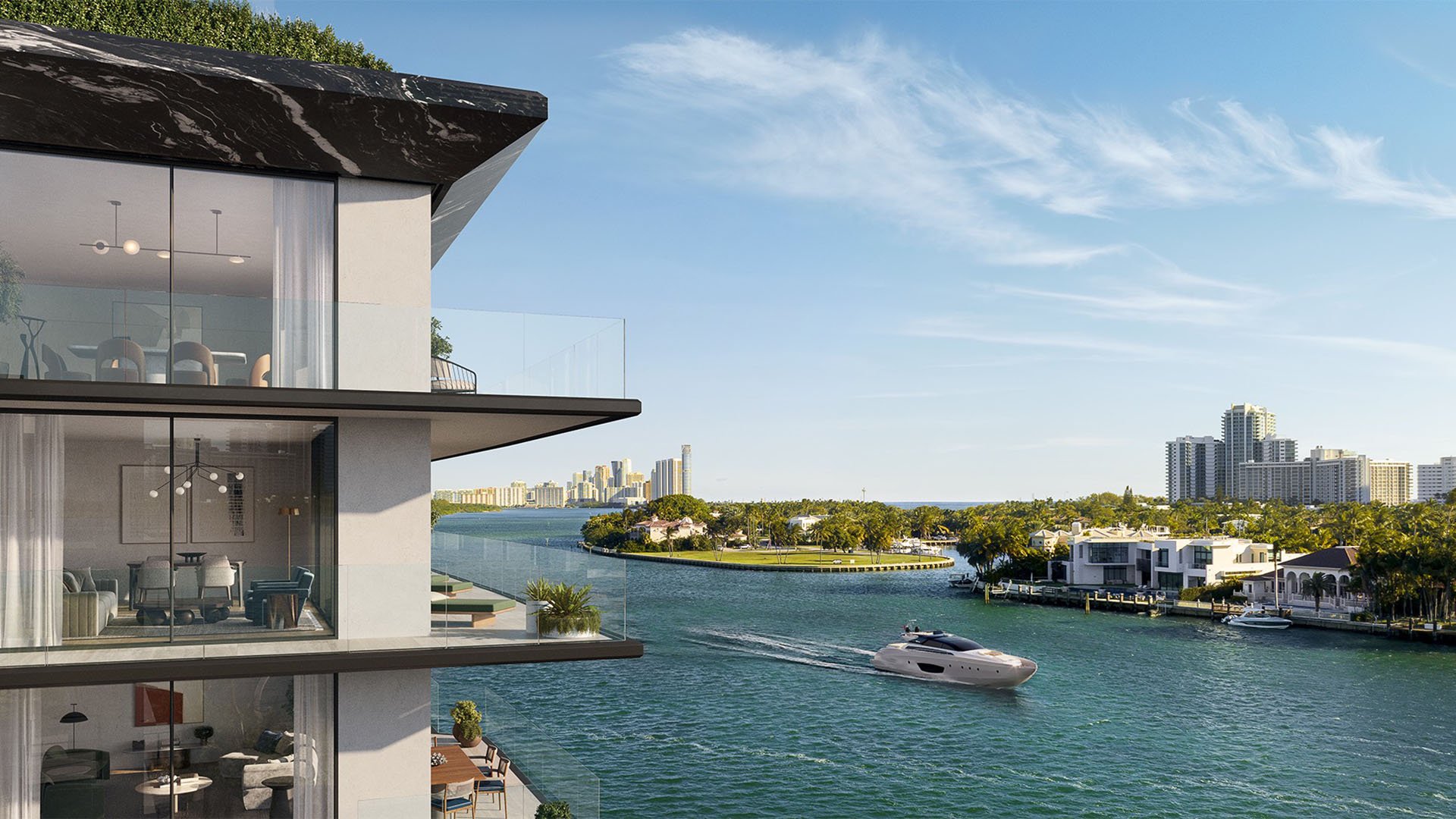
In Bay Harbor Islands, luxury buyers often begin with the residence itself: ceiling heights, terrace depth, water exposure, elevator-landing privacy, lobby architecture. Yet the most consequential question may sit just beyond the property line. What can be built next door, across the street, or across the water?
Neighboring development risk is not merely a construction inconvenience. It can influence light, privacy, noise, traffic flow, rental appeal, resale language, insurance discussions, and the emotional quality of daily living. A residence that feels serene during a sales presentation may live very differently if the adjacent parcel later becomes an active construction site, or if a protected view proves less protected than assumed.
For Bay Harbor Islands buyers, the smartest approach is not alarmist. It is disciplined. Before purchasing, treat nearby land, older structures, vacant parcels, parking areas, and underused waterfront sites as part of the property you are evaluating. The question is not whether the neighborhood will change. The question is whether you understand the range of possible change well enough to price it, negotiate around it, or walk away.
The first question is deceptively simple: what rules govern the site next door? A buyer should ask for a plain-English explanation of zoning, permitted use, height potential, setbacks, lot coverage, parking, access points, and any applicable design or review process. Do not settle for a casual answer such as “nothing major can happen there.” Ask what can happen as of right, and what might be possible with approvals.
This matters especially in a boutique market, where a single neighboring site can alter the living experience of an entire stack of residences. A waterfront home may depend on side views as much as direct frontage. A lower-floor residence may rely on landscaping and separation. A penthouse may depend on air, light, and a sense of openness that is not always protected by marketing language.
The same diligence applies when comparing new offerings such as Alana Bay Harbor Islands with established or forthcoming boutique residences. The building itself is only one side of the analysis. The neighboring context completes the picture.
Buyers often use one phrase, “development risk,” to describe several distinct exposures. They should be separated.
View risk concerns what you may see in the future. Could a neighboring building interrupt a water view, skyline angle, garden outlook, or sunrise exposure? Is the most valuable view straight ahead, lateral, or dependent on a low-rise parcel remaining low? Ask your advisor to identify which sightlines are fundamental to value and which are pleasant but secondary.
Construction risk is different. It concerns timing, noise, dust, staging, truck routes, vibration, temporary loss of quiet, and the day-to-day burden of living beside an active site. A buyer who plans to use a residence seasonally may evaluate that risk differently from a full-time resident. A buyer purchasing for a long-term hold may accept temporary disruption if the finished neighborhood profile improves.
There is also privacy risk. A neighboring terrace, amenity deck, rooftop, or parking structure can change how a residence lives, even if the view remains attractive. In a luxury setting, privacy is often as valuable as water exposure.
A polished presentation can make any building feel self-contained. In reality, real estate is relational. Ask your broker, attorney, or land-use professional to prepare a simple map of the blocks around the property. Mark vacant or underbuilt sites, older buildings, waterfront parcels, surface parking, assemblage possibilities, and active construction.
This exercise can be particularly useful when considering projects such as Bay Harbor Towers, where the boutique character of the immediate surroundings is part of the purchase decision. The goal is not to predict the future perfectly. The goal is to know where future change is most likely to matter.
Ask these practical questions before contract deadlines:
Which neighboring parcels are most relevant to this residence’s views and privacy?
Are any nearby parcels vacant, underused, recently sold, or visibly being prepared?
What is the maximum envelope that could affect the residence?
Where would construction access and staging likely occur?
Would a future building affect morning light, afternoon glare, or terrace usability?
Are any disclosures, association notices, or municipal materials available for review?
The answers should be documented, not merely discussed.
A neighboring tower blocking a view is obvious. The subtler impacts can be just as important.
Traffic flow can change the arrival experience. A new building can alter guest parking patterns, service access, and ride-share activity. Amenity noise can travel across water or between closely positioned buildings. Night lighting from a neighboring property can affect bedrooms and terraces. Even an attractive new development can change the sense of seclusion that justified a premium price.
For waterfront buyers, the word waterfront should be tested carefully. A residence may be on the water, near the water, or oriented toward the water. Those distinctions affect both daily pleasure and future buyer perception. When reviewing Onda Bay Harbor, for example, a buyer should evaluate not only the water relationship within the residence but also the broader waterfront context that surrounds it.
Indirect impact can also be positive. A well-executed neighboring building may improve streetscape quality, architectural coherence, and perceived neighborhood prestige. The point is not to assume development is bad. The point is to understand whether it helps or harms the specific unit you intend to own.
Luxury buyers sometimes move quickly to secure the right residence. Speed should not eliminate discipline. Before waiving key contingencies, ask your attorney whether the contract provides adequate time to review neighboring development exposure, association materials, public-facing documents, and seller disclosures.
Ask whether any representations about views, privacy, or neighboring conditions are written into the contract or merely expressed during sales discussions. Marketing renderings, model residence sightlines, and verbal assurances should never substitute for legal review. If a view is central to the purchase price, that sensitivity should be understood before the deposit becomes meaningfully at risk.
For pre-construction and new-construction purchases, ask what happens if nearby activity affects access, quiet enjoyment, or the timing of your own delivery expectations. The more sophisticated the purchase, the more precise the questions should be.
Not every risk demands a discount. Some buyers will pay for a preferred residence even with known nearby activity because the architecture, scale, location, or long-term scarcity still feels compelling. Others may require a price adjustment, a different floor, a better line, or a more protected orientation.
The most important exercise is to identify whether the premium you are paying is tied to something that could change. If the premium is for building design, services, interior specification, and walkable convenience, neighboring development may be less decisive. If the premium is for unobstructed openness, lateral water views, or absolute privacy, the margin for uncertainty is smaller.
This is where boutique product in Bay Harbor Islands requires a careful eye. Smaller buildings can offer intimacy and character, but they may also sit closer to the parcel conditions around them. A residence at The Well Bay Harbor Islands should be evaluated not only for its wellness-oriented lifestyle but also for the adjacent context that will shape daily experience.
Buyers comparing Bay Harbor Islands with nearby Bal Harbour should also recognize that each micro-market carries its own rhythm of privacy, access, and perceived prestige. The right choice is not only about address. It is about how confidently the setting will hold its value narrative over time.
Neighboring development risk becomes more difficult when it is discovered late. Early diligence keeps it manageable. Ask the questions before emotional momentum takes over. Walk the block at different times. Stand on the actual terrace if possible. Look sideways, not only straight ahead. Consider the soundscape. Imagine construction fencing. Imagine the completed building. Then decide whether the residence still deserves its price.
For an investment-minded buyer, the same discipline applies to eventual resale. Future purchasers will ask what you should be asking now: what can be built nearby, what has changed, and why this residence still feels protected, desirable, and rare.
What is neighboring development risk in Bay Harbor Islands? It is the possibility that nearby construction or future approvals could affect views, privacy, access, noise, light, or resale positioning.
Should I avoid buying next to an underused parcel? Not necessarily. You should understand what could be built there and decide whether the residence still works at the proposed price.
Are water views always protected? No. A buyer should evaluate the exact view corridor and determine whether it depends on neighboring parcels remaining unchanged.
Who should review development risk for me? A qualified real estate attorney, experienced local broker, and land-use professional can each help frame different parts of the risk.
Is construction risk the same as view risk? No. Construction risk is usually temporary disruption, while view risk can permanently affect the way a residence lives.
What should I ask before waiving contingencies? Ask whether nearby parcels, disclosures, association materials, and any known development activity have been reviewed in writing.
Can neighboring development improve value? Yes. A well-designed project can enhance streetscape quality and prestige, but its impact depends on the specific residence.
Are lower floors more exposed to neighboring development? Often they require closer review because privacy, light, and outlook can be more sensitive to adjacent buildings and landscaping.
Should I rely on renderings for future views? Renderings are useful for orientation, but they should not replace independent review of the actual residence and surroundings.
What is the most important question to ask? Ask what can be built on the parcels that most affect your view, privacy, and arrival experience.
To compare the best-fit options with clarity, connect with MILLION.
If branded residences are on your mind — as a home or as an allocation — we would be glad to share what we are seeing, privately.
Begin a quiet conversation