A discreet buyer’s guide to evaluating impact-glass specifications, balcony openings, frames, maintenance obligations and contract diligence in Sunny Isles Beach luxury residences.
In Sunny Isles Beach, glass is not simply a material that frames the view. It shapes the daily experience of living by the water, where light, wind exposure, sound, privacy and maintenance converge at the edge of the residence. For a luxury buyer, the most important questions often come before the view itself. What is the glass assembly? How was it specified? Who maintains the frames, tracks, seals and hardware? What happens if a panel needs replacement years after closing?
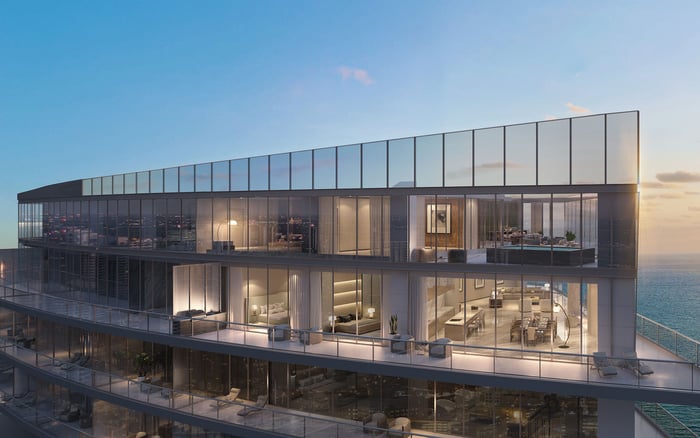
The answers can influence comfort as much as resale confidence. A penthouse buyer evaluating Bentley Residences Sunny Isles may be focused on scale, parking convenience and architectural identity, yet that same buyer should ask how oversized openings, balcony doors and window walls are documented. The more glass a residence has, the more important it becomes to understand the system behind the aesthetic.
“Impact glass” is a starting point, not a specification. Buyers should ask for product approval documents, manufacturer name, series, glass thickness, interlayer type, frame material and installation details for the actual openings in the residence. If the unit has sliding doors, fixed window walls and operable windows, each may have a different assembly.
The key question is whether the documents match the residence being purchased. Luxury towers can include different opening sizes and exposures from one line to another. A low-floor residence may not share the same practical considerations as high-floor homes with broader wind exposure and larger panels. Ask whether the specifications apply to the exact stack, floor, terrace configuration and orientation under review.
Design pressure is one of the most important technical terms to translate before buying. Rather than trying to become an engineer, ask the sales team, owner representative, property manager or your inspector to explain what the ratings mean for the specific unit. The question should be direct: what design pressures were required for these openings, and do the installed products meet those requirements?
For oceanfront and waterfront residences, the answer matters because exposure, elevation and opening size can affect how glass systems are selected. A large panel facing open water is not merely a dramatic design feature. It is also a building component that must perform within the building’s approved envelope. If the explanation feels generic, ask for the supporting paperwork before your inspection window closes.
Many issues begin not in the glass itself, but at the transition points. Balcony doors, terrace sliders, tracks, thresholds, weep systems, gaskets and locks all deserve careful review. Ask whether the doors glide evenly, latch cleanly and seal properly. If there is salt air exposure, ask how often hardware should be cleaned, lubricated or adjusted.
In residences such as Jade Signature Sunny Isles Beach or The Ritz-Carlton Residences® Sunny Isles, buyers may naturally focus on the indoor-outdoor lifestyle. That makes the door systems especially important. A beautiful terrace loses elegance if heavy panels are difficult to operate or if seals have been neglected. Ask to open and close every major door during a showing or inspection, not only the most convenient one.
In condominium ownership, responsibility for glass, frames, exterior seals and balcony doors can vary by governing documents. Buyers should ask which components are the owner’s responsibility and which fall under the association. This is not a minor administrative question. It can affect repair timelines, replacement approvals and future cost exposure.
Ask whether there is a preferred vendor list, whether replacements require association approval and whether any building-wide maintenance program covers exterior glazing, sealant review or door hardware. If a prior owner changed any glass, film, tint, handle, lock or track component, request documentation showing that the alteration was approved. Unauthorized changes can complicate insurance, warranties and future resale review.
Impact performance is only one part of comfort. Ask about sound attenuation, solar heat gain, tint, low-emissivity coatings and privacy. A residence may have technically compliant glass but still feel very different at midday, at night or during windy conditions. If possible, tour at more than one time of day. Stand near the glass, sit in the primary bedroom and listen.
For a buyer comparing St. Regis® Residences Sunny Isles with established resale options, the feel of the envelope can be as important as amenity programming. Ask whether window treatments, films or shades are included, permitted or restricted. Some associations regulate visible exterior appearance, and those rules should be understood before a design package is finalized.
New-construction buyers often review renderings and finish schedules long before they can walk a completed residence. In that case, request the glazing narrative, expected window and door systems, balcony door type, approval status and any options that could affect tint, frame color or operation. Ask whether substitutions are permitted and how any substitution would be disclosed.
For a pre-completion purchase, the strongest position is clarity in writing. If glass performance, frame finish or door configuration is material to your decision, make sure your counsel reviews how it appears in the contract documents. Verbal descriptions are not enough when the residence depends on expansive glass and waterfront exposure.
A disciplined buyer should arrive with a concise, technical checklist. Ask for the manufacturer and product approval documents for all glass and door systems. Ask which openings are fixed, sliding, hinged or otherwise operable. Ask whether the glass has any tint, coating, film or acoustic upgrade. Ask whether the doors have been serviced recently. Ask whether any panels, rollers, locks, seals or thresholds have been replaced.
Then ask the practical ownership questions. Who pays if a panel fails? Who approves replacement? How long do parts typically take to source? Are there pending building projects that involve exterior sealants, balcony work or glazing review? Are there restrictions on window treatments visible from the exterior? In Sunny Isles Beach, these questions are not fussy. They are part of protecting the experience the skyline promises.
Is impact glass the same in every residence within a tower? Not necessarily. Opening size, floor level, orientation and product series can vary, so buyers should request documents for the exact unit.
What is the first document I should ask for? Ask for product approval or specification documents that identify the glass, frame and door systems installed in the residence.
Should I test every balcony door? Yes. Open, close, lock and observe each major door because operation and sealing are central to daily comfort.
Who usually maintains the glass and frames? Responsibility depends on the condominium documents, so confirm whether the owner or association handles each component.
Can I add tint or privacy film after closing? Possibly, but many buildings regulate exterior appearance, so obtain written approval before making changes.
Do high floors require extra attention? Yes. High-floor residences can involve larger openings and different exposure considerations, making documentation especially important.
Should impact glass affect my offer strategy? It can. Deferred maintenance, undocumented alterations or difficult-to-source components may justify deeper diligence before final terms.
Is newer glass always better? Not automatically. The relevant question is whether the installed assembly is properly documented, maintained and appropriate for the opening.
What should I ask in a resale purchase? Ask whether any glass, seals, rollers, locks, handles or tracks have been replaced, and request proof of approvals.
Can my designer evaluate glass specifications? A designer can advise on comfort and aesthetics, but technical review should involve qualified building, inspection or engineering professionals.
To compare the best-fit options with clarity, connect with MILLION.
If branded residences are on your mind — as a home or as an allocation — we would be glad to share what we are seeing, privately.
Begin a quiet conversation