A discreet buyer’s guide to evaluating bridge and causeway dependence before purchasing a luxury condominium in South Florida’s coastal markets.
In South Florida luxury real estate, water is the seduction and access is the discipline. A condominium may offer a cinematic ocean view, an impeccable lobby, and a private arrival sequence, yet the daily experience is often shaped by a narrower question: how does one actually get on and off the island, beach, barrier strip, or waterfront enclave when the region is moving at full tempo?
Causeways and bridges are not merely transportation details. They are lifestyle filters. They influence the school run, the airport transfer, the dinner reservation, the private chef’s arrival, the contractor’s schedule, and the quiet ability to leave before weather turns serious. For buyers evaluating Miami Beach, Key Biscayne, Sunny Isles, Bal Harbour, Surfside, and Fort Lauderdale, the most refined due diligence is not a general complaint that traffic exists. It is a precise understanding of the routes, alternatives, constraints, and patterns that affect the specific building under consideration.
A trophy residence should feel effortless. That feeling depends on what happens outside the porte cochère as much as inside the home.
The first question is not, “How far is it?” It is, “How variable is it?” A drive that feels entirely reasonable in a quiet midmorning window can become something else during school drop-off, a Friday evening, a holiday weekend, a major event, or a rainstorm.
Buyers should experience the approach at the times that mirror their lives. If the residence will be used as a primary home, test weekday mornings and late afternoons. If it is a second home, test Friday arrivals, Sunday departures, and peak seasonal windows. If airport access is essential, consider both the drive to the terminal and the return after a long flight, when tolerance for delays is low.
The best question for an advisor or building representative is simple: when does this route become unreliable? The answer may reveal more than a brochure ever could.
Some luxury addresses enjoy multiple practical approaches. Others depend on a small number of bridges or a single dominant causeway. This distinction matters. A route with two or three workable alternatives can absorb incidents, repairs, police activity, special events, or temporary closures with less disruption. A residence with limited redundancy may require a more deliberate lifestyle strategy.
Ask what the backup route is, not merely whether one exists. Is it realistic during peak hours? Does it add only a few minutes in normal conditions, but much more when the main bridge is compromised? Does it require passing through dense commercial areas, school zones, hotel corridors, or waterfront streets that can slow significantly during season?
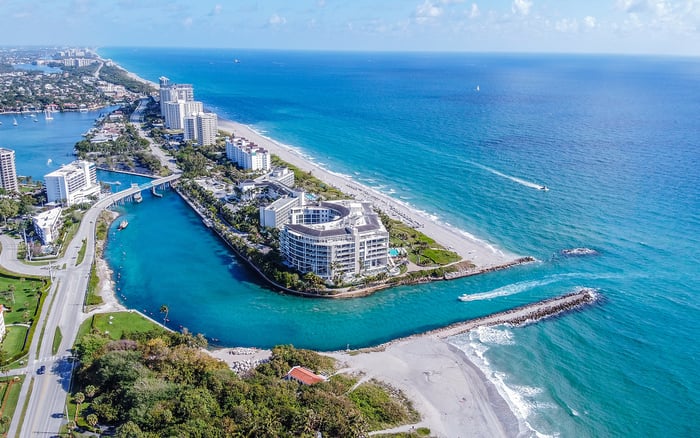
For buyers comparing coastal neighborhoods, the map can be deceptive. A building may appear close to the mainland, a marina, a club, or a business district, yet the usable route may concentrate traffic into a narrow crossing. The value question is not proximity alone. It is resilience.
Luxury living depends on a constant choreography of people who may not arrive in a luxury car. House managers, nannies, private trainers, chefs, medical providers, dog walkers, designers, art handlers, florists, maintenance teams, and delivery drivers all move through the same bottlenecks.
Ask building management how vendors typically access the property, where they stage, and whether deliveries are affected by congestion at certain times. A causeway delay can become a missed installation window, a late dinner setup, or an inconvenient service appointment. In full-service buildings, management quality can soften these impacts, but it cannot erase a constrained route.
This is especially important for owners who travel frequently. If the residence must function smoothly while the owner is away, the access pattern for trusted staff is part of the asset’s performance.
Waterfront living carries a seasonal rhythm. Buyers should ask how the building communicates during severe weather, how residents are advised to leave, and what route assumptions are built into emergency planning. A causeway that is elegant on a blue-sky afternoon can become a critical decision point when officials urge residents to prepare early.
The relevant diligence includes evacuation routes, bridge closure exposure, low-lying approach roads, and how flooding or king tides may affect the final blocks near the building. Even when a tower itself is elevated, hardened, and professionally managed, the approach roads can influence access for residents, staff, emergency services, and post-storm vendors.
The practical question is not whether a property is “safe” in the abstract. It is how the owner, family, pets, vehicles, staff, and essential services move before and after disruptive weather.
Causeway performance is not static. Road work, utility upgrades, bridge maintenance, nearby tower construction, hotel renovations, and new retail or marina activity can all change the cadence of a route. A buyer should ask what is currently underway nearby and what is publicly anticipated in the surrounding area.
This is not a reason to dismiss a market. In South Florida, premium districts continue to evolve because demand remains strong for waterfront living, walkable resort settings, and lock-and-leave residences. But construction traffic can alter day-to-day convenience, particularly when large vehicles share already narrow approaches.
A refined buyer does not simply ask, “Is there construction?” The stronger question is, “Which projects affect my arrival path, and during what hours?”
Different buyers should weigh bottlenecks differently. A seasonal owner who arrives by private car for extended stays may accept a slower route in exchange for privacy, beach access, or a quieter residential atmosphere. A family with daily mainland school commitments may need more redundancy. An executive with frequent airport transfers may prize predictability over a marginally better view line. A collector who hosts often may care deeply about guest arrival friction.
There is no universal answer. The most desirable coastal markets often involve some negotiation between serenity and access. The key is to make that negotiation consciously.
For some, a brief pause over the water is part of the ritual. For others, it becomes a daily tax. The same causeway can feel romantic to one owner and restrictive to another.
Before signing, ask for a candid route conversation. Which bridge or causeway do residents use most often? What happens during peak commute hours? Are there known chokepoints near the building entrance? How do event days affect arrival? How do vendors and rideshare drivers perform in practice? What does building management recommend during storms? Are there upcoming infrastructure or nearby construction issues that could affect access?
Then verify the answers through lived experience. Drive it. Ride it. Sit in the passenger seat and observe where the route compresses. Test the approach after dark. Consider how it feels with guests, children, luggage, pets, or a time-sensitive appointment.
Luxury buyers often scrutinize floor height, exposure, ceiling height, finishes, amenities, and association quality. Causeway diligence deserves a place in that same hierarchy. It is not glamorous, but it is a defining component of daily ease.
Why are causeway bottlenecks important for luxury condo buyers? They can affect daily commutes, airport transfers, service appointments, guest arrivals, and storm planning.
Should I rely on mileage when judging access? No. Travel-time variability often matters more than distance in causeway-dependent locations.
What times should I test the drive? Test the route during weekday peaks, weekend arrivals, seasonal periods, and after dark if those patterns match your use.
Do all waterfront condo markets have the same access risk? No. Some have multiple workable routes, while others depend on a smaller number of bridges or causeways.
How does causeway access affect staff and vendors? Delays can disrupt chefs, house managers, designers, maintenance crews, deliveries, and other services.
What should second-home buyers ask? They should focus on Friday arrivals, Sunday departures, airport transfers, and seasonal congestion patterns.
How should families evaluate bridge dependence? Families should test school runs, activity schedules, medical access, and backup routes during peak hours.
Can building management solve access issues? Strong management can coordinate communication and logistics, but it cannot eliminate a constrained route.
Why do storms change the analysis? Evacuation timing, bridge exposure, flooding, and post-storm service access can all affect real-world usability.
What is the best final question before buying? Ask whether the property’s access pattern supports your actual weekly routine, not just your ideal weekend lifestyle.
If you'd like a private walkthrough and a curated shortlist, connect with MILLION.
If branded residences are on your mind — as a home or as an allocation — we would be glad to share what we are seeing, privately.
Begin a quiet conversation