A discreet buyer’s guide to bridge-clearance due diligence before purchasing at Vita at Grove Isle, with practical questions for boat owners, advisors and waterfront purchasers.
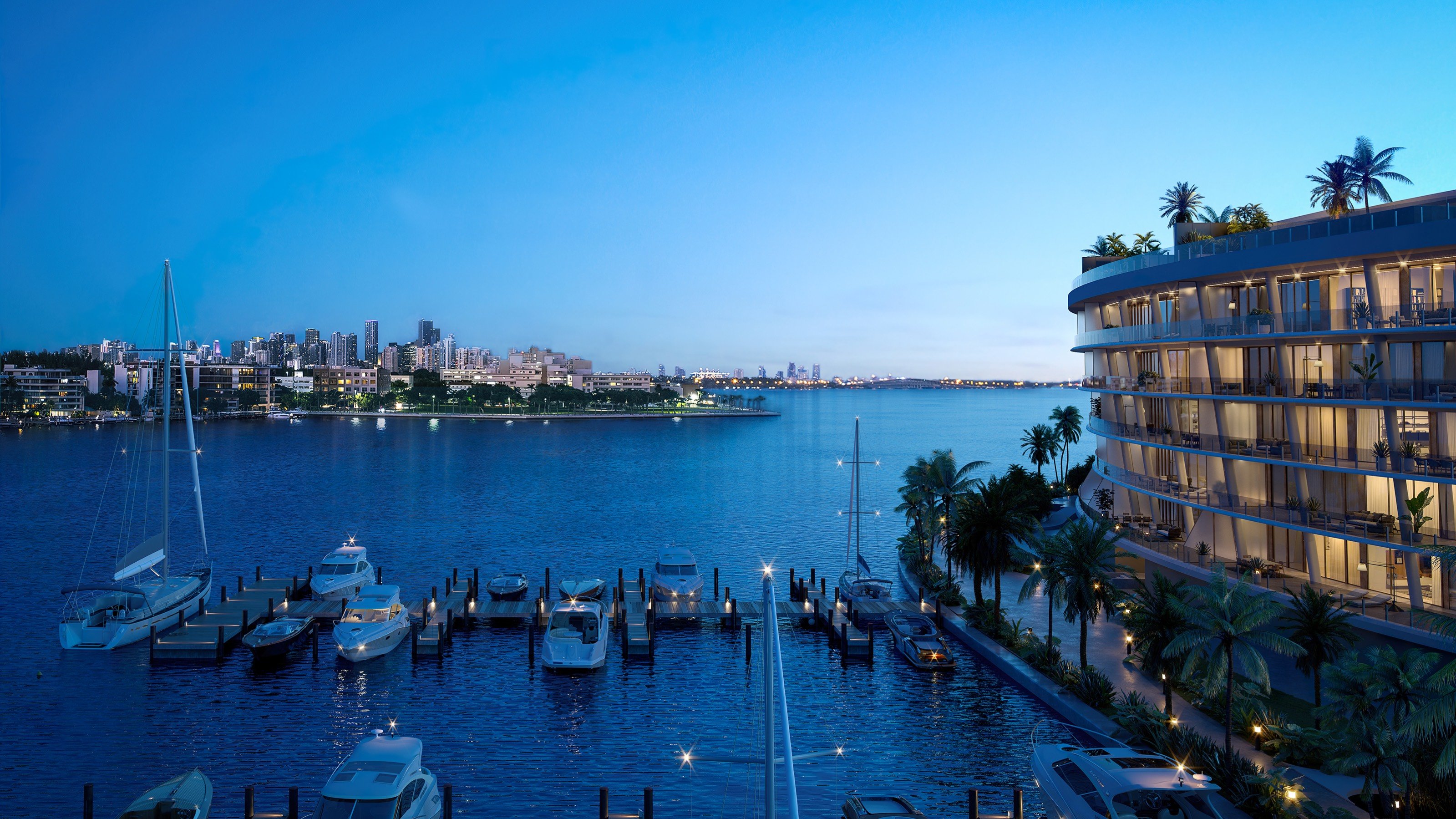
For a waterfront buyer, the romance of arriving home by boat can obscure a practical truth: access is only as good as the route. Before buying at Vita at Grove Isle, bridge clearance should be treated as core due diligence, not a late-stage marina detail. The question is not simply whether a boat can pass. It is whether your boat can pass safely, repeatedly and comfortably under the real conditions in which you intend to use it.
That means asking about height, tide, vessel configuration, route, docking procedures, insurance expectations and who is willing to document the answers. A verbal assurance may sound reassuring during a showing, but it will not help if a hardtop, antenna, tower, bimini or radar arch changes the vessel’s practical clearance profile.
Waterfront buyers in Coconut Grove often compare lifestyle as much as architecture. The calculus may include private terraces, arrival sequence, security, walkability and boating rhythm. Nearby and related Grove considerations, from Four Seasons Residences Coconut Grove to Park Grove Coconut Grove, remind buyers that location alone is not the entire story. For a boat owner, the water path matters.
Start the bridge-clearance conversation with precision. What clearance is being discussed? Is it measured at a particular tide level, from a charted datum, from ordinary observed conditions or from an informal local understanding? Is the answer based on the center of the span, the side of the channel or another point along the route?
A careful buyer should also ask whether the stated clearance changes materially with tide, storm conditions, seasonal water levels or vessel load. A boat that passes during one outing may be too tight under different conditions, especially if passengers, fuel, water toys or equipment alter the vessel’s running profile. This is not academic. It affects how spontaneous the boating lifestyle can feel.
The most useful answer is not a single number. It is a documented range of operating assumptions. Ask your captain, marine surveyor or boating advisor to review the vessel’s fixed and adjustable height. Then compare that profile against the specific access route you expect to use. If anything must be lowered before transit, make sure the process is simple enough to live with.
Marina access is a lifestyle asset only when the rules are clear. Before contract, ask what dockage rights, slip assignments, guest vessel policies, waiting lists, tender rules and storage limitations may apply. If the purchase expectation includes a boat slip, clarify whether that expectation is deeded, licensed, leased, assigned by association process or entirely separate from the residence.
Do not assume every waterfront residence functions like a private yacht club. Ask who controls dock operations, what vessel sizes can be accommodated, whether beams and drafts are restricted and how electricity, water, maintenance access and liability are handled. The answers can shape not only convenience, but resale positioning among future buyers who may ask the same questions.
This is where tone matters. A luxury purchase should feel seamless, but diligence should be exacting. If bridge clearance, marina terms or the access route are central to the value proposition, they deserve the same scrutiny as ceiling heights, glazing systems, elevator privacy and parking.
Many buyers ask, “Can I keep my boat here?” The sharper question is, “Can I use my boat the way I actually live?” That includes departures at preferred times, returns after dinner, guest pickups, fuel runs, service appointments and weather contingencies. If a bridge is part of the route, ask how often timing must be planned around water levels or operational conditions.
Also ask whether your vessel’s highest fixed point is truly fixed. Some owners overlook antennas, outriggers, satellite domes, light bars, canvas, towers and accessories added after purchase. Others assume a tender will pose no issue, only to find that a console, shade structure or trailering modification changes the clearance profile.
For buyers comparing the broader Grove market, Opus Coconut Grove and The Well Coconut Grove may enter the lifestyle conversation in different ways. The point is not that every residence must satisfy the same boating need. It is that a buyer should separate the desire for water proximity from the operational reality of water access.
If boating access is essential, make it visible in the purchase process. Ask counsel whether the contract should include time for marine due diligence, review of dock or marina documents and inspection of the access route. A luxury residence may be perfect architecturally and still be imperfect for a particular vessel.
The cleanest approach is to identify the boat early, measure it accurately and test the assumptions before deadlines pass. If the buyer intends to acquire a different vessel after closing, the diligence should consider the target category, not only the current boat. A center console, day boat, tender and cruising yacht can each create a different clearance conversation.
This is the kind of detail that separates casual touring from true buyer’s guide discipline. It is also where an experienced advisor can help keep emotion and precision in balance. A home may deliver the privacy, design and address a buyer wants, while still requiring a sober look at the waterway.
Before purchasing at Vita at Grove Isle, ask for written answers to several practical questions. What is the relevant bridge clearance along the expected route? Under what tide and water-level assumptions is that answer valid? What is the vessel’s actual air draft, including all fixed and removable equipment? Who has verified the measurement? Is a sea trial or route test appropriate before contingencies expire?
Then move to control and documentation. What rights are attached to any dock or slip? Are marina rules subject to change? Are there limits on vessel height, beam, draft, length or use? Are captains, crew, vendors and guests subject to registration or access rules? Are there insurance requirements for the owner, vessel or association?
Finally, think about resale. Future buyers who own boats may ask the same questions, while non-boating buyers may prioritize views, privacy and design. The strongest position is one in which the residence is compelling on its own merits, and the boating story is accurate, documented and easy to explain.
Why is bridge clearance important before buying at Vita at Grove Isle? It determines whether a specific vessel can access the property route safely and reliably. For boat owners, that can materially affect daily use and long-term satisfaction.
Should I rely on a verbal bridge-clearance estimate? No. Ask for the assumptions behind any estimate, then have your own boating advisor or surveyor verify the vessel’s height and route conditions.
What part of my boat should be measured? Measure the highest point in real operating condition, including antennas, domes, canvas, towers, lights and any accessories that may not appear in basic specifications.
Do tides affect bridge clearance? They can. Buyers should ask how clearance changes under different water levels and whether timing or route planning is needed for comfortable passage.
Is a boat slip automatically included with a residence? Do not assume that. Ask whether dockage is deeded, assigned, leased, licensed or handled under separate marina or association rules.
Who should help review boating access? A captain, marine surveyor, maritime attorney or experienced boating advisor can help evaluate vessel dimensions, route assumptions and documentation.
Can I test the route before closing? Ask early. If boating access is essential, your advisor and counsel can discuss whether a route test or marine due diligence period is appropriate.
Does bridge clearance matter if I only use a tender? Yes. Even tenders can have consoles, shade structures, antennas or accessories that affect practical clearance.
How does this affect resale? Clear documentation can help future buyers understand the boating profile of the residence. Unclear assumptions can create friction during resale diligence.
Is waterfront living still worth it if clearance requires planning? It can be, if the residence, views, privacy and boating routine align with how you live. The key is knowing the tradeoffs before purchase.
To compare the best-fit options with clarity, connect with MILLION.
If branded residences are on your mind — as a home or as an allocation — we would be glad to share what we are seeing, privately.
Begin a quiet conversation