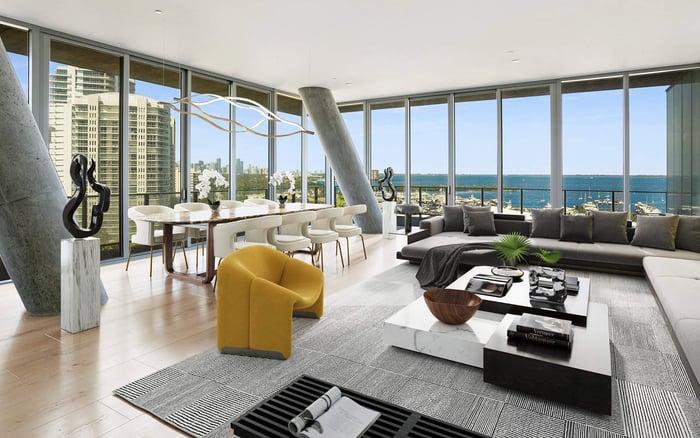
A closing-focused guide to moisture control at Vita at Grove Isle, covering terraces, HVAC, concealed plumbing, common areas, records and early-occupancy monitoring.

At Vita at Grove Isle, the setting is integral to the proposition. The property stands at 5 Grove Isle Drive in Coconut Grove, on a secured private island of approximately 20 acres in Biscayne Bay. All 65 residences are directly on the water, within a single curved building of approximately seven stories.
That intimacy is appealing, but new delivery should never be mistaken for proof of moisture performance. Materials may be new even as a seal, drain, condensate route or ventilation system requires adjustment. In a coastal building, the relevant question is not simply whether visible mold exists. It is whether water and humidity are being controlled, documented and corrected before concealed dampness develops into a larger concern.
For readers approaching this through MILLION's Buyer's Guides, the essential lens combines New-construction, Waterfront and Terrace due diligence. A polished walkthrough establishes condition at a moment in time. A proper review tests how the residence and building manage rain, plumbing, condensation and humid air.
New delivery is not a substitute for verified moisture performance.
Vita's waterfront terraces are approximately 13 feet deep. Buyers should inspect slope, drains, sliding-door thresholds, perimeter sealants and weep systems, preferably after rain. Where permitted, an approved water test can help reveal ponding, blocked drainage or seepage around door tracks and interior baseboards. Association or developer authorization should be obtained before any hose testing of terraces or exterior doors.
A visual review alone is insufficient. Request available building-envelope evaluations and water-intrusion test results for windows, curtain walls and terrace doors. Look for staining, swollen baseboards, bubbling paint and changes in flooring near exterior openings. An experienced building inspector or envelope specialist can assess areas that appear pristine but register elevated moisture.
This discipline is relevant across bayfront Coconut Grove offerings, including Four Seasons Residences Coconut Grove and Park Grove Coconut Grove. The purpose is not to presume a defect at any property, but to make exposure-specific verification part of the acquisition standard.
Linear air-conditioning diffusers and high ceilings make room-by-room performance more important than the impression of a cool interior. Ask for HVAC commissioning records, design humidity criteria and condensate-drain details. During the walkthrough, measure indoor relative humidity in multiple rooms and note meaningful variations, particularly near exterior glass, bathrooms and enclosed cabinetry.
Bathrooms merit equal scrutiny. Vita interiors include steam-equipped showers, which can create substantial localized humidity. Confirm that exhaust reaches the exterior, draws adequately and operates long enough to clear post-shower moisture. Moisture-resistant drywall in bathrooms is constructive, but buyers should verify where it was installed and inspect adjoining wet walls, penetrations and concealed cavities.
Finished drywall drop ceilings can conceal plumbing and mechanical routes. Examine them for stains, paint disturbance and musty odors, then use appropriate moisture measurement where access and conditions permit. Cooling, ventilation and drainage should be understood as one system, not as separate checklist items.
Private elevator access, concealed Miele appliances, Italian cabinetry, European fixtures and book-matched marble create a highly resolved interior. They also introduce built-in zones where a small leak may remain out of view.
Operate refrigerators and ice makers, dishwashers, washing machines and wet bars. Inspect supply connections, drains and plumbing shutoffs before cabinetry obscures the surrounding surfaces. Check cabinet bases, toe kicks, adjacent walls and flooring for staining, distortion or odor. Apply the same standard to vanities and walls shared with showers or other plumbing fixtures.
Comparable diligence is sensible when evaluating another contemporary Grove residence such as Mr. C Tigertail Coconut Grove. Fine finishes heighten the value of careful inspection because repair access can be consequential even when the original moisture event is limited.
A mold protocol matters before any visible issue arises because it reveals whether moisture events are handled consistently. Before closing, request leak-incident logs, unresolved punch-list items, warranties and repair histories relating to the residence, its plumbing stack and the relevant façade. Ask whether prior water events affected finishes or concealed assemblies and which records establish the completed response.
Because all 65 residences occupy one building, an envelope or mechanical issue could be systemic rather than isolated. Buyers should therefore distinguish between a unit-level repair and a condition involving a shared stack, façade zone, drainage route or mechanical system. The objective is a clear chain of information: what occurred, which area was affected, what was corrected, what remains open and which warranty may apply.
Specifications describe intended materials and features. They do not, by themselves, establish that every assembly was installed, commissioned and maintained correctly. The development's proposed National Green Building Standard positioning is a positive design consideration, but installed ventilation, humidity control and water management still warrant separate confirmation.
Vita's amenities include two pools, a fitness center, spa and boat slips. Due diligence should address drainage, exhaust and moisture-control practices in these wet common areas, not solely conditions inside the home. Marina and waterfront circulation also make the management of wet foot traffic, exterior drainage and humid-air transfer into conditioned spaces relevant.
Ask how frequently drains are maintained and how the association handles preventive envelope inspections and HVAC servicing. Maintenance has been indicated at approximately $1.25 per square foot per month, but current fees, budget allocations and warranty terms should be confirmed directly. Older price or fee information should not substitute for current condominium and closing documents.
Garages and assigned storage areas also deserve inspection. Owners intending to keep luggage, furnishings, records or art-related materials there should verify ventilation and humidity conditions rather than assume they match the residence.
Closing marks the beginning of performance monitoring, especially for seasonal owners. Record indoor humidity, inspect condensate lines and revisit doors, baseboards, cabinets and ceilings after heavy rain. Repeat these checks following an extended vacancy, when an unnoticed leak or humidity imbalance may have had time to affect concealed surfaces.
Keep dated notes of observations and service activity, and address musty odors, staining or persistent moisture promptly through qualified professionals and the appropriate building contact. At Vita, discretion and prevention belong to the same ownership standard: preserve the interior by verifying the systems that protect it.
For private guidance on Vita at Grove Isle and South Florida's finest residences, connect with MILLION.
If branded residences are on your mind — as a home or as an allocation — we would be glad to share what we are seeing, privately.
Begin a quiet conversationNew materials do not prove that every seal, drain, condensate route or ventilation system is performing correctly. Early verification can identify dampness before finishes conceal it.
Inspect slope, drains, sliding-door thresholds, perimeter sealants, weep systems, door tracks and nearby interior baseboards.
Yes. Post-rain conditions may reveal ponding, blocked drains or seepage that a dry-day walkthrough misses.
An approved water test may be useful, but buyers should obtain association or developer authorization before hose-testing terraces or exterior doors.
Request commissioning records, design humidity criteria and condensate-drain details, then assess room-by-room performance during the walkthrough.
Confirm that exhaust reaches the exterior, provides adequate airflow and runs long enough to remove post-shower humidity.
Check refrigerators, ice makers, dishwashers, washing machines, wet bars, supply connections, drains and plumbing shutoffs.
Request leak-incident logs, open punch lists, warranties, and repair histories for the unit, plumbing stack and relevant façade.
Yes. Pools, the spa, marina circulation, garages and storage areas should be reviewed for drainage, exhaust, ventilation and humidity management.
Track indoor humidity and inspect condensate lines, doors, baseboards, cabinets and ceilings after heavy rain or extended vacancy.