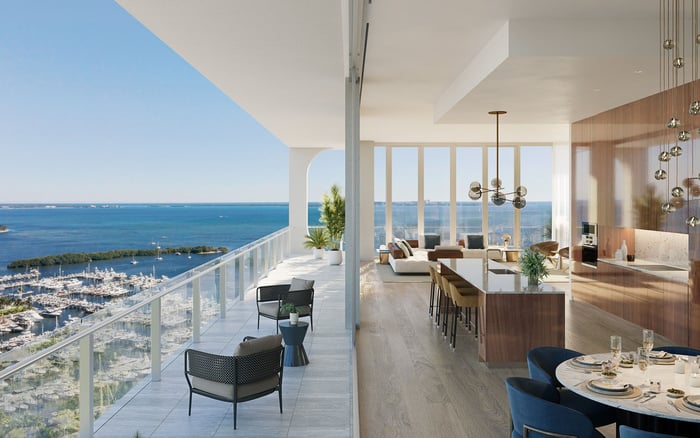
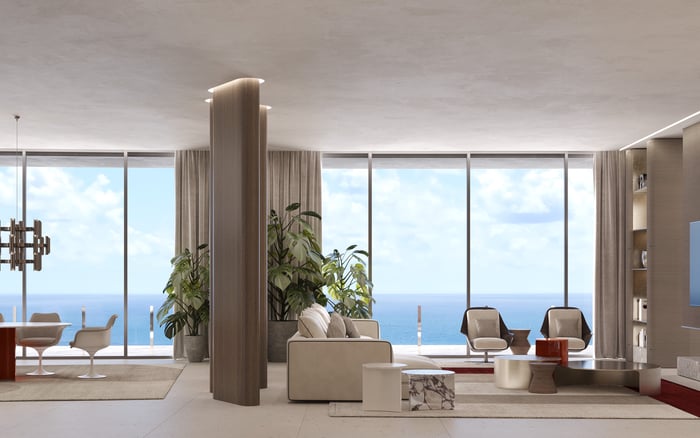
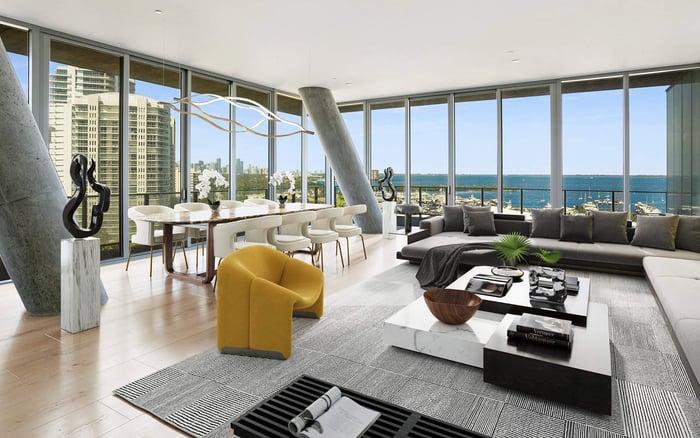
For boating-minded buyers comparing two prominent Coconut Grove addresses, the decisive issue is not proximity to Biscayne Bay. It is whether dockage exists as a documented, transferable right and whether a vessel's intended route works beneath the fixed Rickenbacker Causeway bridge.
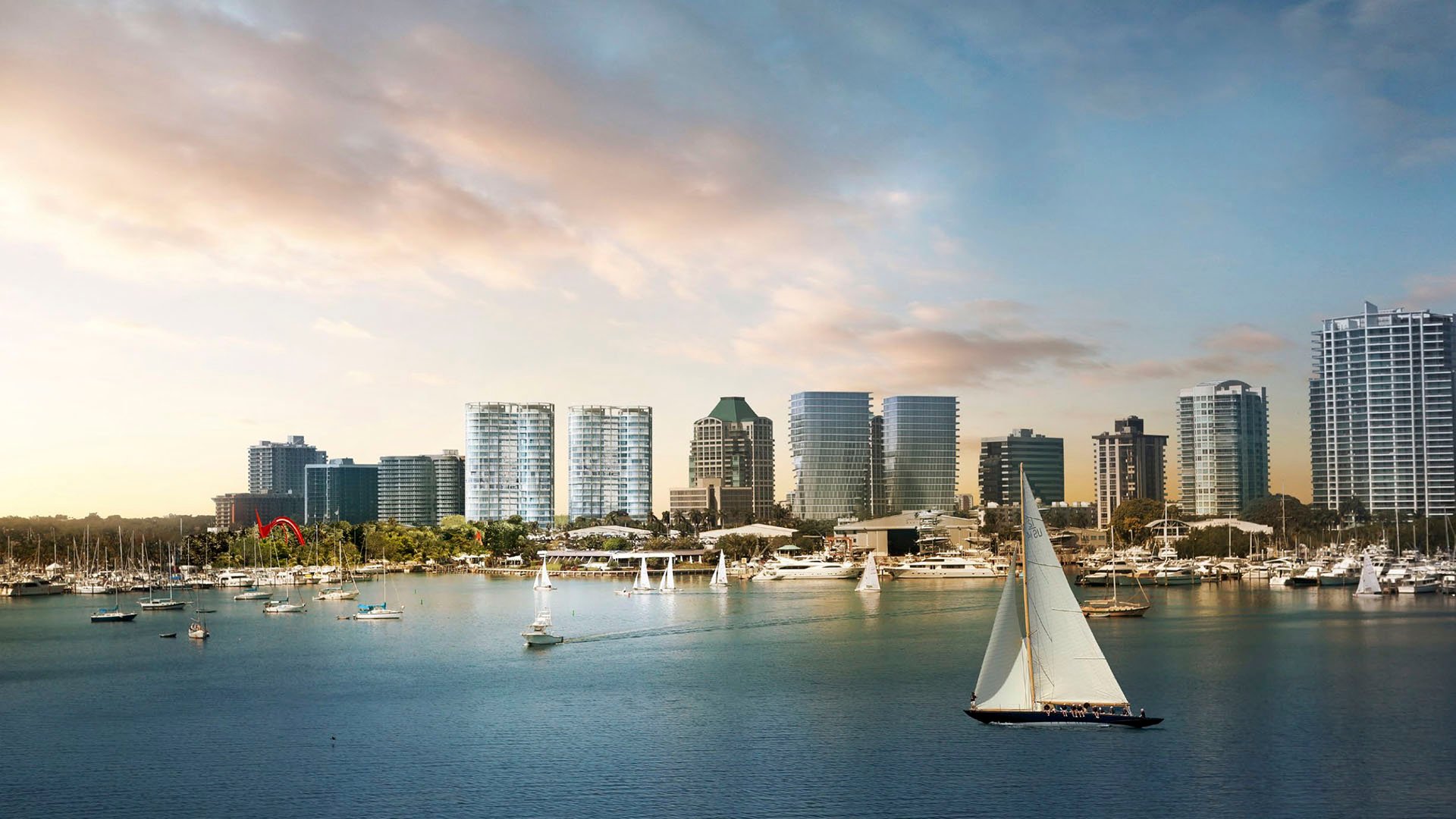
For a buyer with a yacht, sailboat or serious interest in life on the water, Coconut Grove presents a seductive visual equation: Biscayne Bay, Dinner Key and Regatta Harbour sit close to some of the neighborhood’s most refined condominium addresses. Yet proximity is not legal access. A bayfront outlook, marina-facing exposure or short distance to dockage does not, by itself, establish the right to occupy, transfer or control a slip.
That distinction should frame any comparison between Four Seasons Residences Coconut Grove and Park Grove Coconut Grove. Neither property establishes a general, automatic marina right bundled with every residence. Nor does either state a general policy under which a slip automatically passes to the next owner when a condominium is resold.
In Coconut Grove, proximity to a marina is a lifestyle advantage, not proof of dockage rights.
The practical result is a shared buyer’s lens: evaluate the residence and boating arrangement as connected lifestyle decisions, but as separate legal and financial inquiries.
Four Seasons Private Residences Coconut Grove is planned as a 20-story, 70-residence condominium at 2699 South Bayshore Drive. The Biscayne Bay waterfront development is identified as Florida’s first standalone Four Seasons branded residence and is being developed by CMC Group and Fort Partners in partnership with Four Seasons. Completion is planned for 2028, and the construction loan totals $328 million.
Its amenity program includes a restaurant, library, gym, yoga room, spa, children’s area and private pool deck. A private marina or deeded boat slip is not listed among those amenities. Nor is there an established guarantee that slip rights automatically accompany ownership.
This does not prove that an owner could not arrange nearby dockage, and an amenity list does not replace legal review. It means the condominium purchase should not be underwritten on the assumption that a slip is included. Any statement to that effect requires confirmation in the condominium declaration, title materials and relevant marina or club agreement.
Park Grove sits within the same broader South Bayshore Drive luxury corridor near Biscayne Bay, Dinner Key and Regatta Harbour. Boat slips are not documented as bundled with every residence, nor is an automatic marina right attached to each unit.
Regatta Harbour is a separately developed mixed-use marina project by Treo Group, not a residential amenity identified as part of either condominium. Coconut Grove Sailing Club is also geographically separate from the condominiums, adjacent to and south of Dinner Key Marina. These boating destinations strengthen the area’s nautical character, but their presence does not create ownership or assignment rights for nearby residents.
For buyers widening a Coconut Grove search, Mr. C Tigertail Coconut Grove may be considered as another residential option, while Vita at Grove Isle offers another point of comparison in the wider market. Their inclusion in a property tour should not alter the core discipline: boating claims must be tested against the governing documents applicable to the specific residence and dockage arrangement.
The phrase “slip included” can conceal materially different structures. A dockage interest might be deeded, assigned, licensed or leased. Each form may carry distinct rules governing sale, assignment, subleasing, vessel use and termination. Buyers should identify the precise structure before attributing value to it.
A deeded interest should be traced through title records and checked against condominium restrictions. An assigned right requires confirmation that the assignment remains valid and can pass to a purchaser. A license may be personal, conditional or revocable. A lease may expire, restrict transfers or require marina approval. No category should be inferred from marketing language alone.
The resale contract should also distinguish the residence from any separate boating interest. If dockage is material to the acquisition, the buyer’s review should establish whether the seller controls the claimed right, whether transfer consent is required, when the right changes hands and what happens if approval is denied. These are central valuation questions, not closing formalities.
For dockage obtained in the Dinner Key area, route planning introduces another layer. The Intracoastal Waterway passes beneath the fixed Rickenbacker Causeway bridge just over a mile north of Coconut Grove Sailing Club. The bridge has a vertical clearance of 76 feet and a horizontal clearance of 120 feet.
The vertical limit is principally relevant to vessels proceeding north from the Dinner Key area, especially sailboats with tall rigs. An owner should compare the vessel’s air draft with the bridge clearance and intended route rather than assume nearby dockage ensures unrestricted navigation. A slip that physically accommodates a vessel may still be imperfect for the owner’s preferred itinerary.
Bridge clearance therefore belongs in residential due diligence. The analysis is not simply, “Can I secure dockage?” It is also, “Does this dockage work for my vessel and the routes I expect to use?”
For waterfront-property buyers, the most useful questions are specific. Request the condominium declaration, amendments, relevant association rules, title records and every separate marina, club, license or lease agreement connected to the claimed slip. Confirm whether the right is deeded, assigned, licensed or leased-and whether it may be sold, assigned or subleased to the unit purchaser.
Then obtain the current terms directly from the marina or club. Availability, waitlists, vessel-size limits, insurance requirements and transfer restrictions may determine whether the arrangement is practical. Verify the authorized vessel, named holder, duration, fees, approval process and termination provisions. If a resale listing links a slip to a residence, match that statement to executed documents rather than descriptive language.
Finally, test the boating plan operationally. Compare vessel dimensions with slip limitations, evaluate the intended direction of travel and account for the Rickenbacker Causeway clearance on northbound routes. This three-part review-residence, legal dockage right and navigational fit-gives a buyer a far more accurate picture of value.
Four Seasons and Park Grove occupy a compelling Coconut Grove setting, but neither should be treated as automatically conveying marina privileges. The sophisticated approach is to value architecture, service, amenities and location on their own merits, then assign separate value to dockage only after its legal form and transferability are verified.
For discreet guidance on Coconut Grove residences and boating-focused acquisitions, connect with MILLION.
If branded residences are on your mind — as a home or as an allocation — we would be glad to share what we are seeing, privately.
Begin a quiet conversationAvailable project materials do not establish a deeded or guaranteed boat slip that automatically accompanies condominium ownership.
Public project materials do not document bundled slips or an automatic marina right attached to every Park Grove residence.
No. Proximity describes location, while ownership or use rights must be established through title and marina documents.
No. It is a separately developed mixed-use marina project rather than an identified residential amenity of either property.
It concerns whether a dockage right may legally pass from the current holder to a unit purchaser, potentially subject to consent or restrictions.
Review the condominium declaration, title records and any separate marina, club, license or lease agreement.
Deeded, assigned, licensed and leased rights can have different sale, assignment, subleasing and termination rules.
The fixed bridge has a listed vertical clearance of 76 feet and horizontal clearance of 120 feet.
The 76-foot vertical clearance is particularly relevant to tall-rig sailboats proceeding north from the Dinner Key area.
Confirm current availability, waitlists, vessel-size limits, insurance requirements, fees and transfer restrictions.