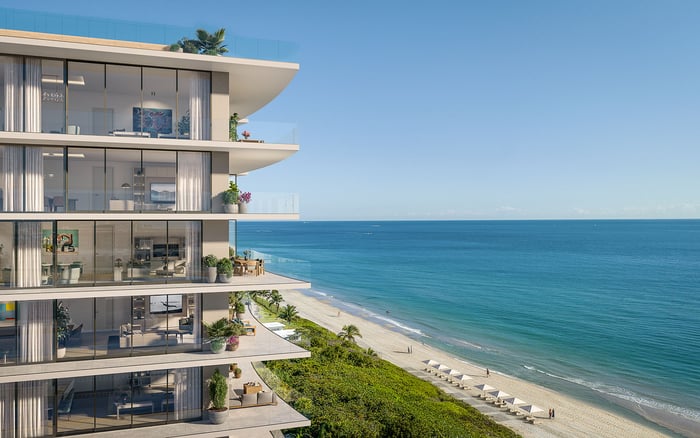
A discreet buyer’s guide to evaluating storm-day livability in Hallandale Beach, from flood exposure and evacuation planning to generators, elevators, reserves, insurance, parking, and marina protocols.

In Hallandale Beach, luxury real estate due diligence should extend beyond view corridors, ceiling heights, amenity programs, and designer finishes. The Atlantic hurricane season officially runs from June 1 through November 30, and for coastal buyers, the question is not only whether a residence feels beautiful on a clear winter afternoon. It is whether the property remains functional, legible, and well managed when weather, tides, access, and power become the central issues.
Storm-day livability is the practical experience of occupying, securing, evacuating, or returning to a home during and after a major storm. In a condominium, it is shaped by the building envelope, garage design, mechanical protection, elevator plan, generator capacity, drainage, insurance posture, staff continuity, and association governance. It is one of the clearest ways to compare otherwise similar residences.
Hallandale Beach buyers looking at 2000 Ocean Hallandale Beach or Shell Bay by Auberge Hallandale should think on two levels: the private residence and the common systems that make the building habitable. A spectacular kitchen matters, but on a storm day, so does the location of the electrical room.
Every evaluation should begin with the specific address. Evacuation requirements can vary by location, so buyers should confirm the property’s evacuation zone and route before closing. This is especially important for second-home owners and seasonal residents who may not know local bridge access, shelter guidance, or the timing of official evacuation instructions.
Flood exposure also requires address-specific review. Buyers should examine the property’s flood zone, base flood elevation, and flood-map history, then cross-check that context with local floodplain information. Storm surge, an abnormal rise in water generated by a storm over predicted tides, is particularly relevant to lobbies, garages, pool decks, marinas, and ground-level equipment. Water views are not the same as water behavior.
Oceanfront living remains one of South Florida’s defining privileges, but oceanfront ownership rewards precision. Ask where the lowest occupied level sits, how water is directed away from entries, whether deployable barriers exist, and which areas have flooded before. A buyer comparing Hallandale with nearby Broward coastal options such as Auberge Beach Residences & Spa Fort Lauderdale should apply the same discipline at every address.
Storm-day comfort is often determined by infrastructure buyers rarely see during a polished showing. Ask whether mechanical, electrical, fire-safety, pump, access-control, and elevator equipment is elevated or otherwise protected against mapped flood risk. If systems sit below grade or near flood-prone areas, request a clear explanation of protections, maintenance, and prior performance.
Backup power deserves particular scrutiny. Do not assume that all elevators will operate during an outage. Ask for the building’s written emergency power plan and confirm which systems the generator supports, including elevators, pumps, fire alarms, access systems, emergency lighting, security, and any cooled common areas. For a high-floor residence, one operating service elevator can be the difference between manageable inconvenience and meaningful isolation.
Vehicle livability belongs in the same analysis. Review garage elevation, drainage, flood barriers, assigned-space location, and any history of lower-level flooding. A premium residence with a vulnerable parking assignment can create a decidedly un-luxury problem after a storm. Buyers with multiple vehicles should evaluate parking location as carefully as exposure, floor height, and view corridor.
For condominium purchasers, documents often reveal more than the tour. Request the latest milestone inspection status and any related repair documentation where applicable. Review permitted work tied to windows, balcony doors, roof systems, façade repairs, waterproofing, and structural elements, with attention to whether current and past work was permitted and inspected under applicable Florida Building Code requirements.
The association’s financial condition is equally important. Review reserves and structural-integrity reserve planning, because underfunded maintenance, storm-hardening, or repair obligations can affect both safety and future assessments. A building can look immaculate and still have unresolved infrastructure obligations that become expensive after a severe weather event.
Board minutes and maintenance records should be read for patterns: water intrusion, garage flooding, elevator outages, generator failures, façade repairs, pump issues, insurance disputes, and post-storm special assessments. Ask direct questions: What failed in the last major storm? How long were elevators or power out? Did the garage flood? Were owners assessed after the event? In refined buildings, the answers should be specific, documented, and calm.
Two residences in the same tower can have very different storm-day profiles. Floor height affects evacuation comfort and elevator reliance. Balcony exposure influences wind-driven rain and post-storm cleanup. Window and balcony-door permit history matters. Parking level can determine whether a vehicle remains usable. Access to generator-backed common areas may matter more than an additional decorative finish.
That is why buyers should not evaluate storm livability only at the building level. A lower floor may reduce elevator dependence but increase proximity to surge-prone amenities or garage areas. A higher floor may offer superior views and privacy but requires confidence in generator-backed vertical transportation and a clear shelter-in-place plan.
A buyer considering Hallandale, Pompano, and Fort Lauderdale can apply the same framework across the coast. When touring a residence such as Waldorf Astoria Residences Pompano Beach, the most useful questions are not dramatic. They are operational: what runs, what locks, what drains, what cools, what opens, and who manages the sequence.
Marina access adds another layer of diligence. Buyers with boats should request the association’s storm mooring, dock-closure, and surge-response plan. Storm surge can rapidly raise water levels, and dock protocols should be written, communicated, and familiar to management. The word marina should prompt questions about lines, access restrictions, insurance responsibilities, and when owners are expected to act.
Insurance should also be separated into its components. Flood coverage is commonly handled apart from standard property insurance, so buyers should review the building’s insurance records, the unit owner’s likely obligations, deductibles, exclusions, and any recent changes. For condominium buyers, the association’s master coverage and the owner’s separate policy should be understood together, not assumed to overlap perfectly.
Longer-term coastal exposure belongs in the conversation as well. Buyers can review sea-level-rise and coastal-flooding tools to understand how the surrounding area may evolve over time. This is not a reason to abandon coastal luxury. It is a reason to buy with discipline, favor well-capitalized associations, and privilege buildings with transparent operations.
In Hallandale, storm-day livability is less about anxiety than continuity. A well-chosen residence gives its owner a clear plan: when to leave, where to go, what happens to the car, how the building communicates, which systems remain live, how staff returns, and what documents support the association’s confidence.
The most sophisticated buyers treat this as part of lifestyle underwriting. They still care about spa suites, private dining, sunrise terraces, and arrival sequence. They simply understand that true coastal luxury includes the systems behind the scenes. In Broward, and especially in Hallandale Beach, discretion and resilience belong in the same sentence.
What is storm-day livability? It is the practical ability to occupy, secure, evacuate, or return to a residence during and after a major storm.
Should I check the evacuation zone before buying? Yes. Evacuation requirements can vary by address, so confirm the zone and route before closing.
Is flood zone review enough by itself? No. Buyers should also review base flood elevation, flood-map history, drainage, garage exposure, and equipment location.
Do all condo elevators run on generator power? No. Ask for the written emergency power plan and confirm exactly which elevators and systems are supported.
Why do board minutes matter? They can reveal prior water intrusion, elevator outages, garage flooding, generator failures, repairs, and special assessments.
Should I review permits for windows and balcony doors? Yes. Window, balcony-door, roof, and façade work should be reviewed for permitting and inspection history.
How should I evaluate parking? Check assigned-space elevation, drainage, flood barriers, and whether lower garage levels have a flooding history.
What should boat owners ask before buying? Ask for the storm mooring, dock-closure, and surge-response plan, plus any owner responsibilities during alerts.
Is flood insurance separate from regular property insurance? Often, yes. Buyers should review flood coverage separately from standard property or condominium insurance.
Should I plan to shelter in place or evacuate? Have both plans before closing, monitor official instructions, and leave when an evacuation order applies.
When you're ready to tour or underwrite the options, connect with MILLION.
If branded residences are on your mind — as a home or as an allocation — we would be glad to share what we are seeing, privately.
Begin a quiet conversation