A buyer-focused guide to evaluating breakfast-room light in South Florida luxury condos, from exposure and glare to privacy, furniture planning, and resale appeal.
In South Florida luxury real estate, buyers are trained to study views, ceiling heights, finishes, amenities, and private outdoor space. Yet one of the most revealing moments in a condominium happens quietly: breakfast, coffee, and first light. The breakfast room, whether a formal bay, a casual corner off the kitchen, or a sculptural dining niche within an open plan, can reveal how the home will feel before the day becomes social.
Light in this zone is not simply brightness. It is direction, softness, glare, reflection, privacy, heat, and the way a room supports a daily ritual. A breakfast area that glows at 8 a.m. can make a residence feel resort-like. One that is harsh, shadowed, or exposed can make even an otherwise polished condo feel less considered.
This is especially important in a market where buyers often compare Brickell towers, oceanfront residences, bay-facing homes, and boutique buildings across several neighborhoods in a single weekend. The best question is not, “Is there good light?” It is, “What kind of light will I actually live with?”
Exposure is the beginning of the conversation. An east-facing breakfast room may receive early sun, while a west-facing room may feel calmer in the morning and more intense later in the day. North and south exposures can feel more even, depending on the plan, nearby buildings, and the depth of the glazing.
Do not judge exposure only from the sales floor or a late-afternoon tour. Ask to understand the light pattern at the hour you will use the space most. If breakfast is a daily ritual, morning light matters more than sunset drama. If the area doubles as a laptop perch or reading table, glare control may be just as important as the view.
For buyers considering a penthouse, the issue can be more nuanced. Higher elevation may create a more open sense of sky, but it can also make the breakfast area more exposed to strong light. The question is not whether the home is bright. It is whether the light is comfortable, flattering, and usable.
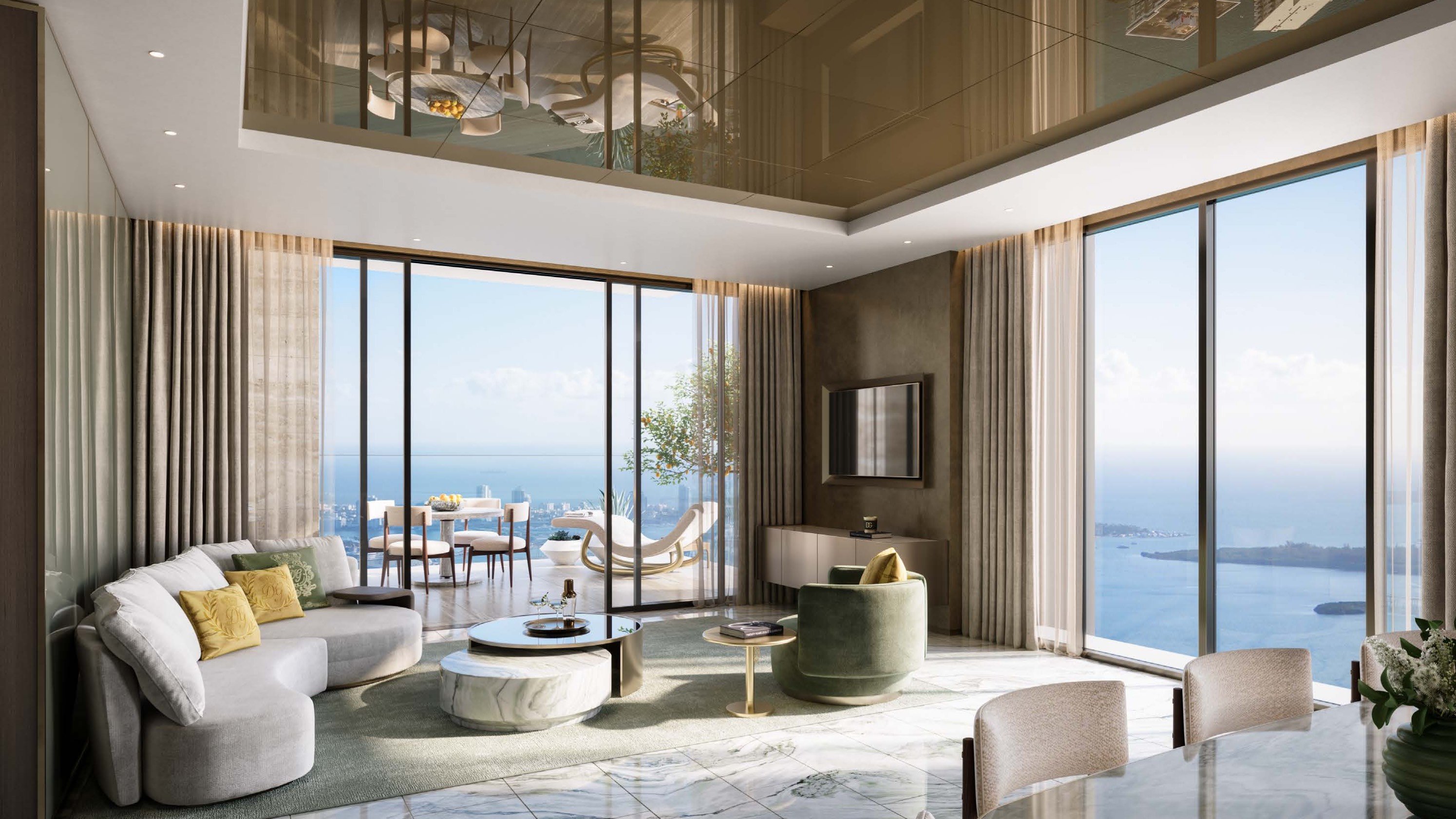
A breakfast room can be transformed by architectural details that buyers sometimes overlook. Floor-to-ceiling glass may bring drama, but the quality of light depends on the depth of the room, the angle of the windows, balcony overhangs, mullions, and any surrounding architectural fins or terraces.
Ask whether the breakfast area sits directly against glass or is set back within the plan. A table placed too close to a glass wall can create squinting, heat, or reflections on stone and lacquered surfaces. A slightly recessed dining niche may receive a more diffuse glow, which often feels more luxurious in daily use.
If the home includes a balcony or terrace adjacent to the breakfast area, consider how that outdoor plane modifies the light. A deep terrace can shade the room beautifully, but it may also reduce the brightness some buyers expect from a waterfront residence. The right answer depends on your habits, not a universal rule.
A water view can be mesmerizing in the morning, but reflective surfaces can amplify glare. Water, neighboring glass facades, pale flooring, polished counters, and lacquered cabinetry may all influence how the breakfast area feels once the sun rises.
During a tour, sit where you would actually sit. Look toward the view, then toward the kitchen, then toward anyone seated across from you. Ask whether a pendant, mirror, glossy wall finish, or glass partition creates a secondary glare point. A dining area can photograph beautifully yet feel uncomfortable if the eye is constantly adjusting.
This is also where window treatments become more than an afterthought. Ask what is included, what can be automated, where pockets are located, and whether shading can preserve both privacy and the view. In luxury settings, the best solution often feels invisible: soft control rather than obvious compromise.
Breakfast-room light should be evaluated with the body, not only the eye. A room can look ideal and still feel warm at the hour it is meant to be used. Ask how the cooling system serves the area, whether supply vents are placed thoughtfully, and whether the glazing creates noticeable heat gain during morning use.
Materials matter as well. Stone floors, glass tables, metal chair frames, and high-gloss cabinetry respond differently to direct light. Some surfaces create a crisp gallery effect. Others can feel hard or reflective when the room is full of sun. If you plan to use upholstery, natural woods, or delicate wallcoverings, ask how sustained exposure could affect their appearance over time.
For buyers who entertain, this is a comfort issue. For buyers who live quietly, it is a daily-luxury issue. The most refined homes do not merely admit sunlight. They discipline it.
Breakfast is intimate. It is often when a residence feels least staged and most personal. In dense urban settings, including Brickell, privacy at the breakfast table can be as important as the view itself.
Ask what is visible from neighboring buildings, pool decks, amenity terraces, and adjacent lines of sight. A high floor does not automatically solve privacy if another tower faces the same angle. Likewise, a lower residence can feel surprisingly private if landscaping, setbacks, or building orientation work in its favor.
The question is simple: when the shades are open at breakfast, who can see in? The answer may affect your furniture placement, window-treatment package, and even whether the breakfast area becomes the everyday dining spot or a more occasional setting.
Luxury floor plans often show a breakfast table in a clean, centered composition. Real life is less abstract. Chairs need to slide back. Circulation to the kitchen, terrace, and living area must remain graceful. Pendant lighting should relate to the table, not simply to a plan drawing.
Measure the intended table size, chair depth, clearance to glass, and relationship to any island seating. If the breakfast area is small, ask whether a banquette, round table, or oval form would improve movement. If it is generous, ask whether the scale supports intimacy or whether the furniture will feel stranded in a bright corner.
This is where design discipline protects value. A breakfast area that feels properly scaled signals that the residence was planned for living, not just display.
South Florida light is not static. Morning brightness can shift with cloud cover, seasonal sun angle, storms, and reflections from nearby surfaces. While a single showing cannot reveal every condition, the right questions can reduce uncertainty.
Ask how the breakfast area performs on bright days, rainy mornings, and during the months when the sun path changes. If possible, tour at different times or request visual references from multiple hours. A room that feels moody and quiet on one day may be brilliant on another.
For second-home buyers, this matters because the residence may be used during specific seasons. A breakfast room should serve the period when you are actually in town, not merely the day you signed a contract.
The goal is not to overcomplicate a purchase. It is to bring the same rigor to daily experience that buyers already bring to amenities, parking, and views. Breakfast-room light can influence window treatments, furniture budgets, inspection priorities, and even the way you compare two otherwise similar residences.
Before buying, ask for clarity on exposure, shading, privacy, heat, furniture placement, and any upgrade options that affect the morning experience. A beautiful condo should impress at cocktail hour. A truly livable one should also feel composed at breakfast.
What is the most important breakfast-room light question to ask first? Ask what the room feels like at the exact hour you expect to use it. Morning comfort matters more than a generic description of brightness.
Is east-facing light always best for breakfast? Not always. East light can be beautiful, but its comfort depends on glass, shading, view reflection, and room depth.
Should I tour the condo in the morning? If breakfast-room light is important to you, a morning visit is highly useful. It reveals glare, privacy, and heat more honestly.
Can window treatments solve harsh light? They can help substantially, especially when planned with automation and proper pockets. They cannot fully correct poor orientation or awkward placement.
Does a balcony improve breakfast-room light? A balcony can soften direct sun and add depth to the view. It may also reduce brightness, so judge the effect in person.
How does oceanfront exposure affect breakfast areas? Oceanfront settings can introduce strong reflection and open-sky brightness. The result may be serene or intense depending on the plan.
Is a terrace better than floor-to-ceiling glass alone? A terrace can create shade and a layered indoor-outdoor feel. Glass alone may feel more dramatic but sometimes less controlled.
Why does furniture placement matter so much? A breakfast table needs comfortable clearance and the right relationship to light. Poor placement can make a beautiful corner difficult to use.
Should investors care about breakfast-room light? Yes, because daily livability can influence how memorable a residence feels during showings. Subtle comfort can support stronger buyer appeal.
Can breakfast-room light affect resale perception? It can. Buyers often respond emotionally to morning rooms that feel calm, private, and well proportioned.
For a tailored shortlist and next-step guidance, connect with MILLION.
If branded residences are on your mind — as a home or as an allocation — we would be glad to share what we are seeing, privately.
Begin a quiet conversation