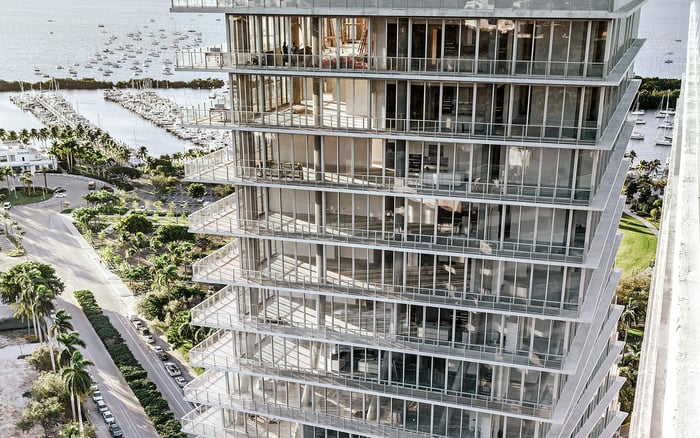
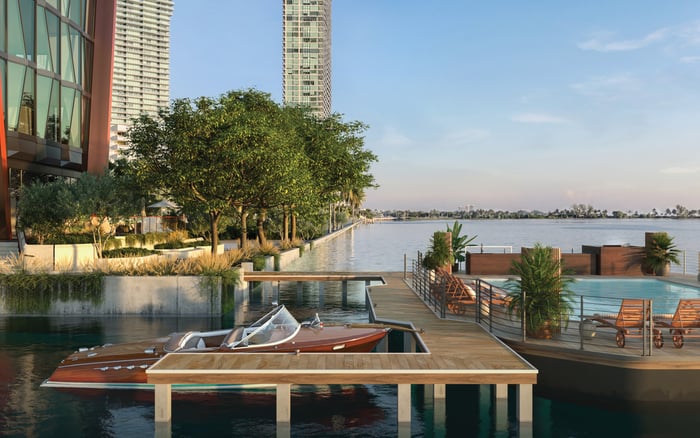
A buyer-oriented underwriting framework for comparing Villa Miami and The Cove Residences Edgewater through the operational details that shape waterfront luxury value.

Villa Miami vs The Cove Residences Edgewater is not simply a question of which tower offers the more dramatic bay perspective. For a serious buyer, lender, or family office, the sharper question is whether each building can translate waterfront positioning into a daily experience that remains seamless under pressure. Views can be photographed. Operations must be lived.
In Edgewater, the bayfront premium is easy to recognize, but harder to underwrite. Villa Miami belongs in the ultra-luxury waterfront category, where bayfront identity is central to the value proposition. That means its relationship to the water should be analyzed as an operating system, not only as a water-view premium. The same discipline should be applied to The Cove Residences Edgewater, with every claim tested against plans, rules, staffing, and real-world flow.
For new-construction buyers, the distinction matters. A residence can have persuasive renderings, generous amenity language, and a coveted address environment, yet still disappoint if arrivals stack, vendors cross resident paths, food service strains elevators, or marina activity proves difficult to manage. The most durable luxury is usually quiet, punctual, and nearly invisible.
A waterfront condominium can be valuable without delivering a truly marine-integrated lifestyle. Marine integration depends on usable access, operating rules, resident priority, guest protocols, staff coverage, service reliability, and resilience during high-demand moments. That is the first underwriting lens for Villa Miami and any Cove Residences Edgewater comparison.
For Villa Miami, the bayfront condition should prompt specific questions: How will residents reach water-related amenities or access points? How are guests processed when they arrive for a waterfront visit, dining experience, or private event? What rules govern timing, staff assistance, security, and service interruptions? If the offering implies a marina-adjacent lifestyle, the buyer should understand not just the presence of water, but the choreography around it.
The same framework applies to The Cove Residences Edgewater without assuming particulars. Review any disclosed plans for marine access, guest movement, and waterside operations. Ask whether resident convenience is protected during peak weekends, holidays, storms, king tides, and maintenance periods. A building that performs well on a quiet Tuesday may reveal its weaknesses when residents, vendors, guests, and service teams converge.
In the ultra-premium market, arrival is part of the asset. The first five minutes can confirm the price point or quietly undermine it. For Villa Miami, arrival choreography should be treated as a brand-equity driver because valet capacity, curb management, lobby handoff, and privacy all shape how residents and guests judge the property.
The underwriting questions are practical. Is the porte cochere or curb sequence designed to prevent stacking? Can valet handle simultaneous resident returns, dinner guests, deliveries, and ride-share activity? Does the lobby handoff preserve privacy, or does it expose residents to congestion? Are guests identified and escorted in a way that feels secure without becoming theatrical?
For The Cove Residences Edgewater, the same arrival diligence is essential. Buyers should not assume that a waterfront address automatically produces a refined arrival. The stronger test is whether the property can protect calm when traffic, weather, and social activity collide. Edgewater’s appeal is partly its access to the city and the bay; that access must be managed at the front door.
Back-of-house planning is where many luxury buildings either protect the resident experience or gradually compromise it. Villa Miami should be evaluated for how staff, vendors, deliveries, food service, housekeeping, maintenance, trash, packages, and security can move without disrupting residents. This is not a secondary detail. It is one of the clearest indicators of whether the building can sustain a hospitality-level waterfront lifestyle.
A buyer or lender reviewing Villa Miami should request detailed plans for loading docks, service elevators, package handling, trash rooms, food-service circulation, and marina-related operations. The question is not whether these areas exist, but whether they are sized, sequenced, and staffed to match the service intensity promised by the property.
For The Cove Residences Edgewater, ask the same questions before assigning a comparable premium. Where do vendors enter? How do large deliveries move? Can caterers support private events without crossing the most sensitive resident corridors? Are service elevators sufficient for full occupancy? What happens when housekeeping, maintenance, food service, and package volume all rise at once?
Investment discipline begins with these less glamorous rooms. The most expensive buildings are often judged by their most ordinary moments: a delayed elevator, a crowded lobby, a noisy loading zone, or a delivery cart in the wrong corridor.
Bayfront living in Miami requires resilience underwriting. For Villa Miami, the bayfront setting makes storm exposure, king-tide conditions, seawall performance, loading access, and service continuity relevant to operating risk. This does not reduce the appeal of waterfront ownership. It simply clarifies the due diligence.
Buyers should ask how access points function during severe weather, how loading and service areas are protected, and whether emergency procedures are compatible with a high-service residential environment. If marina or water-access logistics form part of the lifestyle proposition, the rules for disruption and recovery should be understood early.
The Cove Residences Edgewater should be reviewed through the same lens. In a luxury building, resilience is not only structural. It is also operational. Can the building maintain order, privacy, communication, and essential service when conditions are inconvenient? The answer may influence operating expenses, reserve expectations, and long-term resident satisfaction.
A hospitality-level waterfront lifestyle is labor intensive. Villa Miami’s operating expenses should be evaluated against the staffing and service intensity required to deliver its brand promise. Valet, security, marina-related assistance, front desk coverage, maintenance, food-service support, and back-of-house management all carry cost implications.
This is where early enthusiasm must become long-term governance analysis. Can the homeowners association preserve the service level after turnover? Will future boards understand that staffing cuts can damage the very premium residents paid for? Are operating rules detailed enough to protect arrival, privacy, and waterfront usability once the building is fully occupied?
For The Cove Residences Edgewater, the same HOA questions should be asked before comparing value. A lower expected cost structure may not be better if it underfunds the experience. A higher one may be justified if it produces reliable service and protects resale reputation. The right answer depends on whether the budget, rules, and management plan align with the lifestyle being sold.
Villa Miami’s resale premium should be stress-tested against the durability of its operations after full occupancy and long-term governance. The strongest waterfront properties do not merely launch well. They remain convenient, discreet, and well managed when every residence, guest pattern, vendor route, and service promise is active.
For The Cove Residences Edgewater, underwriting should resist aesthetic shortcuts. Compare disclosed plans, not adjectives. Study how residents arrive, how guests are received, how vendors disappear, how the waterfront is used, and how the building behaves in peak conditions. That is where value becomes defensible.
In Edgewater, the better asset will likely be the one that makes complexity feel effortless. Luxury buyers will pay for views, but they tend to remember friction. The building that protects privacy, movement, service, and calm has the stronger claim to lasting prestige.
What is the core underwriting issue in Villa Miami vs The Cove Residences Edgewater? The core issue is whether each building can deliver a seamless waterfront lifestyle through access, arrival, staffing, and back-of-house systems.
Why is marina logistics important for Villa Miami? Villa Miami’s bayfront positioning makes water access an operating question involving usability, rules, guest movement, service reliability, and resilience.
Should buyers treat water views and marine-integrated living as the same thing? No. Water views are visual, while marine-integrated living depends on physical access, staffing, policies, and daily execution.
What should be reviewed in the guest-arrival sequence? Buyers should examine valet capacity, curb flow, lobby handoff, privacy, guest processing, and performance during peak arrival periods.
Why does back-of-house flow affect luxury value? Poor service circulation can push vendors, deliveries, housekeeping, food service, and maintenance into resident-facing areas, weakening the experience.
What documents should a buyer request for Villa Miami? Request plans for loading docks, service elevators, package rooms, trash handling, food-service circulation, and any marina-related operations.
How should The Cove Residences Edgewater be compared if details are limited? Compare it through disclosed plans and operating rules, focusing on access, arrival, vendor movement, staffing, and governance rather than assumptions.
Do operating expenses matter in this comparison? Yes. Hospitality-level waterfront service requires staffing and management, so the budget should match the lifestyle promise.
What role does HOA governance play after turnover? HOA governance determines whether service levels, arrival standards, privacy, and waterfront usability remain protected over time.
What is the best resale test for these Edgewater waterfront condos? The best test is whether the building remains convenient, private, and serviceable at full occupancy during peak resident, guest, and vendor activity.
To compare the best-fit options with clarity, connect with MILLION.
If branded residences are on your mind — as a home or as an allocation — we would be glad to share what we are seeing, privately.
Begin a quiet conversation