A buyer-focused guide to evaluating private elevator openings across oceanfront, bayfront, and city residences, with attention to privacy, arrival sequence, views, service flow, and long-term livability.
In South Florida’s most considered residences, the private elevator opening is more than a convenience. It is the home’s first architectural sentence. Before a buyer weighs the view, the amenity level, or the address, the elevator arrival quietly signals how the residence is meant to live: formal or relaxed, theatrical or discreet, inwardly private or openly social.
That distinction matters because oceanfront, bayfront, and city living ask different things of a private landing. A direct opening into a glass-wrapped living room may feel spectacular at first glance, yet it can expose too much of daily life. A more composed foyer may feel restrained, yet it can make the home easier to host, staff, secure, and resell. The best choice is not simply the most dramatic one. It is the opening that aligns with how the owner actually moves through the residence.
For a buyer considering a primary home, seasonal retreat, or Penthouse, the question is not whether a private elevator is impressive. The question is whether it creates the right sequence between arrival, privacy, view, and service.
The first test is simple: when the doors part, what is immediately visible? In some residences, the elevator opens to a proper vestibule, allowing a moment of pause before the main interior is revealed. In others, it opens directly into the salon, gallery, or view corridor. Each approach can work beautifully, but each carries different implications.
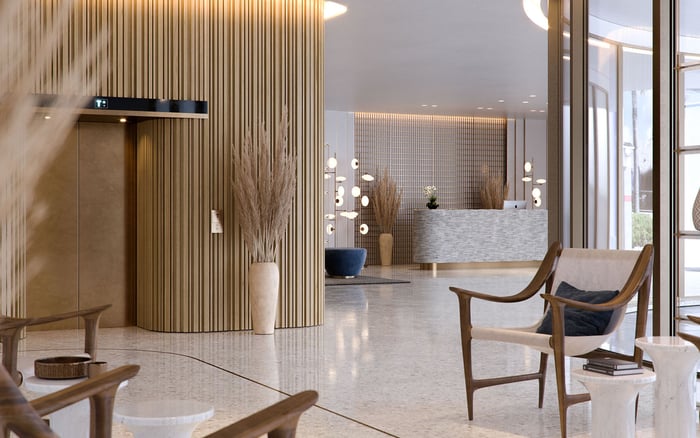
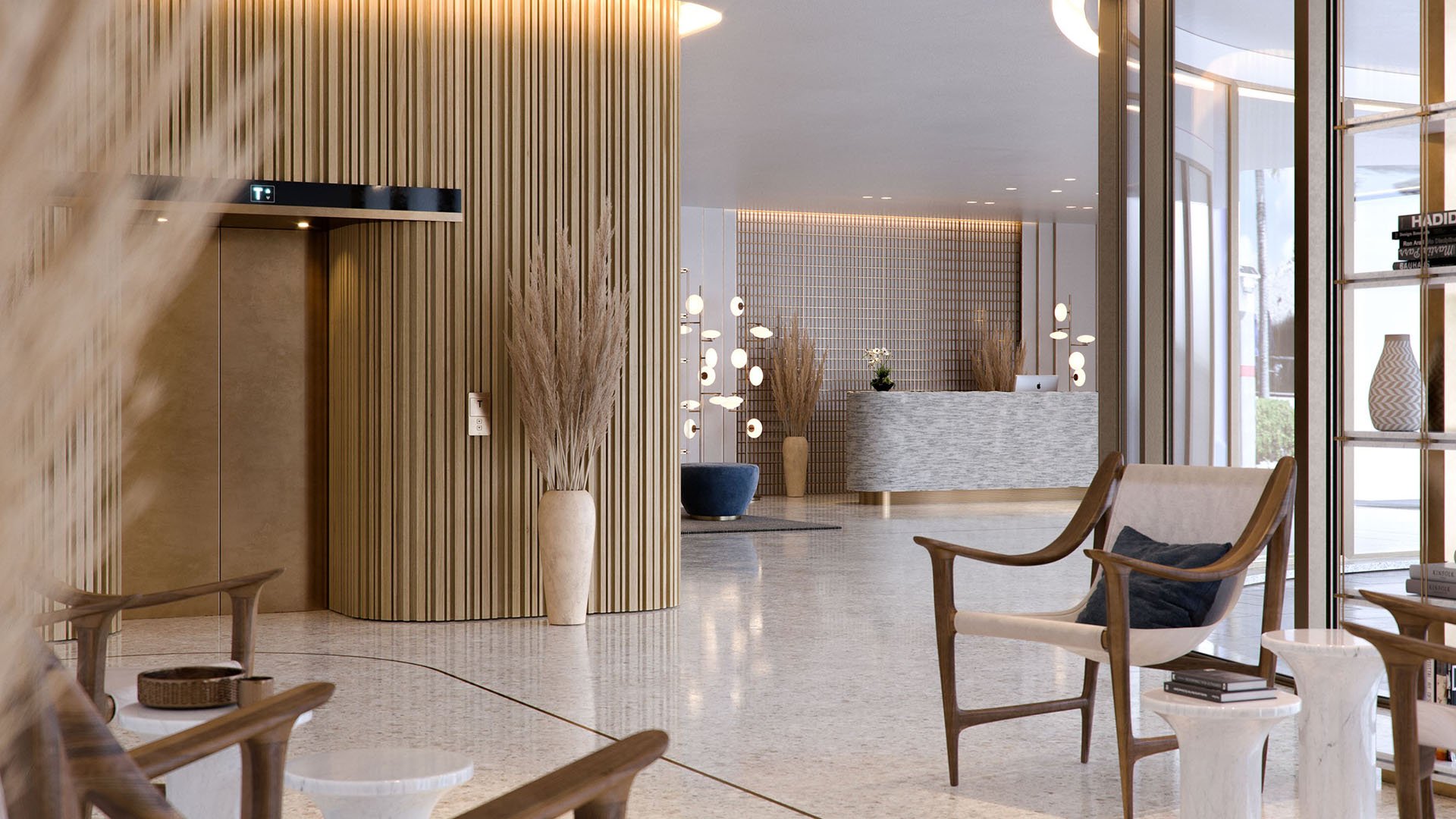
A foyer-first plan is often the most forgiving. It gives guests a place to collect themselves, gives the owner a buffer from unexpected arrivals, and creates a natural transition from public circulation to private life. It also allows art, millwork, lighting, stone, or a sculptural console to establish the mood before the residence opens fully.
A view-first plan is more cinematic. It can make the ocean, bay, or skyline the first impression, which is especially compelling in a residence designed around glass and long sightlines. But it should be tested carefully. If the elevator exposes a dining table, media wall, kitchen activity, or primary seating area too quickly, the home may feel less private over time.
The strongest layouts balance ceremony and control. They allow the owner to decide whether arrival feels like a reveal, a retreat, or a quiet handoff between the outside world and the home.
Oceanfront living invites drama. The horizon is the principal artwork, and many buyers want the elevator opening to acknowledge it immediately. Still, the most successful arrivals do not surrender the entire residence at once. They frame the view rather than simply exposing it.
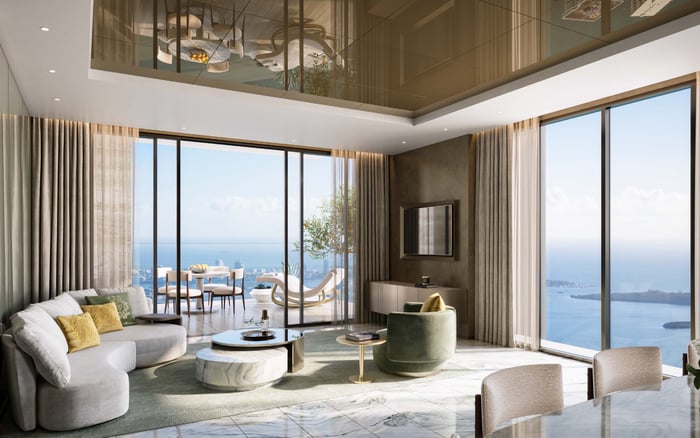
In an oceanfront residence, consider whether the landing manages light, reflection, and movement gracefully. A direct opening toward floor-to-ceiling glass can be extraordinary, but strong daylight may flatten finishes or create glare at certain times. A slightly angled reveal can feel more sophisticated, allowing the view to unfold as one steps forward.
Also consider the relationship between the elevator, beach-facing living areas, and outdoor rooms. If the route to the Balcony or Terrace cuts through the main seating zone, entertaining may feel less fluid. If the elevator opens near a powder room, coat storage, and a subtle service path, the residence may live more elegantly during weekends, holidays, and larger gatherings.
Oceanfront buyers should also think about daily arrivals after the beach, the gym, the pool, or a waterfront dinner. The private landing should feel polished, but not precious. Durable flooring, discreet storage, and a clear path into the home can preserve the mood without making the residence difficult to use.
Bayfront living tends to be less about spectacle and more about atmosphere. A Waterview can be layered, reflective, and changing, especially when the residence is oriented toward water, sky, boats, bridges, or distant city lights. The private elevator opening should support that calmer rhythm.
Here, a framed sightline can be more compelling than an immediate panoramic reveal. A landing that opens to a gallery wall, then gradually releases the view beyond the living room, often feels composed and residential. It gives the home a sense of depth, particularly when entertaining moves between interiors and terraces.
Bayfront buyers should pay close attention to cross-movement. Does a guest arriving by elevator intersect with someone moving from the kitchen to the dining area? Can staff or family members circulate without constantly crossing the formal arrival path? Does the opening support both intimate evenings and larger gatherings? These questions are especially important in homes where the water is not just a backdrop, but the organizing presence.
A well-planned bayfront landing should feel serene, not passive. It should provide enough architectural structure to make the residence feel important, while allowing the view to remain the emotional center.
In a city setting such as Brickell, the private elevator opening has a different responsibility. The energy outside the residence is more vertical, social, and active. The interior arrival should create immediate separation from the pace of the tower, the street, and the surrounding skyline.
A city residence often benefits from a more enclosed or semi-enclosed private landing. This does not mean it should feel small. It means the opening should give the owner a sense of command before the home expands into glass, city lights, and entertaining spaces. Acoustic control, lighting warmth, and a clear threshold become especially important.
Buyers comparing city residences should examine how the elevator relates to the kitchen, primary suite, powder room, and service entry. A beautiful arrival can lose its elegance if deliveries, staff access, or late-night guest movement all pass through the same visual axis. In a city home, discretion is a luxury feature.
The best Brickell private elevator openings feel urban without feeling exposed. They give the owner the pleasure of skyline living while preserving the psychological quiet expected from a high-value residence.
Before choosing between oceanfront, bayfront, or city living, walk the arrival sequence slowly. Stand where the elevator doors would open and imagine three scenarios: arriving alone after travel, welcoming guests for dinner, and receiving a delivery while the home is occupied. The right plan should handle all three without awkwardness.
Ask whether the elevator opens into conditioned private space or a shared threshold. Consider whether there is room for art, luggage, flowers, security equipment, or a console without narrowing circulation. Evaluate whether the door swing, corridor width, and furniture placement will remain elegant after the home is fully furnished.
Lighting is another essential measure. A private elevator opening should not rely only on the view. It should have layered light that feels flattering in the evening and calm during the day. Stone, wood, plaster, glass, and metal all read differently under artificial light, so the arrival should be assessed as a nighttime experience as much as a daytime one.
Finally, consider privacy from inside the home. If someone is seated in the living room, dining area, or media space, do they feel watched when the elevator opens? If the answer is yes, the plan may need stronger separation.
The most successful private elevator opening is personal. A frequent host may prefer a formal arrival with immediate access to entertaining areas. A privacy-oriented owner may prefer a vestibule that shields the main residence. A family may prioritize storage, circulation, and separation between casual and formal zones. A collector may want a gallery moment before the view appears.
For seasonal owners, the arrival should feel instantly welcoming after time away. For full-time residents, it should support daily repetition without fatigue. For resale-minded buyers, the ideal opening is neither overly idiosyncratic nor generic. It feels intentional, adaptable, and aligned with the setting.
A private elevator is often described as a marker of exclusivity, but its deeper value is choreography. It determines how the residence receives people, how it protects quiet moments, and how it reveals its best assets. Choose the opening not for the first five seconds of impact, but for the years of living that follow.
What is the first thing to evaluate in a private elevator opening? Identify what appears when the doors open: a foyer, a view, a gallery, or a living area. That first reveal shapes privacy, atmosphere, and daily function.
Is a direct elevator opening into the living room a good idea? It can be beautiful when the view is exceptional and the layout preserves privacy. It can feel too exposed if seating, dining, or kitchen areas are immediately visible.
Why does oceanfront living require special attention to the landing? The view is powerful, so the opening should frame it with control. The best plans balance spectacle with privacy, durability, and easy movement to outdoor areas.
What makes a bayfront private elevator opening feel successful? A calm, layered arrival often works best. It should let the Waterview unfold gradually while supporting entertaining and everyday circulation.
How should Brickell buyers think about private elevator openings? City living rewards control, acoustic comfort, and separation from the pace outside. A strong threshold can make a skyline residence feel more private.
Should the elevator open into a foyer or directly into the residence? A foyer offers flexibility and discretion, while a direct opening creates drama. The better choice depends on lifestyle, hosting patterns, and privacy expectations.
What role does lighting play in the elevator arrival? Lighting defines mood before the view takes over. Layered lighting helps the landing feel elegant by day and composed at night.
How does a private elevator affect entertaining? It controls how guests enter, where they pause, and how they move toward dining, terraces, or living areas. Poor circulation can make even a beautiful plan feel awkward.
Is service circulation important near a private elevator? Yes. Deliveries, staff movement, and household routines should not compromise the formal arrival or expose private areas unnecessarily.
What is the best way to shortlist comparable options for touring? Start with location fit, delivery status, and daily lifestyle priorities, then compare stacks and elevations to validate views and privacy.
For a tailored shortlist and next-step guidance, connect with MILLION.
If branded residences are on your mind — as a home or as an allocation — we would be glad to share what we are seeing, privately.
Begin a quiet conversation