A discreet buyer’s guide to evaluating brand licensing, service control, fees, rules, resale positioning, and de-branding risk before purchasing luxury real estate in Midtown Miami.
In Midtown Miami, a luxury residence can sell an identity long before it delivers a daily routine. A celebrated name on the façade may signal design fluency, hospitality polish, and a level of social recognition that conventional condominium marketing cannot easily match. Yet for a buyer, the essential question is not whether the brand feels desirable. It is what, exactly, the brand is obligated to provide.
Brand licensing is a contractual matter, not simply an aesthetic one. The name, service philosophy, interiors, uniforms, amenity language, and marketing rights may each be governed by different documents. Before signing, a purchaser should understand whether the brand is deeply involved in the residential experience or primarily present through naming rights, design review, and sales presentation. That distinction can influence how the building lives, how it is governed, and how it is valued at resale.
This is especially important for buyers considering Midtown alongside the Design District, Wynwood, and Brickell, where lifestyle, access, and identity often carry as much weight as square footage. The strongest purchase decisions come from reading the brand promise against the condominium documents, budget, rules, and management structure.
Begin with the narrowest question: what is being licensed? A brand may license its name, trademarks, visual standards, service concepts, design guidelines, or certain operating protocols. Ask whether the license applies to the entire building, only the residential component, only the amenities, or only marketing materials during the sales period.
A sophisticated buyer should also ask who holds the license. Is it the developer, the condominium association, a management company, or another entity? If the license sits with an entity that changes control after turnover, the rights and obligations may shift in ways that affect the owner experience. The answer should be verified in the governing documents, not inferred from brochures.
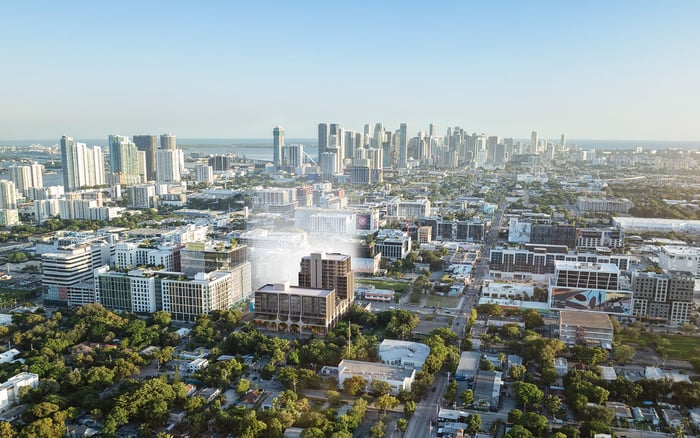
For buyers evaluating Miami Design Residences Midtown Miami, the point is not merely whether the building’s positioning aligns with Midtown’s creative energy. It is whether the ownership documents clarify how the branded or design-driven identity is maintained after closings begin.
A branded residential address is often purchased for its atmosphere: the arrival sequence, lobby cadence, amenity culture, staff discretion, and consistency of service. Ask who hires, supervises, trains, and replaces the people responsible for that atmosphere. Is there a brand-affiliated manager, a third-party operator, or a conventional association-managed staffing model?
Buyers should understand whether service standards are binding obligations or aspirational guidelines. If standards are binding, ask how they are measured and enforced. If they are guidelines, ask who has final discretion when costs, staffing, or owner preferences conflict with the brand concept.
This is where buyer guidance should become practical rather than romantic. The brand may elevate the first impression, but the recurring value comes from operations. A residence that feels effortless on day one should have a governance structure capable of protecting that feeling over time.
Branding can bring specialized expectations: curated amenities, refined common areas, concierge layers, wellness programming, private dining concepts, or design-sensitive maintenance. Ask which costs are included in the regular association budget and which may be billed separately. The issue is not whether fees are high or low. The issue is whether the fees realistically support the experience being sold.
Review whether there are license fees, management fees, amenity fees, club charges, or required service charges. Ask whether any fees can increase automatically, whether owner approval is required, and whether the association has the flexibility to renegotiate. A buyer should be equally focused on reserves, maintenance protocols, and the cost of preserving branded finishes.
In a market where 888 Brickell by Dolce & Gabbana and Cipriani Residences Brickell help frame the conversation around lifestyle-led luxury, Midtown purchasers should ask whether the budget behind any brand promise is durable enough for real ownership.
De-branding risk is one of the most important questions in branded residences. Ask how long the license lasts, whether it can be renewed, who controls renewal, and what events allow termination. A buyer should know whether the brand can leave because of nonpayment, operational default, sale of the property, change of control, reputational concerns, or failure to follow standards.
Then ask what happens to the property if the brand departs. Can signage remain? Must interiors be changed? Can marketing materials continue to reference the original affiliation? Are owners restricted in how they describe the building when leasing or reselling? These details may feel remote at purchase, but they can become central to future value.
The prudent question is not, “Will the brand ever leave?” It is, “If the brand leaves, what do I still own?” The answer should include architecture, location, floor plan quality, view, privacy, amenity infrastructure, and association strength. Brand should enhance intrinsic value, not replace it.
Licensing terms can affect how owners use their residences. Ask about rental rules, guest policies, photography restrictions, event rules, commercial use limits, signage restrictions, and whether the brand controls any standards around presentation or conduct. For an investment-minded buyer, rental flexibility and resale language deserve particular attention.
If the residence will be a primary home, focus on privacy, access, pet policies, guest registration, valet operations, and amenity reservations. If it will be a second home, ask how the building handles owner absence, package management, maintenance access, and approved vendors. If it will be held for future resale, ask whether the brand imposes marketing language or approval requirements.
Midtown’s appeal is tied to movement: dining, galleries, work, wellness, and proximity to surrounding districts. A branded residence should simplify that life, not complicate it with rules that do not match the owner’s routine.
Midtown buyers are rarely evaluating Midtown alone. They often compare the district’s design-oriented rhythm with the financial intensity of Brickell, the gallery pulse of Wynwood, the waterfront polish of Edgewater, and the more established prestige of Miami Beach. Each area uses luxury language differently, and each can justify a different brand premium.
A buyer looking at EDITION Edgewater may be focused on hospitality atmosphere near the bay, while a purchaser considering Baccarat Residences Brickell may be weighing a more formal expression of branded urban living. Midtown’s advantage should be tested against lifestyle fit, not merely name recognition.
The correct question is whether the brand strengthens the exact life you intend to live. If the answer depends only on a logo, pause. If the answer is supported by documents, governance, service, fees, rules, and the underlying real estate, the brand may be a meaningful part of the purchase thesis.
What is the first brand licensing question to ask before buying in Midtown Miami? Ask what the brand is legally licensing and which documents define that relationship. Marketing language should never be the only basis for understanding the brand’s role.
Should I ask who owns or controls the brand license? Yes. The party that holds the license may affect renewals, enforcement, fees, and what happens after developer control changes.
Can a branded residence lose its brand? It can be possible if the underlying agreement allows termination or nonrenewal. Buyers should review the conditions that could cause the brand affiliation to end.
Are branded residences always managed by the brand itself? Not necessarily. Ask whether management is brand-affiliated, third-party, developer-appointed, or association-controlled after turnover.
How should I evaluate brand-related fees? Separate license fees, management fees, amenity charges, and ordinary association costs. Then decide whether the ongoing budget supports the promised experience.
Do brand rules affect rentals or resale? They can. Ask whether there are limits on rental terms, marketing language, guest use, photography, or owner communications when selling.
Is a brand premium justified in Midtown Miami? It may be justified when the brand adds durable service, design discipline, and resale distinction. It is weaker when the value rests only on recognition.
What should my attorney review? Your attorney should review the declaration, bylaws, budget, management agreements, license provisions, rules, and any sales contract references to the brand.
How does Midtown compare with Brickell for branded residences? Brickell may appeal to buyers seeking a more corporate urban setting, while Midtown can appeal to those prioritizing design, culture, and daily neighborhood movement.
What is the safest way to approach a branded purchase? Treat the brand as one layer of value, not the entire reason to buy. The residence should still stand on location, layout, operations, governance, and long-term usability.
To compare the best-fit options with clarity, connect with MILLION.
If branded residences are on your mind — as a home or as an allocation — we would be glad to share what we are seeing, privately.
Begin a quiet conversation