A refined buyer’s guide to evaluating acoustic privacy in Edgewater luxury real estate, with practical questions on glazing, floor assemblies, amenity placement, balconies, and contract-stage due diligence.
In luxury real estate, privacy is often discussed visually: the angle of a terrace, the distance between towers, the screening of a primary suite, or the discretion of arrival. Acoustic privacy deserves the same attention. A residence can have beautiful stone, refined millwork, and dramatic water views, yet feel compromised if conversations travel through walls, footsteps register from above, or amenity noise reaches the bedroom after dark.
For buyers considering Edgewater, the question is not whether a home feels quiet during a polished daytime tour. The better question is whether the residence has been designed, built, and operated to protect quiet as part of daily life. The most successful purchasers tend to treat sound as a performance issue, not a mood. They ask for documentation, observe the building at different hours, and study the plan before falling in love with the view.
This is especially relevant in waterfront condominium living, where glass, balconies, amenity decks, elevators, mechanical systems, and neighboring residences all shape the sound experience. Silence is not simply the absence of noise. It is a luxury finish.
The first conversation should be about the exterior envelope: windows, balcony doors, seals, glazing, and the way each opening closes. Ask whether the development team can provide acoustic information for the glass and door systems. If specific ratings are available, request them in writing and ask how they apply to the unit line you are considering.
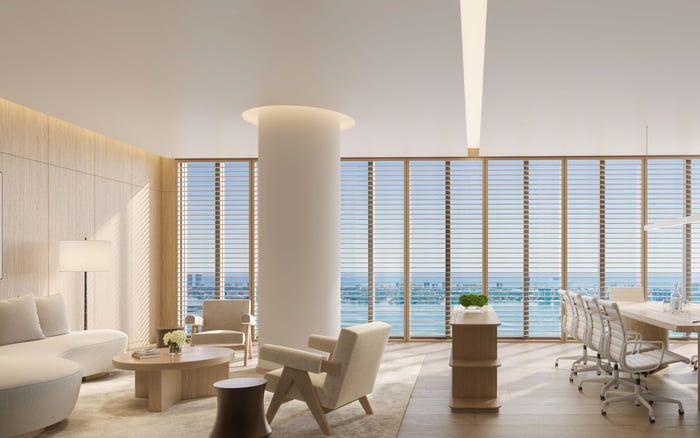
When touring a residence such as Aria Reserve Miami, pay attention to how the interior changes when the doors are open, closed, and locked. Listen near the perimeter, not only from the center of the living room. A well-composed home should feel calm at the glass line, particularly in sleeping areas and work spaces.
Do not assume thicker glass alone solves the problem. The assembly matters: frame, gasket, installation, slab edge, door alignment, and maintenance. Ask who services the window and door systems after closing, how adjustments are handled, and whether owners receive guidance on preserving acoustic performance.
Luxury buyers often inspect finishes closely but rarely ask what sits behind them. Acoustic privacy depends heavily on assemblies that are invisible after completion. Ask about demising walls between residences, separation between bedrooms and corridors, floor and ceiling systems, and impact-noise treatment between stacked units.
The vocabulary may include sound transmission and impact isolation. You do not need to be an engineer to ask the right question: what has been done to reduce airborne sound, such as voices or music, and impact sound, such as footsteps or furniture movement? If a sales or development team cannot answer immediately, ask for the construction or design team to respond before contract execution.
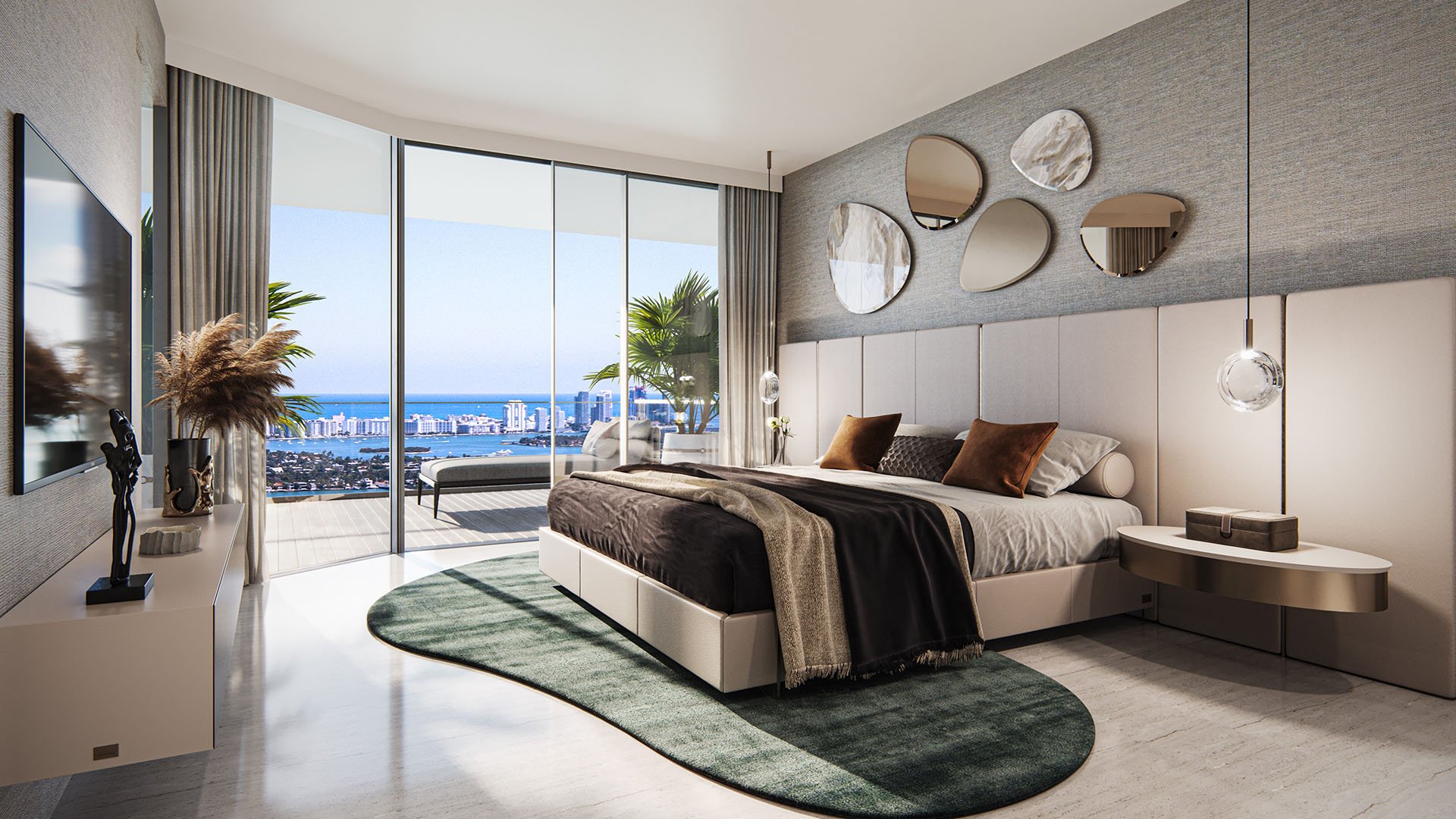
At projects such as EDITION Edgewater, buyers should study how the floor plan positions bedrooms, service areas, elevators, mechanical rooms, and shared walls. A primary suite that does not share a wall with a high-traffic zone may offer a different daily experience than a suite adjacent to an active corridor or service shaft.
Every residence has a sound map. It is created by elevators, trash rooms, stairwells, staff areas, amenity connections, plumbing risers, mechanical systems, and neighboring unit layouts. The quietest line is not always the highest line, and the largest floor plan is not always the most private.
Ask for the floor plate and identify what touches each wall. What is behind the headboard wall? What is above the primary suite? What sits below the living room? Is there an amenity space one level up or down? Are there service corridors behind secondary bedrooms? These questions are practical, discreet, and entirely appropriate for a serious buyer.
High floors can feel removed from some street-level sound, but they may introduce other considerations, including wind perception at openings or proximity to upper-level mechanical spaces. Low-floor residences may offer a more connected lifestyle, but they should be assessed for adjacency to entrances, valet zones, amenity areas, and neighboring outdoor spaces.
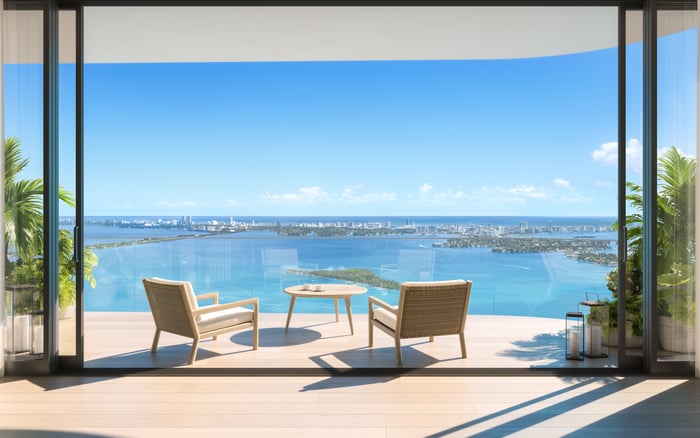
A balcony is an emotional feature in South Florida, but it is also an acoustic device. Outdoor sound can reflect, amplify, or soften depending on the tower form, neighboring balconies, glass railings, overhangs, and the orientation of surrounding buildings. If the residence has a large terrace, ask how sound travels from outdoor entertaining areas to bedrooms, neighboring residences, and the main living room.
At The Cove Residences Edgewater, as with any waterfront condominium, the outdoor room should be evaluated at more than one time of day. Step outside, then step back inside and close the doors. Notice whether the interior returns to calm. If outdoor living is central to your use of the home, acoustic privacy should be reviewed with the same seriousness as exposure, shade, and furniture layout.
Buyers should also ask about building rules for music, gatherings, outdoor speakers, and after-hours use of private and shared spaces. Architectural performance and operating culture work together. A beautifully built building still needs thoughtful management.
A curated sales experience is designed to show a residence at its best. Your role is to understand how it lives. Tour during the day and, if possible, return in the evening. Stand quietly in the bedrooms, near the entry, beside the elevator lobby, and along shared walls. Turn off music. Ask whether the unit above, below, and beside you is occupied, under construction, or vacant, because each condition can affect what you hear.
In a residence such as Villa Miami, a buyer may be drawn first to architecture, views, services, and culinary identity. Those are meaningful considerations, but they should sit beside a disciplined acoustic review. Ask whether model residences reflect the final acoustic assemblies, and whether any upgrades or furnishings in the model are affecting what you hear.
If you are highly sensitive to sound, bring that into the discussion early. A buyer who works from home, records calls, hosts frequently, travels with household staff, or has children on different sleep schedules may need a different acoustic profile than a seasonal owner who uses the residence primarily for weekends.
Before signing, ask for written answers to your core acoustic questions. What ratings or specifications are available for glazing, demising walls, floor assemblies, and entry doors? Have any field tests been performed? What is the process for reporting sound transfer after occupancy? Who determines whether an issue is maintenance, construction, neighbor behavior, or owner modification?
Also ask what alterations are permitted. Flooring changes, speaker systems, built-ins, recessed lighting, and wall modifications can affect acoustic performance. A luxury building should have clear rules for work inside residences, including underlayment requirements, contractor approvals, and hours of construction.
The goal is not to find a soundless home. It is to know what kind of quiet you are buying, how it is protected, and what remedies exist if performance does not match expectations. In Edgewater, where design ambition and waterfront living often meet vertical density, the most discreet luxury may be the ability to close the door and feel the city disappear.
What is acoustic privacy in a luxury condo? It is the degree to which a residence limits unwanted sound from neighbors, corridors, amenities, mechanical systems, and outdoors. It should be evaluated as part of comfort, privacy, and long-term livability.
Should I ask for acoustic ratings before buying? Yes. Ask whether ratings or specifications are available for glass, entry doors, walls, floors, and ceilings, and request written answers when possible.
Is a higher floor always quieter? Not necessarily. High floors may reduce some lower-level noise, but they should still be checked for wind, mechanical proximity, elevator adjacency, and neighboring layouts.
How should I test sound during a tour? Stand quietly in bedrooms, near shared walls, by the entry, and at the balcony doors with music off. If possible, visit at more than one time of day.
Do balconies affect acoustic privacy? Yes. A balcony or terrace can transmit outdoor conversations, music, and reflected sound, especially when neighboring outdoor spaces are close.
What should I ask about amenity noise? Ask what amenity spaces are above, below, or beside the residence and what hours, rules, and management policies apply to them.
Can flooring changes create noise issues? They can. Ask about underlayment requirements, approval procedures, and whether the building enforces acoustic standards for owner renovations.
Is acoustic privacy more important for primary residences? It is often more noticeable in a primary home because daily routines, work calls, sleep, and entertaining reveal sound patterns over time.
Should I hire a consultant? For highly sound-sensitive buyers or major purchases, an acoustic consultant can help interpret assemblies, plans, and on-site conditions.
What is the best final question to ask?
If you'd like a private walkthrough and a curated shortlist, connect with MILLION.
If branded residences are on your mind — as a home or as an allocation — we would be glad to share what we are seeing, privately.
Begin a quiet conversation