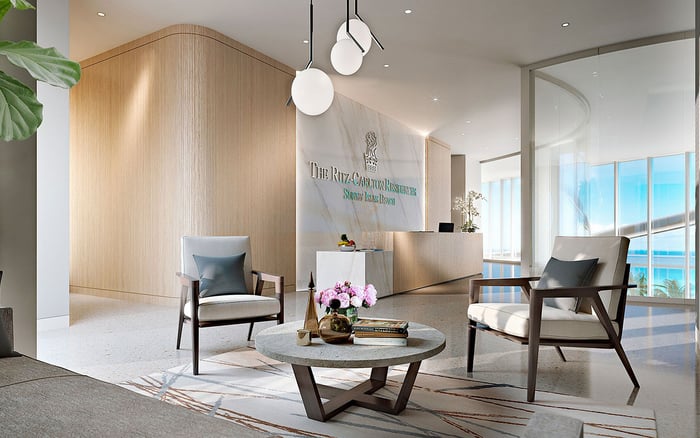
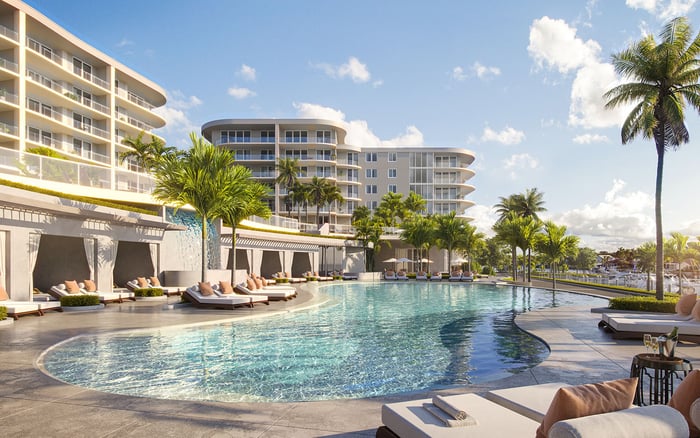
An editorial look at how two Ritz-Carlton branded residences clarify the modern lock-and-leave model for South Florida’s globally mobile luxury buyers.
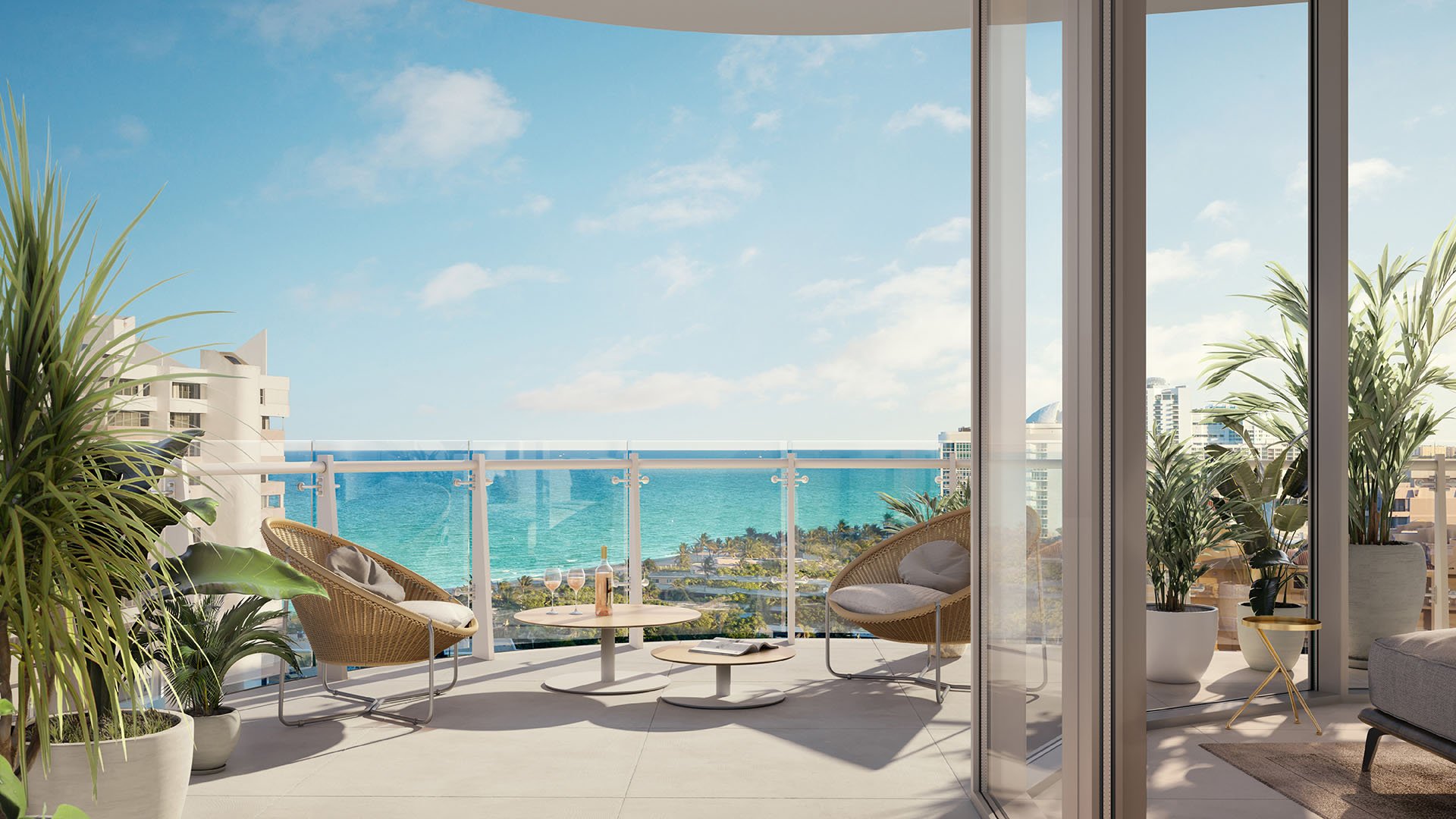
In South Florida luxury real estate, lock-and-leave ownership has matured beyond a convenient phrase. For the most mobile buyers, it now describes an operating model: a residence that can be entered on short notice, enjoyed without friction, and left with confidence that the property will continue to be cared for in the owner’s absence.
That is why The Ritz-Carlton Residences® Miami Beach and The Ritz-Carlton Residences® Pompano Beach are useful reference points. Each is framed as a fully residential environment that adapts Ritz-Carlton-style hospitality services to condominium ownership. Neither is simply about a name on the porte cochère. The more meaningful story is how brand, staffing, governance, building operations, and physical design work together to reduce the owner’s day-to-day responsibilities.
For high-net-worth buyers who divide time among multiple cities, South Florida often functions as a seasonal home base, a pied-à-terre, or a second-home retreat. The question is no longer only whether the view is compelling. It is whether the property can function elegantly when the owner is away.
Miami Beach has long been associated with waterfront single-family homes, privacy, and architectural drama. Yet for some buyers, the traditional trophy home carries an invisible cost: ongoing oversight. Landscaping, exterior maintenance, staff coordination, security, systems monitoring, and local administration all require attention, even when the owner is thousands of miles away.
The Ritz-Carlton Residences® Miami Beach reflects a broader shift from individually managed waterfront estates toward serviced, branded residences that offer a more continuous ownership experience. The appeal is not that a condominium replaces the emotional pull of a private home. Rather, it gives a certain buyer a different kind of control, one based on predictability, professional management, and a service culture that remains active throughout the year.
This is especially relevant in Miami Beach, where global ownership patterns are pronounced. A buyer may arrive after an extended absence and expect the residence to feel ready, composed, and familiar. Lock-and-leave ownership, in that context, becomes a luxury of continuity. The residence is not merely secured. It is maintained within a larger residential system designed to absorb the complexity that would otherwise fall to the owner or a private household manager.
That same buyer may also compare other Miami Beach offerings, including The Ritz-Carlton Residences® South Beach, as part of a broader evaluation of brand assurance, location, and lifestyle rhythm within the island’s luxury market.
The importance of The Ritz-Carlton Residences® Pompano Beach is not limited to one waterfront address. Its larger significance is geographic. The project illustrates how the branded-residence model is expanding beyond Miami’s core luxury markets into Broward County waterfront locations.
Pompano Beach has become part of the conversation for buyers who want coastal South Florida living with a serviced residential structure. In this setting, lock-and-leave is both a lifestyle convenience and a property-management strategy. Owners can use the residence seasonally, return to other homes or obligations, and rely on professionally managed operations rather than a patchwork of private arrangements.
The operational logic matters. Exterior maintenance, shared infrastructure, common-area upkeep, security, staffing, and building systems are not incidental features. They are the practical backbone of absent ownership. For buyers accustomed to hotel-level responsiveness, the Ritz-Carlton name signals a standard of hospitality and consistency that can make condominium ownership feel less transactional and more personally managed.
The Pompano Beach comparison also clarifies that lock-and-leave is not exclusive to Miami Beach prestige. It is increasingly relevant across South Florida’s luxury coastline, from established urban resort markets to Broward waterfront locations where branded residential living is gaining visibility. Buyers looking along this corridor may also encounter projects such as Waldorf Astoria Residences Pompano Beach, further underscoring how service-led ownership has become a regional theme.
The phrase lock-and-leave can sound casual, as if the main issue is simply closing the door before a flight. In practice, affluent owners are outsourcing far more than access and security.
They are outsourcing coordination. A well-run branded residence can reduce the need for owners to manage local vendors, monitor building concerns, or supervise routine property administration while away. They are outsourcing uncertainty, because professionally managed residential operations can create a clearer chain of responsibility. They are also outsourcing the emotional residue of ownership: the background concern that something at the property may require attention when the owner is elsewhere.
This is where branded condominium ownership separates itself from a conventional second home. The residence is part of a managed environment, not an isolated asset. Shared infrastructure is overseen collectively. Common areas are maintained through the building’s operations. Staff and service protocols create a resident experience designed to continue whether the owner is in residence or abroad.
For buyers who still value space, privacy, and design, this does not eliminate the desire for a distinctive home. It changes the calculus. The most compelling luxury residence is not always the one with the most personal responsibility attached. Increasingly, it is the one that preserves the feeling of private ownership while reducing the burden of private administration.
In ultra-premium real estate, brand is often discussed in aesthetic or lifestyle terms. With The Ritz-Carlton Residences® Miami Beach and The Ritz-Carlton Residences® Pompano Beach, brand also functions as a form of operational shorthand.
The Ritz-Carlton name communicates a hospitality service standard. For a buyer comparing residences from afar, that matters. A known service culture can help create confidence around staffing, responsiveness, and daily residential operations. It does not remove the need for due diligence, but it gives the buyer a recognizable framework for evaluating how the property is intended to function.
This is one reason branded residences have become so relevant in South Florida. The region attracts owners who may not live here full time but still expect the residence to be cared for year-round. They are not simply buying square footage. They are buying continuity between visits, consistency of experience, and a structure that can accommodate mobility without diminishing comfort.
The same logic can extend into other coastal markets. A buyer considering The Ritz-Carlton Residences® Sunny Isles may be weighing not only beach access or skyline presence, but also how a branded residential platform supports a life lived across multiple residences.
It is tempting to read lock-and-leave as a sign that the owner is detached from the property. In reality, the opposite is often true. The buyer is highly engaged with quality, but selective about where personal attention should be spent.
They may care deeply about arrival experience, privacy, security, service tone, and the ability to host family or guests without operational distractions. They may use the residence intensely during the season, then leave for long intervals. What they do not want is for ownership to become another management assignment.
This distinction is central to understanding Miami Beach and Pompano Beach as paired examples. One reflects the evolution of an established luxury island market. The other shows the model’s expansion into Broward waterfront living. Together, they suggest that South Florida’s next chapter of luxury ownership is not defined only by architecture or address. It is defined by how seamlessly a property can support absence and return.
For the right buyer, lock-and-leave is not a compromise. It is the point.
What does lock-and-leave ownership mean in South Florida luxury real estate? It refers to owning a residence that can be used periodically and left with minimal day-to-day responsibility, supported by professional operations and building services.
Why are The Ritz-Carlton Residences® Miami Beach relevant to this trend? The project reflects Miami Beach’s shift from traditional trophy waterfront homes toward serviced, branded residential living.
Why does The Ritz-Carlton Residences® Pompano Beach matter? It shows how the branded-residence model is expanding beyond Miami’s core luxury markets into Broward County waterfront locations.
Is lock-and-leave just another amenity? No. It is a system combining architecture, services, governance, security, staffing, and brand assurance.
Who is the typical lock-and-leave buyer? The model suits globally mobile owners, seasonal residents, pied-à-terre users, and buyers who may not occupy a South Florida residence full time.
How does a branded residence reduce owner responsibility? It can help shift exterior maintenance, shared infrastructure, common-area upkeep, and daily operational oversight into a professionally managed structure.
Does lock-and-leave ownership replace the appeal of a private home? Not for every buyer. It offers an alternative for those who value privacy and quality but prefer less personal administration.
Why does the Ritz-Carlton brand matter in this context? The brand signals a hospitality service standard and operational consistency, both of which are important to absent or seasonal owners.
Is this trend limited to Miami Beach? No. Pompano Beach demonstrates that service-led branded residential ownership is becoming relevant across a broader South Florida coastline.
Should buyers still perform due diligence? Yes. Brand recognition is useful, but buyers should evaluate governance, service structure, ownership costs, and how the residence will function when they are away.
To compare the best-fit options with clarity, connect with MILLION.
If branded residences are on your mind — as a home or as an allocation — we would be glad to share what we are seeing, privately.
Begin a quiet conversation