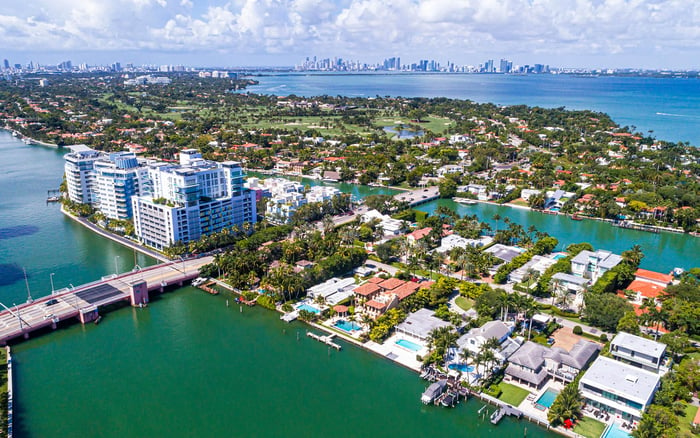
For Dallas families considering Fisher Island, the acquisition is not simply a second residence. It is a governance decision involving domicile, homestead, spousal rights, federal transfer taxes, condominium rules, and family operating discipline.

For a Dallas family, buying on Fisher Island can feel familiar at first glance. The acquisition should not be reduced to a single tax comparison or a seasonal-housing decision. The more durable questions are where the family intends to live, how the residence will be owned, who may use it, who pays for it, and who has authority to sell it.
That is why sophisticated Fisher Island acquisitions are often treated less like trophy purchases and more like succession-planning events. A private island home off Miami Beach may serve as a seasonal base, a gathering place for children and grandchildren, a residence for a surviving spouse, or an asset held through a trust or family entity. Each role can carry different planning consequences.
Fisher Island adds its own layer. Access, security, club life, marina use, beach routines, dining, spa, golf, and racquet facilities are not merely lifestyle details. They influence annual carrying costs, guest protocols, family calendars, and the practical meaning of ownership. A waterfront residence may be beautiful, but the structure around it determines whether the asset remains a source of harmony.
Dallas buyers sometimes ask whether purchasing in Florida creates a clean planning result. By itself, it does not. A Florida domicile strategy can include a declaration, but the larger picture should be consistent across voting, driver licensing, tax filings, advisors, estate documents, personal records, and the family’s actual pattern of life.
For families keeping substantial ties to Dallas, this becomes a facts-and-intent exercise. The Fisher Island residence may be the permanent residence, or it may be a second home. That distinction matters because homestead treatment and asset-protection planning should be reviewed in light of the property’s intended use, the family’s documents, and the family's actual behavior.
The practical point is simple: decide the role of the residence before closing, then align documents and conduct around that decision. A family looking at The Residences at Six Fisher Island may evaluate floor plans and views, but its advisors should also evaluate how occupancy, ownership, and residency intent fit together.
Texas community-property concepts and Florida spousal-right planning can meet in complicated ways. That issue should be addressed before a Fisher Island deed, trust interest, or entity interest is finalized. The wrong sequence can create avoidable ambiguity for spouses, children from prior marriages, family offices, and fiduciaries.
For blended families, the question is rarely only who owns the condominium. It is also who may occupy it after death, who controls sale decisions, who pays assessments and club-related expenses, and whether children or grandchildren have rights to use the property. An elegant home at Palazzo della Luna can be undermined by vague family expectations. Written governance is often the more luxurious choice.
Couples should coordinate the residence with marital agreements, estate documents, fiduciary appointments, insurance, and liquidity planning. The goal is not to turn a home into paperwork. It is to make sure the home supports the family plan rather than contradicting it.
Federal estate, gift-tax, and generation-skipping transfer planning can be relevant when a high-net-worth family intends a residence or holding entity to benefit children, grandchildren, or more remote descendants. The planning should be coordinated before interests are transferred, use rights are promised, or family branches begin relying on informal assumptions.
Some families use an LLC, trust, or other structure to hold or manage a residence. If so, the governing document should be more than boilerplate. It should address governance, capital calls, permitted users, sale rights, deadlock rules, and succession. Who books holiday weeks? Who approves renovations? What happens if one branch of the family wants liquidity and another wants permanence? The answers belong in the structure, not in a future dispute.
There may also be transaction-cost considerations when deeds or ownership structures change. Buyers considering The Links Estates at Fisher Island should think beyond the acquisition contract and ask how a future restructuring would work if the first ownership choice no longer fits.
Condominium documents are essential reading for any family office, trustee, or multigenerational buyer. The declaration, bylaws, association rules, and amendments may address transfer restrictions, leasing rules, approval requirements, assessment obligations, guest protocols, and limits on how the residence can be used by relatives or invitees.
This is especially important when the property is intended for intergenerational use. A parent may picture children and grandchildren visiting freely, while the governing documents may impose procedures for occupancy, approvals, leasing, or access. If the residence is held in trust or through an entity, association requirements should be reviewed before closing.
At the same time, buyers should compare Fisher Island’s private-island character with other Miami Beach choices. A residence such as The Perigon Miami Beach may offer a different access profile and ownership rhythm. Fisher Island’s appeal is precisely its controlled environment, but control has procedures, costs, and rules attached.
The most successful multigenerational ownership plans tend to answer uncomfortable questions early. Will the residence be reserved for parents during peak season? Are adult children permitted to host guests without the senior generation present? Are grandchildren treated equally by branch, by age, or by need? Who pays if one branch uses the property more often than another?
These questions do not diminish the romance of a Fisher Island home. They protect it. The island’s private-club environment can become a family ritual only when expectations are clear. Without structure, an investment in togetherness can become a source of friction.
A family-use agreement can sit alongside a trust, LLC agreement, or estate plan. It may cover scheduling, guests, household staff, pets, repairs, improvements, club charges, emergency decisions, and sale procedures. It can also establish a review cycle so the plan evolves as children marry, grandchildren grow, and the senior generation’s residency needs change.
Before signing, Dallas families should assemble Florida, Texas, and federal tax and estate counsel around a single question: what role should this Fisher Island residence play for the next three generations? If the answer is a permanent Florida residence, domicile and homestead planning move to the center. If the answer is a seasonal family compound, governance and cost-sharing may matter more.
The best plans do not overcomplicate the purchase. They make the intended use legible. They connect ownership with family values, tax realities, spousal rights, condominium rules, and the everyday logistics of private-island living. On Fisher Island, privacy is part of the appeal. Precision is what preserves it.
Is moving from Dallas to Fisher Island mainly an income-tax decision? Not usually. The larger planning issues often involve domicile, homestead, asset protection, spousal rights, and estate structure.
Does buying on Fisher Island automatically create Florida domicile? No. Buyers should align documents, records, advisors, and actual living patterns with the intent they want to support.
Can a seasonal Fisher Island residence qualify for homestead treatment? It depends on the intended and actual use of the property. Buyers should review that question with Florida counsel before relying on any homestead assumption.
Why does Texas community-property planning matter after buying in Florida? Spousal-property expectations formed in Texas can affect how a couple wants a Florida residence or holding entity to be treated. The issue should be addressed before title or entity interests are finalized.
Can a trust own a Fisher Island residence? It may be possible, but the condominium documents, transfer procedures, fiduciary duties, and estate-planning objectives should be reviewed before choosing that structure.
Why would a family use an LLC for a Fisher Island home? An LLC can help organize governance, capital calls, permitted users, and succession. Its agreement should be tailored to the family’s actual use plan.
Do gift-tax rules matter for family transfers of the property? They can. Transfers of fractional interests, entity interests, trust interests, or certain use rights should be reviewed before implementation.
What is generation-skipping planning in this context? It concerns planning for assets intended to benefit grandchildren or more remote descendants. A Fisher Island residence or holding entity can raise those questions when the family wants long-term continuity.
Why are condominium documents so important? They may control transfer approvals, leasing, family use, assessments, guest access, and occupancy procedures. Those rules can shape whether the family’s intended plan is practical.
What is the best way to shortlist comparable options for touring? Start with location fit, delivery status, and daily lifestyle priorities, then compare stacks and elevations to validate views and privacy.
If you'd like a private walkthrough and a curated shortlist, connect with MILLION.
If branded residences are on your mind — as a home or as an allocation — we would be glad to share what we are seeing, privately.
Begin a quiet conversation