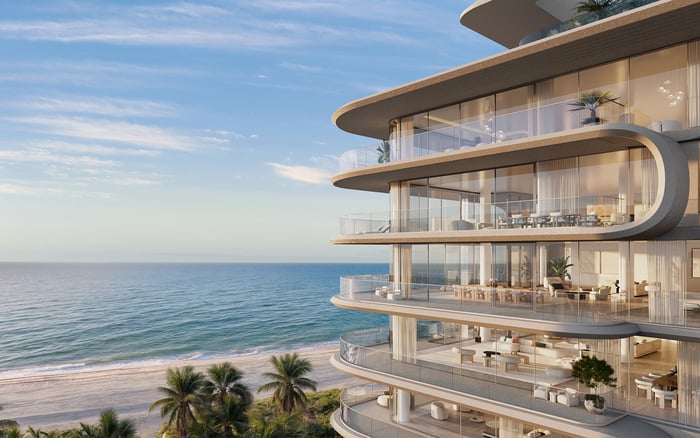
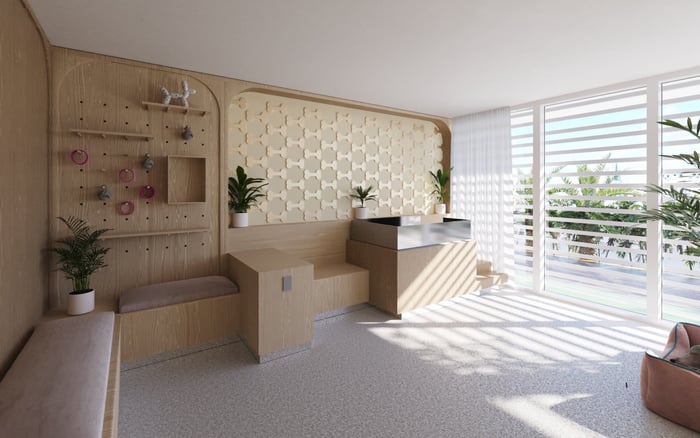
At The Delmore Surfside, private elevator foyers and expansive residences do not establish extended-outage performance. Buyers should seek written clarification of generator runtime, elevator operating sequences, and refrigerator circuit coverage before treating emergency power as a residential convenience.
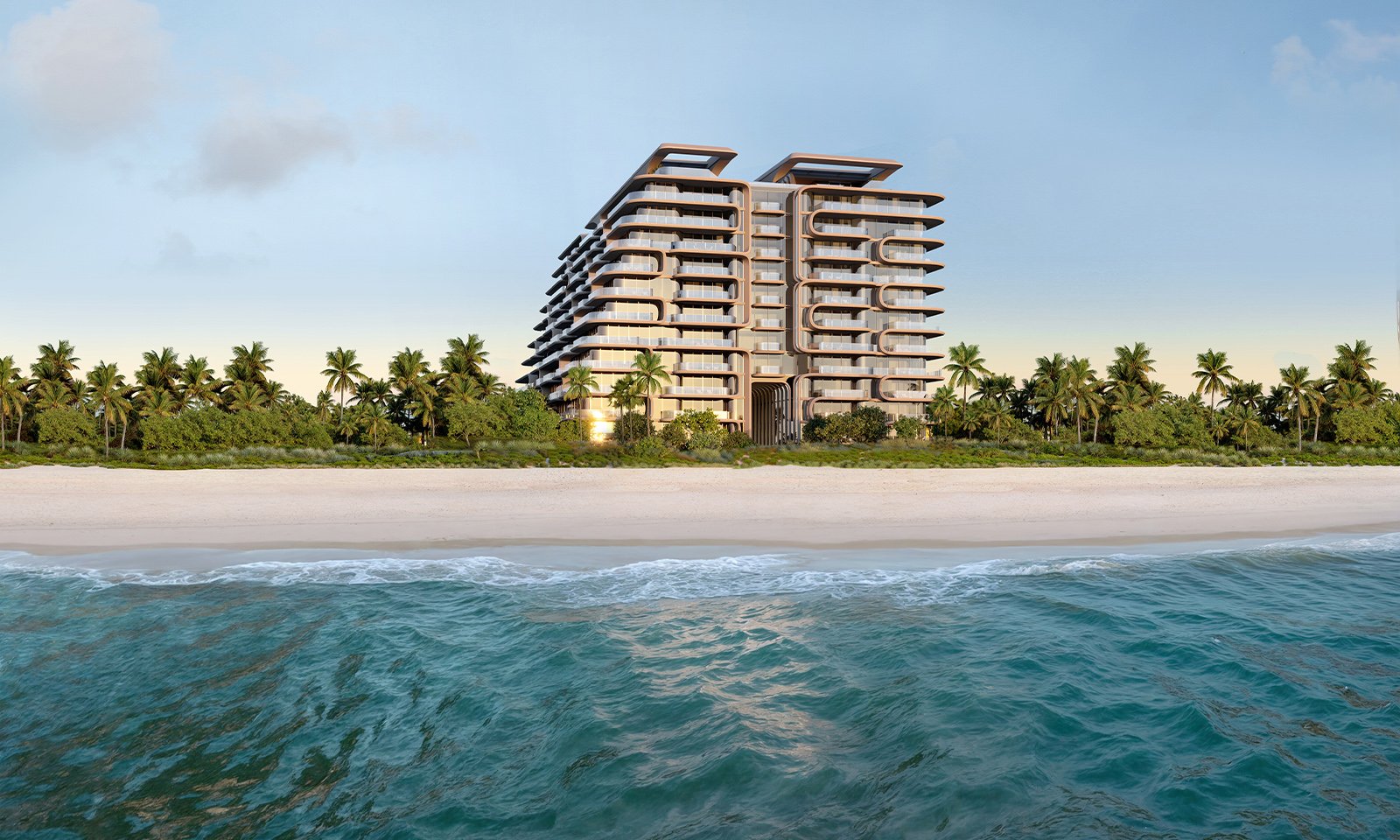
At The Delmore Surfside, the residential proposition is substantial: a planned 12-story oceanfront development at 8777 Collins Avenue in Surfside, with 37 residences averaging more than 7,000 square feet. Private elevator foyers reinforce the emphasis on discretion. Yet neither generous dimensions nor a private arrival establishes which services remain available during an extended utility outage.
For a buyer evaluating a primary residence or coastal retreat, three questions warrant separate review: how long emergency power can operate under stated conditions, how elevators will function, and whether in-residence refrigeration receives backup power. Each requires its own written answer.
Those commitments are not established by the information supplied for this article. That is a limit of the available information, not evidence that the systems are absent or inadequate. The appropriate response is neither reassurance by assumption nor criticism by inference. It is a precise request for documentation.
Generator fuel-tank capacity, connected load, and guaranteed runtime are not established here. Emergency-refueling arrangements and guaranteed refueling response times are likewise not established. A buyer should therefore not assign The Delmore a specific number of outage hours or days without supporting documentation.
Start by requesting the fuel type, usable fuel capacity, and stated runtime at identified loads. Ask for any duration estimate to be paired with the emergency-power load schedule, rather than presented in isolation. A useful answer identifies both the operating period and the equipment included in that scenario.
The distinction matters to the purchase decision. A statement about emergency power does not, by itself, establish that residential appliances, air-conditioning, elevators, and amenities are all covered. Those services must appear explicitly in the relevant documents before a buyer treats them as part of the outage experience.
Refueling warrants its own written explanation. Request the applicable arrangements, any response-time commitments, and procedures for delayed replenishment. If a duration estimate assumes refueling, ask for that assumption to be stated explicitly. A conditional operating estimate should not become an unconditional promise.
Private elevator foyers describe the ordinary arrival experience. They do not establish continued access during an outage. The information supplied for this article does not specify the number of elevators that would operate during a prolonged utility interruption, recall floors, utility-loss operating sequences, or restart requirements.
The buyer's question should therefore extend beyond whether an elevator is connected to emergency power. Request the utility-loss sequence, primary and alternate recall floors, elevator banks intended to receive backup power, and destinations available under the proposed operating plan. Ask separately for shutdown and restart procedures.
A single assurance that the building has elevator backup cannot answer all these questions. The documents should distinguish recall provisions from the service residents can expect during an extended interruption. The available information does not support a detailed account of The Delmore's programmed elevator behavior.
For a household with mobility considerations, seek written clarification of access to the actual residence under the stated outage scenario. If Ocean House Surfside is also on the shortlist, ask the same questions there without assuming equivalent systems or operating commitments. Consistent questions make the comparison more useful.
The supplied information does not confirm that individual refrigerator receptacles or other in-unit outlets at The Delmore are generator-backed. Residence size, appliance presentation, and private elevator entry cannot resolve that question.
Request the unit electrical plans and panel schedules for the residence under consideration. Ask the project team to identify the circuit serving each refrigerator receptacle and confirm in writing whether it is included in emergency-power coverage. The answer should address the proposed unit configuration, not merely describe the building's systems.
If a purchase includes additional refrigeration appliances, ask about each individually. This is a review question, not a statement that any particular appliance is offered at The Delmore. Confirmation for one receptacle does not establish coverage for every refrigerated storage location in the home.
Keep cooling separate from refrigeration. Emergency-power coverage for residential air-conditioning, as distinct from common-area equipment, is also not established here. A refrigerator commitment does not answer the air-conditioning question; both belong in the written review.
Completion estimates vary between 2029 and around 2030; neither should be treated as a guaranteed delivery date. Completion of deep and trench soil mixing in November 2025 is a dated construction milestone, not confirmation of a final emergency-power configuration or an occupancy schedule.
For the purchase review, request the current electrical one-line diagram, engineering specifications, approved permit documents, relevant condominium exhibits, and written hurricane and outage procedures. Ask the project team to distinguish current design intent from approved specifications and commitments included in the transaction documents.
Have the appropriate engineering and legal advisers reconcile those materials with the written answers. The objective is to identify what is documented, what remains conditional, and which document governs each representation. Keep the review tied to the particular residence and current document versions.
Amenities require a separate conversation. Pool, rooftop, landscaping, restaurant, and common-area offerings do not establish a corresponding extended-outage operating schedule. Ask which spaces and services are intended to remain available, under what conditions, and how residents would receive operating updates.
A buyer also considering Rivage Bal Harbour can apply the same review framework across the shortlist. This is not a comparison of verified backup capabilities. It is a way to avoid crediting a property with features that have not been expressly documented.
Organize the decision around three written answers: runtime under a stated load scenario, elevator access under defined outage procedures, and circuit-level confirmation for refrigeration. Treat residential air-conditioning and amenity availability as distinct considerations, rather than folding them into a broad discussion of emergency power.
For The Delmore, the unresolved questions are specific enough to act on. The most valuable next step is a coordinated document review, not a conclusion drawn from marketing silence. A considered luxury purchase gives operational clarity the same attention as the floor plan, finishes, and ocean outlook.
For a discreet perspective on South Florida luxury residences and buyer due diligence, explore MILLION.
If branded residences are on your mind — as a home or as an allocation — we would be glad to share what we are seeing, privately.
Begin a quiet conversationThe Delmore is planned at 8777 Collins Avenue in Surfside. It is a planned 12-story oceanfront residential development.
The project has 37 planned residences averaging more than 7,000 square feet. Those dimensions do not establish emergency-power coverage.
The supplied information does not establish fuel-tank capacity, connected load, or guaranteed runtime. Buyers should request usable fuel capacity and runtime at stated loads.
The supplied information does not establish emergency-refueling arrangements or a guaranteed response time. Buyers should request written arrangements and clarify whether runtime estimates assume replenishment.
Private elevator foyers do not establish an outage-service commitment. Buyers should verify how many elevators would operate during a prolonged utility outage and which residences they would serve.
Request the utility-loss sequence, primary and alternate recall floors, backed-up elevator banks and destinations, and shutdown and restart procedures.
The supplied information does not confirm generator-backed refrigerator receptacles. Request unit electrical plans and panel schedules identifying coverage for each relevant circuit.
The supplied information does not establish emergency-power coverage for residential air-conditioning. Buyers should seek a separate written answer rather than infer coverage from common-area systems.
Completion estimates vary between 2029 and around 2030, and neither should be treated as a guaranteed delivery date. The November 2025 soil-mixing milestone does not establish a final occupancy schedule.
No; an unconfirmed capability is not proof that a system is absent or inadequate. Buyers should resolve the questions through current engineering documents and written commitments.