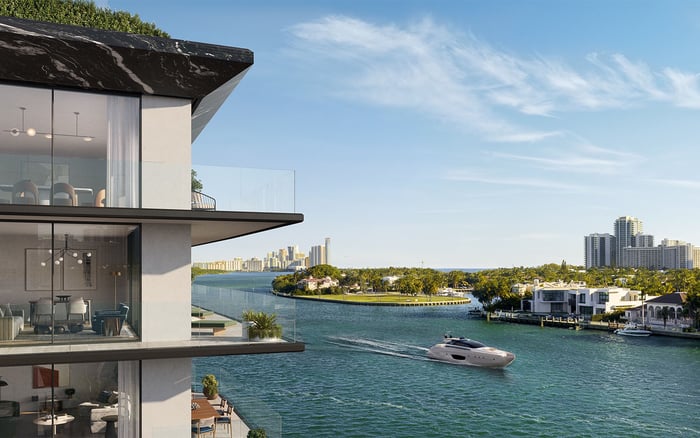
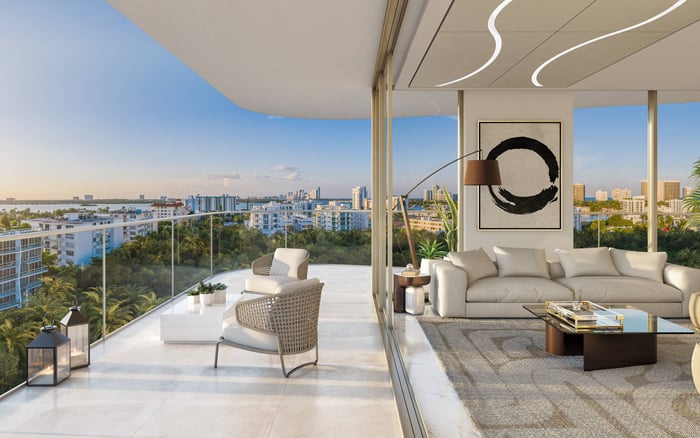
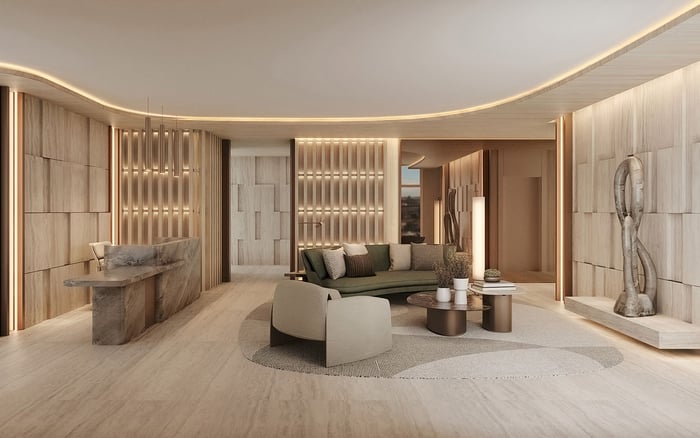
La Maré’s expansive glazing invites a closer conversation about collecting at home. For art-owning buyers, the essential questions concern wall-level daylight, cumulative exposure, shading controls and environmental stability, not simply the quality of the view.
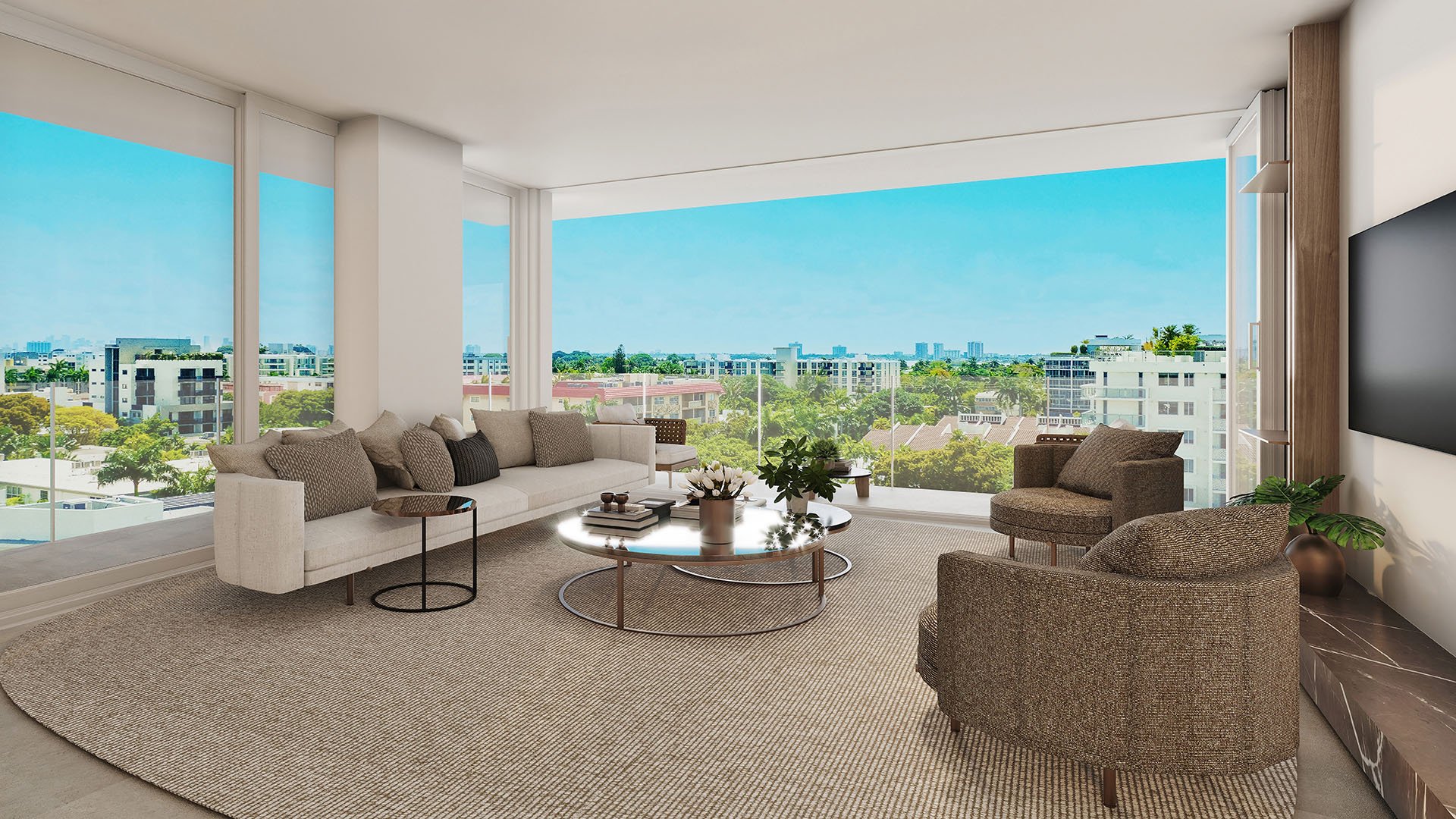
A luminous residence and a carefully protected collection are not necessarily incompatible. They do, however, call for different questions. At La Maré Bay Harbor Islands, the appeal of expansive glass deserves consideration alongside the less visible requirements of paintings, photography and works on paper. A room can feel beautifully balanced to its owner while exposing an artwork to more light than its materials should receive.
The Regency Collection, at 9927 East Bay Harbor Drive, is marketed as an eight-story building with panoramic bay views and wrap-around, floor-to-ceiling glass walls. The Bay Collection, at 10301 East Bay Harbor Drive, is marketed as an eight-story, glass-clad building with nine two- to four-bedroom residences, ranging from approximately 2,100 to more than 4,200 square feet.
Those descriptions establish an architectural proposition, not a conservation specification. For a collector, the next step is to examine how a particular residence would accommodate specific works. Neither openness nor square footage establishes suitability for display.
The reviewed marketing does not disclose visible-light transmittance, solar heat-gain coefficient, U-factor or spectral UV rejection for the glazing. Nor does it establish a specific shading package or automation strategy intended to keep direct sun off artwork.
Room-specific daylight and glare simulations are also undisclosed. Conservation-appropriate conditions at proposed artwork walls therefore have not been demonstrated by the marketing alone.
These are narrowly defined disclosure gaps. They do not establish that appropriate features are absent, that technical information is unavailable, or that a residence is unsuitable for art. Equally, the available information does not establish museum-grade conservation conditions. That phrase should remain a performance question, not an assumption attached to luxury finishes.
Request technical documentation for the residence under consideration. The relevant question is not whether a building has impressive glass, but what its glazing, orientation and proposed controls mean at the collection’s intended locations.
Glare control addresses viewing comfort. Conservation also addresses cumulative exposure and environmental fluctuations. A setting that makes a room pleasant to occupy is not automatically protective of a watercolor or photograph.
Begin with a plan identifying intended artwork walls and façade orientations. Request seasonal sun-path studies and measured or modeled illuminance at those locations. The brief should account for when direct sunlight might reach a work, not simply how bright the room appears during a single visit.
For buyers also considering Bay Harbor Towers, the same questions provide a disciplined framework for comparison. Request equivalent residence-specific evidence rather than assuming that one property’s presentation establishes better art protection. No conservation-performance comparison between the projects is established here.
The design goal is not to suppress daylight everywhere. It is to identify where views can remain the priority and where the collection requires more controlled conditions.
Light damage depends on illuminance multiplied by exposure time. Lux describes the light level; lux-hours express cumulative exposure. The distinction matters: a lower level maintained for longer can produce the same exposure total as a brighter, shorter display.
For example, 200 lux for 200 hours, 100 lux for 400 hours and 50 lux for 800 hours each total 40,000 lux-hours. These are equivalent exposure calculations, not declarations that any of those schedules is safe for every object.
For highly sensitive paintings, including watercolors and works containing dyes or lakes, approximately 50 lux is a conservation benchmark. Works on paper have a general range of 50-80 lux, while especially sensitive materials such as photographs, textiles and dyed objects may call for 50 lux.
For oil paintings, upper display levels include 150-200 lux; approximately 200 lux is also a benchmark for tempera and acrylic paintings. These figures are starting points for professional assessment, not universal permissions. Material sensitivity and exposure duration remain decisive, and a mixed collection may require controls suited to its most sensitive works.
Protecting paintings calls for avoiding direct daylight and using curtains or blinds where windows or skylights are present. At La Maré, buyers should request the proposed shading details and ask how the arrangement would protect each intended display location.
If automation is proposed, ask what it is intended to control and how its performance would be checked. The brief should distinguish comfortable everyday living from the exposure limits established for the collection. It should also address periods when the owner is away, rather than relying entirely on someone noticing sunlight on a painting.
UV filtration is a separate requirement. For paintings, ultraviolet radiation should be eliminated or minimized; 75 microwatts per lumen is an upper limit where elimination is not possible. Monitoring matters, and UV-filtering material is called for where radiation exceeds that level.
UV filtration alone, however, does not prevent light damage. Visible-light intensity and exposure duration still need control. A reassuring statement about UV protection cannot substitute for wall-level lux assessment or a plan to exclude direct sun.
Art conservation extends beyond the façade. Stable relative humidity within approximately 40-60% is suitable for many paintings, with around 50% commonly used as a central target in lending contexts. These are general parameters, not a disclosed performance specification for La Maré or a prescription for every collection.
Ask a conservator or lighting designer to review display locations, lux and UV measurements, and HVAC temperature and humidity stability. The placement assessment should also account for direct sunlight and heat from lighting systems, both of which should be avoided when caring for paintings.
For a search extending to Bal Harbour and Rivage Bal Harbour, carry the same collection brief into the evaluation. Consistent questions make the comparison more useful without implying that either property has verified museum-grade conditions.
Before committing to an artwork layout, request façade orientations, glazing specifications, shading details, seasonal sun-path studies and measured or modeled lux levels at intended walls. Then have those materials assessed against the actual collection, including its most light-sensitive pieces.
Keep three categories distinct: what is documented for the residence, what is proposed as an owner’s installation, and what still requires measurement or independent review. That distinction allows the interior design conversation to proceed without turning an attractive rendering into a conservation guarantee.
The most considered outcome is a home where the view and the collection each have an appropriate place. At La Maré, that means neither dismissing the glass nor presuming it solves the problem. It means specifying the conditions in which the art will live.
For a considered approach to South Florida residences and collection-led living, explore MILLION.
If branded residences are on your mind — as a home or as an allocation — we would be glad to share what we are seeing, privately.
Begin a quiet conversationThe reviewed marketing does not establish museum-grade conservation conditions. That does not mean the residences are unsuitable for art; residence-specific technical review is needed.
Request visible-light transmittance, solar heat-gain coefficient, U-factor and spectral UV rejection specifications. These are not disclosed in the reviewed marketing.
Not necessarily. Glare control addresses viewing comfort, while artwork protection also requires limits on cumulative light exposure and environmental fluctuations.
Lux-hours combine illuminance with exposure duration. For example, 200 lux for 200 hours and 50 lux for 800 hours both total 40,000 lux-hours, without establishing safety for a particular object.
Approximately 50 lux is a guidance level for highly light-sensitive paintings and materials. Works-on-paper guidance also includes 50–80 lux, subject to the object’s sensitivity and exposure duration.
Guidance includes upper display levels of 150–200 lux for oil paintings. These are not universal safe limits and should be assessed against each work’s materials and display schedule.
No. Visible-light intensity and exposure duration still require control even when ultraviolet radiation is filtered.
Painting-care guidance calls for avoiding direct daylight. Buyers should have intended artwork locations assessed and request suitable shading details.
Stable relative humidity within approximately 40–60% is suitable for many paintings, with around 50% commonly used as a central target in lending contexts. Individual collection requirements need professional review.
A conservator or lighting designer should assess proposed locations, lux and UV levels, and HVAC temperature and humidity stability. The review should address the actual collection rather than assume uniform sensitivity.