Colette Residences Brickell advertises access control and continuous surveillance, but those phrases leave practical questions unanswered. A buyer-focused look at camera coverage, visitor authentication, footage preservation, and the written policies worth requesting before purchase.
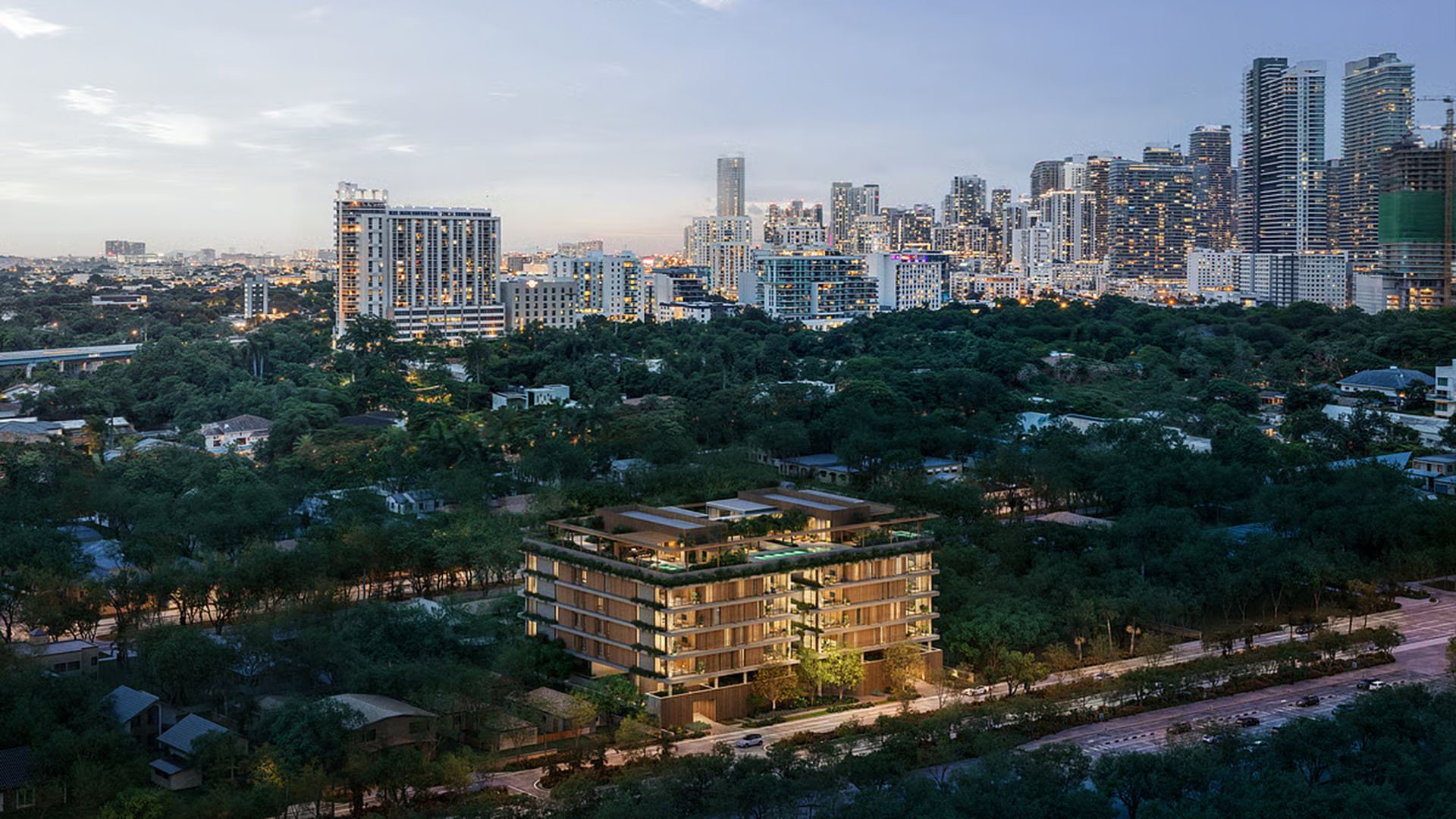
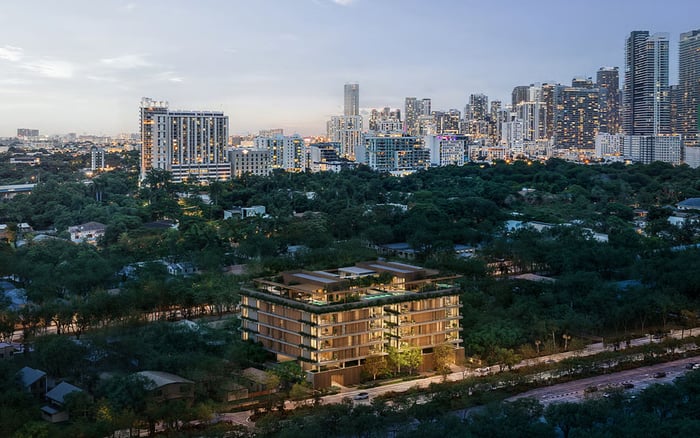
At Colette Residences Brickell, marketed at 1880 Brickell Avenue in South Brickell, security deserves the same scrutiny as the residence itself. For buyers who value discretion, an elegant arrival matters. So does knowing who can enter, what is recorded, and what documentation remains available after an incident.
Advertised features include 24/7 concierge and front-desk service, “advanced access control,” and “continuous surveillance.” These are meaningful marketing commitments, but they do not define a complete security operation. Camera counts, fields of view, monitoring locations, and footage-retention periods remain unspecified.
The distinction is essential: disclosure gaps are not evidence of blind spots, missing cameras, deficient security, or an incident history. They identify questions to resolve in writing. Planned and advertised features should not be treated as confirmation of installed equipment or operating procedures.
A staffed desk and a continuously monitored surveillance system are different propositions. Round-the-clock concierge and front-desk service are advertised; a separate round-the-clock security-monitoring operation is not defined. “Continuous surveillance” does not establish that a live operator watches every camera at all times.
Buyers should ask whether the phrase means recording, live observation, automated alerts, or some combination. Then establish responsibility: who receives an alert, who reviews an event, and who initiates a response? A service description is more useful when it assigns roles rather than relying on reassuring language.
Advertised features for Unit 27 include doorman service, secured elevators, card entry, phone entry, secured garage or parking, secured lobby, and “TV Camera.” That last designation does not explain recording mode, image quality, nighttime performance, or identification distance. Treat it as an advertised feature, not a technical specification or response guarantee.
The most useful request is a written camera-coverage map-or a controlled review of one-with documented exclusions. No such map is provided for garage ramps, service entrances, package areas, stairwell doors, elevators, amenity corridors, or roof access.
These are areas to ask about, not established blind spots. Request a clear distinction between spaces that are observed, spaces that are recorded, and spaces intentionally outside coverage. Ask whether image quality is intended merely to show movement or to support identification, and whether lighting conditions affect that purpose.
The same care applies outside. Complete surveillance coverage of sidewalks, driveway approaches, landscaping, valet areas, or the Brickell Avenue boundary is not established. Buyers should clarify where the property's surveillance responsibility begins and ends rather than assume the entire arrival sequence is documented.
For a buyer also considering 2200 Brickell, a consistent written questionnaire allows a more disciplined comparison. This is a due-diligence standard to apply across a shortlist, not a claim about either property's relative security.
Colette's advertised parking features include covered self-parking for two or three vehicles per residence, optional valet service, and EV charging. Each raises a practical access question: how does a person move from a vehicle to the residential elevator, and which permissions govern that journey?
Direct password-protected elevator entry to residences is also advertised. Private elevator access, however, does not explain how guests, contractors, deliveries, maintenance personnel, or emergency responders are authenticated and logged. Privacy at the apartment threshold should be evaluated alongside the procedures that precede it.
Ask how credentials are issued, restricted, changed, and revoked. Establish whether temporary permissions can expire and whether vendor access is limited by destination or time. These are proposed buyer questions, not descriptions of Colette's systems.
Entry-log searchability, review permissions, and retention also remain unspecified. A credential can control access without providing enough information to understand the later audit trail. Request clarity on both functions.
Video footage, access-event logs, and incident records are distinct categories. A clear answer about one should not be assumed to resolve the others.
For video, no footage-retention period or automatic-overwrite policy is specified. Request the applicable schedule, whether retention differs by camera or recording mode, and what happens when storage reaches capacity. Seek an explicit preservation deadline rather than assuming footage will remain available whenever someone requests it.
For access events, request a separate retention schedule and an explanation of who may search or review entries. Ask whether relevant entry data can be preserved alongside footage when an event is under review.
For incident records, a formal incident log, retention schedule, reporting chain, escalation procedure, and response-time commitment remain unspecified. Ask what documentation is created, who receives it, and where the final policy will be recorded. The objective is a coherent written account of the procedure, not an assumed entitlement to every internal record.
An owner who is away should not have to discover the preservation process after raising a concern. How residents request a footage hold, who authorizes it, and whether residents can obtain a copy remain unexplained.
Ask for a designated request channel, the information needed to identify an event, and confirmation that an accepted hold prevents relevant material from being overwritten. Clarify how requests are handled outside ordinary administrative hours and how an authorized representative can act for an absent owner.
Preservation and disclosure are separate questions. Ask who may view or export footage, what approvals apply, and how other residents' privacy is protected. Those controls-as well as redundant recording, backup power, backup communications, and tamper alerts-are not established by the advertised surveillance features. Request written clarification without treating nondisclosure as proof that safeguards are absent.
For readers comparing Colette with Una Residences Brickell, the useful comparison is documentary: obtain the same categories of answers without inferring equivalent systems or service levels.
Before purchase, request a coverage explanation, recording specifications, monitoring responsibilities, credential procedures, separate retention schedules, and an incident-preservation protocol. Ask where final policies will be documented, which details remain subject to change, and who will administer them.
The right conclusion is neither blanket reassurance nor suspicion. Colette advertises security-related features; the buyer's task is to establish their scope and operational meaning in writing. For a residence chosen partly for privacy, that clarity belongs alongside every other considered purchase criterion.
Explore South Florida residences with a more considered buyer's perspective at MILLION.
If branded residences are on your mind — as a home or as an allocation — we would be glad to share what we are seeing, privately.
Begin a quiet conversationColette Residences is marketed at 1880 Brickell Avenue in South Brickell, Miami.
Not necessarily. The phrase is undefined in the reviewed marketing and does not establish continuous live observation of every camera.
No. The reviewed amenities language advertises concierge and front-desk service without separately defining a round-the-clock security-monitoring operation.
No. The reviewed materials establish disclosure gaps, not actual blind spots, missing cameras, or deficient security.
Request a written coverage map or controlled review, documented exclusions, recording modes, and clarification of image quality and nighttime performance.
It identifies a listed security feature, but does not specify recording mode, live monitoring, image quality, nighttime performance, or identification distance.
Direct password-protected elevator entry to residences is advertised. Authentication and logging for guests, vendors, or emergency responders remain unexplained.
A footage-retention period and automatic-overwrite policy are not specified in the reviewed amenities description. Buyers should request both in writing.
The reviewed amenities description does not explain the preservation process, hold authorization, or whether residents can obtain copies. Buyers should clarify preservation and disclosure separately.
The reviewed materials do not specify retention schedules for those records. Buyers should request separate policies for video, entry logs, and incident documentation.