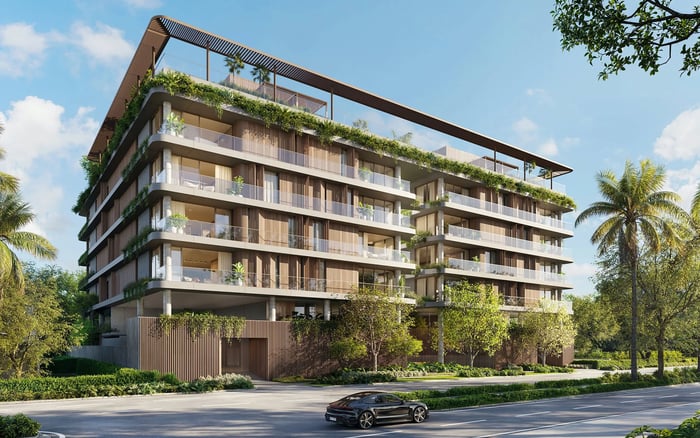
A proposed family-office diligence framework for Colette Residences Brickell, separating the residential decision from contract approvals, source-of-funds documentation and payment authorization.

A family residence can be an emotional acquisition without becoming an informal one. At Colette Residences Brickell, the proposed setting is intimate: a planned five-story condominium with 38 residences at 1870-1880 Brickell Avenue in South Brickell. The public-facing address is 1880 Brickell Avenue. OSPA is the architect.
The planned two- to four-bedroom residences start at 2,210 square feet and include two penthouses. Each penthouse is planned with four bedrooms, a family room and an office. These spaces provide a starting point for assessing how the property might accommodate family life, guests and private work.
For a family office, residential suitability and authorization to commit capital should remain separate decisions. The framework below is proposed buyer-side diligence, not a description of Colette's procedures or a statement of legal requirements. Counsel, the purchasing entity and the relevant financial institutions should determine what the transaction requires.
Start with a short acquisition memorandum. Identify the intended use, proposed ownership structure, selected residence, maximum authorized commitment and people empowered to approve it. Distinguish permission to negotiate from permission to sign, and both from permission to release money.
A proposed approval matrix could make the principal or investment committee responsible for the acquisition decision, counsel for documenting legal review, and treasury for payment preparation. A separate authorized reviewer would approve the transfer. These are suggested internal roles, not established project protocols.
The memorandum should also record unresolved conditions and identify who can clear them. An attractive floor plan should not silently override an outstanding contract question.
If the family's shortlist also includes 2200 Brickell, apply the same approval template to each candidate. This makes the comparison a disciplined allocation decision rather than a contest of presentations. Do not assume that neighboring projects share deposit structures, contractual protections or delivery obligations.
Colette's stated entry prices are inconsistent: approximately $2.79 million and $3.3 million. Neither figure should become the family's approved acquisition budget without a current, residence-specific written proposal.
Indicative offerings include a two-bedroom, 2.5-bath residence measuring 2,423 square feet at $2,790,000; a three-bedroom, four-bath residence with a den measuring 2,704 square feet at $4,002,000; and a four-bedroom, five-bath residence with a den measuring 3,184 square feet at $5,798,000. These are reference points, not confirmation of current availability or executable pricing.
Penthouse consideration should likewise begin with a specific proposal, not a generalized starting price. The approval file should identify the residence, plan version, quoted area, purchase price, included items and any separately priced selections.
Request a dated schedule of deposits and estimated transaction costs, clearly distinguishing assumptions from agreed obligations. The committee should authorize the actual commitment under consideration, not the marketing headline.
The $18.5 million acquisition and development loan from BridgeCity Capital for META Development's land assemblage should not be treated as proof that the entire construction budget is funded. Completion is projected for 2028; this is an expected delivery date, not a verified contractual deadline.
Counsel's proposed review agenda should cover seller-entity authority, title and liens, permit status, escrow arrangements, deposit treatment, cancellation rights and contractual delivery provisions. Request the operative documents rather than treating any of these matters as established by a financing announcement or sales presentation.
The financial review should separately assess the family's liquidity through the expected holding period and its tolerance for later delivery. Record which assumptions require confirmation before signing.
For a family also evaluating Una Residences Brickell, use the same questions but obtain independent answers for that transaction. A consistent diligence standard does not imply equivalent project circumstances.
The source-of-funds file should explain the proposed funding path, not merely demonstrate that the family has substantial assets. As an internal preparation exercise, distinguish the family's broader wealth narrative from the origin and movement of the money intended for this purchase.
A proposed working file could include the purchasing entity's ownership chart, authorized signers, relevant account ownership evidence and documents supporting the funding event. Depending on the circumstances, that event might be an asset sale, distribution or financing. Include only documents that accurately describe the transaction.
Where the payer and purchaser differ, ask counsel and the receiving institution to confirm the acceptable arrangement before scheduling a transfer. Record any intervening entity or account so the intended payment path is clear.
This is not a verified Colette checklist or an assertion of applicable AML/KYC requirements. Obtain the actual documentation requests from the parties responsible for review. Designate a controlled delivery channel and restrict access to sensitive family information.
Treat payment authorization as a fresh decision, even after the acquisition has been approved. No project-specific wire instructions or payment-control arrangements are established here. The following measures are proposed internal safeguards to agree with counsel and the bank, not assurances against fraud.
Before funding, have counsel confirm the intended recipient and its contractual role. Treasury should independently verify payment instructions through a contact route established separately from the message carrying them. A reply to that same message should not satisfy the proposed verification standard.
Use separate preparer and approver roles. Reconcile the beneficiary name, bank details, amount, purpose and payment date against the approved transaction file. Record who performed each check and when.
Any change in instructions should pause the transfer and restart verification. Urgency should not waive that rule. If a payment appears misdirected, the proposed response plan should call for immediate contact with the bank and counsel, without assuming recovery will be possible.
The final decision record should connect three things: the residence the family wants, the obligations it has accepted and the payment it has authorized. Keep the signed approvals, operative agreement, funding documentation and verification record together, with access appropriate to their sensitivity.
Unresolved items should remain visible, each with a named owner and an explicit decision on whether it prevents signing or funding. Boutique scale is a residential characteristic, not a reason to relax financial governance. The objective is a considered purchase whose documentation is as precise as the family's expectations for the home.
For a discreet conversation about your South Florida residential priorities, connect with MILLION.
If branded residences are on your mind — as a home or as an allocation — we would be glad to share what we are seeing, privately.
Begin a quiet conversationColette is planned as a five-story, 38-residence boutique condominium at 1870–1880 Brickell Avenue in South Brickell. Its public-facing address is 1880 Brickell Avenue.
Planned layouts range from two to four bedrooms and start at 2,210 square feet. Each of the two penthouses is planned with four bedrooms, a family room and an office.
Stated starting prices differ between approximately $2.79 million and $3.3 million. Approval should rely on a current written proposal for the selected residence rather than either headline figure.
No; completion is projected for 2028, but that is an expected delivery date rather than a verified contractual deadline.
No; the acquisition and development loan should not be treated as proof that the entire construction budget is funded.
The framework separates permission to negotiate, permission to sign and permission to release money. It also calls for named decision-makers and explicit treatment of unresolved conditions.
The proposed review agenda includes seller authority, title and liens, permits, escrow arrangements, deposit treatment, cancellation rights and contractual delivery provisions. These matters should be addressed through the operative transaction documents.
A working file could include ownership and signer information, account ownership evidence and documentation explaining the proposed funding event and payment path. Actual requirements should be confirmed with counsel and the reviewing institutions.
No; the approval, source-of-funds and wire-verification measures are proposed buyer-side safeguards, not verified Colette procedures or legal requirements.
Under the proposed framework, changed instructions should pause the transfer and restart independent verification. The payment should remain subject to separate preparation and approval.

.jpg&width=700&height=438&fit=cover)