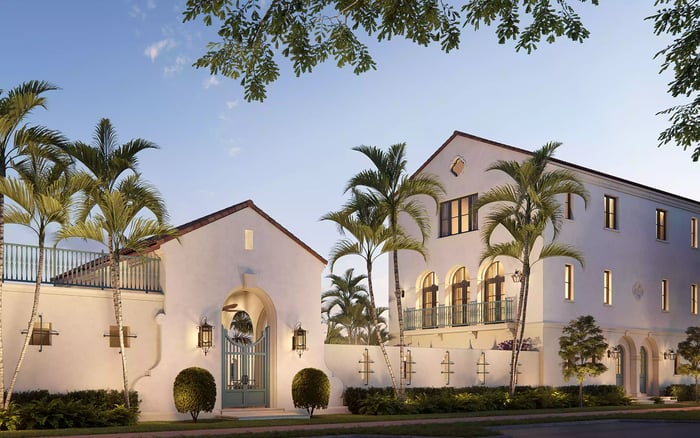
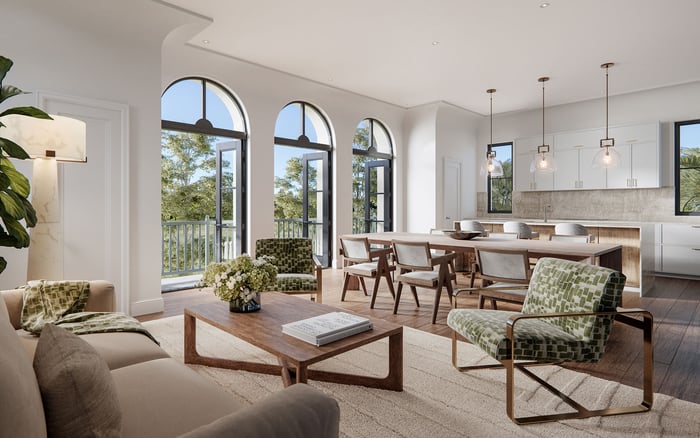
For Hong Kong buyers considering a Coral Gables second home, a disciplined first-year budget separates recurring ownership costs from furnishing, installation and any club application fee. Property-specific dues, insurance quotes and tax estimates matter more than a single headline allowance.
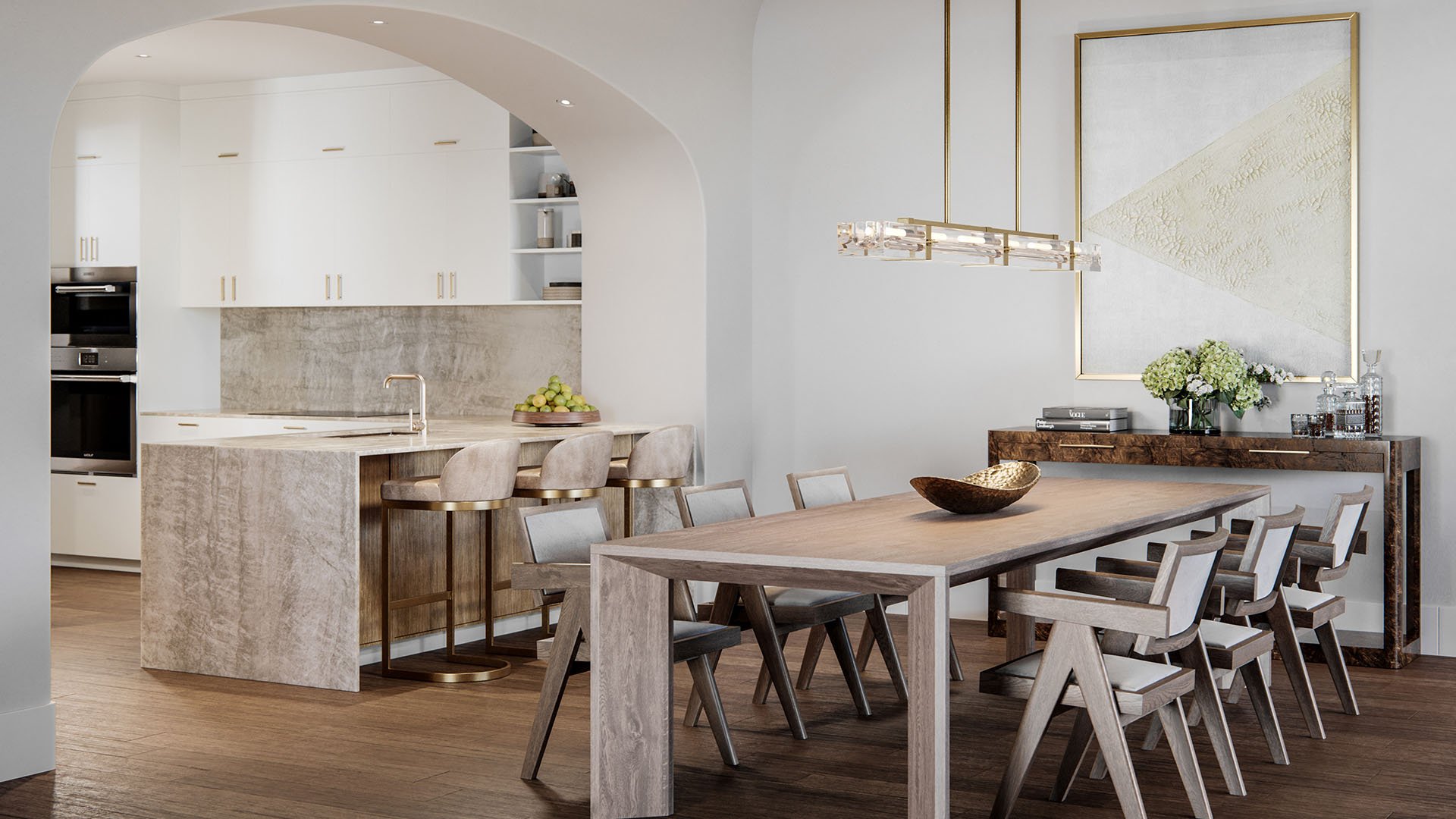
For a Hong Kong household establishing a second home in Coral Gables, the financial question extends beyond the acquisition price. What must be funded before the first arrival, what continues during months abroad, and which expenses fall outside the apparent convenience of a managed address?
The most useful budget has two ledgers: purchase-year setup and recurring ownership. Furnishing, installation and any applicable club application fee belong in the first. Association dues, property taxes, insurance and ongoing services belong in the second. Keep acquisition costs and financing separate from this operating plan: household expenses do not represent the full cash requirement for a purchase.
All figures below are in U.S. dollars. They are planning references, not quotations for a particular residence. For a cross-border household, assign a payment date and a responsible person to every line so annual affordability does not obscure immediate liquidity needs.
Preliminary estimates for one segment of full-service Coral Gables condominiums put regular dues at approximately $700-$1,400 monthly, or $8,400-$16,800 annually. Higher-end condominium estimates reach $2,000-$3,500 monthly, equivalent to $24,000-$42,000 annually, with some larger residences costing more. Neither range is an official citywide average, and both exclude special assessments.
Building age, amenities, included utilities and master insurance affect the charge. Lower monthly dues do not necessarily mean lower ownership costs if more responsibilities remain with the owner.
When considering Ponce Park Coral Gables, request the applicable residence-level budget and included-service schedule rather than assigning it a market range. Apply the same discipline to every comparison: distinguish regular dues from separately billed services and any assessments.
For cash-flow purposes, annualize the confirmed regular charge, then record its actual payment schedule. Keep any disclosed assessment on a separate line with its own due dates. A twelve-month equivalent is useful for comparison, but it is not a payment calendar.
Coral Gables’ adopted FY 2025-26 city operating property-tax rate is 5.5590 mills. This is only the municipal operating component. County, school-board and regional taxes also apply; treating that rate as the entire property-tax burden would substantially understate the bill.
One mill equals $1 for each $1,000 of taxable value. Calculate the charge by multiplying taxable value by the applicable millage, then dividing by 1,000. For illustration only, $2 million of taxable value at 5.5590 mills produces $11,118 for that city operating component alone. This is neither a total tax estimate nor an assumption that purchase price equals taxable value.
A Hong Kong-based owner using the residence solely as a second home should not assume Florida homestead eligibility, which requires qualifying permanent-residence status. Florida’s additional homestead exemption also does not apply to school-district taxes, so taxable values can differ among authorities.
Request a property-specific estimate for the relevant ownership year, with applicable rates and taxable values identified. The FY 2025-26 municipal figure is not a guaranteed rate for a future purchase.
For a condominium, the association’s master policy and the owner’s HO-6 policy serve different purposes. HO-6 generally addresses the unit interior, personal belongings, liability and certain loss assessments; it does not replace the building’s master coverage.
The average HO-6 insurance benchmark for Miami-Dade County is $2,538 annually, approximately $211 monthly. This is a county benchmark, not a luxury-unit quote. Standard HO-6 coverage does not cover flood damage, so evaluate flood protection separately.
For a $2 million Coral Gables single-family property, a preliminary planning estimate puts combined homeowners and flood insurance at approximately $18,000-$30,000 annually, depending on the property. A separate large-estate windstorm estimate spans $20,000-$60,000 annually, but is neither standardized nor necessarily a complete insurance budget.
Do not add these ranges together. Instead, ask the insurance adviser to identify homeowners, windstorm, flood, contents and loss-assessment coverage within each proposal, including deductibles and exclusions. Enter the resulting quote and payment terms in the cash calendar.
An attractive residence is only one part of an effortless arrival. The operating brief should identify who checks the property, coordinates access, prepares it for occupancy and responds while the owner is in Hong Kong.
For Cora Merrick Park, as for any address under consideration, establish which tasks are included before commissioning outside providers. Do not infer private household services from a project’s name or positioning.
Request property-specific quotes for home-watch, cleaning, HVAC servicing and hurricane preparation. Where relevant, add pool and landscaping care. Specify visit frequency, emergency authorization, arrival preparation and whether each service is billed as a retainer or an individual charge.
Give utilities their own line after checking what the association includes. Separate ongoing contracts from visit-driven expenses, then record billing dates. A generic monthly allowance is no substitute for a defined service scope.
Furnishing belongs in the purchase-year ledger, not in an inflated recurring-cost estimate. Build the specification around how the household will occupy the home: which rooms must be ready for the first stay, and which can follow later.
For a buyer evaluating The Village at Coral Gables, the furnishing exercise should begin with the selected residence’s confirmed dimensions and delivery condition. Do not infer a project-specific furnishing allowance from the ownership ranges above.
Request itemized proposals separating furniture, design fees, freight, storage, installation and applicable taxes. Map deposits, balances and installation payments to the expected arrival schedule. A room-by-room scope is more useful than an unsupported luxury furnishing benchmark, particularly when purchases are approved remotely.
For a Gables Estates purchase, preliminary estimates put the nonrefundable club application fee at approximately $100,000, or approximately $105,000 for foreign applicants, with annual dues of approximately $7,500. Confirm current requirements and the applicable applicant category directly with the club before budgeting. These are not general Coral Gables ownership charges.
Keep any application fee in setup costs and annual club dues in recurring expenses. Then organize the final worksheet into pre-arrival commitments, scheduled ownership payments and separately quoted services. Show both the first twelve months after closing and the purchase-year calendar, particularly if ownership begins late in the year.
The objective is not a deceptively precise total. It is a funded plan that distinguishes confirmed obligations, preliminary estimates and decisions still awaiting a quote, allowing the home to feel composed from the first visit.
Explore your Coral Gables second-home options with MILLION.
If branded residences are on your mind — as a home or as an allocation — we would be glad to share what we are seeing, privately.
Begin a quiet conversationSeparate purchase-year setup, including furnishing and installation, from recurring dues, taxes, insurance and services. Keep acquisition costs and financing outside that operating ledger.
Preliminary higher-end planning estimates reach $24,000–$42,000 annually, with some larger residences costing more. These figures exclude special assessments and are not quotations for a specific building.
No. It is the adopted FY 2025–26 city operating rate only; county, school-board and regional taxes also apply.
Multiply the applicable taxable value by the millage and divide by 1,000. Use the relevant taxable value and rate for each taxing authority rather than assuming purchase price is taxable value.
No. Florida homestead eligibility requires qualifying permanent-residence status, so a property used solely as a second home should not be budgeted on that assumption.
No. HO-6 generally covers the unit interior, belongings, liability and certain loss assessments, while the association’s master policy serves a different role.
No. Flood protection should be evaluated separately, with the adviser clarifying how it fits alongside other coverage.
Not without checking coverage. The estimates may overlap, so identify homeowners, windstorm, flood, contents and loss-assessment protection within each proposal before totaling premiums.
Use itemized furnishing proposals and property-specific service quotes rather than generic allowances. Separate setup payments from recurring contracts and visit-driven charges.
Preliminary estimates indicate a nonrefundable application fee of approximately $100,000, or $105,000 for foreign applicants, and approximately $7,500 in annual dues. Confirm current requirements and the applicable category directly with the club.