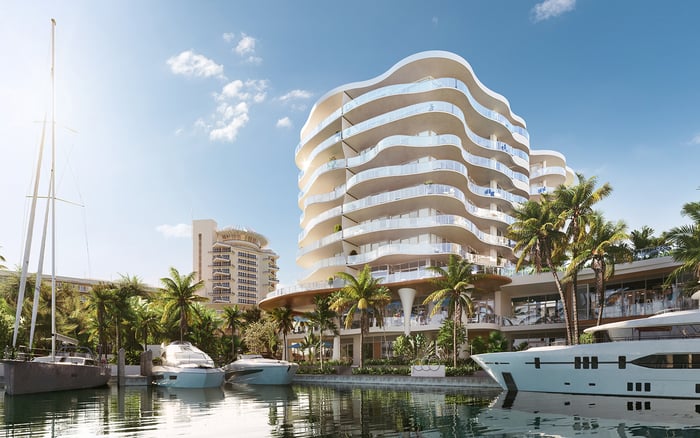
A practical buyer’s guide to reviewing marina security, dock-use rights, access controls, insurance, and operating rules before closing on a North Bay Village residence.

For a waterfront buyer, a marina can feel like the emotional center of the purchase. It promises ease, privacy, and the rare pleasure of keeping a boat close to home. Before closing, however, marina security deserves the same scrutiny as title, association reserves, insurance, and the condition of the residence itself.
In North Bay Village, buyers often focus first on the view corridor, floor plan, terrace, and arrival experience. Those elements matter. But when the value proposition includes dock access, boat storage, or a marina-adjacent lifestyle, the security framework along the waterfront edge becomes part of the asset. The right questions reveal whether the marina is governed by disciplined oversight or merely by aesthetics and assumption.
A buyer may see search labels such as North-bay-village, Marina, Boat-slip, Waterview, New-construction, and Resale, but closing diligence should convert those labels into documents, permissions, and operating procedures.
The first issue is not cameras or gates. It is the nature of the right being conveyed. A buyer should confirm whether any dockage, slip access, lift use, or marina privilege is deeded, assigned, leased, licensed, reserved by the association, or subject to a separate agreement. The distinction matters because a beautifully presented marina may not grant the same rights to every owner.
Review the governing documents, marina rules, dock-use agreements, slip assignment policies, and transfer provisions. If a slip is being marketed with the residence, the contract should state precisely what is included and what requires separate approval. If the right is not permanent, exclusive, or transferable, the buyer should understand that before price and terms are final.
Security also intersects with control. If an owner has the right to use a slip but the association controls access, vendors, guest approvals, hours, and maintenance standards, those rules define the actual ownership experience.
A marina is a threshold between public water, private property, owners, guests, crews, contractors, and service providers. Access control should therefore be reviewed with the same seriousness as lobby security or private elevator access.
Buyers should ask how residents enter the marina area, whether access is controlled by keys, fobs, codes, staff, gates, or another system, and how credentials are issued, changed, or revoked. A code shared too broadly can become a weak point. A fob system with clear owner records and deactivation procedures may offer stronger accountability, provided it is properly administered.
Guest access matters as well. Are guests escorted, registered, or permitted to enter independently? Are captains, mechanics, detailers, cleaners, and delivery vendors subject to check-in procedures? The more valuable the vessels and equipment, the more important it becomes to know who can reach the dock, and when.
Visible equipment is not the same as a security program. During a showing, a buyer may notice cameras and lighting, but the diligence question is how those systems are used. Ask whether cameras cover access points, dock approaches, storage areas, walkways, gates, and transitions between the building and marina.
Buyers should also ask whether footage is monitored live, reviewed only after an incident, retained for a defined period, or managed by building staff or a third party. The answer affects both deterrence and response. A camera that records clearly at night is materially different from a decorative device with limited range.
Lighting deserves close attention. Dock areas need visibility without glare that diminishes the waterfront environment. Look for consistency along walkways, entry points, and areas where owners may board or disembark after dark. Poorly lit transitions can create both security and safety concerns.
Security is as much a human system as a physical one. Buyers should ask who is responsible for the marina at different times of day. Is there building staff, marina staff, roving security, a manager on call, or a defined emergency contact? A polished lobby does not automatically mean the dock is managed with the same discipline.
Request written incident procedures, if available. A strong operation should be able to explain how it handles unauthorized access, suspicious activity, damaged equipment, vessel issues, trespass concerns, and after-hours emergencies. The goal is not to assume risk, but to determine whether response is established or improvised.
Communication is equally important. Owners should know how notices are delivered, whether marina alerts are sent through the association, and who has authority to restrict access temporarily if needed.
Marina security cannot be separated from insurance and liability. Before closing, buyers should ask their counsel and insurance advisor to review what the association covers, what the owner must insure, and how responsibility is allocated for docks, lifts, vessels, personal property, and third-party claims.
The governing documents may define maintenance duties, owner obligations, guest responsibility, and consequences for rule violations. Buyers should not rely on verbal assurances. If a boat, lift, dock box, utility pedestal, or related equipment is part of the intended lifestyle, each component should be matched to a document.
For higher-value waterfront ownership, it is also wise to confirm whether the building or marina has specific rules for contractors, fuel handling, battery charging, storm preparation, vessel size, noise, and storage. These rules can preserve order, but they can also affect how an owner uses the property.
In South Florida, marina diligence should include storm protocols. Buyers should ask how the association communicates preparation requirements, whether vessels must be moved under certain conditions, who secures common marina elements, and whether access may be limited before or after severe weather.
Security during a storm is not simply about preventing entry. It is about chain of command, access for approved personnel, protection of common property, and clarity around owner duties. The most elegant marina can become stressful if expectations are vague when conditions change.
Ask whether there are written procedures for securing vessels, removing loose items, managing dock utilities, and reopening access after an event. Even if a buyer does not own a boat today, these protocols influence the waterfront environment and reflect the building’s operational discipline.
Before the inspection and document review periods expire, buyers should gather a concise set of answers. Who controls the marina? What rights transfer with the residence? How is access granted and revoked? Where are cameras located? How long is footage retained? What lighting covers the dock? Which vendors are permitted? What insurance is required? What storm rules apply? What happens if an owner violates marina policy?
These questions are not adversarial. They are part of sophisticated waterfront acquisition. A secure marina should withstand careful inquiry. If answers are vague, delayed, or inconsistent across sales materials, association documents, and management communication, the buyer should slow down and resolve the issue before closing.
The best waterfront purchases are not merely beautiful. They are legible. Every right, rule, duty, and access point should be understood before keys change hands.
Should I review marina security before making an offer? Yes. Early review can help shape offer terms, contingencies, and the documents requested before closing.
Is a boat slip automatically included with a waterfront condo? Not necessarily. The buyer should confirm whether any slip or dock right is deeded, assigned, leased, licensed, or separately approved.
What is the most important marina security document to request? Start with the governing documents and any marina rules or dock-use agreements, then compare them with the purchase contract.
Are cameras enough to consider a marina secure? No. Buyers should understand camera coverage, monitoring, retention, lighting, access control, and incident response procedures.
Should vendor access be part of my diligence? Yes. Captains, mechanics, cleaners, and delivery personnel may need access, so confirm how vendors are approved and tracked.
Can marina rules affect resale value? They can. Clear and transferable rights may appeal to future buyers, while uncertain or restrictive arrangements may require more explanation.
Who should review marina rights before closing? A buyer should involve qualified legal and insurance advisors, especially if dockage or boat storage is material to the purchase.
What should I ask about storm procedures? Ask who communicates requirements, whether vessels must be moved, how common areas are secured, and when access can be restricted.
Can security rules limit my guests? Yes. Guest registration, escort policies, and after-hours access may be governed by association or marina procedures.
What if the seller describes a marina benefit that is not in writing? Treat it as unresolved until the right is documented, transferable if needed, and consistent with the association’s rules.
For a confidential assessment and a building-by-building shortlist, connect with MILLION.
If branded residences are on your mind — as a home or as an allocation — we would be glad to share what we are seeing, privately.
Begin a quiet conversation