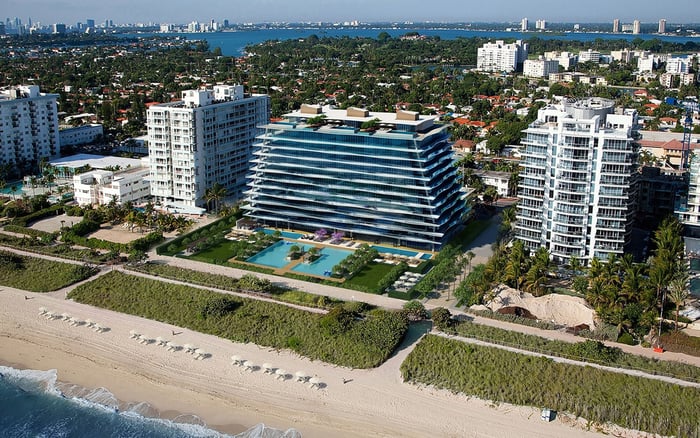
For multigenerational buyers in Surfside, a residence’s readiness extends beyond the front door. Review association turnover records, engineering documents, warranties, and common-area approvals alongside the daily needs of every generation.

For a multigenerational household, a Surfside residence must accommodate more than different tastes. It must support different rhythms, mobility needs, and expectations of independence. A beautifully finished apartment does not establish whether an older parent can navigate the garage comfortably or children can reach shared amenities without passing through unfinished work.
The central distinction is between ownership, association control, and operational readiness. Developer turnover transfers association control to unit owners. It does not, by itself, prove that every shared space is complete or every outstanding issue resolved.
Whether a family’s search includes Arte Surfside or another condominium, a document-led review belongs alongside the floor-plan discussion. The projects referenced here are search examples, not assertions about their turnover status, construction condition, or outstanding obligations.
First, establish whether control has transferred and request an inventory of the turnover materials held by the association. Florida law requires the developer to deliver specified records at that transition, including insurance, occupancy, permit, and warranty documentation. These obligations run to the association; they do not promise every buyer a complete file automatically.
The review should distinguish four categories:
Permits: Governmental permits applicable to the condominium property that remain in force or were issued within the preceding year.
Occupancy records: Copies of certificates of occupancy issued for the condominium property, rather than assurances limited to the residence being purchased.
Insurance: The actual association insurance policies, not simply a statement that coverage exists.
Warranties: Still-effective written warranties from contractors, subcontractors, suppliers, and manufacturers.
Ask the association to identify the documents received, the items still outstanding, and the person responsible for obtaining them. Have counsel assess any gaps rather than treating an incomplete inventory as proof of a particular legal violation.
Keep building-wide records separate from unit-specific paperwork. A polished closing package for an apartment is no substitute for reviewing the documentation governing shared property.
Three document categories deserve distinct attention: the turnover inspection report, milestone-inspection documentation, and the structural integrity reserve study. One does not answer the questions addressed by the others.
Before transferring association control, developers must obtain the required turnover inspection report for each condominium building three stories or higher. Request the complete applicable report and ask a qualified professional to explain its findings, scope, and any recommended follow-up.
Qualifying condominium buildings are separately subject to milestone inspections addressing structural condition and life-safety concerns. Establish applicability and status for the particular building. If an inspection identifies work, request documentation of the association’s response and any subsequent professional review.
For the structural integrity reserve study, determine whether the association must complete one and which statutory timing provisions apply. Do not assume a single deadline governs every association. Ask how the applicable study relates to the association’s funding plans.
A family considering Fendi Château Residences Surfside should keep these questions distinct: what has been inspected, what requires attention, and what financial planning supports the shared building.
Delivery of a warranty does not establish that unfinished work has been corrected. Evaluate warranties alongside the property’s condition, not as substitutes for inspection or confirmation of repairs.
As a practical step, assemble a warranty schedule identifying the covered work or equipment, responsible company, effective period, and claim procedure. Ask which unresolved items have already been submitted and request the relevant correspondence.
Where responsibility is disputed or time-sensitive, involve Florida condominium counsel. The question is not merely whether a warranty exists, but whether the particular concern falls within its terms and what action remains necessary. Do not assume every issue shares the same coverage or remedy.
Shared spaces deserve a separate completion record. A household considering Ocean House Surfside, for example, can make documented common-area readiness part of its purchase criteria without presuming anything about the project’s current status.
Request a written schedule for each incomplete space showing:
The specific area and remaining work.
The party responsible for completion.
The proposed completion date and any dependencies.
The present permit, inspection, and approval status.
The party responsible for funding the remaining work.
This schedule is a practical diligence recommendation, not a claim that every field is a mandatory statutory turnover deliverable.
Local occupancy paperwork distinguishes temporary certificates of occupancy, certificates of occupancy, and certificates of completion. Temporary approval is not interchangeable with final approval. Request the actual project-specific certificates and have municipal building staff clarify their scope and any conditions relevant to the space in question.
An application form or fee category does not prove that an amenity is finished or approved. Nor does an attractive presentation of a shared space establish its permitted use. Match the space the family expects to use with the documentation that applies to it.
Documents establish essential context, but daily usability deserves a physical review. Before setting a move-in plan, walk the garage-to-unit route with the needs of older residents, children, and caregivers in mind.
Check elevator operation, accessible routes, thresholds, and the approach to shared amenities. Ask what happens if a normal route is unavailable. Request a clear explanation of backup-power coverage rather than assuming every system or convenience will remain operational during an interruption.
For households evaluating The Delmore Surfside, these questions can become written purchase criteria alongside layout and privacy. Where a route or amenity cannot yet be walked, identify what remains to be verified. A planned feature should not be treated as an available one.
These household-specific checks supplement legal and technical review. They are recommendations, not an assertion that every listed feature is required by the turnover statutes.
Resale purchases require a separate disclosure review. For contracts entered into after December 31, 2024, applicable statutory language must conspicuously identify required milestone inspections, qualifying turnover inspection reports, or structural integrity reserve studies that have not been completed.
Have Florida condominium counsel assess the disclosures, missing documents, and any associated cancellation, escrow, or closing rights. Do not assume an unfinished amenity or absent document automatically creates a particular remedy.
Before committing to a family move, reduce the open questions to a short written record: what remains unresolved, who must act, what evidence will establish completion, and whether the household can function comfortably in the interim. The objective is not a larger file. It is a clear understanding of what the family is buying and what still requires confirmation.
For a considered approach to your Surfside residential search, explore MILLION.
If branded residences are on your mind — as a home or as an allocation — we would be glad to share what we are seeing, privately.
Begin a quiet conversationIt concerns the transfer of association control from the developer to unit owners. It does not, by itself, establish that all common areas are complete or outstanding issues resolved.
Review the applicable permit records, certificates of occupancy, actual association insurance policies, and still-effective written warranties. Ask the association to identify outstanding documents.
The records include governmental permits applicable to the condominium property that remain in force or were issued within the preceding year.
No. The turnover package must include copies of certificates of occupancy issued for the condominium property, so the review should extend beyond unit-specific assurances.
Before transferring association control, developers must obtain the required turnover inspection report for each condominium building three stories or higher.
The two should be reviewed separately. Qualifying buildings are subject to milestone inspections addressing structural condition and life-safety concerns.
Do not assume a universal deadline. Determine whether the association must complete a structural integrity reserve study and which statutory timing provisions apply.
No. Review warranty terms alongside the unresolved work and request documentation of claims, responses, and any completed corrections.
Request a written schedule identifying each incomplete space, responsible party, proposed completion date, approval status, and funding responsibility. This is a practical diligence recommendation rather than a universal statutory deliverable.
For contracts entered into after December 31, 2024, counsel should review applicable disclosures identifying required inspections or reserve studies that remain incomplete. Counsel should also assess any associated cancellation, escrow, or closing rights.