A discreet pre-contract guide for Miami penthouse buyers evaluating hurricane readiness, building-envelope integrity, critical systems, insurance exposure, and board governance before committing to a luxury residence.

For Miami penthouse buyers, storm preparation is not an afterthought to manage after closing. It is a core element of pre-contract diligence, especially for residences defined by height, glass, terraces, roof exposure, and waterfront views. The very features that make a penthouse desirable can also create the most important questions when hurricane season arrives.
The right inquiry is not simply whether a building is new, admired, or well managed. It is whether the property has a clear, documented approach to protecting the envelope, maintaining critical systems, communicating with residents, and restoring normal operations after severe weather. A polished lobby can reassure, but the stronger signal is disciplined preparation behind the scenes.
Before signing, buyers should ask direct questions, request written materials, and understand which obligations belong to the association, the building staff, and the owner. For search discipline, many buyers organize notes around Miami Beach, Brickell, Sunny Isles, oceanfront, high-floor, and penthouse priorities, because each location and elevation can introduce different operational concerns.
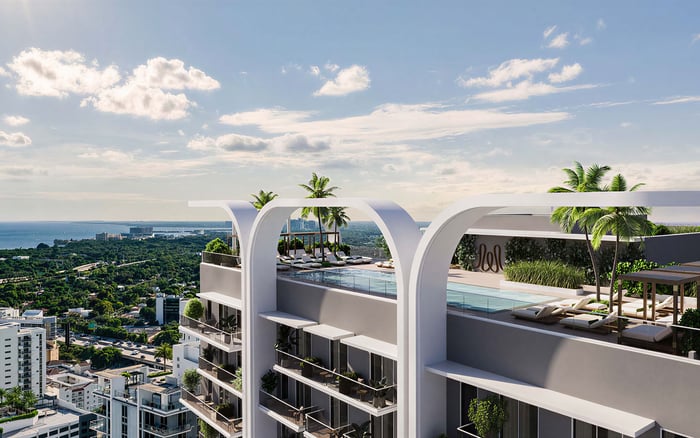
The first area to examine is the building envelope: exterior glass, doors, window systems, balcony and terrace assemblies, roof conditions, waterproofing, and drainage. A penthouse may have expansive exposures and private outdoor areas that require more than a casual visual inspection.
Ask whether the association maintains records for façade work, waterproofing, terrace membranes, roof repairs, and post-storm inspections. Buyers should also ask how movable outdoor elements are secured, whether planters or furniture require special handling, and whether the building provides written owner instructions before a storm.
Glass is another central issue. Rather than relying on verbal assurances, ask what documentation is available for exterior openings and whether there are any known recurring issues with water intrusion, door seals, wind-driven rain, or terrace drainage. A well-run building should be able to explain how concerns are reported, tracked, and resolved.
Storm preparation is also a systems question. A penthouse buyer should understand how the building manages power interruptions, elevator service, garage access, domestic water, fire and life-safety systems, pumps, access control, cooling, and communications.
Ask what areas are served by backup power and what is not. The difference between lighting in common corridors and full comfort inside a private residence is significant. Buyers should understand whether backup power supports selected common areas, security systems, elevators, pumps, or other essential infrastructure, and how long operations can be maintained under stress.
Elevator planning deserves particular attention in a high-rise. Ask how many elevators are expected to remain available during preparation and recovery, how the building prioritizes service, and whether residents are advised to relocate before a storm if mobility or medical needs make stair use impractical.
Cooling is another practical concern. Some towers may have centralized systems, while others place more responsibility on in-unit equipment. The buyer’s question should be simple: what can fail, who maintains it, how quickly service can be restored, and what access is needed after a storm?
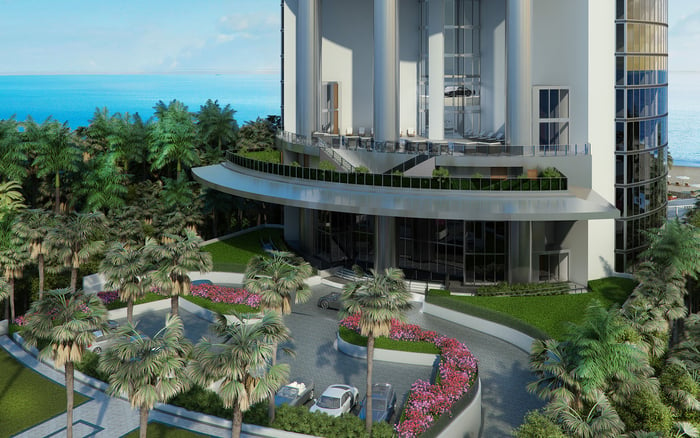
Even for an upper-floor residence, lower-level vulnerability matters. If the garage, lobby, electrical rooms, loading areas, package rooms, or mechanical spaces are compromised, penthouse living can become inconvenient quickly. Height does not isolate an owner from building-wide recovery.
Ask how the property prepares for water at ground level and whether the association has protocols for garage closures, vehicle relocation, barriers, pumps, drainage, and post-storm access. Buyers should also ask how the building communicates changes to entry points, valet operations, delivery service, staff availability, and temporary restrictions.
In waterfront and near-water neighborhoods, evacuation and re-entry planning should be part of the conversation. A luxury buyer may be seasonal, international, or managing multiple homes. The building’s ability to communicate clearly with absent owners is often as important as its physical preparation.
Storm readiness is both operational and financial. Before contract, buyers should request the condominium documents, budget, insurance summaries, reserve information, meeting minutes, and any available disclosures relating to major maintenance or storm-related repairs.
The goal is not to become the association’s underwriter. The goal is to understand exposure. Ask what insurance is carried by the association, what deductibles may apply, how losses are handled, and where the owner’s individual policy begins. A penthouse with extensive interiors, built-ins, art, wine storage, or terrace improvements may require careful private insurance review.
Reserves and special assessments are equally relevant. If a building has deferred exterior maintenance or unresolved water-intrusion issues, storm season can expose weaknesses. Buyers should ask whether any major exterior, roof, mechanical, or waterproofing projects are planned, discussed, or recently completed.
In the ultra-premium market, amenities create desire, but governance preserves value. A building with a serious storm posture should have a chain of command, resident communications, vendor relationships, staffing plans, and recovery procedures. The buyer should ask who makes decisions, how updates are delivered, and what residents are expected to do before leaving the property.
Meeting minutes can reveal whether the board addresses maintenance proactively or reactively. Management responsiveness during diligence can also be instructive. If basic questions about storm preparation are difficult to answer before contract, they may be even harder during an actual event.
Buyers should also ask whether there are owner responsibilities specific to terraces, shutters if applicable, balcony items, access permissions, pets, house staff, or guests. The best buildings make preparation routine, not dramatic.
A refined purchase process is not adversarial. It is precise. Before contract deadlines pass, a buyer should gather building documents, speak with qualified inspectors and insurance advisers, and ask counsel to review association obligations and owner responsibilities.
The most useful questions are practical: What is protected? What remains vulnerable? Who decides? Who pays? How are residents notified? How is access restored? How has the building handled prior preparation and recovery? Those answers help transform a beautiful penthouse from an emotional acquisition into a resilient long-term holding.
Should storm preparation be reviewed before signing a penthouse contract? Yes. The pre-contract period is when buyers have the most leverage to request documents, ask questions, and evaluate risk before deposit deadlines harden.
Is an upper-floor residence protected from storm-related issues? Not entirely. A penthouse may avoid certain ground-level concerns, but it still depends on elevators, pumps, access systems, garage operations, staff, and building recovery.
What should buyers ask about glass and exterior openings? Ask for available documentation, maintenance history, known water-intrusion issues, and how the building inspects or repairs exterior openings after severe weather.
Why do terraces require special attention? Terraces can involve drainage, waterproofing, furniture, planters, railings, doors, and owner responsibilities. Buyers should know what must be secured before a storm.
What backup power questions matter most? Ask which systems are supported, how long they can operate, and whether backup power covers elevators, pumps, access control, life-safety systems, or only selected common areas.
Should a buyer review condominium meeting minutes? Yes. Minutes may show how the board discusses maintenance, repairs, reserves, insurance, vendor contracts, and storm-related procedures.
Does association insurance replace private insurance? No. Association coverage and individual owner coverage are different, so buyers should review both with qualified insurance guidance before closing.
What if the building has impressive amenities? Amenities do not answer resilience questions. Buyers should evaluate maintenance discipline, staffing, communication, systems, and financial readiness separately.
Are waterfront buildings automatically riskier? Not automatically. The better question is how the property addresses water exposure, access, garage protocols, drainage, pumps, and resident communication.
What is the best way to shortlist comparable options for touring? Start with location fit, delivery status, and daily lifestyle priorities, then compare stacks and elevations to validate views and privacy.
For a tailored shortlist and next-step guidance, connect with MILLION.
If branded residences are on your mind — as a home or as an allocation — we would be glad to share what we are seeing, privately.
Begin a quiet conversation