Private-club adjacency can elevate a property's narrative, but sophisticated buyers should separate prestige from enforceable rights. In South Florida, nearby ownership rarely guarantees membership, pricing power, or resale insulation unless club-related benefits are clearly documented, transferable, and financially durable.

In South Florida, a residence beside a celebrated golf, racquet, beach, or resort club can feel like shorthand for status. The setting suggests privacy, curation, and a particular kind of social access. But sophisticated buyers should draw a firm line between proximity and entitlement. Owning next to a private club does not, by itself, confer admission, access privileges, or preferred economics. In most cases, membership remains a separate relationship with the club, governed by its own approval standards, fees, waitlists, and internal caps.
That distinction matters because club adjacency is often woven into a property's narrative more easily than into its legal package. Terms such as adjacent, bordering, or club lifestyle can create the impression of bundled value even when the rights attached to the residence are narrow, revocable, or nonexistent. In a market where image can quickly influence pricing, the disciplined buyer treats that language as atmosphere, not evidence.
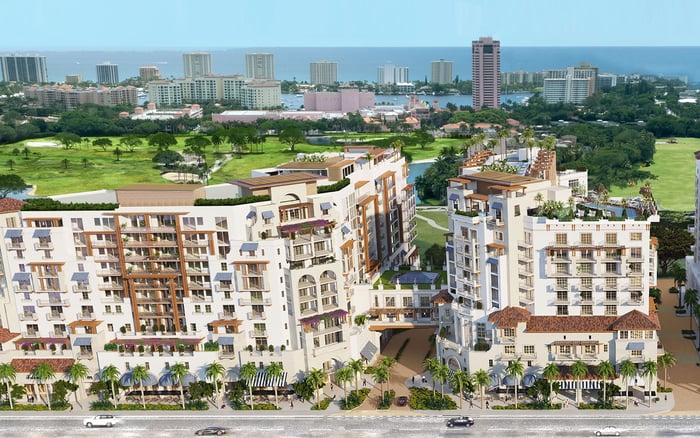
This is especially relevant in lifestyle-driven submarkets from Miami Beach to Palm-beach, where hospitality, wellness, and private-member ecosystems shape perception. A branded waterfront residence such as The Ritz-Carlton Residences® Miami Beach or a polished enclave such as Alina Residences Boca Raton may sit within a broader luxury universe, but buyers still need to identify exactly which privileges belong to the real estate and which remain outside the deed.
If the club connection is central to your buying thesis, the enforceable source of that value is not the sales pitch. It is the recorded deed, declaration, CC&Rs, purchase agreement, or another binding instrument that clearly states what the property conveys. That documentation should answer practical questions: Is there any membership eligibility tied to the home? Is there a discount, a priority category, or merely an invitation to apply? Are those benefits transferable upon resale, or do they expire with the first owner?
These distinctions are not semantic. A so-called preferential membership program may be limited, revocable, or nontransferable. Benefits negotiated by a developer may look compelling during an initial launch cycle but lose force once the residence enters the resale market unless they were properly structured to run with the property or otherwise remain assignable. If later purchasers cannot inherit the same privileges, the long-term value proposition is weaker than early marketing may suggest.
For buyers in Boca-ratón, Key-biscayne, or other club-oriented enclaves, the most useful question is simple: what survives a resale? A residence near The Residences at Mandarin Oriental Boca Raton and Oceana Key Biscayne may benefit from an exceptional address and surrounding lifestyle, but any club-related premium deserves separate verification before it is capitalized into the purchase price.
Even when a buyer is eligible to pursue membership, the economics should be treated independently from the residence itself. Initiation fees, annual dues, and minimum-spend obligations belong in a separate underwriting model. They are not incidental add-ons. For many households, they represent a meaningful recurring commitment that should be tested alongside carrying costs, reserves, insurance, assessments, and opportunity cost.
This is where the discipline of luxury acquisition becomes more financial than emotional. If a buyer is stretching to justify a price because a nearby club is assumed to complete the lifestyle, that assumption should be pressure-tested. What happens if membership is delayed by a waitlist? What if admission is denied? What if the required economics rise after purchase? A residence can still be highly desirable without club privileges, but the valuation framework changes once those privileges become uncertain.
In markets oriented around amenity-rich ownership, from Brickell to coastal resort corridors, the same principle applies. A project like 2200 Brickell may embody a private, curated residential experience on its own merits, while nearby club adjacency remains a separate value variable that should never be assumed into the basis without documentation.
Luxury buyers often pay for nuance, but appraisers tend to reward what can be demonstrated. If a club-related benefit is undocumented, revocable, or nontransferable, adjacency alone is less likely to command a meaningful premium in formal valuation. Market data rarely isolates the effect of being beside a private club because sale prices in the upper tier usually reflect multiple overlapping qualities: architecture, frontage, security, views, service, scarcity, and brand.
That creates a familiar tension. A seller may price a residence as though the neighboring club is part of the package, while an appraisal may treat the relationship more conservatively if there is no written, transferable right to support it. The result can be a gap between aspirational pricing and bankable value.
Resale follows the same logic. If a future buyer discovers that the expected club access is unavailable, expensive, subject to approval, or no longer transferable, the buyer pool may narrow. In the Resale conversation, disappointment is expensive. The more central the club story is to the listing narrative, the more important it becomes that the entitlement story is clear, durable, and easy to explain.
Adjacency to a private club can bring prestige, but it can also introduce friction. Traffic tied to events, service activity, noise, operational changes, and renovation cycles may affect daily enjoyment. Buyers should also investigate fee increases, litigation, restructuring, and capital plans at the club itself, because those issues can shape both quality of life and perceived property value next door.
Club instability is not theoretical in South Florida. The region has seen periods of financial stress and restructuring that affected club-linked expectations across multiple properties. When buyers pay a premium largely because a neighboring club appears permanent and seamless, they are implicitly underwriting the club's durability as well as the residence.
That is why adjacency should be viewed as an exposure, not just an amenity. Near Shell Bay by Auberge Hallandale or The Surf Club Four Seasons Surfside, the surrounding ecosystem may be part of the attraction. But prudent buyers still ask what happens if operating policies change, access terms tighten, or the club's strategic direction shifts over time.
The cleanest approach is to separate three questions. First, what does the real estate legally convey? Second, what does the club presently offer this specific property, in writing? Third, would those benefits remain intact for the next owner?
A buyer's attorney should review all governing documents and confirm whether any promised rights are documented and assignable. Buyers should also contact the club directly, in writing, to verify whether the specific residence receives eligibility, priority, discounts, or any other special treatment. Oral assurances that membership is guaranteed or easy should be treated as unreliable unless they are backed by binding instruments.
For investors and second-home purchasers, the standard should be even higher. If a premium is being paid today for a lifestyle promise that cannot be clearly transferred tomorrow, that premium may prove fragile. True luxury value is not built on assumptions. It is built on clarity.
Does buying next to a private club automatically include membership? No. Nearby ownership usually does not confer access, and membership is commonly a separate application with separate costs.
Can a seller advertise club lifestyle even if no rights transfer with the property? Yes. Marketing language can be broader than the actual legal rights, which is why buyers need to verify documents carefully.
What documents matter most when club access affects value? The deed, declaration, CC&Rs, purchase agreement, and any binding club-related instruments are the key records to review.
Are preferential membership programs always permanent? No. They may be limited, revocable, or nontransferable unless the rights are clearly documented in binding form.
Should club costs be treated as part of the home price? No. Initiation fees, dues, and minimum-spend obligations should be underwritten separately from the real estate purchase.
Can appraisal value fall short of the asking price because of unclear club rights? Yes. If the club connection is central to pricing but not clearly documented, appraisal support may be more conservative.
Do club-related benefits always pass to the next buyer? No. Some benefits do not survive resale unless they were structured to be transferable.
Can club adjacency create drawbacks as well as prestige? Yes. Event traffic, activity, noise, and operational disruptions can affect day-to-day enjoyment.
What should buyers ask the club directly? Ask, in writing, whether the specific property conveys any eligibility, priority, discount, or other special treatment.
Why does assignability matter so much in luxury purchases? Because a benefit that cannot be transferred to the next owner is less durable and usually less valuable over time.
When you're ready to tour or underwrite the options, connect with MILLION.
If branded residences are on your mind — as a home or as an allocation — we would be glad to share what we are seeing, privately.
Begin a quiet conversation