For family-office principals in South Florida, private arrival is the nonnegotiable foundation. Walkability remains valuable, but mainly when it supports daily life without compromising discretion, security, and household control.
For family-office principals, the debate between walkability and private arrival is rarely a matter of preference alone. It is a question of operating style. A residence is not simply a place to sleep between meetings, flights, school runs, dinners, wellness appointments, and board-level obligations. It is a private headquarters for a household that may include children, staff, visiting relatives, advisers, security personnel, drivers, chefs, tutors, trainers, and guests whose presence should remain unremarkable.
That is why private arrival tends to anchor the search. Walkability is desirable, and in certain South Florida enclaves, it can be a meaningful advantage. Yet for principals managing significant wealth, visibility carries a cost. The ability to enter, exit, receive, park, screen, and stage movement discreetly can matter more than being a short stroll from a favorite café.
The strongest answer is therefore not walkability versus privacy. It is whether walkability can be enjoyed without surrendering the choreography of private life.
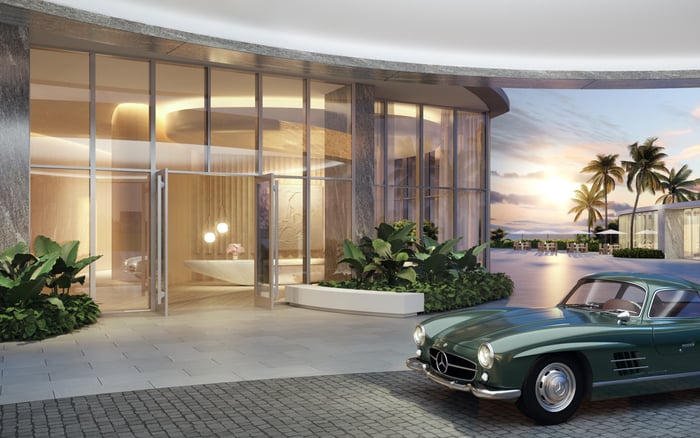
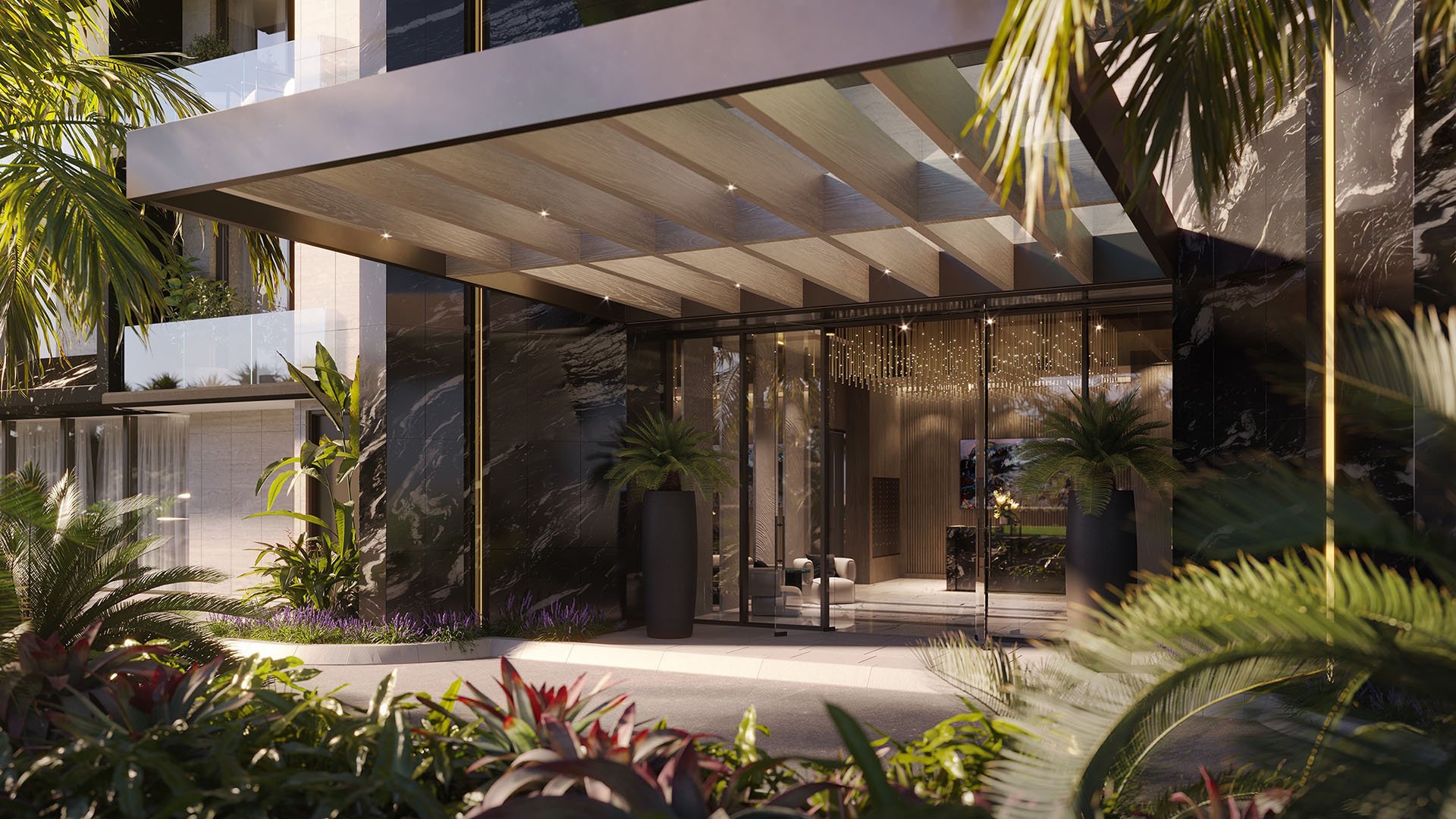
Private arrival is not only about prestige. It is about control. A refined porte cochère, an orderly garage sequence, a separate service pathway, or a residence with a calm arrival experience can reduce the number of uncontrolled moments in a day. For a family-office principal, those moments matter. They affect children, guests, staff, scheduling, confidentiality, and the emotional temperature of the home.
The appeal is especially clear in South Florida, where many owners are seasonal, international, or constantly moving between residences. A home must absorb unpredictable arrivals and departures without turning every transition into a public performance. The most successful properties allow the household to move with ease, even when luggage, drivers, vendors, security protocols, and family logistics converge at once.
This is why buyers evaluating Brickell may weigh the energy of a central address against the discretion of the actual residential sequence. A tower such as St. Regis® Residences Brickell enters the conversation not simply because of its location, but because the family-office buyer will study how that location is experienced at the curb, in the lobby, at the elevator, and at the residence door.
Walkability becomes powerful when it reduces friction without increasing exposure. For families, that may mean proximity to dining, wellness, parks, schools, marinas, cultural life, or everyday services. For principals, it may mean the ability to host a quiet breakfast, take a meeting nearby, or allow older children a degree of independence within a familiar radius.
Still, not all walkability is equal. A highly visible, tourist-heavy environment may feel convenient on paper but tiring in practice. A more residential village pattern can offer daily usefulness with fewer compromises. That is why Coconut Grove remains a compelling case study for buyers who want neighborhood texture without the constant intensity of a commercial core. In a setting like Four Seasons Residences Coconut Grove, the conversation often centers on the balance between recognizable service, residential calm, and access to a mature neighborhood fabric.
The same logic applies in Bay Harbor Islands, where the appeal is not spectacle. It is measured access, a quieter scale, and the ability to remain connected without feeling overexposed. The Well Bay Harbor Islands fits naturally into that buyer discussion because wellness, privacy, and neighborhood rhythm are increasingly evaluated together.
A family-office principal should evaluate a property through a household test rather than a brochure test. How does the residence function when three generations arrive for a holiday? Can a driver wait without creating awkwardness? Can staff receive vendors without crossing the family path? Can children come and go without unnecessary attention? Can a principal return from travel and reach the residence without the lobby becoming a stage?
These questions often reveal more than a view corridor or an amenity menu. A beautiful home that complicates daily movement can become tiring. A slightly less walkable address with a seamless arrival may feel more luxurious because it protects time, privacy, and attention.
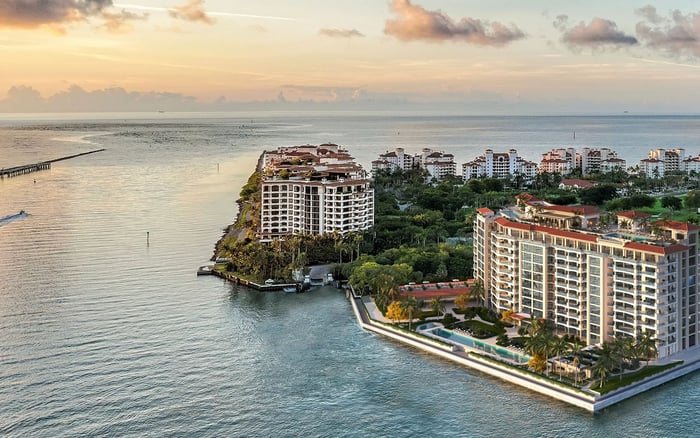
In the highest tier, the residence becomes an instrument of discretion. Fisher Island illustrates the far end of this preference, where separation itself is part of the lifestyle proposition. Buyers considering The Residences at Six Fisher Island are often not asking whether they can walk to the greatest number of restaurants. They are asking whether the environment supports a self-contained, highly private way of living.
South Florida is not a single luxury market. Brickell is vertical, financial, and connected. Miami Beach can offer social access and ocean proximity. Coconut Grove prizes shade, scale, and neighborhood identity. Palm Beach emphasizes discretion, tradition, and a polished residential cadence. Bay Harbor Islands and Surfside appeal to buyers who want a quieter coastal rhythm near the center of everything.
For the family-office buyer, each area presents a different answer to the same question. In Brickell, walkability can be a strategic advantage if the arrival experience remains composed. In Coconut Grove, the value may lie in the ability to live locally without sacrificing privacy. In Palm Beach, the priority may be the refinement of daily routine, with privacy embedded into the culture of the address. A property such as The Ritz-Carlton Residences® West Palm Beach may therefore be weighed not only by finish level or brand, but by how comfortably it supports the movement of a sophisticated household.
The most desirable answer is rarely the most obvious. Some principals will accept less walkability for a stronger arrival sequence. Others will pay for a walkable setting only if the building shields them from the public nature of that convenience. The pattern is consistent: convenience is welcome, but exposure is not.
The most disciplined buyers rank private arrival, security, staff logistics, parking, elevator experience, service routes, and guest handling before assigning value to nearby restaurants or retail. This does not diminish walkability. It simply places it in the proper order.
A practical framework begins with three questions. First, does the property protect anonymity during the most common household movements? Second, does the surrounding neighborhood improve daily life for the family, rather than merely sound attractive in conversation? Third, will the address still feel calm during peak season, major events, and full household occupancy?
If the answer to all three is yes, the property may offer the rare combination South Florida’s most sophisticated buyers seek: private life with selective access. If not, the family-office principal should be honest about which compromise will age better. In most cases, privacy is harder to retrofit than walkability.
What matters more for family-office principals, walkability or private arrival? Private arrival usually matters more because it supports discretion, security, and household control. Walkability is most valuable when it does not compromise privacy.
Is walkability still important in South Florida luxury real estate? Yes. It can improve daily life, especially when dining, wellness, parks, or services are close without making the residence feel exposed.
Why do principals prioritize arrival experience so heavily? Arrival is where privacy can be most vulnerable. A controlled sequence helps manage family movement, staff activity, guests, and transportation.
Does Brickell work for privacy-focused buyers? Brickell can work when the building experience feels composed and the private residential sequence offsets the energy of the district.
Is Coconut Grove better for families than more urban neighborhoods? Coconut Grove can appeal to families seeking neighborhood texture, calm streets, and access to daily conveniences within a residential setting.
Why do some buyers choose island or gated-style environments? They often prefer separation, controlled access, and a quieter rhythm over maximum proximity to restaurants or retail.
Should a family-office buyer pay a premium for walkability? Only if the walkability genuinely improves daily routines and does not create unwanted visibility or operational friction.
What should buyers examine beyond finishes and views? They should study parking, elevators, staff routes, guest handling, service access, and the feeling of arrival at different times of day.
Can a walkable address still feel private? Yes, if the building, entry sequence, and residence planning separate the private household experience from the public street.
What is the most durable luxury for this buyer profile? The most durable luxury is control: control of access, time, movement, attention, and the daily rhythm of the household.
To compare the best-fit options with clarity, connect with MILLION.
If branded residences are on your mind — as a home or as an allocation — we would be glad to share what we are seeing, privately.
Begin a quiet conversation