A buyer-focused guide to converting a Greenwich household’s primary residence to Miami, with emphasis on domicile evidence, homestead benefits, Connecticut exposure, closing costs, insurance, and estate-planning coordination.
For Greenwich households, a Miami primary-residence conversion is rarely just a change of scenery. It is a coordinated shift in tax posture, estate planning, documentation, property ownership and daily life. Florida’s constitution prohibits state taxes on residents’ personal income, estates and inheritances, which is why domicile often sits at the center of the move. Connecticut, by contrast, imposes state income tax under graduated rates and separately has estate and gift tax exposure, creating a meaningful planning contrast for high-net-worth families.
The essential distinction is simple: buying in Miami is not, by itself, the same as becoming domiciled in Florida. Connecticut residency rules look to domicile and also to a statutory-residency test tied to maintaining a permanent place of abode and spending more than 183 days in the state. A family that keeps a Greenwich home, retains Connecticut-source income, or leaves behind facts suggesting continued Connecticut residency should approach the transition with particular care.
This is why the strongest conversions are designed before closing, not cleaned up afterward.
Florida allows a person to record a sworn Declaration of Domicile stating that Florida is their permanent home. That filing is useful, but it should sit within a broader evidence file. New Florida residents should also update licensing promptly, since the state requires a driver license within 30 days after becoming a resident. Voter registration is another practical marker because Florida provides a formal process to register or update voter information.
The higher the household profile, the more consistency matters. Banking addresses, club memberships, physicians, insurance policies, vehicle registrations, professional licenses, charitable affiliations and family office records should tell the same story. Day-count discipline is equally important. If a Greenwich residence or business connection remains, contemporaneous records of time spent in Connecticut and Florida can become as important as the closing statement for the Miami purchase.
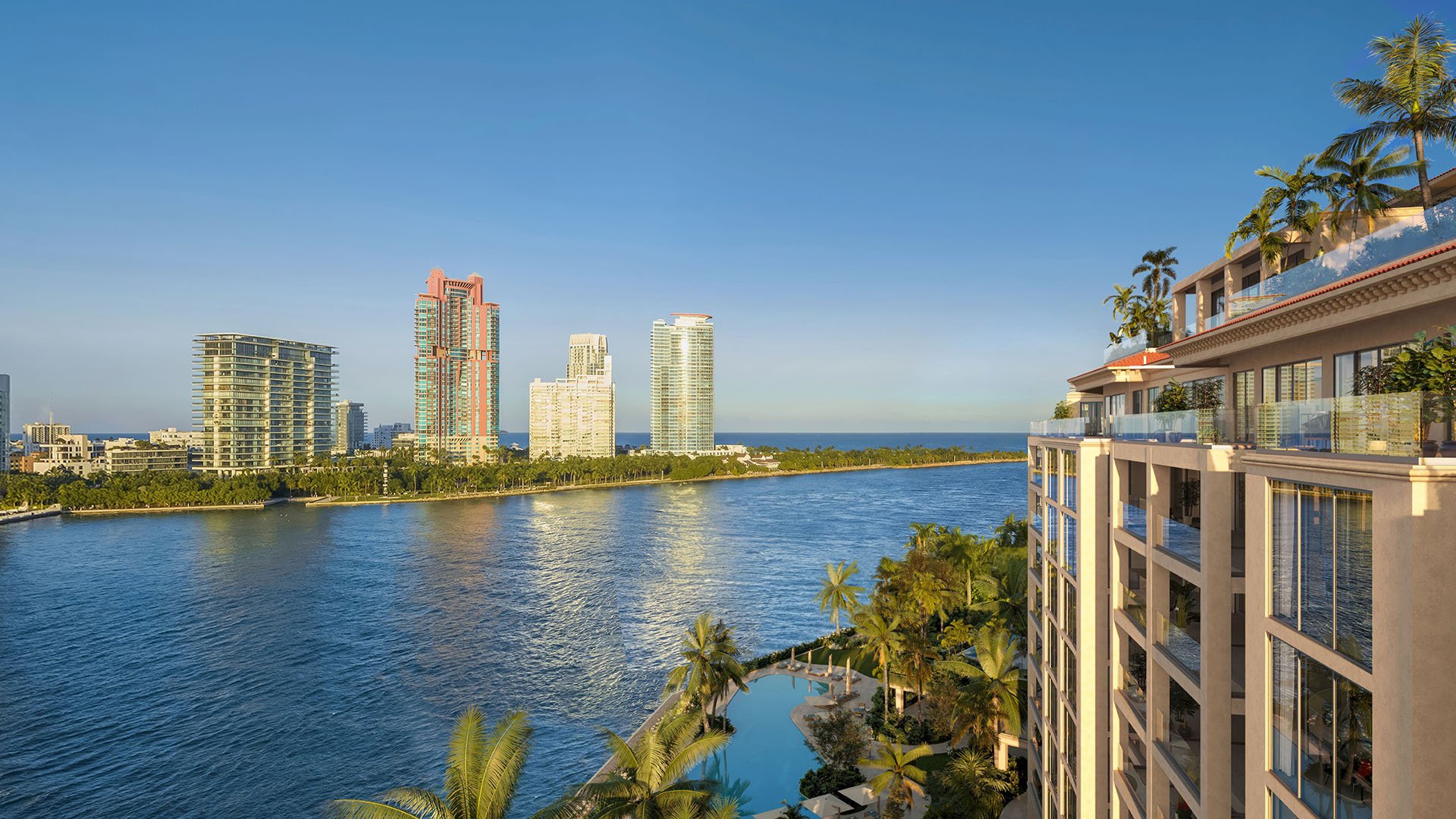
For buyers choosing a vertical primary residence in Brickell, the appeal is clear: private residential services, proximity to offices, bay views and a global dining culture without the maintenance profile of a large estate. A building such as St. Regis® Residences Brickell fits the buyer who wants a highly serviced home base that supports full-time Florida living rather than occasional visits.
Florida’s homestead regime is central to the primary-residence conversation. The homestead exemption can reduce taxable value for an owner-occupied permanent residence, subject to eligibility rules and filing requirements. In Miami-Dade County, homestead-exemption applications are due by March 1 for the tax year in question.
Once homesteaded, Florida’s Save Our Homes cap limits annual increases in assessed value to the lesser of 3% or the change in the Consumer Price Index. For owners who already have a Florida homestead, portability can allow transfer of up to $500,000 of Save Our Homes benefit from a prior Florida homestead to a new Florida homestead. For a Greenwich buyer entering Florida for the first time, portability may not be available immediately, but the future value of the cap can still be material.
Homestead is not only a property-tax concept. Florida’s constitutional homestead protection can shield a qualifying primary residence from many creditor claims, subject to acreage and exception rules. That protection is one reason ownership structure deserves attention before signing a contract. The same rules can also complicate estate planning, because devise of homestead property is restricted when the owner is survived by a spouse or minor child.
In Miami Beach, a buyer might be drawn to the privacy, sand proximity and wellness rhythm of The Perigon Miami Beach. But the title decision for a coastal primary residence should be made with the same seriousness as the architectural choice.
A Greenwich sale should be planned alongside the Miami acquisition. Connecticut real estate conveyance tax applies to deeds transferring real property. A seller may also qualify for the federal primary-residence capital-gains exclusion if ownership-and-use tests are met, generally up to $250,000 for single filers or $500,000 for married joint filers. These are not afterthoughts. They can influence timing, contract structure and liquidity planning.
On the Miami side, buyers should factor Florida documentary stamp taxes into acquisition costs. Miami-Dade has a distinct deed-tax structure from other Florida counties, so closing estimates should be property-specific. For condominium buyers, the acquisition model should also include assessments, reserves, association fees, private insurance, windstorm coverage, flood coverage, maintenance, staff expectations and any lifestyle costs tied to marina, club or wellness amenities.
Coconut Grove often appeals to Greenwich buyers who want mature landscaping, a village texture and quick access to the bay. Four Seasons Residences Coconut Grove speaks to that desire for privacy, service and a softer residential cadence while remaining within Miami’s core.
South Florida luxury buyers should check flood-map status before closing because flood zones are used for risk and insurance determinations. Standard homeowners insurance generally does not cover flooding, so separate flood-insurance evaluation is often part of prudent underwriting. Even when a residence is elevated, newly built or professionally managed, the buyer should understand the policy structure, deductibles, exclusions and association-level coverage.
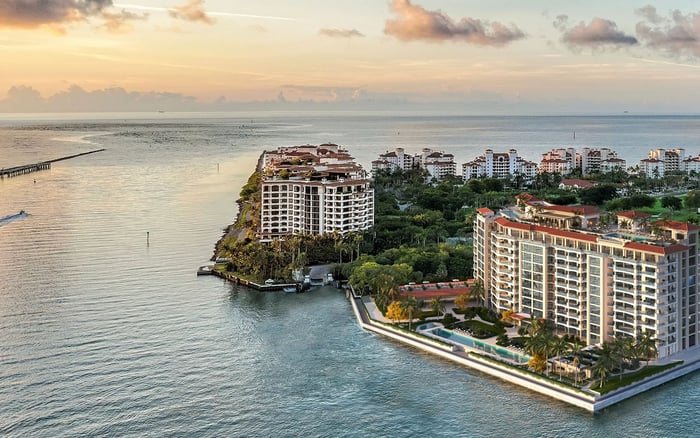
For waterfront and island residences, the insurance review should occur before the deposit goes hard. Fisher Island buyers, for example, may prize security, privacy and a resort-like daily environment, and The Residences at Six Fisher Island belongs naturally in that conversation. The same discretion that informs the property search should inform insurance diligence.
West Palm Beach can be a strategic alternative for buyers who want Florida domicile with a different tempo, private clubs and a strong connection to Palm Beach. The Ritz-Carlton Residences® West Palm Beach may suit a household that wants new-construction services while keeping a refined, less urban pattern of daily life.
A clean Greenwich-to-Miami conversion is usually quiet. The household identifies the primary residence, aligns title with tax and estate goals, documents Florida intent, reduces inconsistent Connecticut ties where possible, tracks days carefully and files for homestead on time. The result is not merely a favorable tax profile. It is a residence that functions as the family’s real center of gravity.
For luxury buyers, that is the standard. The home should support the legal story, the financial plan and the lived experience. When those elements align, Miami becomes more than an address. It becomes the permanent base.
Does buying a Miami home automatically make me a Florida resident? No. The purchase helps support the move, but domicile depends on intent, documentation and behavior.
Why does the 183-day rule matter for a former Greenwich resident? Connecticut can treat residency as an issue when someone maintains a permanent place of abode and spends more than 183 days there.
Should I record a Florida Declaration of Domicile? It can be a useful formal statement that Florida is your permanent home, but it should be supported by consistent facts.
How quickly should I update my Florida driver license? Florida requires a driver license within 30 days after becoming a resident.
When is the Miami-Dade homestead-exemption deadline? The application deadline is March 1 for the tax year in question.
What does Save Our Homes do? For homesteaded property, it limits annual assessed-value increases to the lesser of 3% or the change in the Consumer Price Index.
Can Florida homestead affect estate planning? Yes. Restrictions can apply when an owner is survived by a spouse or minor child, so title and estate documents should be coordinated.
Should I keep records of days spent in Connecticut and Florida? Yes. Day-count records are especially important if you retain a Greenwich home or Connecticut business interests.
Is flood insurance included in standard homeowners coverage? Generally no. Buyers should evaluate separate flood insurance and understand building-level coverage before closing.
What is the best way to shortlist comparable options for touring? Start with location fit, delivery status, and daily lifestyle priorities, then compare stacks and elevations to validate views and privacy.
To compare the best-fit options with clarity, connect with MILLION.
If branded residences are on your mind — as a home or as an allocation — we would be glad to share what we are seeing, privately.
Begin a quiet conversation